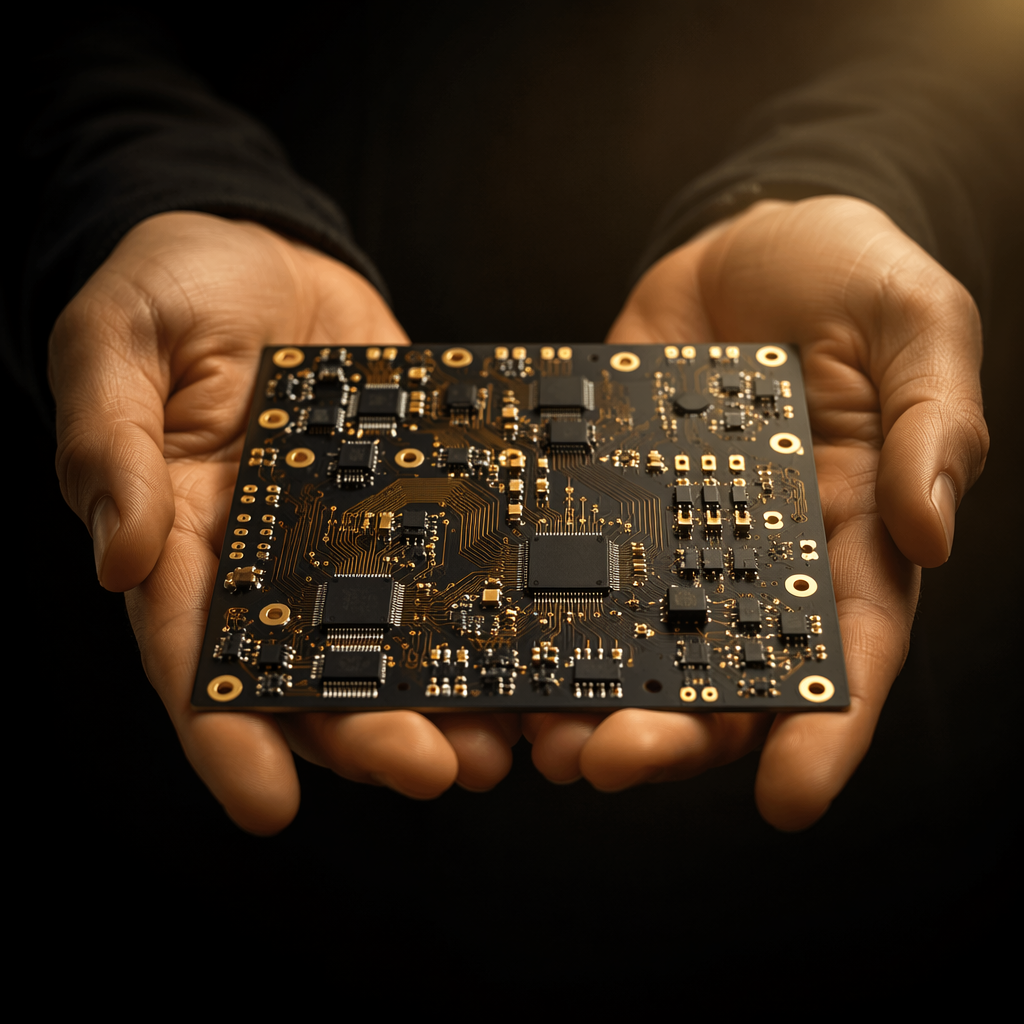
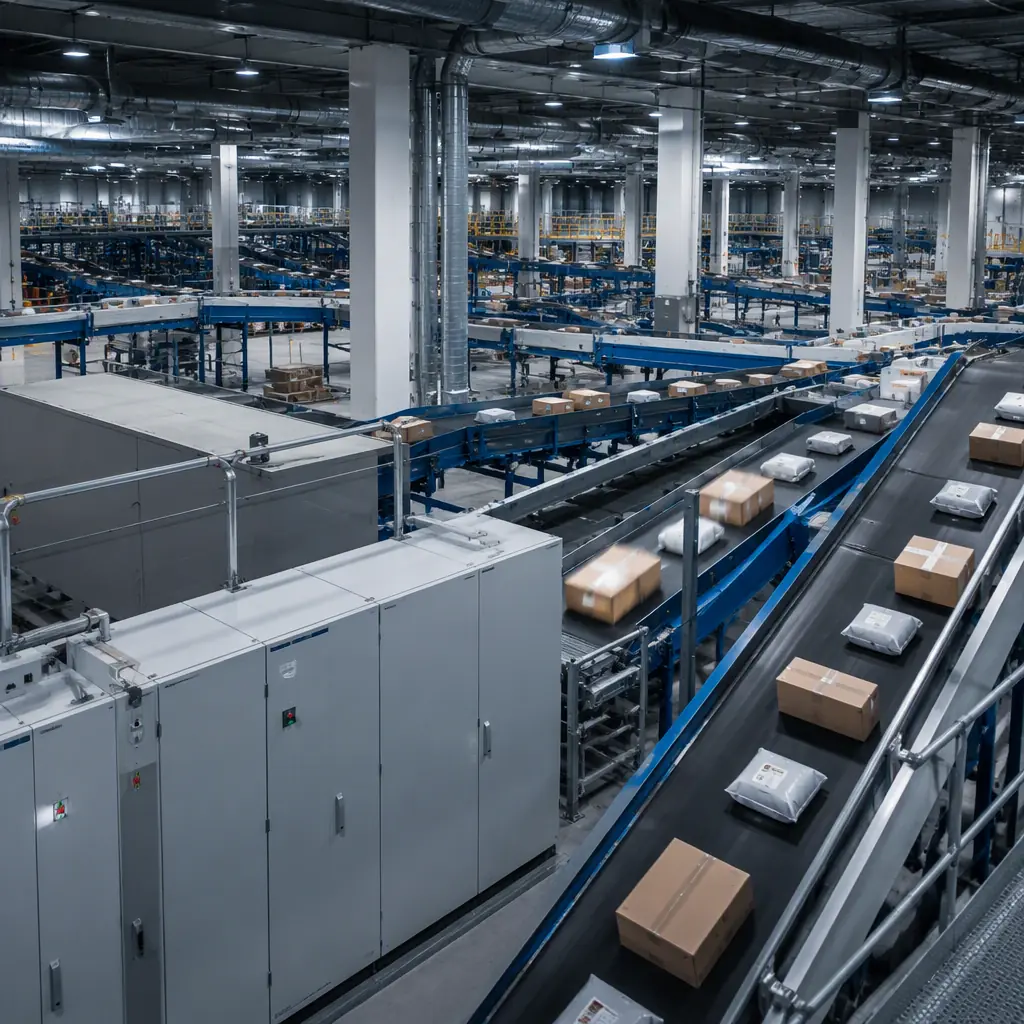
Automation of physical fulfilment is one of the biggest and most commercially-predictable spending areas in industrial electronics. E-commerce volumes and labour costs are pushing operators toward conveyor systems, automated sortation and automated storage & retrieval systems (ASRS) that can handle throughput around the clock. The electronic heart of it all is a collection of control boards, motor drives, I/O cards, safety relays and datalogging interfaces, and they have to run at 24/7 duty with minimal downtime. A sortation loop in a parcel hub can move 3,000+ parcels per hour, so an hour of downtime can stall thousands of items. At Huaxing PCBA we build this class of industrial board with 8 SMT lines, 0.3 mm pitch, 0201 placement and 32-layer fabrication, in 15,000 m² serving 30+ countries.
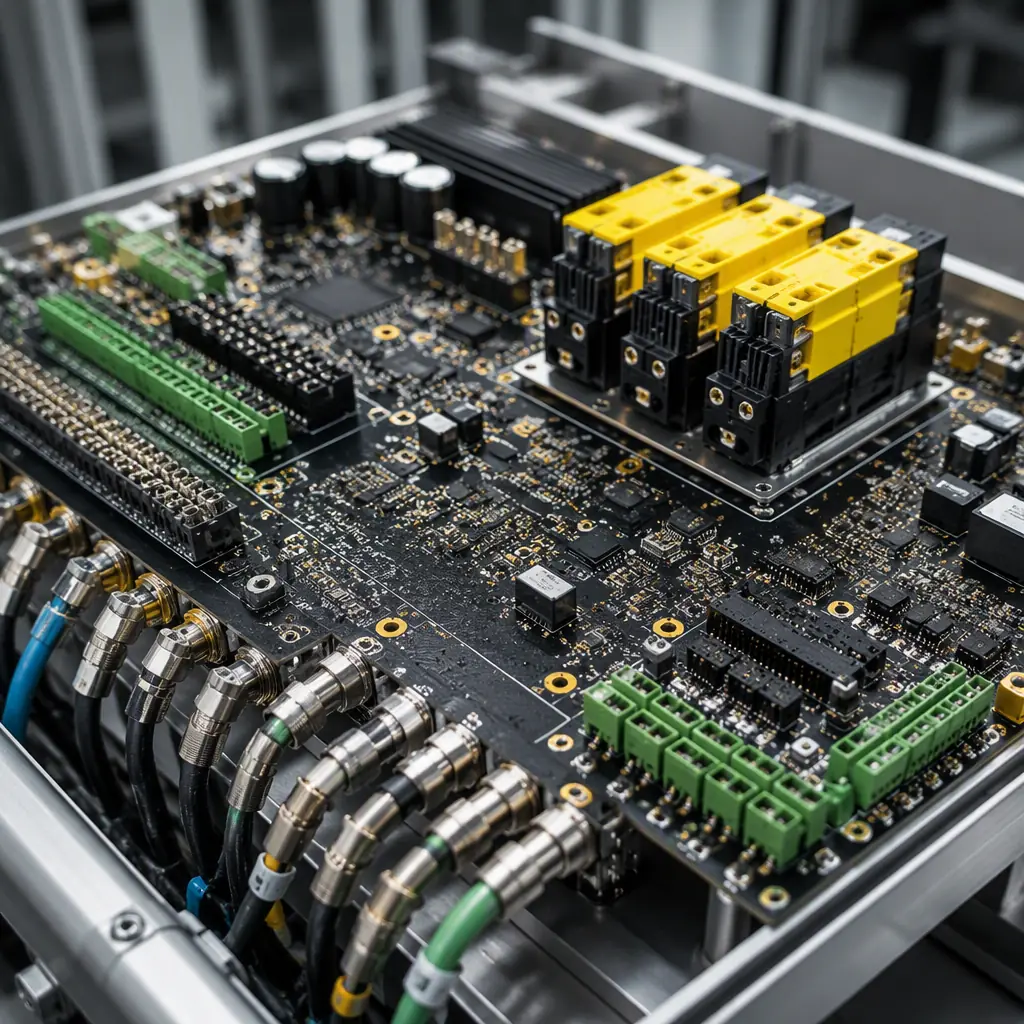
Fixed Automation Is the Backbone, Not Mobile Robots
It is easy to focus on mobile robots and autonomous vehicles, but the bulk of material movement in a distribution centre is done by fixed machinery, belt and roller conveyors, vertical sorters, crossbelt and tilt-tray sorters, and ASRS shuttles or cranes. These are the systems that actually move cartons from receiving to storage to shipping, and they are driven by electric motors under the command of control boards. The engineering demands on those boards are different from a consumer product or even a mobile robot, because they are wired to field devices, expected to be safe around people, and expected to survive a dusty, vibrating, temperature-cycling environment for years.
Key Distinction: A mobile robot steers and avoids, so its board is sensor- and compute-heavy. A conveyor or sortation board is actuator- and I/O-heavy. It drives motors, reads limit switches and photo-eyes, and integrates into a safety loop. Mobile and fixed automation need different boards, and this article is about the fixed kind.
Conveyor Drive Control: VFD and Torque Management
A conveyor is a friction and load problem. The motor has to start a loaded belt without snapping it, carry a variable load smoothly, and stop without throwing product off the line. The control board is typically a variable-frequency drive (VFD) driving a 3-phase AC motor, or a lower-power DC or BLDC drive for smaller roller motors. The key is controlled acceleration, current limiting and enough starting torque for a loaded belt.
Single-zone and multi-zone drive
Modern lines are frequently zoned, with each zone driven by its own small roller motor so that items can be closed up, separated or metered. Zoned control needs many small drives coordinated on a fieldbus or distributed I/O, which is a board-, network- and firmware design problem. Our BLDC motor controller and design-for-testability guides cover the motor drive side.
Starting torque and current limiting
A loaded belt needs a high starting torque, but a hard start can damage the belt or the product. The drive has to ramp up current and speed, and limit the inrush so it does not trip a breaker or sag the line. Controlling the ramp profile and the current limit is the balance between throughput and wear. Our power supply layout guide is relevant.
EMI on a distributed drive network
An automated line is a network of drives and I/O running over industrial Ethernet or a fieldbus. Badly filtered motor drives radiate EMI that can corrupt the communication and drop packets, which stalls the line. The drive boards need proper filtering, shielding and grounding. Our EMI/EMC design and industrial Ethernet design guides cover the practical approach.
Parcel Sortation: Crossbelt and Tilt-Tray Control
Sortation is where throughput and accuracy collide. A crossbelt sorter runs carriers on a loop, each with its own motor, and the control system has to decide, in real time, where each carrier should discharge. A tilt-tray sorter does the same with a tray that tips on command. Each carrier has a small motor controller and a reader interface, and the whole loop has to be coordinated to a few tens of milliseconds of precision.
Carrier-level motor control
Each crossbelt carrier has a brushless motor and a small controller. The board has to accept a command, drive the carrier belt, and report its state back over a bus, all while riding a moving loop. Hundreds of these boards run on one loop, so the board and bus design have to be deterministic and fault-tolerant. Our MCU design guide is the reference here.
Realtime dispatching and reader integration
A sorter reads a parcel's destination from a barcode or RFID tag and decides when to discharge it. The dispatch decision is made by a control computer, but the carrier board has to execute it precisely. The board also integrates photo-eyes, encoders and destination readers, so the sensor interfaces and the timing are critical. Our RFID/NFC antenna design and camera module guides are relevant.
Fault isolation and maintainability
When a sorter has hundreds of carrier boards, diagnosis has to be fast. A good design identifies a failed carrier quickly, reports it over the bus, and lets the rest of the line keep running. Isolated outputs, per-carrier addressing and field-replaceable modules make maintenance possible between shifts. Our box build and first article inspection guides cover the build and inspection side.
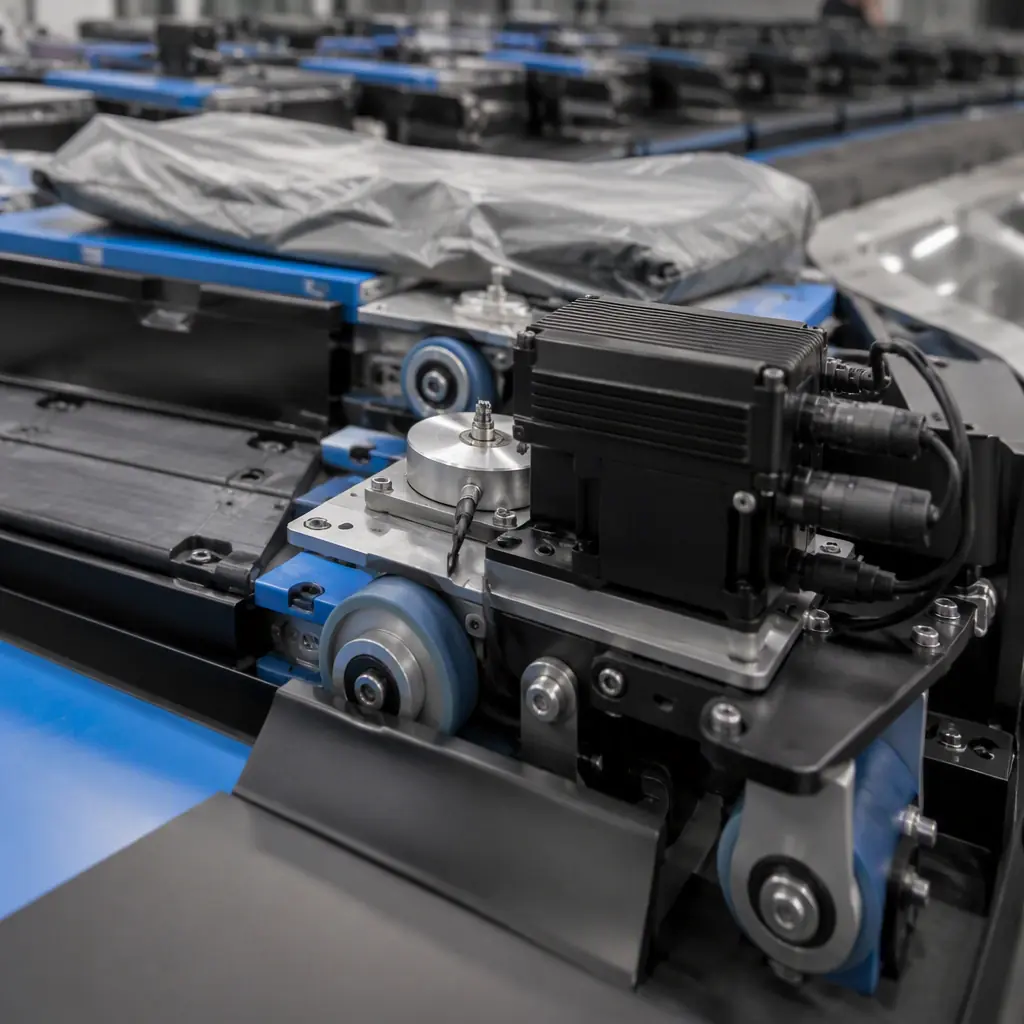
ASRS and High-Bay Storage Control
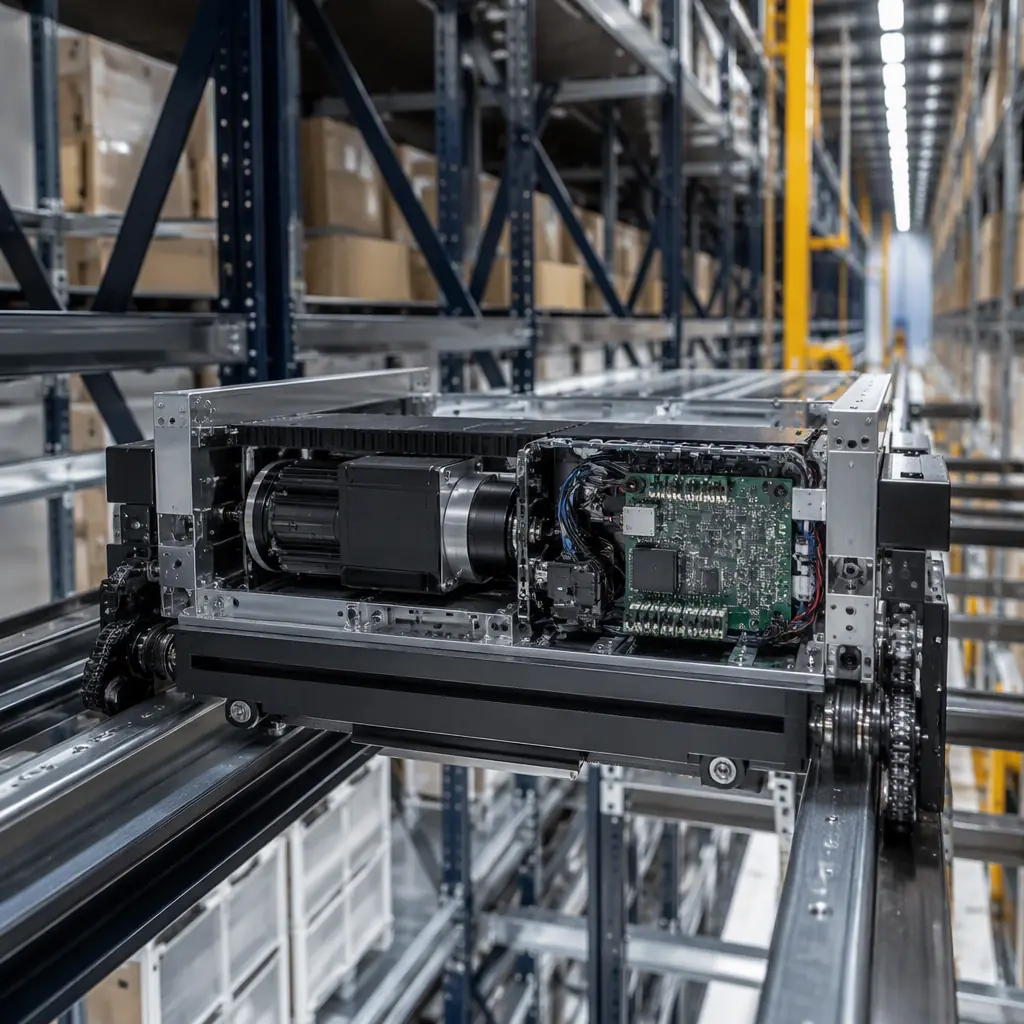
Automated storage and retrieval systems move pallets, cases and totes in and out of high-bay racking with a shuttle, a stacker crane or a mini-load system. The control board drives a lift and a horizontal transfer, reads positioning encoders, and has to stop at rack openings with millimetre accuracy, thousands of times a day, without wearing the mechanism.
High-precision positioning
ASRS positioning is a dual-loop control problem. The motor drive and the position feedback have to work together to bring a lifting platform to a target within a few millimetres. Encoder resolution, signal conditioning and the control loop are board-level concerns. Mispositioning is dangerous and costly, so the design has to be robust to noise and to sensor wear.
Regenerative braking and energy
An ASRS crane or shuttle constantly accelerates and decelerates, and the braking returns energy to the DC bus. The board has to handle that regenerated energy, either dumping it or storing it, without overvoltaging the drive. This is a power-electronics design consideration that shows up in the bus capacitors and the drive topology. Our UPS and energy storage guides are relevant.
Safety and interlock
ASRS systems operate around people, in the form of maintenance personnel and operators, so they have safety interlocks, gates and light curtains. The control board has to integrate with a safety loop, redundant channels, monitored relays and a safe stop function. This is a distinct discipline, so the safety I/O has to be designed separately from the standard I/O. Our functional safety guide is the reference.
Field I/O, Safety and Surviving 24/7 Duty
The difference between a warehouse automation board and a generic industrial control board is that it is wired to physical field devices, motors, encoders, photo-eyes, limit switches, sensors and safety devices, and it is expected to run for years in a dusty, vibrating, temperature-cycling building with minimal service. That shapes the board design from top to bottom.
| Design area | What a warehouse board needs | Why it matters |
|---|---|---|
| I/O isolation | Galvanically isolated digital/analog inputs | Survives field wiring and ground loops |
| Safety | Redundant, monitored safety I/O | Protects people, meets SIL requirements |
| ESD & surge | Hardened external interfaces | Dusty, static-prone environment |
| Thermal | Wide temperature rating, robust layout | -10–50°C, sealed cabinets |
| Reliability | Watchdog, redundancy, self-test | 24/7 uptime, long service interval |
Watchdog and self-test
A controller that fails silently on a 24/7 line is a serious cost. The board should have a watchdog that detects a software hang and resets into a safe state, plus a self-test on power-up that verifies critical functions. The firmware and hardware have to agree on what "safe" means and how to get there. See our burn-in and ESS testing guide for the reliability-validation angle.
EMI, ESD and environmental hardening
The harsh environment demands protection from surges, transients, dust and wide temperature swings. External interfaces need ESD and surge protection, and the whole board needs enough thermal margin. Our ESD control, vibration & shock testing and thermal management guides cover these.
Maintainability and field service
A warehouse line cannot wait for a new controller to be shipped from across the world. The board has to be field-serviceable, clearly-labelled, with a documented connector map, hot-swappable modules where appropriate, and a spares policy. Design choices at the board level directly affect how fast an operator recovers after a failure.
Procurement Tip: Ask the supplier to demonstrate the power-on self-test and the fail-safe behaviour, not just the spec sheet. On a 24/7 sorting line, a controller that fails clearly and restarts safely is worth far more than one with a slightly better throughput figure.
What to Specify With a Warehouse Automation PCBA Supplier
Material-handling control boards have to be built to a stringent, safety-conscious and reliability-focused standard. The checklist below is the practical minimum to nail down when you source them.
| Specification | What to demand | Why it matters |
|---|---|---|
| Motor control | Torque-controlled, soft-start | Protects belt, product and motor |
| I/O isolation | Galvanic isolation on field I/O | Survives field wiring, ground loops |
| Safety | Redundant, monitored, SIL-capable | Protects people, meets regulation |
| Reliability | Watchdog, self-test, wide temperature | 24/7 uptime, long service interval |
| Serviceability | Labelled, documented, spares plan | Fast recovery after a failure |
At Huaxing PCBA we build warehouse and logistics automation boards with 8 SMT lines, 4 DIP lines, 32-layer fabrication and 0201 / 0.3 mm pitch placement, in a 15,000 m² facility with 500+ staff serving 30+ countries. We are ISO 9001, IATF 16949 and UL (E354321) certified, with a 99.2% on-time delivery and 98.7% first-pass yield. Upload your design for a quote or talk to our engineering team about your material-handling project. For related applications, see our industrial control and robotics & automation guides.