When an overseas procurement manager sources PCBs from China, the board itself is rarely the final deliverable. What comes after bare board assembly, enclosure integration, cable harness termination, functional testing, labeling, and retail-ready packaging, is often managed through a fragmented chain of 3-5 different suppliers. Each handoff introduces schedule risk, quality variance, and logistics overhead. Box build assembly consolidates these post-PCB steps under one roof, turning your EMS partner into a single-source system integrator. At Huaxing PCBA, we process over 50,000 box build units annually across industrial control panels, medical device housings, EV charger modules, and IoT gateway enclosures.
What Exactly Is PCB Box Build Assembly?
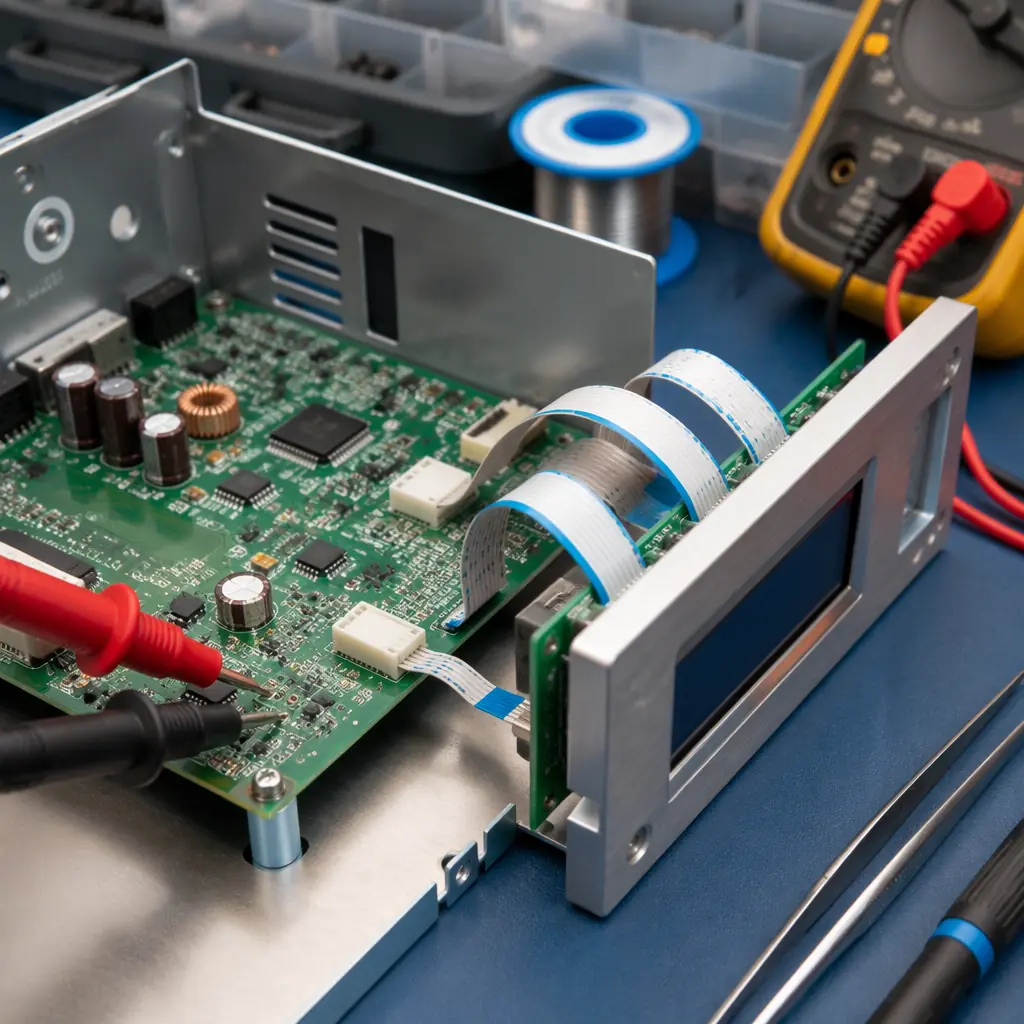
Box build, also called system-level assembly or electromechanical integration, is the process of taking a populated PCB and building it into a complete, tested, enclosed product ready for end-use or retail shelf. It goes beyond SMT and through-hole assembly to include:
Enclosure Installation
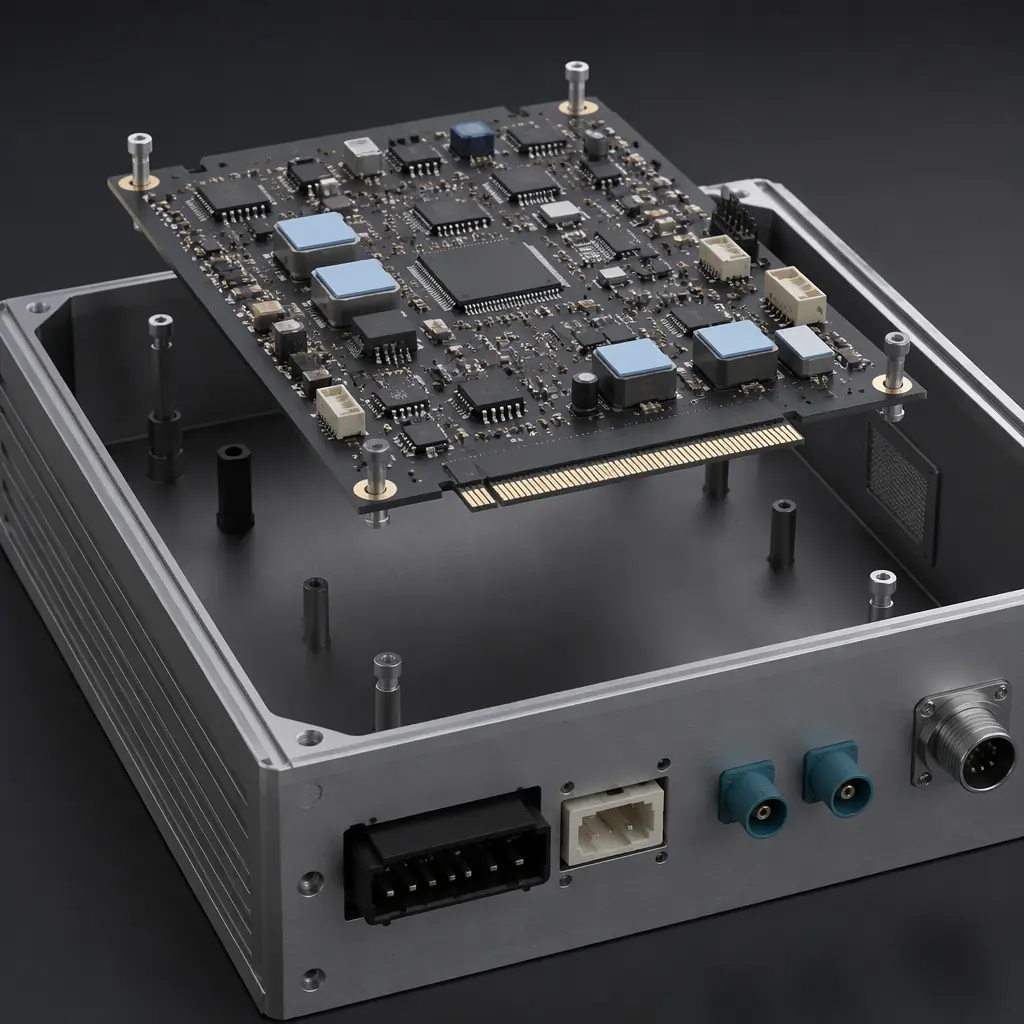
Mounting the PCB assembly into custom or off-the-shelf enclosures, metal (aluminum, steel), plastic (ABS, polycarbonate), or IP-rated sealed housings, with standoffs, gaskets, and grounding points per your mechanical drawing.
Cable Harness & Wire Routing
Fabricating and installing internal wiring harnesses, power input leads, ribbon cables, coaxial connectors, sensor wiring, with strain relief, ferrite beads, and cable management per UL/CSA requirements.
Sub-Assembly Integration
Installing secondary components: displays, touchscreens, fans, heat sinks, transformers, EMI shielding, switches, connectors, and user interface panels into the enclosure.
Functional & Safety Testing
Powered-on system-level testing beyond ICT/flying probe: firmware loading, button/interface validation, hipot (dielectric withstand) testing, ground bond testing, burn-in, and full functional verification to your test specification.
Labeling, Branding & Packaging
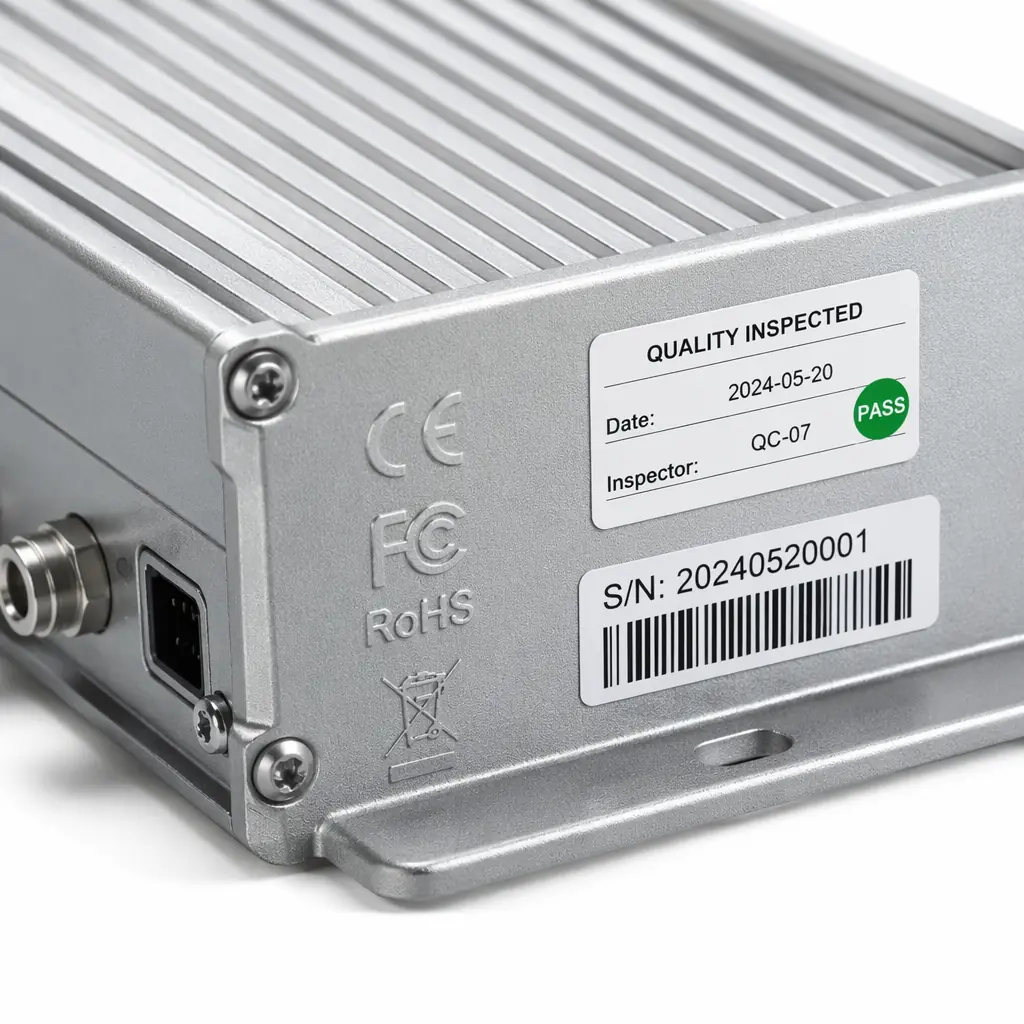
Applying product labels, serial number tags, regulatory marks (CE, FCC, UL), barcode/RFID tags, and retail/industrial packaging: including foam inserts, ESD bags, and moisture barrier packaging.
Why Consolidate Box Build With Your PCB Supplier?
The traditional multi-vendor model, one factory for PCBs, another for enclosures, a third for final assembly, creates compounding inefficiencies. Our analysis of 120+ client transitions from fragmented supply to consolidated box build reveals measurable impact:
| Metric | Multi-Vendor | Single-Supplier Box Build |
|---|---|---|
| Supplier management overhead | 3-5 vendors to coordinate | 1 point of contact |
| Typical lead time (bare PCB to finished unit) | 10-14 weeks | 6-8 weeks |
| Quality responsibility | Fragmented, finger-pointing between vendors | Single throat to choke |
| Logistics cost (inter-factory shipping) | 2-3 domestic shipments | 0, everything under one roof |
| Minimum order quantity flexibility | Each vendor enforces own MOQ | Single MOQ across entire build |
| NPI (new product introduction) speed | Sequential: each vendor waits for previous step | Parallel, internal teams coordinate in real time |
When Does Box Build Make Sense?
Box build isn't for every project. It adds value when your product includes:
Enclosures with Mechanical Complexity
If your product requires custom-machined enclosures, IP65/IP67 sealing, EMI gasketing, thermal pad placement, or DIN rail mounting, handing the mechanical integration to the PCB assembler eliminates tolerance stack-up issues between the board fab and enclosure shop.
Multiple Internal Cable Assemblies
Products with more than 3 internal wiring connections, power, data, sensor, display, benefit enormously from box build. Cable harness fabrication, crimping, and routing are labor-intensive steps that Chinese EMS providers handle at a fraction of Western labor costs.
Regulatory Certification Requirements
When the finished product needs CE, UL, FCC, or IEC certification, a box build partner who understands the full system, not just the PCB, can pre-test and document compliance before the certification lab visit, reducing $15,000-$40,000 in re-test fees.
Retail-Ready Packaging
If your units ship directly to Amazon FBA, distributor warehouses, or end customers, bypassing your own facility, the assembler must handle final packaging, serialization, and shipping label generation.
Box Build Process Flow: 8 Gates From BOM to Shipment
BOM & Mechanical Drawing Review (DFM for Assembly)
Our NPI engineers review your full bill of materials, not just the PCB BOM: including enclosure part numbers, fasteners, cables, labels, and packaging specs. We flag tolerance mismatches, missing connector types, and incompatible finish specifications before procurement begins.
Material Procurement (PCB + System-Level Components)
We source all components: bare PCB, electronic components, enclosures (sheet metal, die-cast, injection-molded), cables/connectors, hardware (screws, standoffs, nuts), thermal interface materials, labels, and packaging materials, all tracked through a single ERP system with lot-level traceability.
PCB Assembly (SMT + Through-Hole + Conformal Coating)
Standard PCB assembly, solder paste printing, pick-and-place, reflow, wave/selective soldering, AOI, and X-ray for BGAs. If required, conformal coating (acrylic, silicone, urethane) is applied before the board moves to system integration.
Sub-Assembly & Enclosure Integration
PCBs are mounted into enclosures with specified torque on fasteners. Cable harnesses are routed and secured. Thermal pads, EMI shields, and grounding straps are installed. Displays and user interfaces are connected and aligned.
Firmware Loading & Configuration
We flash firmware, bootloaders, and configuration files per your provided image. Serial numbers and MAC addresses are programmed. This step is fully automated for volumes above 500 units, eliminating human error in manual programming.
System-Level Functional Test
Powered-on testing of the complete system: all buttons, displays, I/O ports, communication interfaces (RS-485, CAN bus, Ethernet, USB), sensors, and actuators. Test fixtures are custom-built for each product. Test data logs are provided with each shipment. A requirement for ISO 13485 medical device and IATF 16949 automotive builds.
Safety Testing (Hipot, Ground Bond, Insulation Resistance)
Per IEC 62368-1, IEC 60601-1, or your specified standard: dielectric withstand (typically 1500V AC for 60s), ground continuity (<100mΩ), and insulation resistance (>100MΩ at 500V DC). Test reports with serial-number correlation are archived for regulatory audits.
Final Inspection, Labeling & Packaging
Cosmetic inspection, label verification, ESD-safe bagging, foam-in-box packaging, carton labeling, palletizing, and shipping documentation generation, all under ISO 9001:2015 quality management with AQL 0.65 sampling per ANSI/ASQ Z1.4.
Common Box Build Pitfalls & How to Avoid Them
Box Build Pricing: What Drives Cost?
| Cost Driver | Impact | Optimization Tip |
|---|---|---|
| Enclosure complexity | Custom machined aluminum: 3-5× more than off-the-shelf ABS | Use standard enclosure sizes where possible; customize only the front/rear panels |
| Cable harness count | Each additional harness adds ~$1.50-4.00 in labor | Standardize connector types across product variants |
| Test coverage depth | Full functional test: 2-3× labor vs. basic power-on test | Invest in a good test spec, it pays back in reduced field failures |
| Conformal coating | Adds $0.80-2.50 per board depending on type and coverage | Apply selectively (connector masking) rather than full-board dip |
| Labeling & serialization | Manual labeling: $0.30-0.80/unit; automated: $0.05-0.15/unit | For >1,000 units, automated label application pays for itself |
| Regulatory pre-compliance testing | Adds $800-3,000 in NRE depending on standards | Bundle CE+UL pre-testing; separate sessions cost more |
At Huaxing PCBA, our box build NRE (non-recurring engineering) averages $2,500-$8,000 depending on test fixture complexity and enclosure tooling requirements. Unit pricing for mid-complexity builds (1 PCB + enclosure + 3-5 cables + functional test + packaging) typically ranges from $12-45/unit at 500-5,000 unit volumes.
Huaxing Box Build Capabilities at a Glance
| Capability | Specification |
|---|---|
| PCB layers supported | 1-32 layers |
| SMT capacity | 8 million placements/day across 6 SMT lines |
| Enclosure types | Sheet metal (steel/aluminum), die-cast, injection-molded, IP65/IP67 sealed |
| Cable harness | Wire cutting, stripping, crimping, soldering, overmolding, UL/CSA certified |
| Testing | ICT, flying probe, functional, hipot, ground bond, burn-in, environmental stress screening |
| Conformal coating | Acrylic, silicone, urethane, parylene, selective robot or manual brush |
| Certifications | ISO 9001:2015, ISO 14001, ISO 13485, IATF 16949, UL (E53210) |
| Quality standard | IPC-A-610 Class 2 & Class 3, J-STD-001, ANSI/ESD S20.20 |
| Volume range | 50-50,000+ units per order |
| Lead time (box build) | 4-8 weeks (includes PCB fab + assembly + integration + test) |