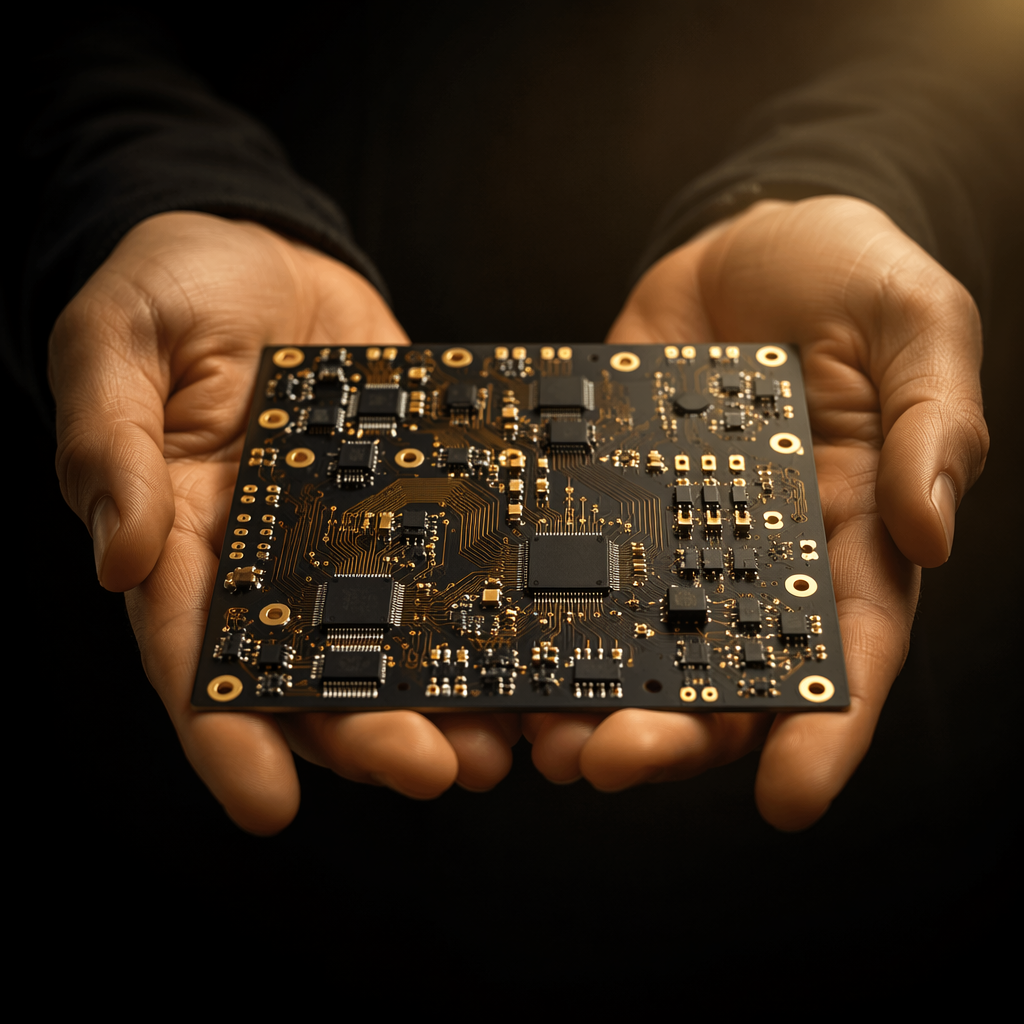
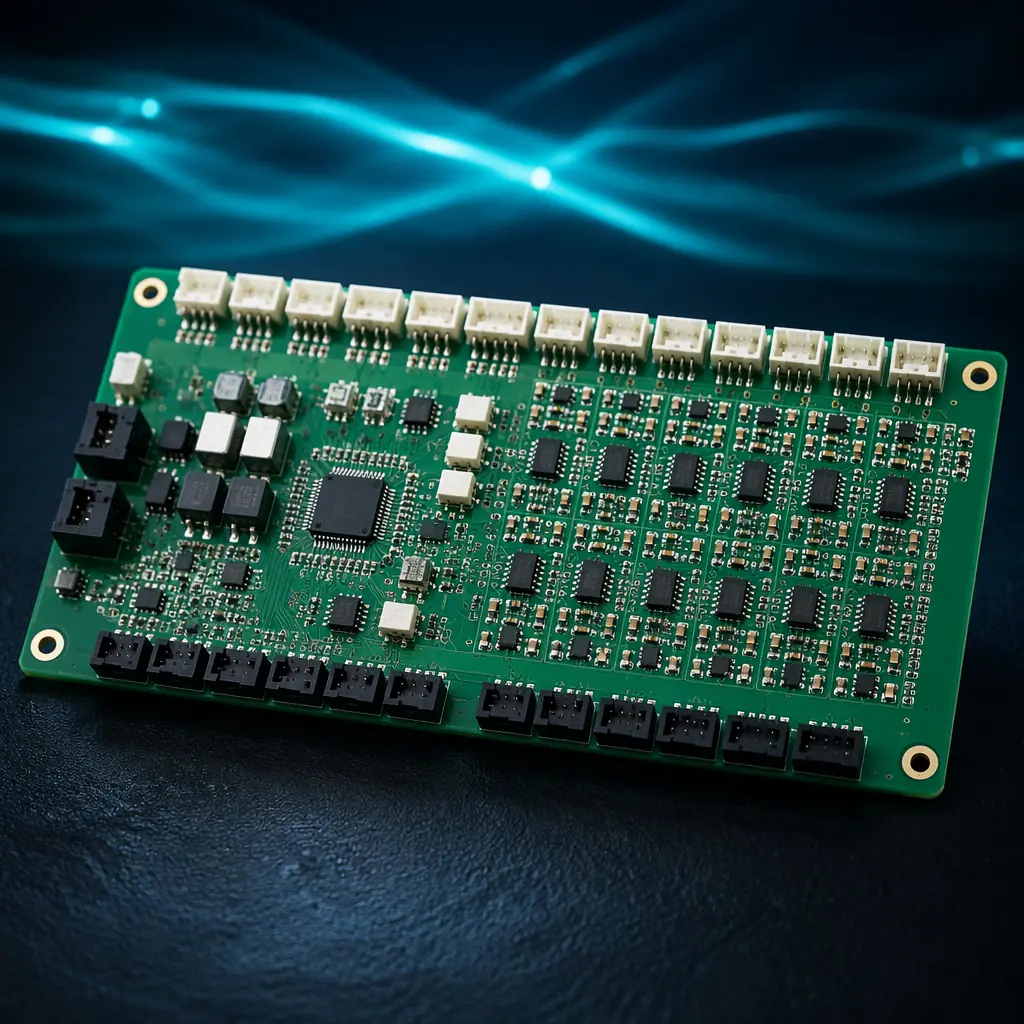
The global energy storage market is projected to exceed 500 GWh of annual deployments by 2030, driven by utility-scale solar-plus-storage projects and commercial peak-shaving installations. Every battery energy storage system (BESS), whether a 5 MWh containerized unit or a 10 kWh residential wall, contains a stack of specialized PCBs: battery management system (BMS) boards, power conversion system (PCS) control boards, DC busbar interface boards, and system-level communication and safety controller boards. The PCB requirements for these applications are fundamentally different from conventional industrial electronics due to continuous high-voltage DC operation and mandatory functional safety certification.
Huaxing PCBA manufactures energy storage PCBs at our ISO 9001 & IATF 16949 certified facility in Shenzhen. We handle the full range: 2-layer BMS slave boards for cell monitoring, 8-16 layer master controller boards with isolated CAN and Ethernet, and heavy copper DC bus boards up to 6oz with ENEPIG surface finish for press-fit busbar connectors. UL recognition (E354321) and IPC Class 3 assembly come standard on all energy storage products.
BMS Architecture: Slave Boards, Master Controllers, and Isolation
A modern BMS for a 1500V DC battery rack uses a distributed architecture: multiple slave boards (one per 12-16 cell module) daisy-chained via isolated SPI or transformer-isolated CAN to a single master controller. Each slave board floats at the module's stack voltage, potentially 800V above ground in a 10-module rack, while communicating with the grounded master controller through reinforced isolation barriers rated for 1500V DC working voltage.
Reinforced Isolation Between Cell Monitoring and Communications
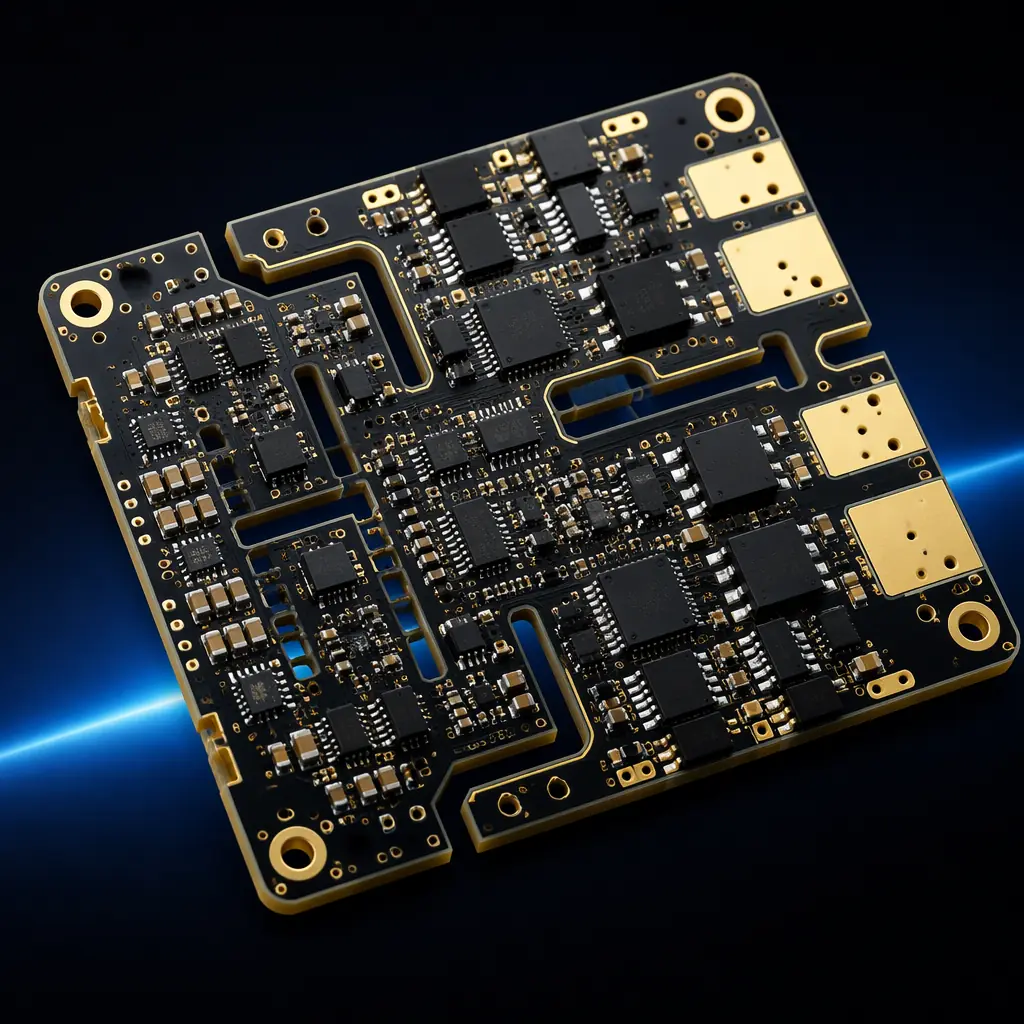
BMS slave boards require reinforced isolation (IEC 62368-1 / UL 60950-1) between the high-voltage cell measurement domain and the low-voltage communications domain. This means 8mm+ creepage distance, isolation transformers rated for 3750 Vrms hipot, and slot-milled PCB cutouts between domains. Our high-voltage PCB design guide covers the physical spacing requirements.
Precision Analog Front-End for Cell Voltage and Temperature Sensing
Cell voltage measurement accuracy of ±2 mV is required for state-of-charge (SOC) estimation within 1% error. This demands a 4-layer minimum BMS slave board with dedicated analog ground planes, guard traces around high-impedance sense lines, and Kelvin-connected sense resistors. See our mixed-signal PCB design guide for low-noise layout techniques.
Functional Safety: IEC 61508 / ISO 26262 Compliance on PCB Level
Grid-connected BESS must meet SIL-2 or SIL-3 functional safety requirements. This means redundant cell over-voltage and under-voltage detection paths, watchdog timers on the master controller, and fail-safe contactor drive circuits that default to open on power loss. PCB design must include physical separation between redundant safety paths. Our certifications guide covers the documentation requirements for safety-certified PCBs.
Key Procurement Fact: A single BESS container (5 MWh) contains 80-120 BMS slave boards and 8-16 master controller boards. At volume production of 2,000+ units per year per board variant, the per-board cost must be optimized without compromising safety isolation. Huaxing's domestic Chinese laminate supply chain (Shengyi, ITEQ equivalents) delivers IEC-certified isolation performance at 30-40% below Rogers/Panasonic-based solutions.
High-Current DC Busbar Integration
The DC bus in a utility-scale BESS carries 1000-1500V at 200-400A continuous. The PCB-to-busbar interface is one of the most critical, and most frequently under-specified, design elements in energy storage systems.
Press-Fit Connector Pads Require ENEPIG Surface Finish
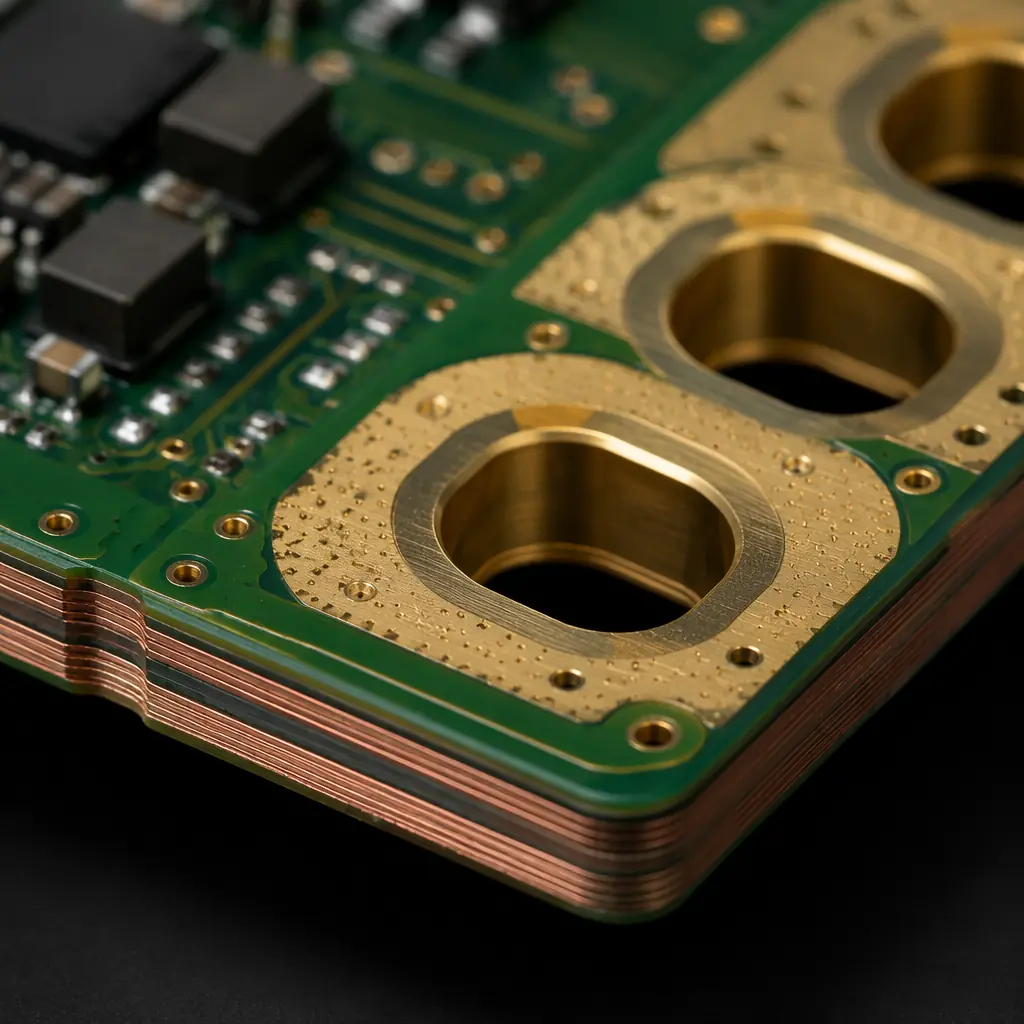
High-current busbar connectors use press-fit pins that require a hard, wear-resistant surface finish. ENEPIG (Electroless Nickel, Electroless Palladium, Immersion Gold) provides the required hardness for 25+ insertion cycles without pad damage. Standard ENIG soft gold deforms after 5-10 insertions. Our surface finish selection guide compares ENEPIG, hard gold, and ENIG for press-fit applications.
Heavy Copper Planes for 200-400A Continuous Current
DC bus boards require 4oz-6oz copper on external layers and 3oz-4oz on internal planes. At 400A continuous, the temperature rise must stay below 30°C per IPC-2152. This typically requires 25mm+ wide bus traces on 6oz copper or dedicated busbar overlay plates. Our heavy copper PCB guide provides the thermal calculations.
Environmental Durability: Outdoor and Containerized Installation
BESS containers installed in desert solar farms or coastal wind sites face extreme environmental conditions: -30°C to +60°C ambient, 0-100% condensing humidity, salt spray, and continuous vibration from inverter cooling fans.
Conformal Coating Is Mandatory for Outdoor BESS
Condensing humidity inside BESS containers causes electrochemical migration (dendrite growth) between closely spaced pads. Silicone or parylene conformal coating to IPC-CC-830B is the minimum requirement. Our conformal coating guide covers silicone vs. acrylic vs. parylene selection by application environment.
High-Tg Laminate for Continuous 85°C+ Operation
BMS boards inside sealed battery racks operate at 70-85°C continuously during charge/discharge cycles. Standard FR-4 (Tg 130°C) experiences 3-5% Z-axis expansion at these temperatures, cracking plated through-holes within 500-1000 thermal cycles. High-Tg FR-4 (Tg ≥ 170°C) or polyimide laminate is essential for any BESS PCB expected to last 10+ years. See our materials guide for Tg vs. Td specifications.
Field Data: Analysis of BESS installations in the Middle East and Southeast Asia shows that PCBs without conformal coating fail at 3-5× the rate of coated boards within the first 2 years of operation. The dominant failure mechanism is not component degradation. It is electrochemical migration between adjacent PCB traces caused by condensation cycling in high-humidity environments.
Summary: Specifying Energy Storage PCBs for 10+ Year Field Life
Energy storage PCB procurement comes down to four non-negotiable requirements: reinforced isolation between high-voltage and low-voltage domains (1500V DC working voltage with 8mm+ creepage), precision analog layout for ±2 mV cell voltage accuracy, heavy copper DC bus interfaces (4oz-6oz with ENEPIG finish for press-fit connectors), and environmental protection (conformal coating + high-Tg laminate for 85°C continuous operation).
At Huaxing PCBA, we manufacture the full BESS PCB stack, BMS slave and master boards, DC bus interface boards, and PCS control boards, with UL recognition, IPC Class 3 assembly, and 100% flying probe testing on every board. Engineering prototypes ship in 3-5 days. Volume production of 5,000+ units per month with full traceability. Use our supplier audit checklist or contact our engineering team to review your energy storage PCB requirements.