
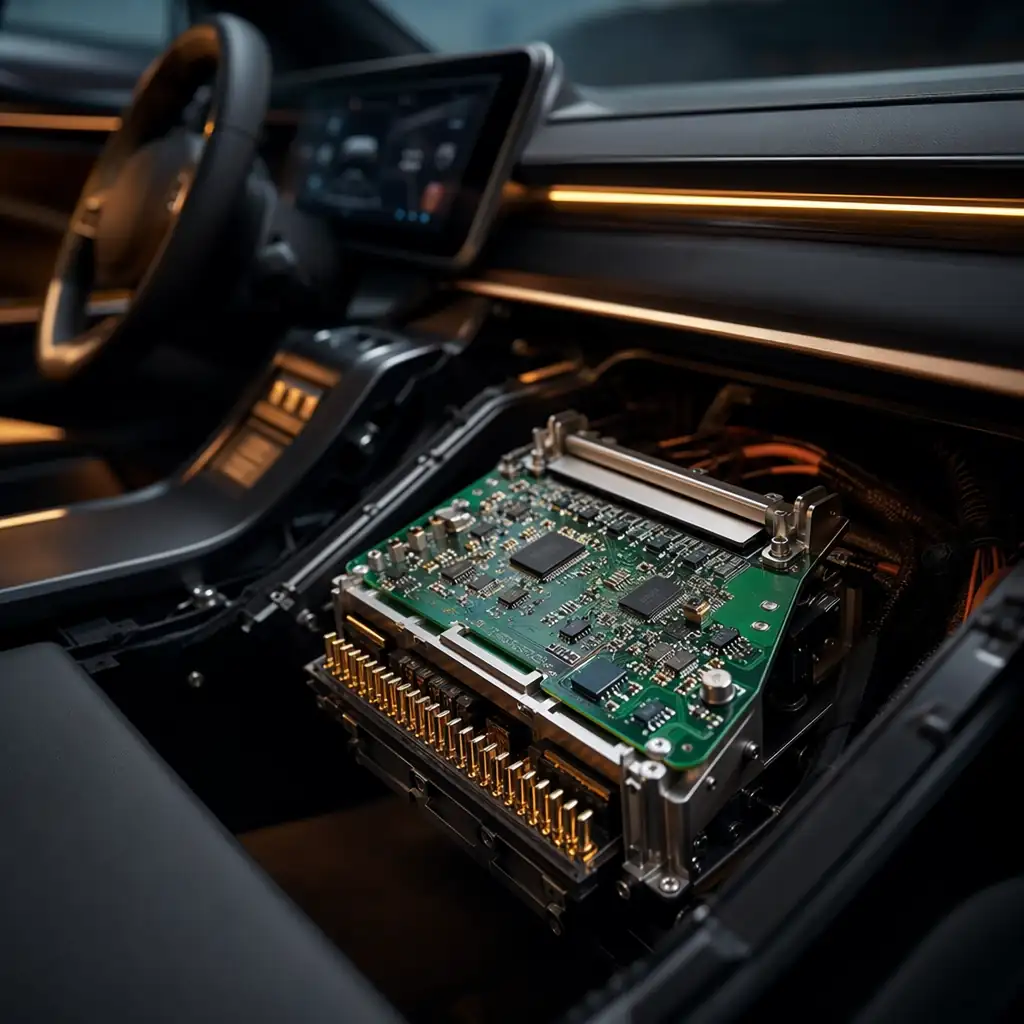
Industries / Automotive Electronics
IATF 16949 certified automotive PCB manufacturer. From ADAS radar to 800V BMS, from ECU to infotainment, 2 million+ units shipped with zero field failures. PPAP Level 3 documentation. IPC Class 3 assembly. 100% AOI + X-Ray on every board.
Manufacturing Excellence
Single-sided to 32-layer HDI . From simple LED drivers to complex ADAS controller backplanes with blind/buried vias and any-layer microvia stacking.
Ultra-fine line capability for high-density automotive ECUs and camera modules. Laser-drilled 75µm microvias on any-layer HDI builds.
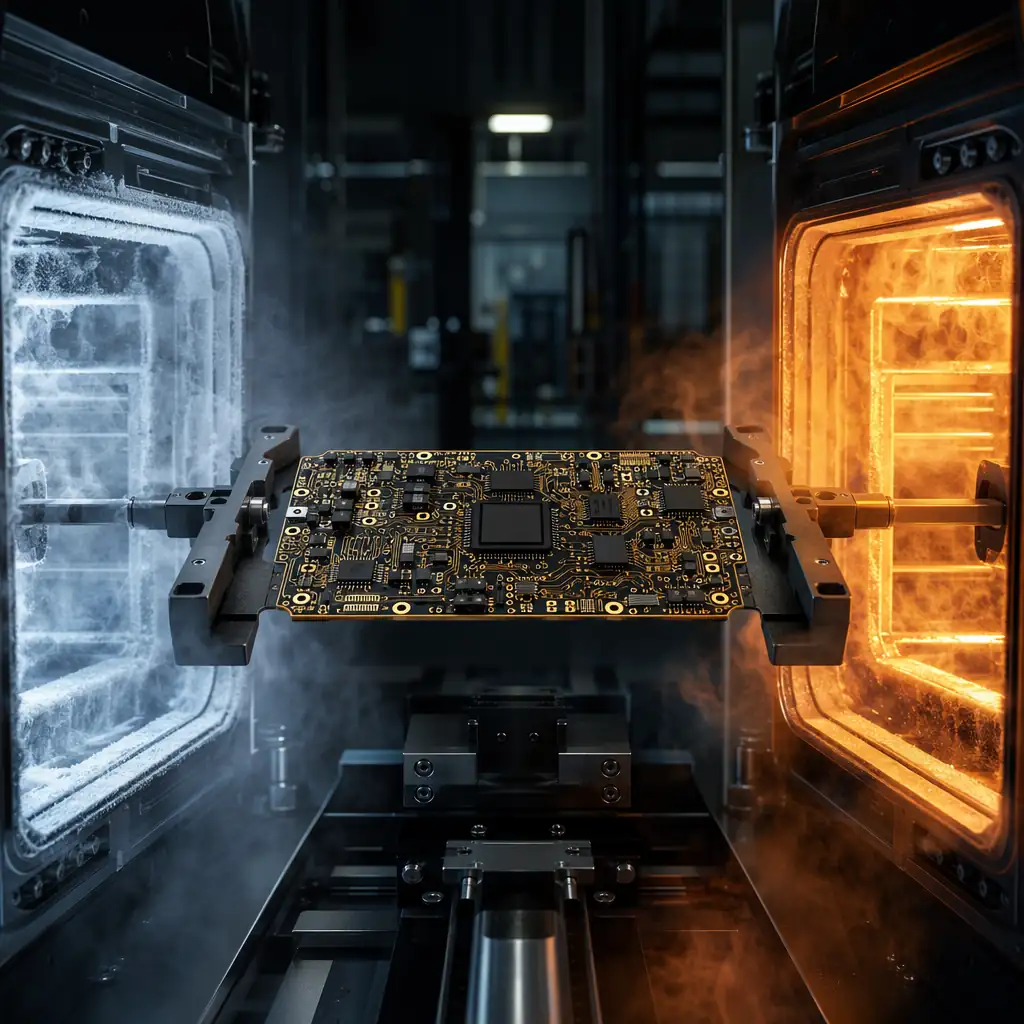
High-Tg FR-4, polyimide, and metal-core laminates qualified for under-hood, brake-system, and engine-bay thermal environments with 3000+ thermal cycles.
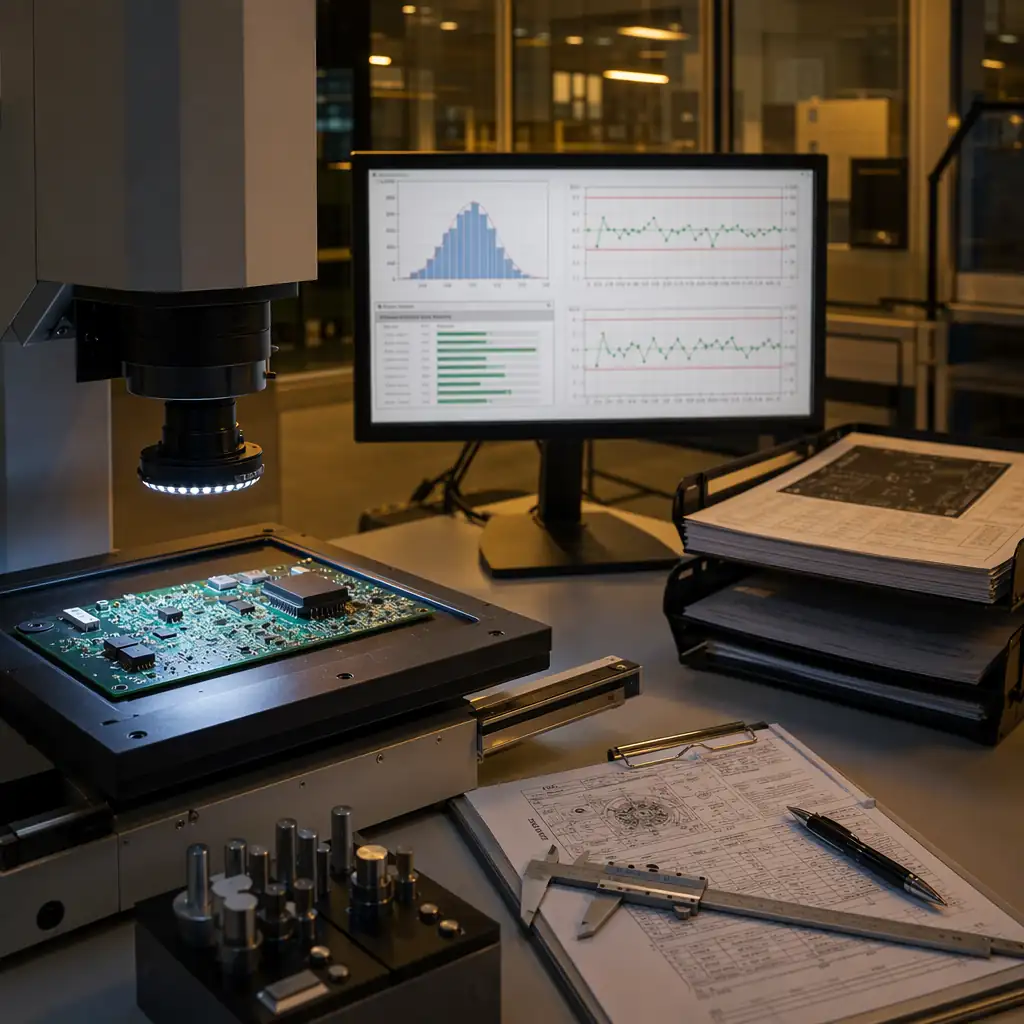
Every single board passes automated optical inspection and BGA/joint X-ray verification. No sampling, 100% coverage. Data logged per serial number.
TDR-verified on every production panel. Critical for ADAS radar (77GHz), high-speed camera links (GMSL/FPD-Link), and automotive Ethernet (1000BASE-T1).
Across 2M+ automotive PCBs shipped since 2018. Process FMEA, SPC on critical dimensions, and PPAP Level 3 documentation support zero-defect manufacturing.
Why IATF 16949 Matters
IATF 16949 adds 37 specific requirements on top of ISO 9001, all focused on defect prevention, supply chain traceability, and continuous improvement in automotive production. Every process change triggers a documented risk assessment. Every component is lot-tracked from receiving to shipping. Every defect gets a root-cause analysis with corrective action within 48 hours.
Materials & Reliability
Automotive PCBs must survive 15+ years of thermal cycling, vibration, humidity, and chemical exposure, without a single failure. Standard FR-4 doesn't cut it. We select laminates, surface finishes, and via structures based on the specific environmental profile of each application.
| Application | Key PCB Requirements | Huaxing Capability | Quality Level |
|---|---|---|---|
| ADAS / Autonomous | 77GHz radar, HDI, impedance ±5%, 0.3mm BGA | Rogers/PTFE hybrid, any-layer HDI, 75µm µvias | IPC Class 3 |
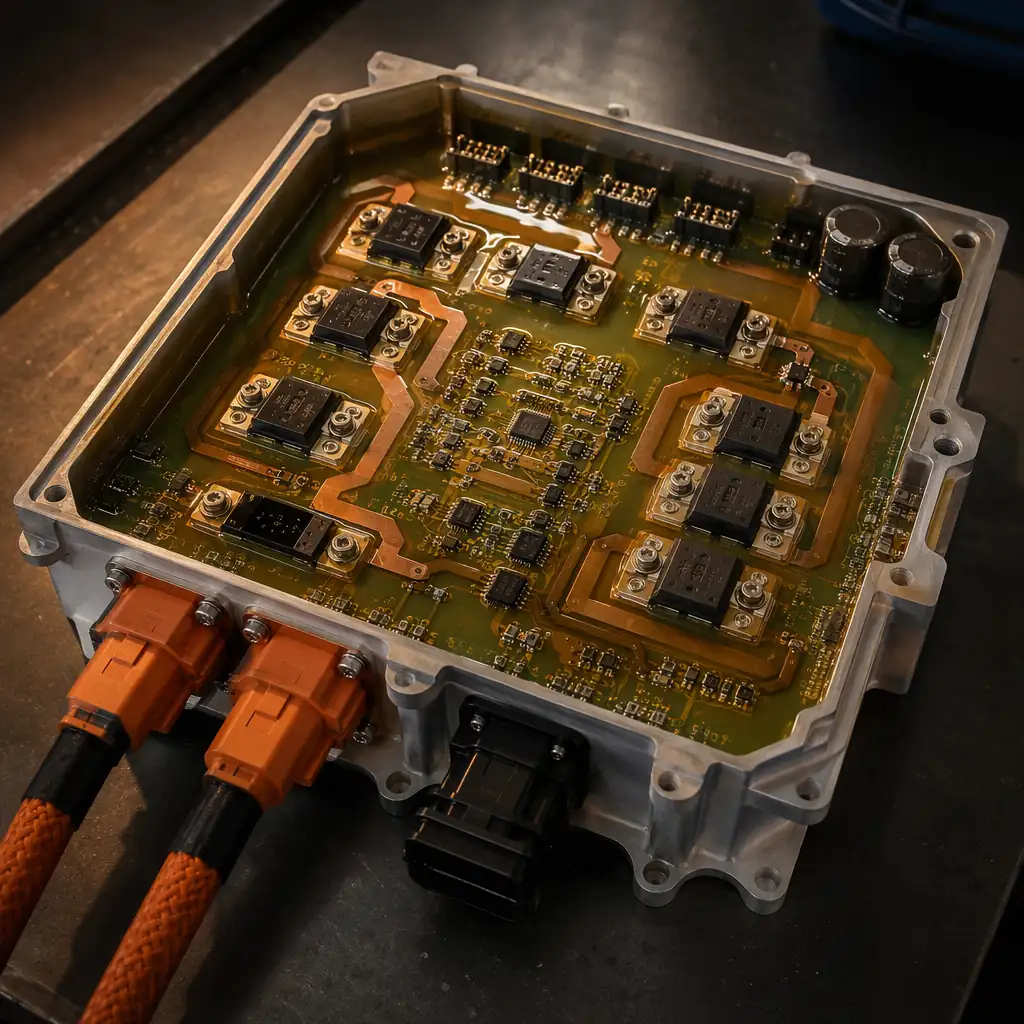
| Battery Management | 800V isolation, 6-10oz copper, 4kV HiPot | 12oz copper, 4kV HiPot, metal-core thermal | IPC Class 3 |
| Engine Control Unit | -40°C to +150°C, vibration, 15yr life | Polyimide, high-Tg FR-4, IPC Class 3 | IPC Class 3 |
| Infotainment | 8+ layer HDI, 0.4mm BGA, ENIG finish | Any-layer HDI, impedance ±7%, ENIG | IPC Class 2+ |
| Body Electronics | 4-8 layers, cost-optimized, high volume | Automated SMT, panel-optimized, 8M placements/day | IPC Class 2+ |
| EV Power Inverter | Heavy copper, IGBT/SiC thermal, HV isolation | 10oz copper, buried coin, 4kV HiPot, metal-core | IPC Class 3 |
PFMEA before production. Material selection based on environmental profile. PPAP documentation plan.
SPC-monitored etching, drilling, plating. Impedance coupons on every panel. AOI on inner layers.
SPI before reflow. 100% AOI post-reflow. X-Ray on every BGA/QFN. ICT on every board.
Thermal cycling, vibration, HiPot. Lot-based reliability audit. Data included in PPAP package.
Full DHR, CoC, SPC reports, test data. Barcode-level traceability. 99.2% on-time delivery.
Testing & Validation
Automotive PCB failure isn't a warranty claim, it's a recall, a safety risk, and a supplier disqualification. Our five-layer inspection strategy catches defects at every stage so they never reach your assembly line.
Inside the Factory
Certificates are renewed every 3 years. The surveillance audits in between tell the real story: how many non-conformances, how quickly closed, any repeat findings. A clean certificate with repeat NCs in surveillance audits means the system exists on paper, not in practice.
Any change to material, process, equipment, or location must trigger a customer notification per PPAP requirements. The supplier should describe a documented change-management workflow, not "we'd let you know."
Automotive-grade answer: immediate quarantine, 48-hour root cause analysis, lot traceability to identify all affected boards, customer notification within 24 hours, corrective action with effectiveness verification. Not "we rework it."
For automotive, the answer must be every BGA on every board. Sampling-based X-Ray is a consumer-electronics practice. Hidden-joint defects (head-in-pillow, insufficient collapse) pass electrical test and fail in the field after thermal cycling.
Component lifecycle database, EOL monitoring with 12-month advance notice, last-time-buy execution, pre-validated alternate sources. Without this, your ECU gets redesigned mid-program because a $0.50 LDO went obsolete.
Real-time SPC on critical dimensions demonstrates process control. A manufacturer that can show live CpK data during your audit is genuinely running SPC. One that needs "a few days to prepare the reports" is running inspection, not control.
Send us your design files and PPAP requirements. We'll respond within 24 hours with a DFM analysis, PFMEA draft, and qualification timeline, from an IATF 16949 certified manufacturer with zero automotive field failures.
Upload your Gerber files and PPAP requirements. We'll respond within 24 hours with DFM review, PFMEA draft, and qualification timeline.