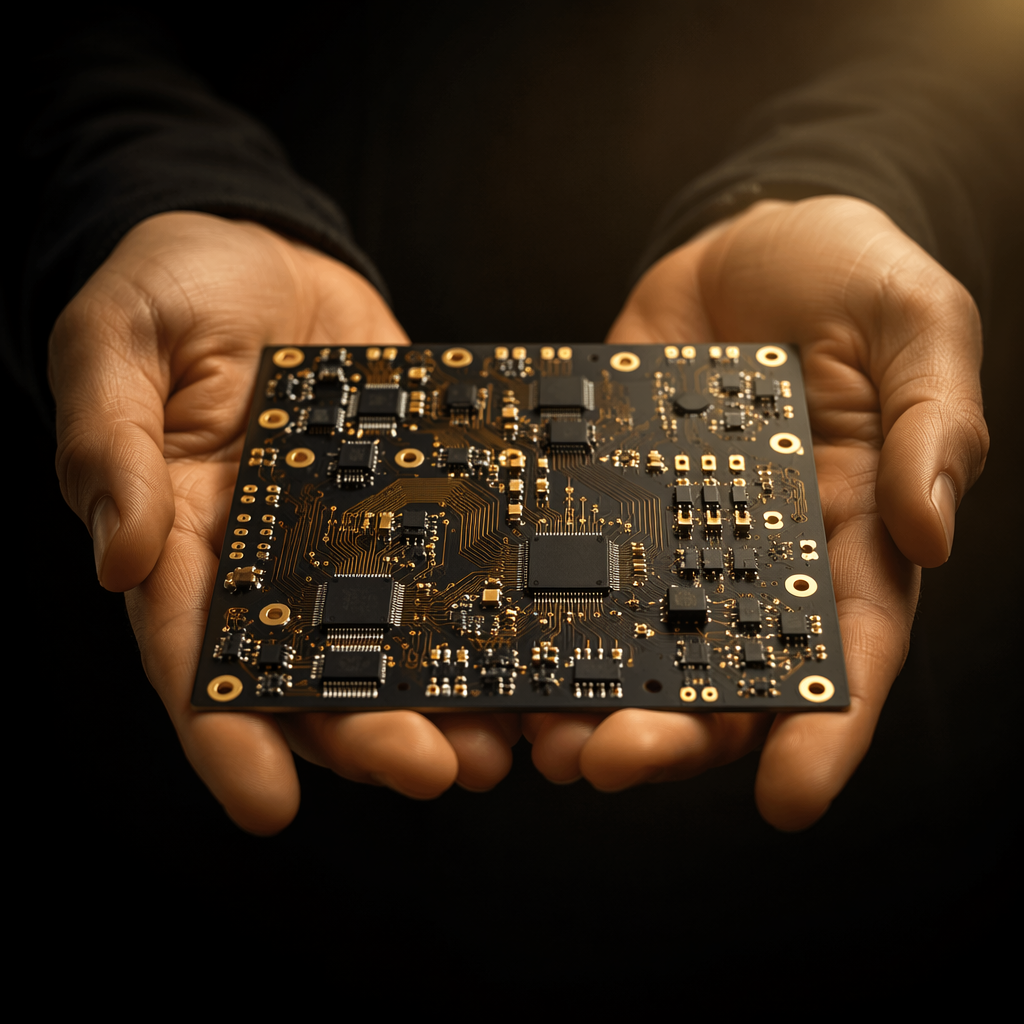
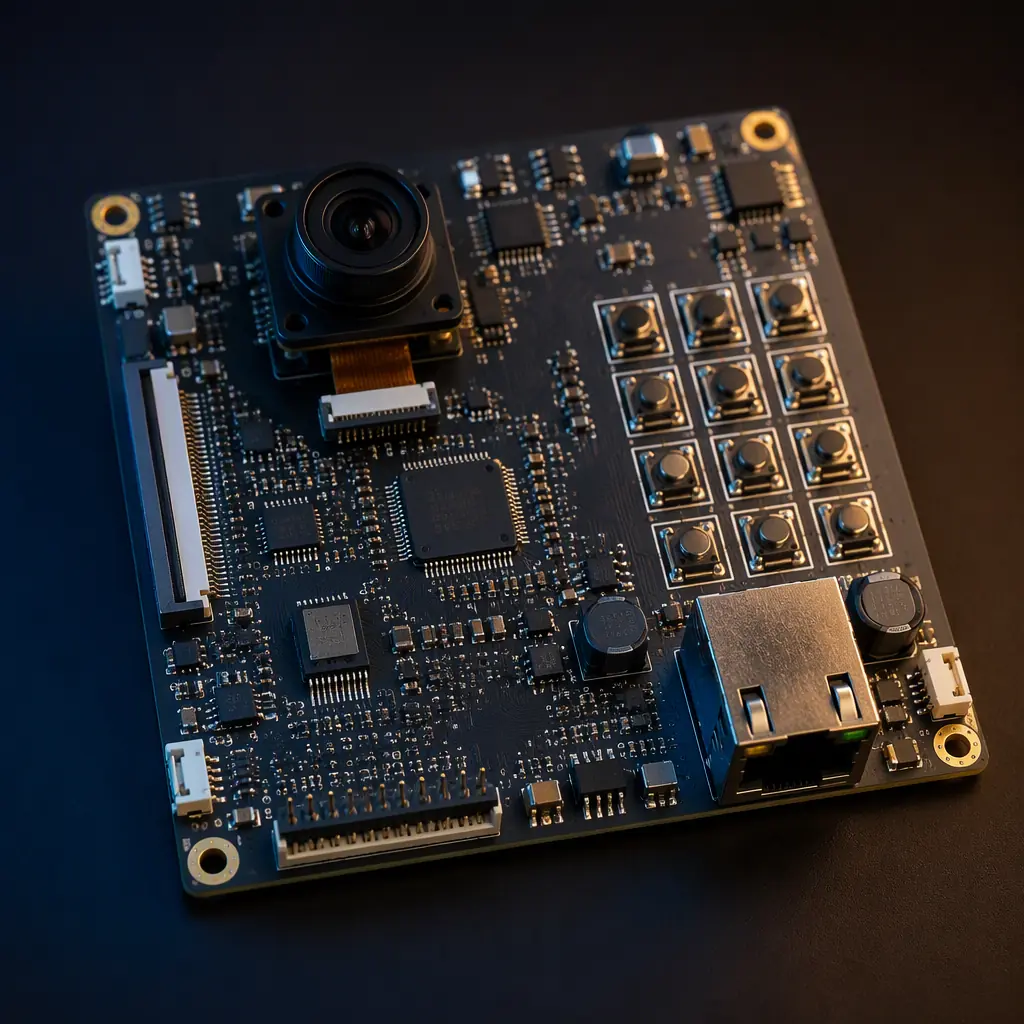
Every apartment building, office tower and gated community relies on a video intercom system: an outdoor door station with camera, microphone and keypad, connected to indoor monitors or mobile apps. The door station board is a demanding electronics package. It runs a camera, audio codec, display driver, keypad scanning, door strike control and network communication, all inside a weatherproof enclosure mounted at eye level outdoors. It must work at −20°C in winter and +60°C in direct summer sun, for a decade or more, with nobody maintaining it.
For access control OEMs, the door station and monitor boards are the core of the product's cost and reliability. This guide covers what to specify in video intercom PCBs: the 2-wire vs IP architecture decision, PoE power budgeting, audio and camera integration, outdoor environmental protection and the manufacturing controls that keep boards working on building facades for years. Huaxing PCBA has manufactured intercom and access control electronics for export markets since 2016, including outdoor-rated door station boards for EU and North American projects.
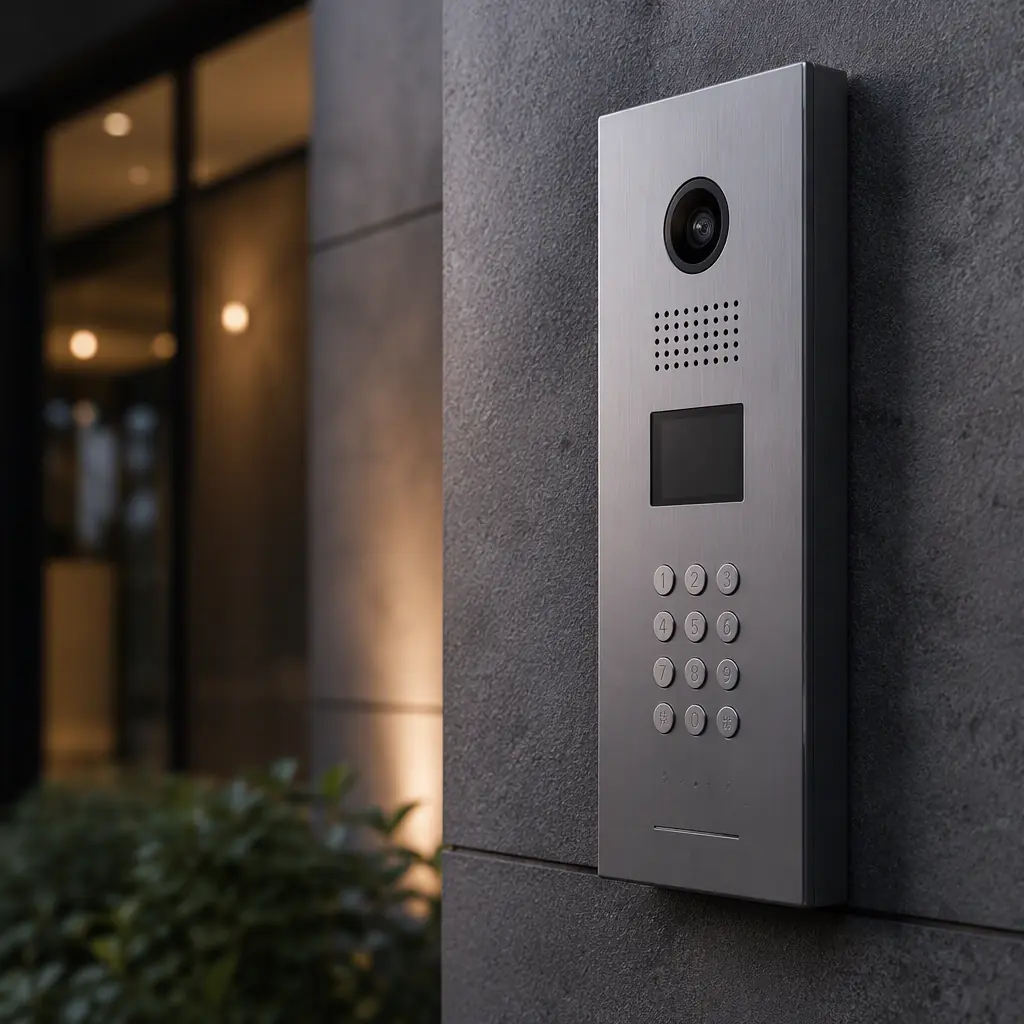
Architecture Decision: 2-Wire Analog vs IP Network
The first specification decision is the system architecture, because it drives the entire board design. Both remain common in 2026, the choice depends on the building's wiring budget and feature requirements.
| Parameter | 2-Wire (analog/digital hybrid) | IP Network (PoE) |
|---|---|---|
| Wiring | One twisted pair, up to 300m | Cat5e/6, up to 100m per segment |
| Video | Analog CVBS or low-res digital | HD 1080p / 4MP IP camera |
| Power | Central supply over same pair | PoE 802.3af/at, up to 30W |
| Audio | Full-duplex analog audio | Digital, with echo cancellation |
| Typical use | Retrofit, multi-tenant, long runs | New builds, large estates, integration |
2-wire systems dominate retrofit markets because existing buildings rarely have network cable to the door. IP systems dominate new construction and high-end projects where the door station joins a building-wide security network. A growing number of boards support both, the same hardware with a modular communication daughterboard. Our security and surveillance PCB guide covers the camera-side requirements that apply to both architectures.
Outdoor Door Station Boards: The Harsh Environment Design
The door station board is the hardest environment in the system. Mounted outdoors, it faces rain, UV, temperature extremes, electrostatic discharge from people touching the keypad, and power transients from the door strike solenoid.
Environmental protection: coating, sealing and material selection
Specify conformal coating (silicone or acrylic, 50-75µm) on the door station board, plus IP65+ enclosure sealing. For boards with exposed keypad or sensor areas, selective coating (masking connectors) is standard. UV-resistant solder mask (matte black or dark gray) prevents long-term degradation of the outer layers. Boards destined for coastal installations need salt-spray tested coating, our marine-grade guide covers the test levels.
ESD and transient protection at every interface
The keypad, microphone, speaker and camera connector are all user-facing interfaces. Every one needs TVS protection: 8kV contact / 15kV air per IEC 61000-4-2 on the keypad and exposed metal parts. The door strike output (typically 12V/24V solenoid) needs a flyback diode and TVS at the driver. Boards without this protection fail from static discharge within months of installation.
Temperature range and thermal design
The board must operate from −20°C to +60°C ambient (wider for extreme climates). This drives component selection, industrial-temperature (-40 to +85°C) components throughout, LCD displays with wide-temperature ratings, and careful thermal management around the camera ISP and network processor. See our thermal management guide for heat dissipation strategies in compact enclosures.
Key Takeaway: The outdoor door station board is a safety-critical, weather-exposed product. Conformal coating, TVS protection on every user-facing interface and industrial-temperature components are non-negotiable, these three decisions prevent the vast majority of field failures.
PoE Power Budgeting for IP Door Stations
IP door stations typically run on Power over Ethernet. The power budget must cover the camera, processor, audio amplifier, display backlight and door strike. And the door strike alone can draw 2-5A at 12V, far beyond PoE capacity, which is why most designs power the strike separately.
802.3af vs 802.3at: know your class
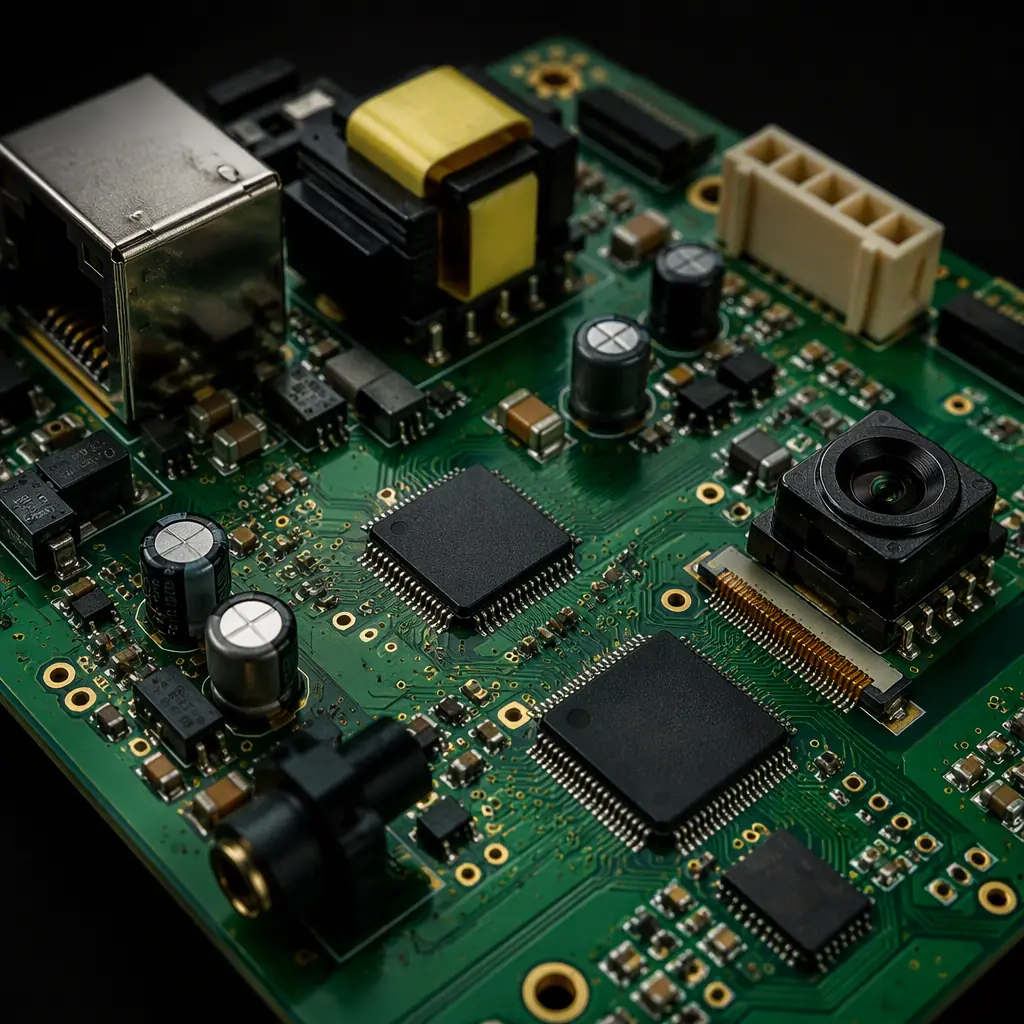
A basic door station (camera + audio + keypad) fits in 802.3af (12.95W available); one with a heater, larger display or PTZ needs 802.3at (25.5W). Design the PD front end (diode bridge, signature resistor, classification) to the highest class you may need, and budget 20% headroom for the DC-DC conversion losses. Our PoE PCB design guide details the PD controller layout.
Power sequencing and brownout behavior
When the door strike fires, the shared supply dips. The board needs proper power sequencing (camera ISP first, then codec, then network) and a brownout detector that resets cleanly instead of hanging. Test the board's behavior at 70% of nominal PoE voltage, this is where cheap designs fail.
Audio and Camera Integration
The product experience of a video intercom is audio quality and video clarity. Both depend on board-level design details.
Audio: echo cancellation and acoustic design
Full-duplex intercom needs acoustic echo cancellation (AEC). The board layout must keep the codec's analog inputs away from the amplifier output and switching regulators, route the microphone input as a guarded trace, place the speaker amp on the opposite edge, and specify the codec's reference design layout. A common failure: microphone noise pickup from the DC-DC converter, audible as a hiss. The mixed-signal design guide covers partition strategies.
Camera module integration
IP door stations use MIPI CSI-2 camera modules. The interface requires controlled-impedance differential routing, clean sensor power (separate LDO, low noise), and careful EMI control since the camera sits near the antenna. Our camera module PCB design guide covers the routing rules, and the antenna design guide explains how to keep Wi-Fi/BT performance with a camera on the same board.
Keypad and card reader interfaces
Keypad scanning (matrix or capacitive) and optional RFID/card reader input sit on the user-facing side. Route the keypad matrix away from the RF section, add ESD protection to every row/column line, and for capacitive touch follow the touch controller vendor's ground and overlay guidance. Boards integrating a fingerprint reader should follow the smart lock PCB guide for the sensor-specific layout rules.
Indoor Monitor and Apartment Station Boards
Indoor monitors are the counterpart boards: a display (7-10" touchscreen typical), audio, and connection back to the door station or network. They run in benign environments but face their own challenges, display signal integrity, touch sensitivity and standby power.
Display interfaces: LVDS, MIPI-DSI, RGB
7-10" displays use LVDS or MIPI-DSI. Both need controlled impedance (100Ω differential for LVDS, 100Ω for DSI) and clean power for the backlight (constant-current LED driver). Our display driver board guide covers these interfaces in detail.
Standby power and always-on audio
Indoor monitors stay in standby, listening for the doorbell signal. Standby consumption should be under 1W to meet modern energy regulations, this drives the power architecture (always-on low-power MCU, wake-on-signal for the main processor). Verify the standby figure on the real board before committing to a marketing number.
Manufacturing and Testing for Intercom Boards
Intercom products ship in high volume with long field life expectations. Manufacturing controls matter at every step.
| Control | Intercom-grade requirement | Commercial default |
|---|---|---|
| PCB surface finish | ENIG (gold) for fine-pitch and keypad contacts | HASL |
| Solder inspection | 100% AOI + X-ray on camera/processor BGA | AOI sampling |
| Environmental | Conformal coating, UV-inspected, salt-spray optional | None |
| RF test | 100% Wi-Fi/BT RF functional test where applicable | None |
| Burn-in | 24h at 50°C for outdoor boards | None |
| Traceability | Serial-level traceability for warranty tracking | Date code |
Functional test for intercom boards should include an audio loop test (record and play back, verify THD), camera image capture, keypad response and network connectivity. Our testing methods guide explains how AOI, ICT and functional test combine, and the incoming inspection guide helps you verify boards on arrival.
Specifying Your Video Intercom PCB Program
Write the specification before RFQ: architecture (2-wire / IP / hybrid), PoE class and power budget, audio performance targets, camera resolution and interface, environmental rating (operating temperature, IP rating, salt-spray), conformal coating requirements and test coverage. The PCB specification and RFQ guide provides the template, and the supplier audit guide helps you verify the factory's capabilities.
Huaxing PCBA manufactures video intercom and access control electronics under IPC Class 2 and Class 3 programs, with ENIG finish, double-coat conformal coating lines, audio/video functional test fixtures, RF test capability and serial-level traceability across 8 SMT lines. Read our smart lock guide for adjacent access control products, or send your design files for a DFM review and a manufacturing quote within 24 hours.