Shenzhen is the densest PCB manufacturing cluster on earth: thousands of fabrication plants, assembly houses, and trading companies operate within a 50 km radius, and the city's ecosystem covers everything from 2-layer prototype runs to 32-layer HDI and any-layer interconnect. That density is why global buyers source here. But it is also why the market is full of intermediaries who look like factories on paper. This guide gives you a verification checklist that separates manufacturers from brokers, the capability documents to demand, and the cost benchmarks that tell you whether a quote is realistic.
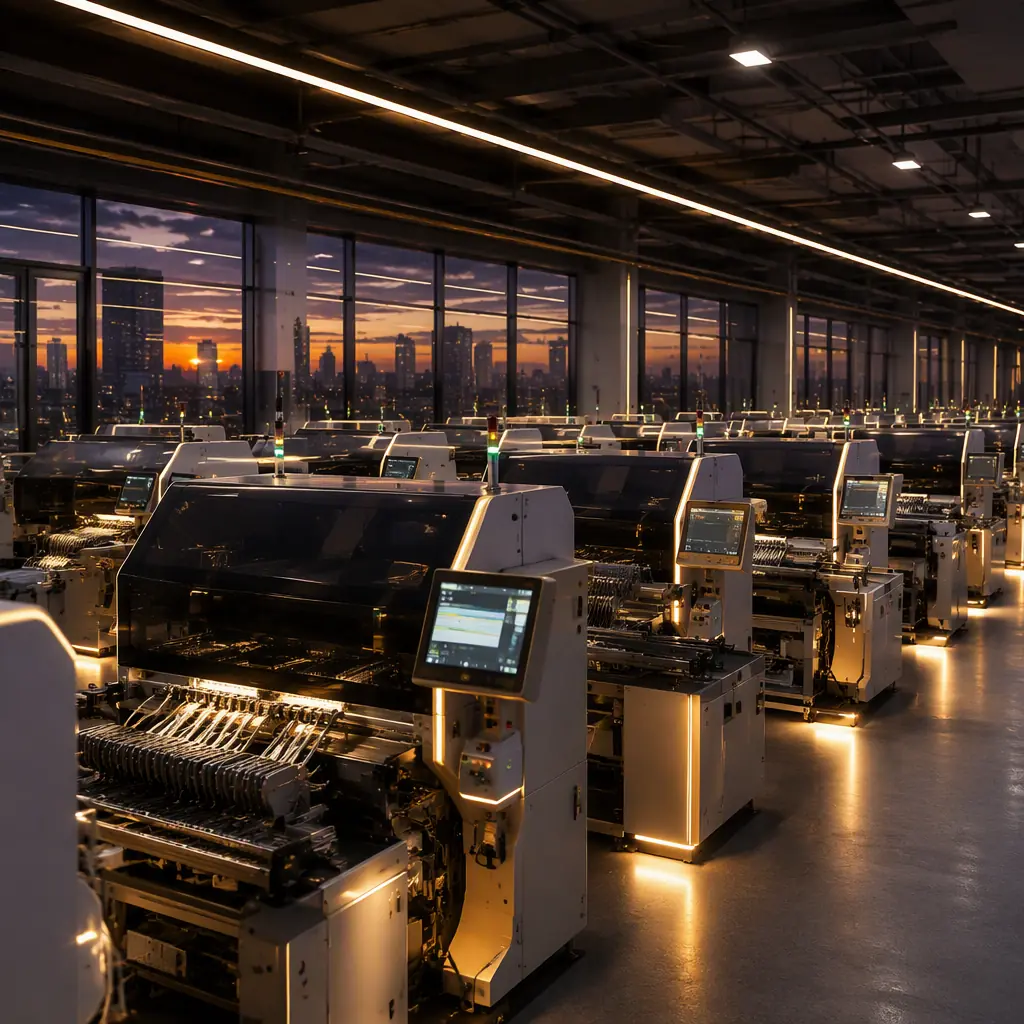
We write this from the inside: Huaxing PCBA operates a 15,000 m² facility in Shenzhen with 8 SMT lines, 4 DIP lines, and monthly capacity of 80,000 m² of bare boards and 50 million solder joints. The verification steps below are the same ones we would want a customer to run on us. For the broader China-sourcing picture, cost gaps, logistics, and when to move production out, pair this with our US vs China PCB sourcing analysis.
First, Understand the Three Types of Shenzhen PCB Suppliers
Every supplier in Shenzhen falls into one of three categories, and the category determines everything downstream: pricing, lead time, quality control, and your legal recourse if something fails. Ask directly which one you are dealing with, a genuine factory will say so without hesitation.
True manufacturers, own the production line
They own the fab or the SMT lines, employ their own engineers and QC staff, and can show you equipment lists, maintenance logs, and production floor CCTV. They quote from real material and labor costs. Expect genuine DFM feedback on your Gerber files before you place an order, see our DFM tips guide for the kind of feedback a real factory gives.
Trading companies, brokers with a website
They accept your order, then re-source it to whichever factory gives them the best margin that week. You never know who actually built your boards. Their QC depends on the factory they happen to use, and quality varies order to order. Some trading companies are honest and add real value on logistics. But you are paying a markup for a service you did not necessarily ask for.
Hybrids, a small factory plus heavy outsourcing
Many Shenzhen companies own a small in-house line (often for prototypes) but outsource volume production. This is not automatically bad, the in-house line proves technical competence, but you must verify which part of your order is made in-house and which is subcontracted. Ask for the subcontractor's name and audit them too.
Key Takeaway: The single most reliable signal is equipment ownership. A factory that owns its lines can show you its AOI machines, its X-ray inspection system, and its impedance testers, and let you verify them on a video call. A broker cannot.
The Capability Verification Checklist, Documents to Demand
Capability claims are cheap; documented proof is not. Before you shortlist any Shenzhen supplier, collect the following. Any supplier that stalls on these is telling you something important.
Business license with a matching registration scope
Request a copy and check that the registered scope includes PCB manufacturing or electronic assembly. Cross-check the legal entity name against the bank account you are asked to pay. The legal name on your contract, invoice, and bank details must match the license. Mismatches are the classic signal of a pass-through company. Our financial due diligence guide covers entity verification in depth.
Certification certificates, not just logos
Demand PDF certificates with the certificate number and issuing body: ISO 9001:2015 for quality systems, IATF 16949 for automotive, ISO 14001 for environment, UL for safety. Then verify the number with the issuing body, counterfeit certificates circulate in Shenzhen. UL file numbers can be checked directly on UL's database. See our certifications & compliance guide for which ones matter for your industry.
Equipment list with model numbers and counts
A real factory can list its machines: how many SMT lines, which pick-and-place models (e.g., NXT or Yamaha), how many AOI stations, whether it has X-ray, ICT, and flying probe testers. Generic claims like "advanced equipment" mean nothing. Our PCB assembly process guide explains which equipment each production step requires, use it as your baseline.
Monthly capacity and current utilization numbers
Ask for square meters of bare-board capacity per month, solder joints per day, and current utilization. A factory quoting 80,000 m²/month capacity at 40% utilization has room for you; one quoting "unlimited capacity" is a broker. Utilization is also a negotiation lever, see our price negotiation guide.
Reference customers and sample boards
Ask for 2-3 reference customers in your industry and, more importantly, physical sample boards you can inspect: check edge quality, solder mask registration, silkscreen legibility, and via fill. A factory keeps its own production samples; a broker has to ask its supplier. For the inspection criteria, use our first article inspection guide.
Red Flags That Scream "Trading Company"
Some signals appear in the first email exchange. Treat any of these as a reason to dig much deeper, not necessarily to walk away, but never ignore them:
| Red Flag | Why It Matters | What to Do |
|---|---|---|
| Refuses video call or live factory tour | No real floor to show | Insist on a live walkthrough; a real factory can do this same-day |
| Quotes suspiciously low, 30%+ below market | Margin gets recovered on quality or later add-ons | Get a line-by-line quote breakdown and compare to the benchmarks below |
| No DFM feedback before order | No engineering review capability | Send a deliberately flawed Gerber set and see what comes back |
| Payment to a personal account | No legal entity, no recourse | Require company account matching the business license |
| Promises any layer count, any finish, any turnaround | No understanding of process limits | Ask about their actual minimum line width and min via size |
Cost Benchmarks, What Shenzhen Pricing Really Looks Like in 2026
Price is where most buyers get lost, because Shenzhen quotes vary by an order of magnitude depending on layer count, material, quantity, and whether you are buying bare boards or full turnkey assembly. Use these 2026 benchmarks as a sanity check. Your actual quote should land within ±20% unless there is a documented reason (special materials, tight impedance tolerance, fast turnaround).
| Product Type | Typical Range (2026) | Notes |
|---|---|---|
| 2-layer FR-4 prototype (5 pcs, standard) | $30 - $80 total | Includes tooling at most factories; 24-48h turnaround adds ~50-100% |
| 4-layer FR-4, 100 pcs | $0.08 - $0.20 per cm² | ENIG finish adds ~$0.02-0.04/cm² over HASL |
| 6-8 layer, 500 pcs | $0.15 - $0.35 per cm² | Impedance control ±5% usually included in tooling |
| Rogers / high-frequency laminate | 3-6× FR-4 price | Material cost dominates; verify laminate brand in quote |
| Turnkey PCBA (parts + assembly) | Assembly $0.004-0.012 per joint | Parts cost at cost + 5-10% handling; BOM optimization matters |
Two pricing realities worth internalizing. First, tooling (NRE) is where low quotes hide: a factory may quote cheap per-unit pricing and charge $200-800 in tooling that another supplier includes. Our NRE and tooling cost guide explains how to compare quotes apples-to-apples. Second, freight has normalized since the pandemic peak but still adds 5-15% to landed cost on small orders, see our Incoterms and shipping guide before you compare FOB versus DDP prices.
How to Run a Remote or On-Site Factory Audit
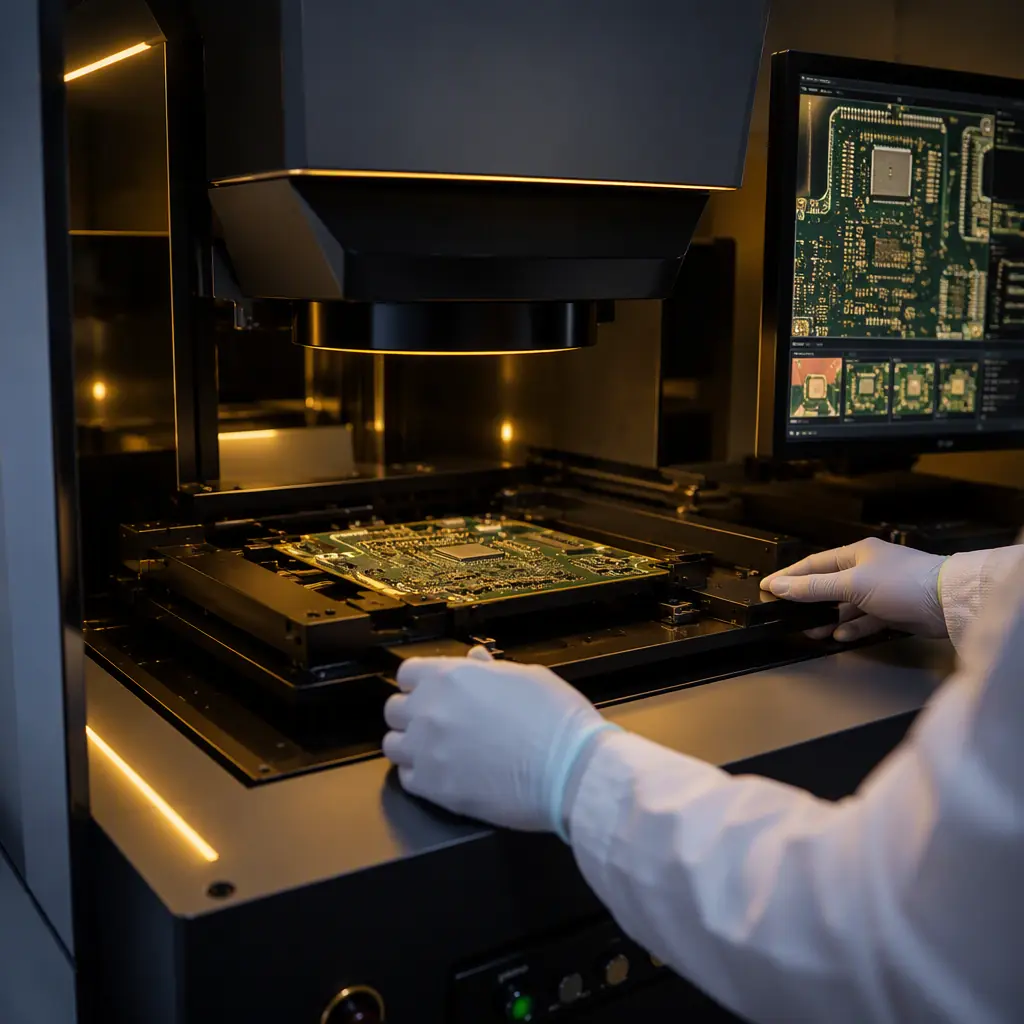
If your order is large enough to justify it: typically above $20,000 or any automotive/medical volume, audit the factory before committing. A structured audit takes half a day on-site or two hours on video. Our full supplier audit guide has the complete checklist; the critical items are:
Walk the line and count equipment
Verify the equipment list matches what you see: line count, machine brands, AOI stations. On a video audit, ask them to pan slowly across the floor. A real factory will show you everything, including the QC room. See our remote factory audit guide for a script you can reuse.
Check incoming material storage
Laminates, solder paste, and components have shelf lives and storage requirements. Solder paste must be refrigerated; moisture-sensitive components need dry cabinets. How a factory stores materials tells you how it treats your product. Our MSL handling guide lists what to look for.
Review QC records, not just QC claims
Ask to see real inspection records from last month: AOI logs, X-ray reports, first article inspection forms. A factory can pull these in minutes. Our DPPM benchmarks guide tells you what good numbers look like for a mid-size Shenzhen manufacturer (typically 100-500 DPPM for SMT assembly).
Meet the quality manager, not just the sales team
Salespeople sell; the quality manager lives with your defects. Ask the QM how they handled their last customer complaint and what the corrective action was. Their answer is the most honest data point you will get all day.
Summary: A 7-Step Shenzhen Sourcing Protocol
Here is the complete sequence a disciplined buyer follows when sourcing PCBs from Shenzhen:
| Step | Action | Time |
|---|---|---|
| 1 | Shortlist 3-5 suppliers; verify business license + certifications | Day 1-2 |
| 2 | Send the same Gerber set + BOM to all; compare DFM feedback quality | Day 2-5 |
| 3 | Collect line-by-line quotes; normalize for tooling and freight | Day 5-7 |
| 4 | Video audit the top 2 (equipment count + QC records) | Day 7-9 |
| 5 | Order small pilot batch; inspect against incoming inspection checklist | Week 2-3 |
| 6 | Scale to volume with agreed quality gates and DPPM targets | Week 4+ |
| 7 | Set up quarterly business review and dual-source if volumes justify | Ongoing |
At Huaxing PCBA, we are a Shenzhen manufacturer in the first category. We own our lines, we publish our capacity numbers, and we will happily walk you through the factory on video before you spend a dollar. If you are evaluating us or any other Shenzhen supplier, send us your Gerber files and BOM: you will get a line-by-line quote with real DFM feedback within 24 hours, and we will show you exactly where your boards will be built. Contact our engineering team, or read our Vietnam vs China comparison if you are still weighing sourcing regions.