
There is a persistent myth among overseas PCB buyers that Chinese manufacturers fix their prices and do not negotiate. The opposite is true. Shenzhen's PCB industry, over 1,500 factories competing for global orders, operates on a negotiation culture where the first quote is a starting position, not a final price. Factories build 10–20% margin headroom into initial quotes precisely because they expect the buyer to negotiate. If you do not negotiate, you are effectively paying the factory's aspirational price. The one they hope you will accept, not the one they would settle for.
At Huaxing PCBA, we process quotes for over 1,200 unique buyers per month. The price difference between a well-negotiated order and one accepted at first quote averages 15–18% across all order sizes, and reaches 25% for high-volume repeat business. This guide is written from the factory side: what we consider fair negotiation, what tactics damage the relationship, and how professional buyers structure deals that reduce cost without compromising quality. For a complete cost breakdown, also see our PCB cost factors guide and quote comparison guide.
The Factory's Margin Structure: What Is Actually Negotiable
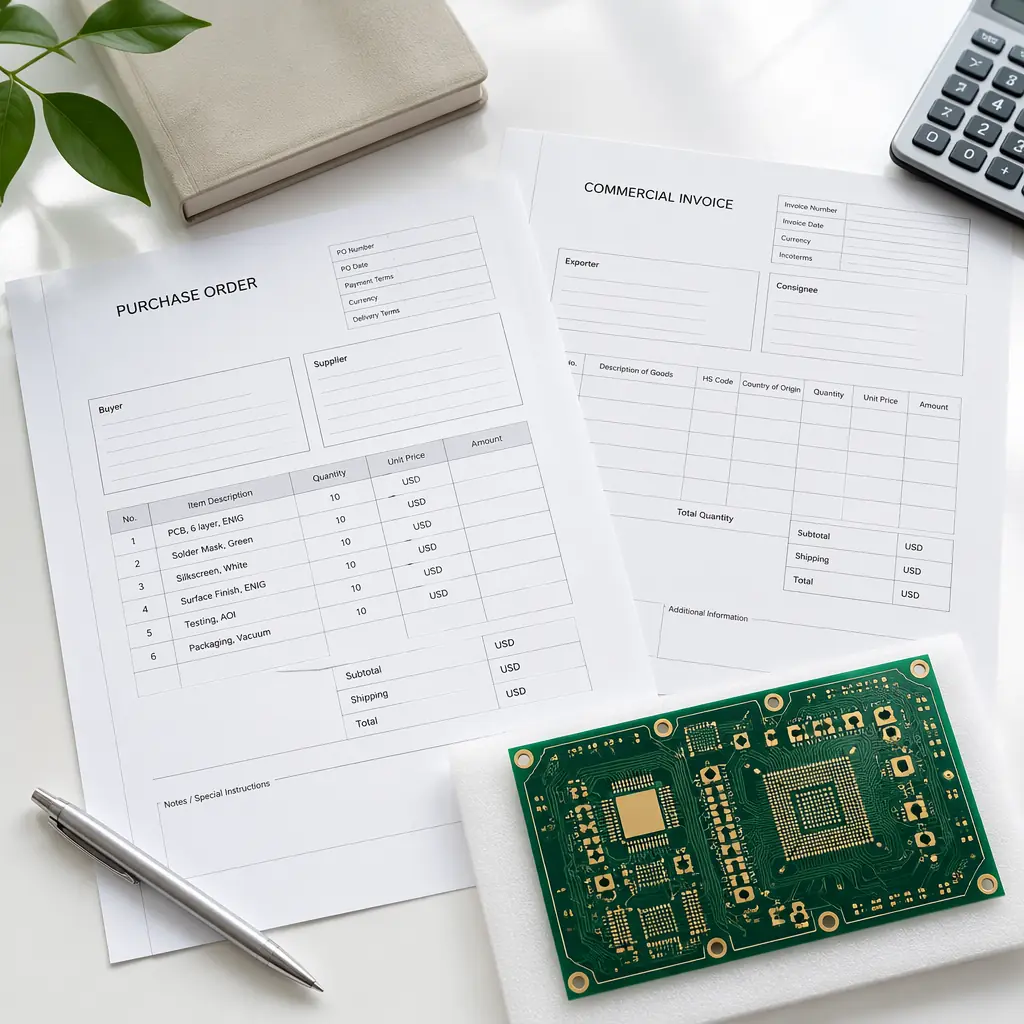
To negotiate effectively, you need to understand where the factory's margin lives. A typical PCB assembly quote has three cost layers: direct materials (components, bare PCB, solder paste, 55–70% of total), direct labor and overhead (SMT line time, operators, electricity, 15–25%), and gross margin (10–20%). The factory cannot negotiate on component costs, those are passed through from distributors. They have limited flexibility on labor (line time is line time). The negotiation happens almost entirely within the gross margin layer. This means the absolute maximum discount on any quote is roughly 10–20% of the total. Anyone promising 30–40% discounts is cutting corners on materials or quality, not on margin.
Factory Reality: When a buyer pushes for a 30% discount, the factory has two choices: decline the order, or find 30% in cost reduction. Cost reduction on a PCB assembly order means: thinner gold plating, lower-grade laminate, fewer AOI passes, skipping conformal coating inspection, or substituting components without disclosure. The discount is real. The quality loss is hidden until field failures appear 6–12 months later. Professional negotiation targets the 10–20% margin layer, not the 55–70% materials layer.
Tactic 1: Volume Tiering, The Single Most Effective Lever
Volume is the strongest negotiation lever because it directly reduces the factory's per-unit overhead. SMT line setup time (stencil loading, feeder setup, program loading) is a fixed cost whether you order 50 boards or 5,000. The more units you spread that setup across, the lower the factory's cost per board, and the more discount they can offer.
Ask for a Tiered Quote Upfront: 100 / 500 / 1,000 / 5,000 Units
Always request pricing at multiple volume breakpoints in your initial RFQ. The factory sees the ceiling, they know you might scale to 5,000 units, and prices the lower tiers more competitively to win the business. A factory that quotes $6.20/board at 500 units might drop to $5.40 at 500 units simply because they see 5,000 in the pipeline. Never reveal your exact target volume as a single number. Instead, provide a range: "We expect 500–3,000 units over 12 months." This creates upside the factory will price for, without committing you to the high end. Our NRE and tooling costs guide explains how volume affects the non-recurring charges that layer on top of unit price.
Use "Annual Volume Commitment" for 5–10% Additional Discount
If you can commit to a minimum annual volume, say 10,000 units per year, released in quarterly batches, the factory can plan capacity, bulk-purchase common components, and amortize NRE more aggressively. An annual commitment typically unlocks 5–10% beyond the standard volume tier discount. Structure it as a framework agreement: 10,000 units/year minimum, quarterly releases of 2,500, pricing reviewed annually. The factory values predictability almost as much as volume. Importantly, do not commit to more than you can realistically consume, broken volume commitments damage your credibility with every factory in the Shenzhen ecosystem, and word travels fast.
Tactic 2: Payment Terms, Cash Flow Leverage
Payment terms affect the factory's working capital, and working capital has a cost. A factory financing $50,000 in materials for 60 days at 8% annual interest pays $667 in financing cost. If you can reduce that burden, they can reduce your price.
30% Deposit + 70% Before Shipment: The Standard Baseline
This is the default payment structure for most Shenzhen PCB factories working with new overseas buyers. The deposit covers component procurement (which the factory cannot return), and the balance before shipment eliminates collection risk. Do not accept 50% deposit terms. That means the factory is either credit-constrained (a red flag) or does not trust your payment reliability. If they insist on 50%, ask why. The answer will tell you whether it is about their financial health or your perceived risk as a buyer.
Negotiate Net-30 After Delivery for a 3–5% Discount
If you have an established relationship and consistent payment history, ask for Net-30 payment terms after delivery. Counterintuitively, this can reduce your price: the factory no longer needs to factor in the risk buffer they build into upfront-payment pricing. Offer to pay within 15 days for an additional 2% early-payment discount. This nets you 5–7% total reduction and gives the factory faster cash conversion than their standard 30-day terms. For first-time buyers, offer a trade reference from another Chinese supplier to shortcut the trust-building process. See our supplier audit checklist for what to verify before extending payment terms.
Tactic 3: Design Leverage, Reduce Cost Through Engineering, Not Haggling
The most sustainable price reductions do not come from negotiation at all, they come from designing your board to be cheaper to manufacture. When you present a design-optimized board, the factory's quote is naturally lower, and you are negotiating from a genuinely reduced cost base rather than pressuring margin.
Panel Utilization: The Difference Between 70% and 90% Is 5–10% Unit Cost
PCB fabrication cost is driven by panel area, not board area. If your board dimensions waste 30% of the panel (70% utilization), you are paying for 30% more raw material than necessary. Adjusting board dimensions by just a few millimeters to improve panel fit can increase utilization to 85–90% and cut bare PCB cost by 5–10%. During the quote stage, ask the factory: "What board dimensions would maximize your panel utilization?" Most factories will happily suggest adjustments, it saves them material cost, and they pass a portion of the savings to you. Our PCB panelization guide covers the math in detail.
Component Standardization: Fewer Unique Part Numbers = Lower Assembly Cost
Every unique component on your BOM requires its own SMT feeder, its own pick-and-place program entry, and its own inventory SKU. Reducing unique part numbers by standardizing resistor values (use 10kΩ pull-ups everywhere instead of 10kΩ, 4.7kΩ, and 22kΩ) or consolidating capacitor values reduces setup time and feeder count. SMT line cost is approximately $150–250/hour: every hour of setup reduction is direct savings. For medium-complexity boards, component standardization typically saves 3–7% on assembly cost, entirely outside the negotiation conversation.
Tactic 4: Quality Guarantee Clauses, Negotiating What Matters More Than Price
Price negotiation that sacrifices quality is a net loss. The smartest buyers negotiate quality guarantees alongside price, locking in acceptance criteria, defect rates, and remedy clauses that protect them from the hidden cost of poor quality. These clauses cost the factory nothing if they deliver quality; they only cost money if quality fails. That aligns incentives perfectly.
Specify IPC-A-610 Class 2 or Class 3 Acceptance Criteria in the PO
The IPC-A-610 standard defines what constitutes an acceptable solder joint, and it has three classes. If your purchase order does not specify a class, the factory defaults to Class 2, which permits some visual defects that Class 3 rejects. Medical, aerospace, and automotive buyers should specify Class 3 explicitly. This is not a cost item. It is an instruction to the inspection team about which boards to pass and which to rework. Our IPC Class 2 vs Class 3 comparison explains the specific defect criteria that differ between classes.
Negotiate a Defect Rate SLA: ≤0.5% for Production Runs
An industry-standard SLA for production PCB assembly is ≤0.5% defect rate (measured as boards requiring rework beyond touch-up at AOI). The factory should absorb rework cost for any defect rate above this threshold. For critical applications (medical, aerospace), negotiate ≤0.1%. This SLA puts a cost on poor quality without affecting the base price. And it signals to the factory that you will inspect incoming boards, which motivates process discipline. Pair this with the incoming inspection protocol in our PCB incoming quality inspection guide.
Tactic 5: What Not to Do, Negotiation Moves That Backfire
Some negotiation tactics damage the buyer-supplier relationship and result in worse outcomes over time. These are the moves we see from inexperienced buyers that signal "this customer will be more trouble than they are worth."
Do Not Fabricate a Competing Quote
Buyers sometimes invent a lower quote from a competitor to pressure the factory. Experienced sales engineers can spot fabricated quotes instantly. The pricing structure, line items, and technical assumptions will not match any real competitor. If you are caught inventing a quote, the factory will either walk away entirely or build a "difficult customer" margin premium into every future order. If you genuinely have a lower quote, share it (with the competitor's name redacted), competitive intelligence is fair game. But invention destroys trust permanently.
Do Not Negotiate After the Order Is Placed
Once a purchase order is issued and accepted, the negotiation window is closed. Attempting to renegotiate price after production has started, because you "found a better quote elsewhere", is the fastest way to damage a supplier relationship. The factory has already procured components, scheduled line time, and allocated capacity. At that point, renegotiation is a breach of good faith. If you genuinely need to cancel, offer to pay for materials already procured, the relationship may survive. Attempting to leverage a post-order cancellation threat for a discount ensures that factory will never quote you again.
Long-Term Strategy: The buyers who get the best pricing over 3–5 years are not the toughest negotiators, they are the most predictable ones. A buyer who sends 4 orders per year at consistent volumes, pays on time, provides clean documentation, and rarely requests rush changes will receive better pricing than an aggressive negotiator who places sporadic orders with last-minute scope changes. Shenzhen factories value predictability because it lets them optimize production scheduling. At Huaxing PCBA, our best pricing goes to repeat customers with quarterly forecasts, not one-time buyers who extract the maximum discount. Read our low-volume PCB assembly guide if you are starting with smaller quantities and want to build toward volume pricing.
Negotiating PCB prices effectively comes down to understanding factory economics, using volume and payment terms as leverage, and investing in design-side cost reduction. The buyers who master all three consistently pay 15–25% less than those who accept first quotes, without sacrificing quality. At Huaxing PCBA, we welcome informed negotiation. Our quotes include transparent line-item breakdowns, and our engineering team is available to discuss design optimizations that reduce cost before you place the order. Contact our sales team for a detailed quote on your next project, 24-hour response with free DFM review included.