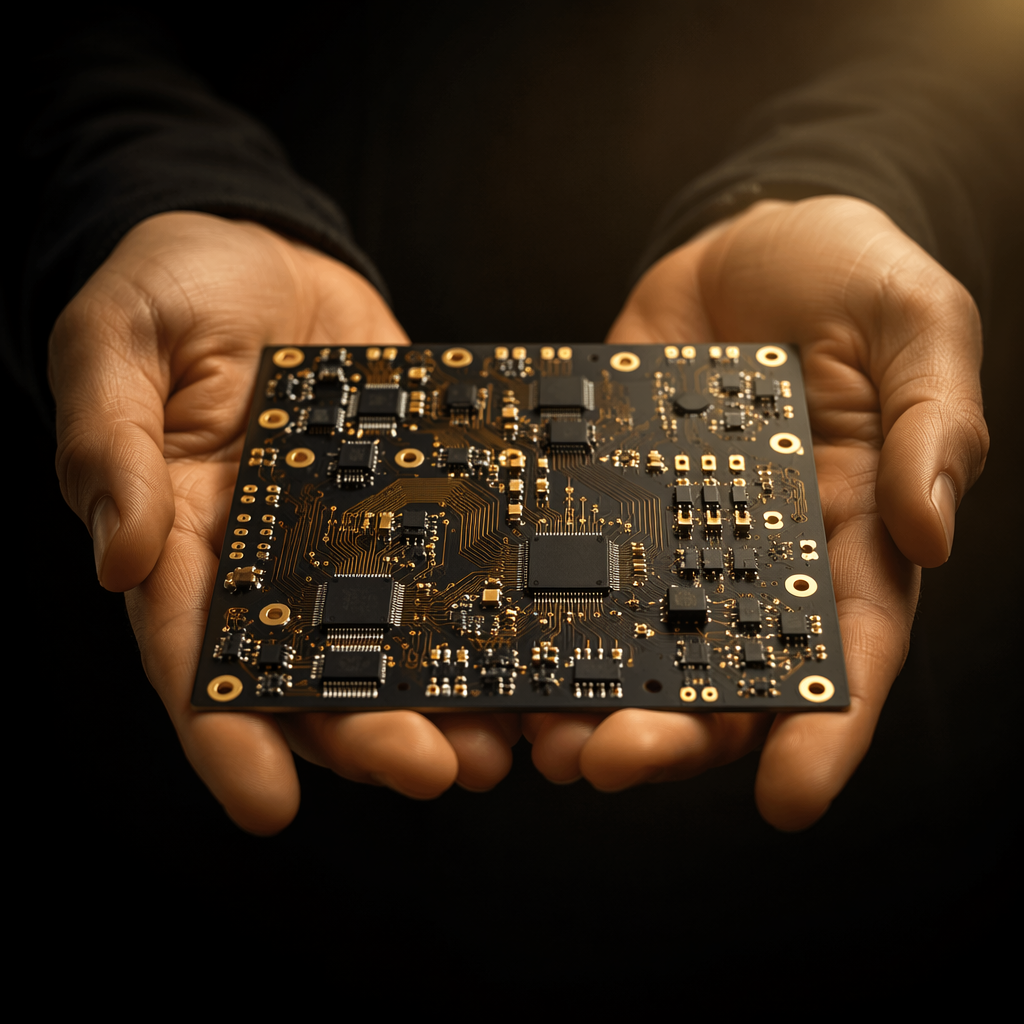
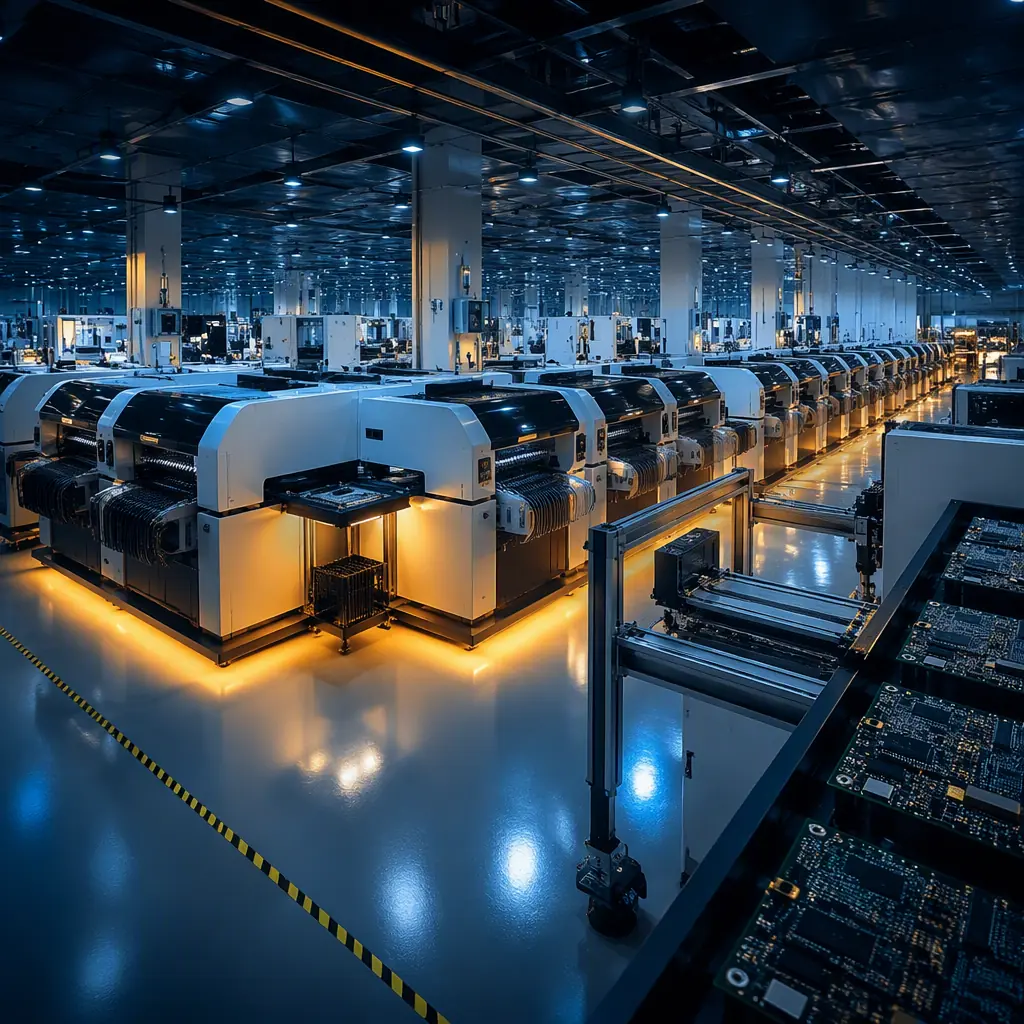
Every hardware team reaches the same fork: build boards domestically for control, or offshore for cost. The answer in 2026 is more nuanced than either camp admits. US board shops are genuinely competitive for prototypes, quick-turn work, and defense-grade requirements — while Chinese manufacturers still win on volume pricing, assembly density, and iteration speed. The deciding factor is usually not the board price per square inch; it is the total cost of getting a working, qualified product into the field.
Huaxing PCBA manufactures PCB and PCBA from Shenzhen, China, serving customers in 30+ countries — including US companies that split their sourcing between domestic prototypes and offshore production. This guide compares the two options on the metrics that actually drive sourcing decisions: board cost, lead time, quality systems, tariffs, communication, IP protection, and the hybrid model most companies converge on. For the full cost framework, start with our total cost of ownership guide.
The Short Answer: Where the Cost Difference Actually Comes From
On an apples-to-apples quote, a standard 4-layer board runs roughly 40–60% cheaper from a Chinese supplier before freight and duties. The gap is largest on mid-volume production (100–10,000 boards), where US shops price for engineering support and Chinese shops price for throughput. But the gap shrinks dramatically once you add shipping, customs, and the cost of longer iteration cycles — which is why "China is always cheaper" fails for teams that need three board revisions a week.
Key Takeaway: China wins on unit cost and iteration speed at volume; the US wins on proximity, communication, and rapid domestic logistics. The smart comparison is not "China vs US" — it is "which supplier shortens my time-to-market for this specific program."
Board Cost: Comparing Like-for-Like Quotes
Price comparisons are only meaningful when the specification matches: same layer count, copper weight, surface finish, impedance control, and panelization. A US quote for "prototype, expedited, with full documentation" and a China quote for "standard production" are not comparable — yet buyers compare them constantly.
| Board Type | US Shop (typical) | China Shop (typical) | What's Included |
|---|---|---|---|
| 2-layer prototype, 10 pcs | $180–400 | $10–40 | Standard FR-4, green mask, no impedance |
| 4-layer, 100 pcs | $2,500–4,500 | $600–1,200 | 1 oz copper, ENIG, ±10% impedance |
| 6-layer, 500 pcs | $8,000–14,000 | $2,500–5,000 | Controlled impedance, tight tolerances |
| PCBA (SMT, 100 boards) | $15,000–30,000 | $4,000–9,000 | Full turnkey, components + assembly + test |
The ranges are indicative for 2026 standard FR-4 work — exact numbers vary with stackup, finish, and quantity. Two caveats: Chinese quotes are almost always cheaper per unit, but minimum order quantities, tooling/NRE, and freight minimums mean very small orders (under 50 boards) sometimes cost more per unit than domestic options. And the assembly gap is bigger than the bare-board gap — Chinese turnkey assembly benefits from lower component sourcing and labor costs. Our quote comparison guide shows how to normalize quotes from different suppliers.
Lead Time and Iteration Speed
For hardware teams, lead time is not a logistics detail — it is the difference between shipping this quarter and shipping next quarter. Chinese board houses run 24-hour expedited prototyping and 5–7 day production cycles for standard work, and because the supply chain is co-located, assembly components are rarely a bottleneck. US shops typically quote 3–5 days for expedited prototypes and 2–4 weeks for production, but with domestic shipping the boards arrive in days rather than weeks.
Count Iterations, Not Just Days
A team doing weekly design revisions will complete 4–6 revision cycles faster with a 24h–3d China prototype loop than with a 5–10d domestic loop — even counting the 2–4 day freight leg. That is where the offshore prototype advantage shows up in calendar time, not just price. Our quick-turn manufacturing guide explains the 24h service mechanics.
Buffer for Customs and Holidays
Freight from China to the US west coast is typically 3–7 days by air, 2–4 weeks by sea. Add 1–2 days for customs clearance, and remember Chinese national holidays (Spring Festival, Golden Week) shut down production for 1–2 weeks. A realistic offshore calendar adds 2 weeks of buffer to any critical milestone. Our Incoterms and shipping guide covers the freight options in detail.
Use Domestic for Crisis, Offshore for Rhythm
The winning pattern we see from customers: domestic shops for emergency boards and qualification samples, offshore for the steady production cadence. That split converts each supplier's strength into calendar time.
Quality, Certifications, and Control
The "Chinese factories have weak quality" assumption is a decade out of date for the export-focused tier of manufacturers. The factories that serve US and European customers hold ISO 9001, IATF 16949, UL, and IPC-A-610 Class 2/3 acceptance standards, run automated AOI/SPI/X-ray inspection, and publish yield and DPPM data. The quality gap that remains is not about capability — it is about how quality is verified and enforced.
Verify the Certificate, Then Verify the Practice
Certificates are table stakes; audit the practice. Ask for yield data, DPPM, and the actual inspection reports from your last three orders. Our supplier audit guide has a structured checklist, and our quality metrics guide explains what good DPPM looks like for different board classes.
Require Third-Party Inspection Before Shipment
An independent pre-shipment inspection (visual, dimensional, and functional sampling per your AQL) removes the distance risk from offshore sourcing. It costs a fraction of a failed batch and turns "trust me" into "verified." Our pre-shipment inspection guide lists what the OQC report should contain.
Use Remote Audits for Ongoing Oversight
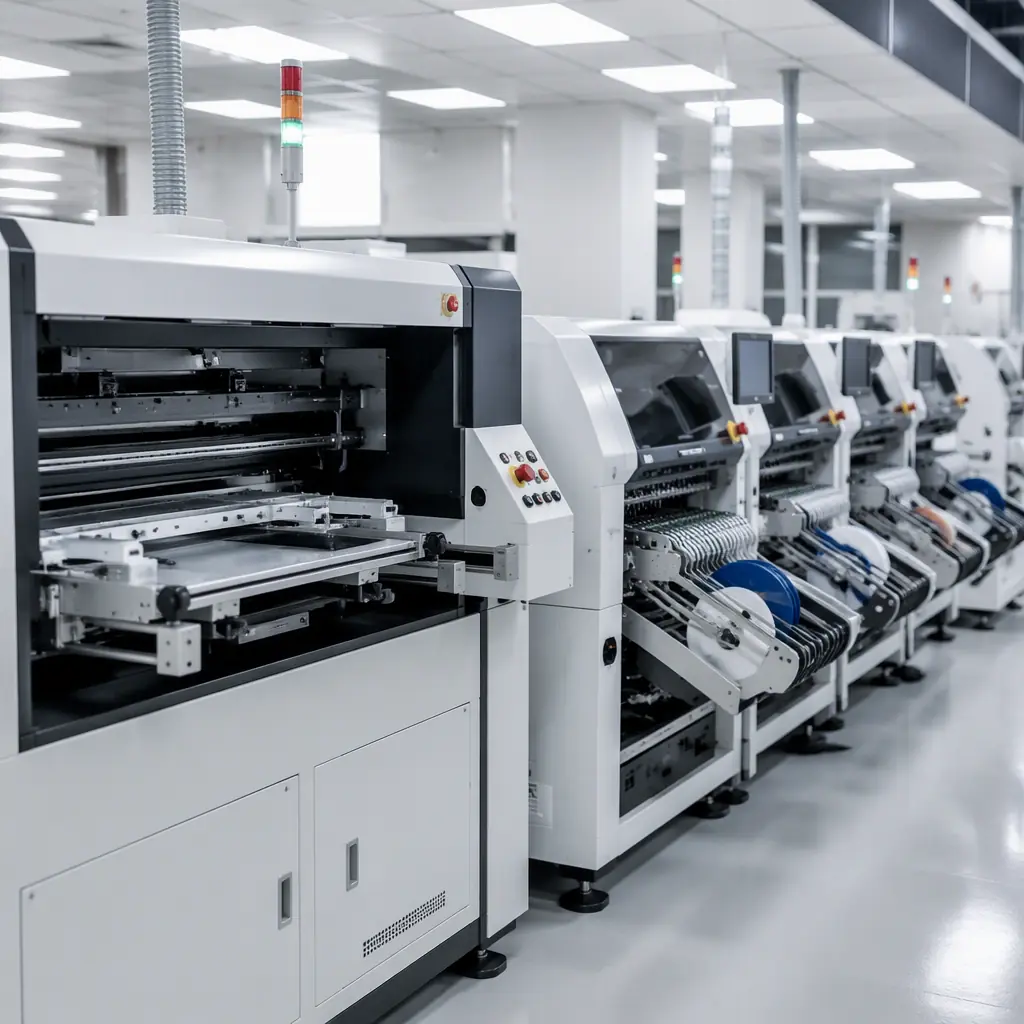
You do not need to fly to Shenzhen for every audit. A structured video audit covering the SMT lines, IQC incoming inspection, and test stations gives 80% of the signal at 5% of the cost. Our remote factory audit guide has the camera-walk script.

Tariffs, Duties, and Landed Cost in 2026
Tariffs changed the math. Section 301 duties on Chinese-made PCBs and the de minimis changes for low-value shipments mean the "China price" on a quote is no longer the price you pay. The correct comparison uses landed cost: board price + freight + duty + customs brokerage + any compliance testing.
| Cost Component | Typical Range (2026) | Notes |
|---|---|---|
| Board price (China) | Baseline | The quoted FOB price |
| Section 301 duty | 7.5–25% | Depends on HTS classification; some PCB subcategories hit higher rates |
| Air freight (per kg) | $4–8 | West coast; heavier boards shift the economics |
| Customs brokerage | $50–150 per entry | Flat fees, irrelevant at volume |
| De minimis (under $800) | Varies | Low-value exemption rules tightened — verify current thresholds |
A 4-layer board quoted at $1,000 FOB can land at $1,300–1,500 after duty and freight. That still beats the US quote for the same spec — but the margin is thinner than the raw price comparison suggests, and it narrows further for heavy, low-value boards where freight dominates. Our import duty and tariff guide has the HTS codes and current duty rates for PCB categories.

Communication, Timezone, and Engineering Support
The most underestimated cost in offshore sourcing is communication overhead. A 13-hour timezone gap means one email round-trip per day if you work normal hours. The factories that serve export customers mitigate this with English-speaking engineering teams, structured DFM reports, and working hours that overlap with US mornings — but the buyer should verify this before committing, not discover it during a crisis.
Test the Response Loop Before You Order
Send a detailed DFM question and measure how long a useful answer takes. A factory that replies with a thoughtful engineering answer within 24 hours will support you through production; one that replies with "ok" will not. Our supplier RFP guide includes the questions that separate responsive factories from order-takers.
Define the Documentation Standard Up Front
Agree on the deliverables: DFM report, impedance test data, first article report, inspection records, and lot traceability (IPC-1782). Our supplier scorecard guide helps you track these systematically across orders.
IP Protection and Supply Chain Risk
IP concern is the most common reason buyers rule out China entirely — and also the most misunderstood. The real risks are not the dramatic "factory steals your design" scenarios; they are uncontrolled file distribution, counterfeit component risk, and over-reliance on a single supplier. Each has a practical mitigation.
Protect Files at the Process Level
Use password-protected archives, watermark PDFs, and NDAs that name your design data. Split sensitive information (BOM vs Gerbers) across channels if needed. Our IP protection guide covers the practical steps that work in practice.
Qualify a Second Source
Every offshore buyer should have a qualified backup supplier for critical boards. Dual sourcing is also your strongest negotiation lever. Our dual sourcing guide explains how to qualify a second factory without doubling your audit workload.
Screen the Factory's Financial Health
Supplier failure is a supply chain risk regardless of country. A basic financial due-diligence check on an offshore supplier takes an afternoon and prevents a mid-program disaster. Our financial due diligence guide has the checklist.
The Hybrid Model: US Design, China Volume
The sourcing strategy most successful hardware companies converge on is neither "all domestic" nor "all China" — it is a hybrid. Prototypes and qualification units stay domestic (or use 24h China prototypes when speed matters), while production volume goes to the offshore factory that was qualified during the prototype phase. The same design files, same documentation standard, and same acceptance criteria carry across both suppliers.
The hybrid works because it matches each supplier's economics to the phase of the program: domestic shops earn their premium where iteration speed and proximity pay, and offshore factories earn theirs where unit cost and production throughput dominate. The qualification work done with the prototype supplier — DFM feedback, impedance verification, first article — de-risks the production handoff. Our supplier transition guide covers moving a design between suppliers without losing quality.
Summary: Compare Landed Cost, Then Verify Capability
The 2026 decision framework: compare landed cost (not FOB price), count iteration cycles (not just lead time), verify quality systems (not just certificates), and design for a hybrid supply chain from the start. China remains the volume cost leader for standard and mid-complexity boards; the US retains advantages in proximity, rapid domestic logistics, and certain regulated categories. Most teams do not have to choose — they qualify both and route work by program phase.
At Huaxing PCBA, we support exactly this model: 24h expedited prototypes, production up to 32 layers, full turnkey assembly, and documentation (DFM reports, impedance data, first article, lot traceability) that meets the audit standards of US customers. Read our tariff guide to model your landed cost, or send your files for a like-for-like quote with a DFM review.