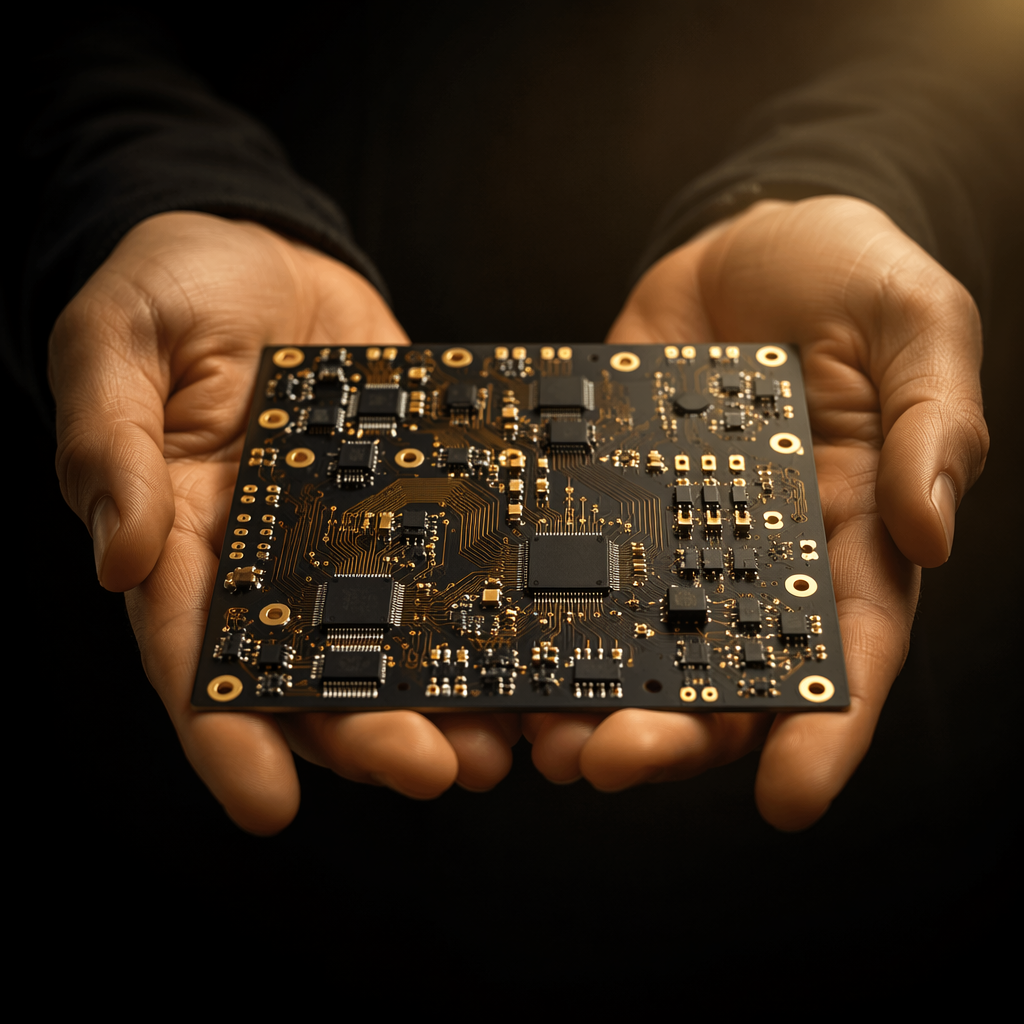
An NRE (non-recurring engineering) charge is the one line on a PCB assembly quote that buyers scrutinise hardest, because unlike board area or component cost it has no physical object attached to it. You are paying for engineering effort that happens once, before production starts, and it is quoted as a lump sum with little explanation. That opacity is why NRE is both the most negotiated and the most misunderstood line on a contract manufacturing quote.
This guide breaks an NRE and tooling charge into the four cost buckets that actually compose it, shows how the amount amortises across an order quantity, and explains the narrow set of cases where waiving NRE is a legitimate commercial decision rather than a hidden margin. Huaxing PCBA quotes NRE as itemised line items rather than a single number, so buyers can see what each charge covers.
What an NRE Charge Actually Pays For
The term non-recurring is precise: these are costs the factory incurs once for a given product, and cannot recover from the per-unit price if the order is small. At a contract manufacturer working on SMT assembly, NRE and tooling typically break into four buckets, and a legitimate quote should let you see which ones apply to your build.
Programming and engineering setup
SMT machine programming, component library creation, feeder setup plans and the DFM review that precedes them. For a board with 400 placements this is a few hours of engineering time; for a 3000-placement board with several QFNs and fine-pitch BGAs it can be several engineer-days. This bucket scales with placement count and package diversity, not with board count.
Tooling: stencils, fixtures, carriers
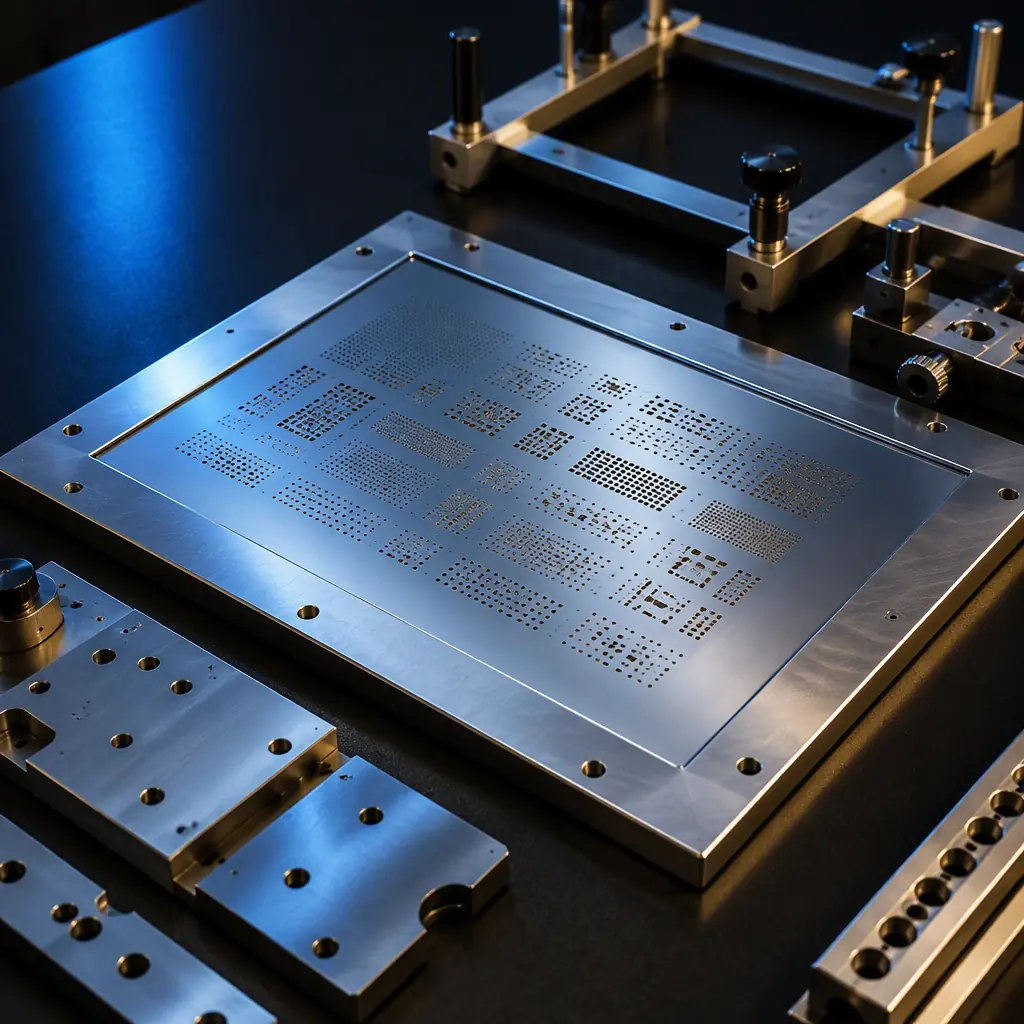
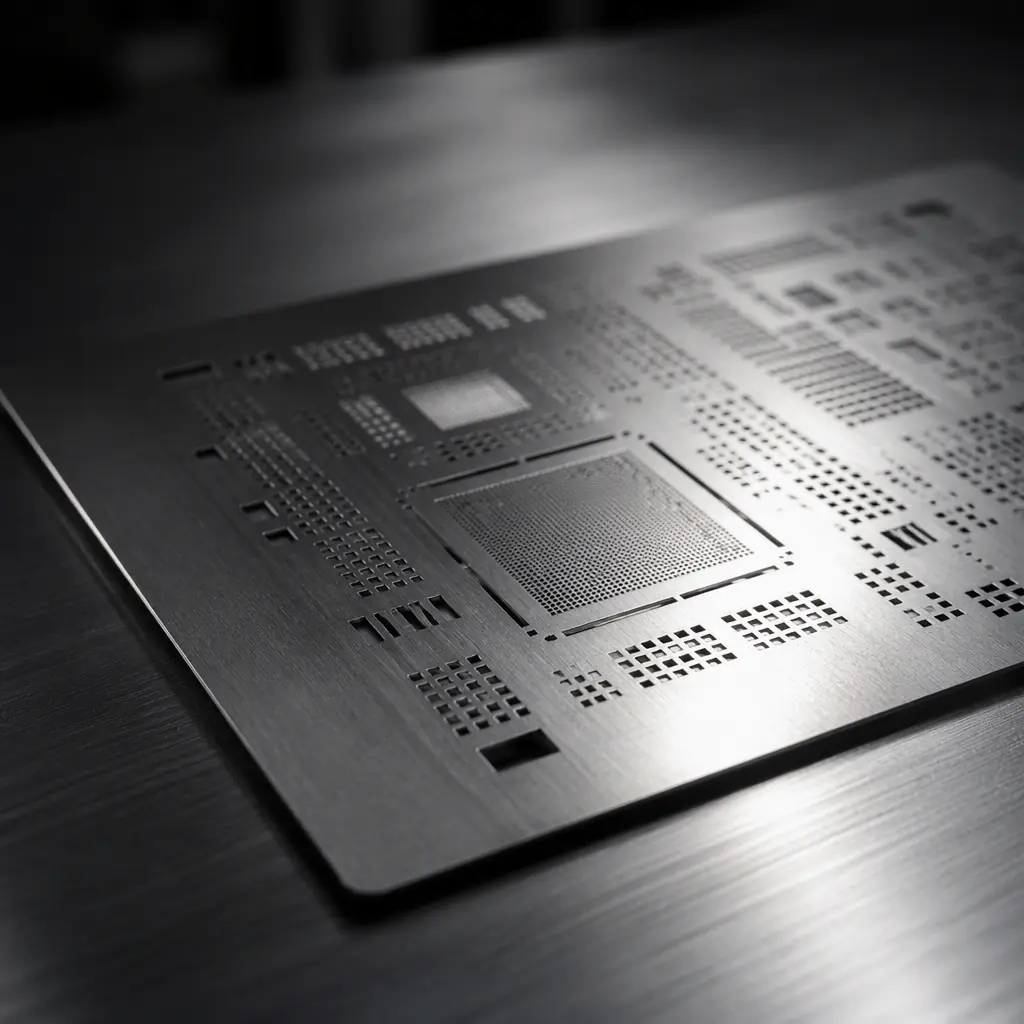
Laser-cut stencils, reflow carriers for thin or high-warpage boards, selective-solder pallets, and depaneling fixtures. These are physical items with a real bill of materials. A frameless stencil is far cheaper than a framed one, and the zero-tooling stencil guide covers when each format is worth its cost.
Test development
Flying probe programmes, ICT fixture design, and functional test software with a bed-of-nails or pogo-fixture. This bucket frequently dominates the total NRE on complex products, because functional test development can exceed assembly programming many times over. Test fixtures are discussed in the fixture cost guide.
Documentation, first article and qualification
First article inspection against IPC-A-610, PPAP documentation where the customer requires it, and the quality records that accompany a new product introduction. On an automotive or medical programme this bucket carries the standards compliance that the customer's own audits will later verify.
Key Takeaway: Ask the supplier to split the NRE into these four buckets. A quote that shows programming, tooling, test development and documentation separately is auditable; a single lump sum tells you nothing about whether the charge is reasonable. Most buyers find that one bucket dominates, and negotiating on the others is where the real discussion happens.
The Amortisation Math Buyers Should Run
NRE is a fixed cost, so its impact on your effective unit price depends entirely on order quantity. The math is simple but rarely run: divide total NRE by the number of units in the programme, not the first order. This is where buyers often misjudge a decision.

| Total NRE | 500 units (1 order) | 5,000 units (1 yr) | 50,000 units (programme) |
|---|---|---|---|
| $1,200 (simple double-sided SMT) | $2.40 / unit | $0.24 / unit | $0.024 / unit |
| $4,500 (fine-pitch + selective solder) | $9.00 / unit | $0.90 / unit | $0.090 / unit |
| $12,000 (BGA + ICT + functional test) | $24.00 / unit | $2.40 / unit | $0.240 / unit |
| $30,000 (IATF programme + PPAP + fixturing) | $60.00 / unit | $6.00 / unit | $0.600 / unit |
The table makes the strategic point clear: on a bridge order of 500 units, NRE can be a larger unit cost than the assembly itself. On a production programme it disappears. This is the entire economic argument for a prototype-to-production path with one supplier — you pay the NRE once and amortise it across the programme, whereas re-sourcing later means paying a second NRE. The low-volume assembly guide covers how quantities in this range are typically quoted.
When Waiving NRE Is Legitimate — and When It Is Not
Buyers are frequently offered an NRE waiver, and the offer is not automatically good news. There are two distinct reasons a factory waives NRE, and they have opposite implications.
Legitimate: the work is genuinely reusable
If the factory already owns a near-identical stencil, a compatible carrier, or a test platform its engineers can adapt without new programming, the marginal cost of setup is real but small. Waiving it to win a production programme is a rational investment. This is common when the customer's board is a revision of an existing product the factory already builds.
Suspect: the NRE is moved into the unit price
A waived NRE is not free — it has to be recovered somewhere, and the usual place is the per-unit price or the component markup. Always compare total landed cost across the programme, not the headline NRE figure. A supplier quoting $0 NRE with a unit price 15% higher than the competition has not waived the engineering; it has financed it into your first order.
There is a third pattern worth recognising: the deliberately low first-order NRE with a self-funding recovery model. Some factories price NRE below cost to win a bridge order, then charge the full rate on the first engineering change. Which brings us to the trap most often missed.
The ECO Recharge Trap
NRE is quoted for the design as presented. If the design changes after tooling is cut — a moved component, a new package, a revised stackup — the affected tooling must be remade and the programming adjusted. Most suppliers charge a change fee, and it is legitimate, because the work genuinely recurs. It is also where inexperienced buyers get surprised, because a series of small design changes can accumulate into more engineering cost than the original NRE.
The mitigation is process, not negotiation. Freeze the design before tooling is cut, batch ECOs rather than issuing them one at a time, and ask upfront what the change fee structure is. The engineering change order guide covers how to run a disciplined ECO process, and the shift-left DFM guide covers catching the changes before tooling exists.
Procurement tip: Negotiate the change-order rate card at the same time you negotiate the original NRE. A supplier who will quote $1,500 for the initial setup but $900 for each later change, in writing, is a supplier you can plan around. One who quotes a number for the first build and then prices each change ad hoc is a budget risk regardless of the headline NRE.
Comparing NRE Across Suppliers Properly
Because NRE is bundled differently by every factory, a raw comparison of the NRE line is close to meaningless. The comparison that works is total delivered cost over a defined programme, with the NRE definition pinned down. Establish these four things with each supplier before comparing:
What is inside the number
Does the quoted NRE include test development and first article, or are those billed separately? A supplier may quote a lower NRE precisely because functional test development is excluded and will appear later.
What is reusable on a repeat build
Stencils and fixtures are physical assets. Confirm they are retained for your product and reused on repeat orders at no additional charge, rather than re-billed each time.
Who owns the tooling
Ask explicitly whether stencils and fixtures are yours, the supplier's, or transferred on request. If you move the programme later, ownership determines whether you pay for tooling a second time.
Change-order rates
Get the ECO fee structure in writing at quote stage. This is where the real programme cost often hides, and a supplier with a published rate card is signalling that it expects a long relationship.
NRE is best understood not as an obstacle but as the price of a production-ready process. A factory charging nothing for setup is either recovering it elsewhere or has not done the work. The useful questions are what is inside the number, where it is reused, and what a change costs later — and a supplier that answers all three clearly is the one whose total programme cost is predictable. The assembly cost breakdown guide covers how the other quote lines relate to each other.
Summary / Next Steps
NRE and tooling cover four distinct cost buckets — programming, tooling, test development and documentation — and each amortises differently depending on order quantity. Ask for the buckets to be itemised, run the amortisation math across the whole programme rather than the first order, and treat a waived NRE as a signal to check the unit price rather than a win. Finally, pin down the change-order rate card before you start, because that is where budget surprises come from.
At Huaxing PCBA, quotes itemise NRE by bucket and disclose what tooling is retained and reused across repeat orders, on a line running 8 SMT lines and 4 DIP lines under an IATF 16949 and ISO 9001 quality system. Send your Gerber and BOM for an itemised quote with a free DFM review within 24 hours.