Ask two factories for the same 2,000-board assembly and one will quote flying probe, the other a bed-of-nails ICT test. And you will get a price difference that has nothing to do with the boards, and everything to do with how each factory treats electrical test. The right answer is not "which is cheaper per board." It is "at what volume does a fixture stop being optional." That number is predictable, and this guide gives you the arithmetic.
At Huaxing PCBA we run 8 SMT lines with AOI, SPI and X-ray in-line, and choose the electrical test method per project: flying probe for prototypes and low volume, bed-of-nails ICT for repeat production, and functional test (FCT) for anything with firmware. The cost logic below applies to any contract manufacturer. You should be able to reproduce it in your own quote.
The Three Test Methods, and What Each Really Costs
There is a natural confusion between the fixture and the test itself. A fixture is physical tooling, a frame, probes, and a program. The test is what runs in it. Understand the components and the costs fall into place.
| Method | Typical Fixture Cost | Test Time / Board | Best For |
|---|---|---|---|
| Flying probe | $0 (no fixture) | 1–4 min | Prototypes, first article, low volume |
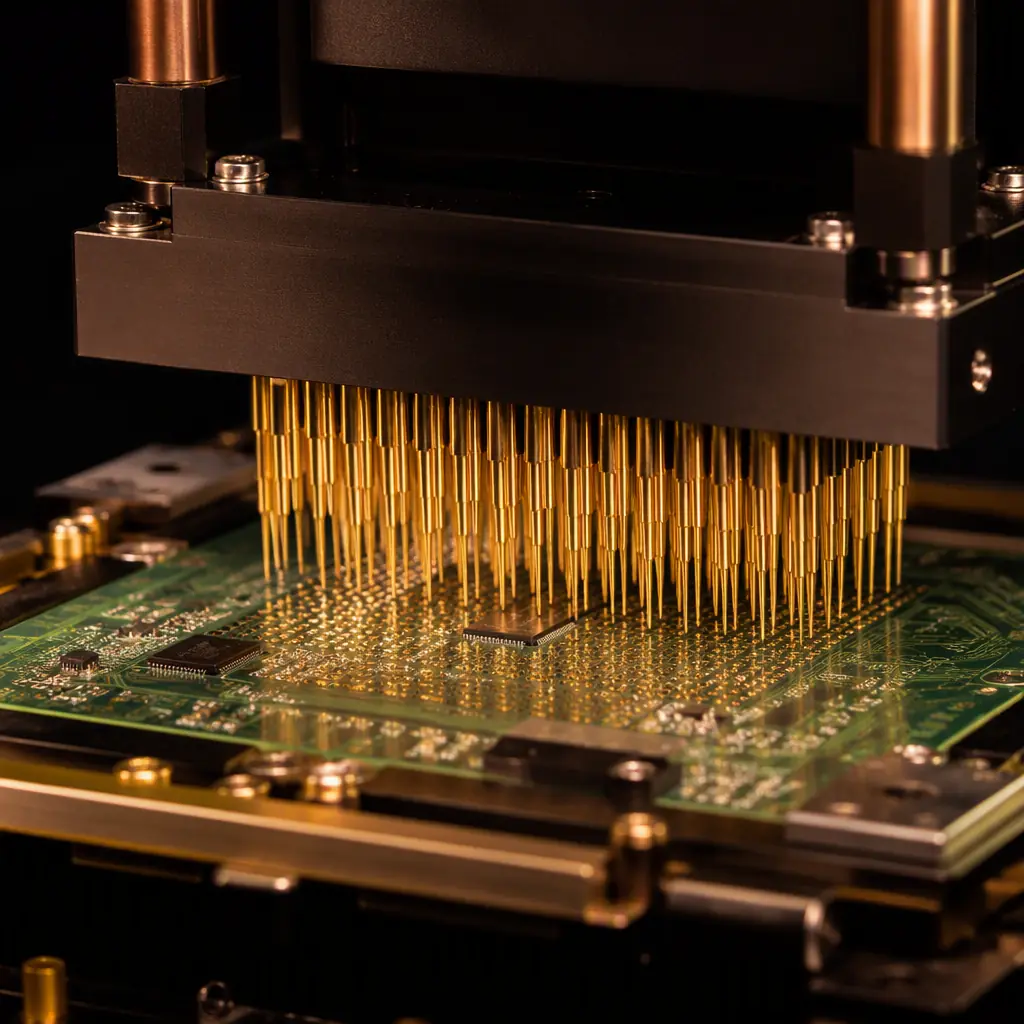
| Bed-of-nails ICT | $1,800–$5,000 | 5–15 sec | Repetitive volume, continuity + shorts |
| FCT (functional) | $1,200–$4,000 | 30–90 sec | Firmware, signalling, interface function |
| Pogo-pin / pinless | $800–$2,500 | 20–60 sec | Prototypes migrating to mid-volume |
Note the important qualifier: these are typical ranges for a mid-complexity board. A 12-layer rigid-flex with 1,500 testable nets will sit at the top of each range; a simple 2-layer board with 60 nets sits near the bottom. Your net count is the single biggest driver of fixture price.
Why Flying-Probe Is "Free", and Sometimes Wrong
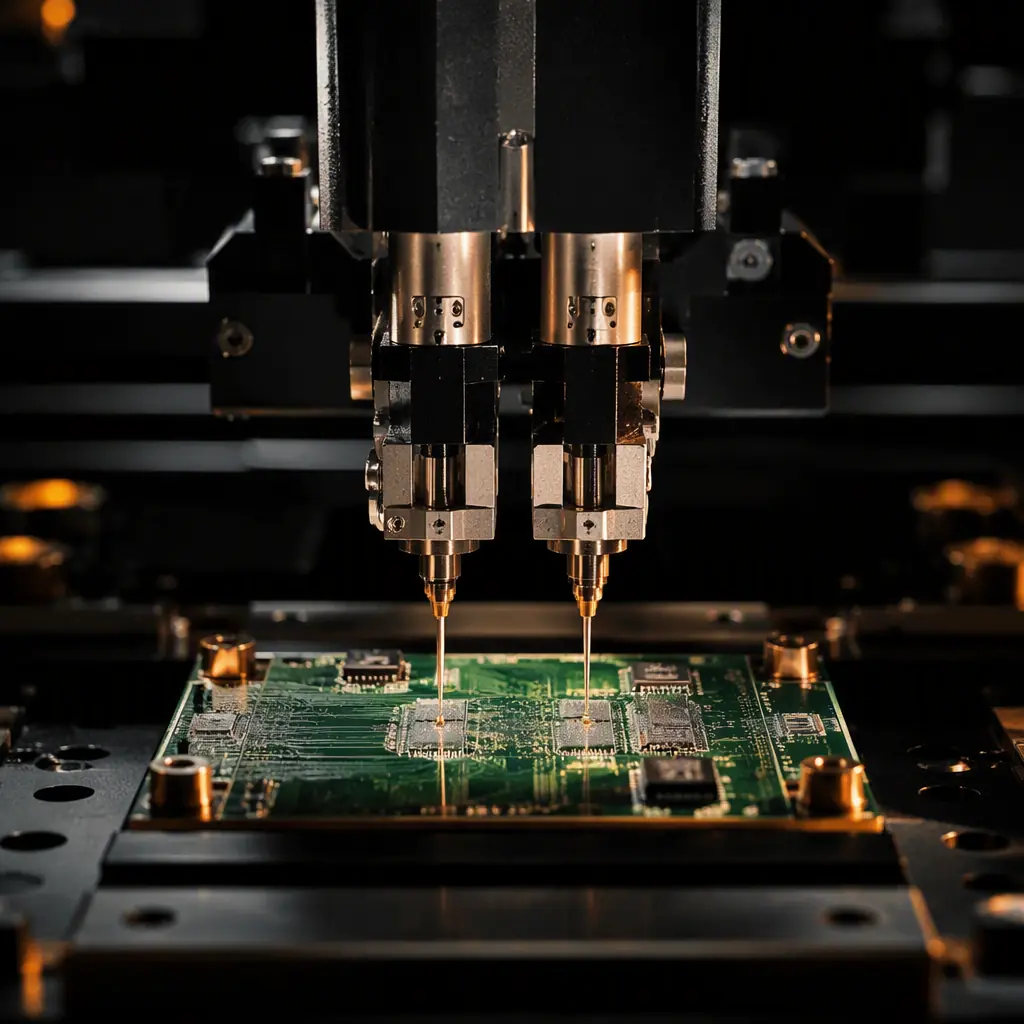
Flying probe needs no fixture, which is why it dominates prototyping and first article inspection. Two motorised probes move across the board and test point-to-point. It costs nothing to set up, requires less engineering, and is ideal for a board that changes weekly. See our flying probe vs ICT vs functional test comparison for the full method-level trade-offs.
The Speed Ceiling Is Real
At 1–4 minutes per board, a 2,000-board run at 3 minutes each ties up the tester for 100 hours. At 50,000 boards you have monopolised the machine for weeks. The cost of that time, not the fixture, is what drives the decision at scale.
Flying Probe Does Not "Power On" Everything
Flying probe is a passive test. It checks continuity, shorts, opens, and resistance. But it does not apply power and exercise the circuits the way an ICT with power or an FCT does, and it does not test your firmware. For a complex board you need an active test at some point in the lifecycle.
The ROI Breakeven, Where the Fixture Pays for Itself
Here is the arithmetic you can run with your own quotes. Let the fixture cost be F, and let the difference in test time between flying probe and the fixture be dt minutes per board. If the tester costs the factory (or you) C per hour, then the fixture pays for itself when:
With a $3,000 fixture, a 2.8-minute time saving per board, and a tester/burdened-labor cost of $80/hour: breakeven = 3000 / (80 × 2.8 / 60) = ~804 boards.
Pull the numbers across a realistic range and the pattern is striking:
| Fixture Cost | Time Saved / Board | Breakeven Volume |
|---|---|---|
| $1,800 | 1.5 min | ~900 boards |
| $3,000 | 2.8 min | ~804 boards |
| $5,000 | 3.6 min | ~1,040 boards |
Across realistic numbers, the breakeven lands almost always between 800 and 1,500 boards. Below that, flying probe is cheaper. Above that, a fixture wins, and grows more valuable with every additional unit.
Add the Failure-Cost Term
The breakeven above only counts test time. Add the cost of a defective board that escapes to the field. If you catch one bad board per 500 that would otherwise be shipped as a field failure, the fixture pays for itself on warranty cost alone. For a $150 assembly with 3% field-return cost, that is real money.
FCT Is Often Worth It Below the ICT Breakeven
Functional test validates firmware and interface behaviour that continuity testing simply cannot see. If your board runs firmware, an FCT may be justified even at a few hundred units. Evaluate functional test as a separate line item, not as a substitute for ICT.
What a Fixture Costs You Over Its Lifetime
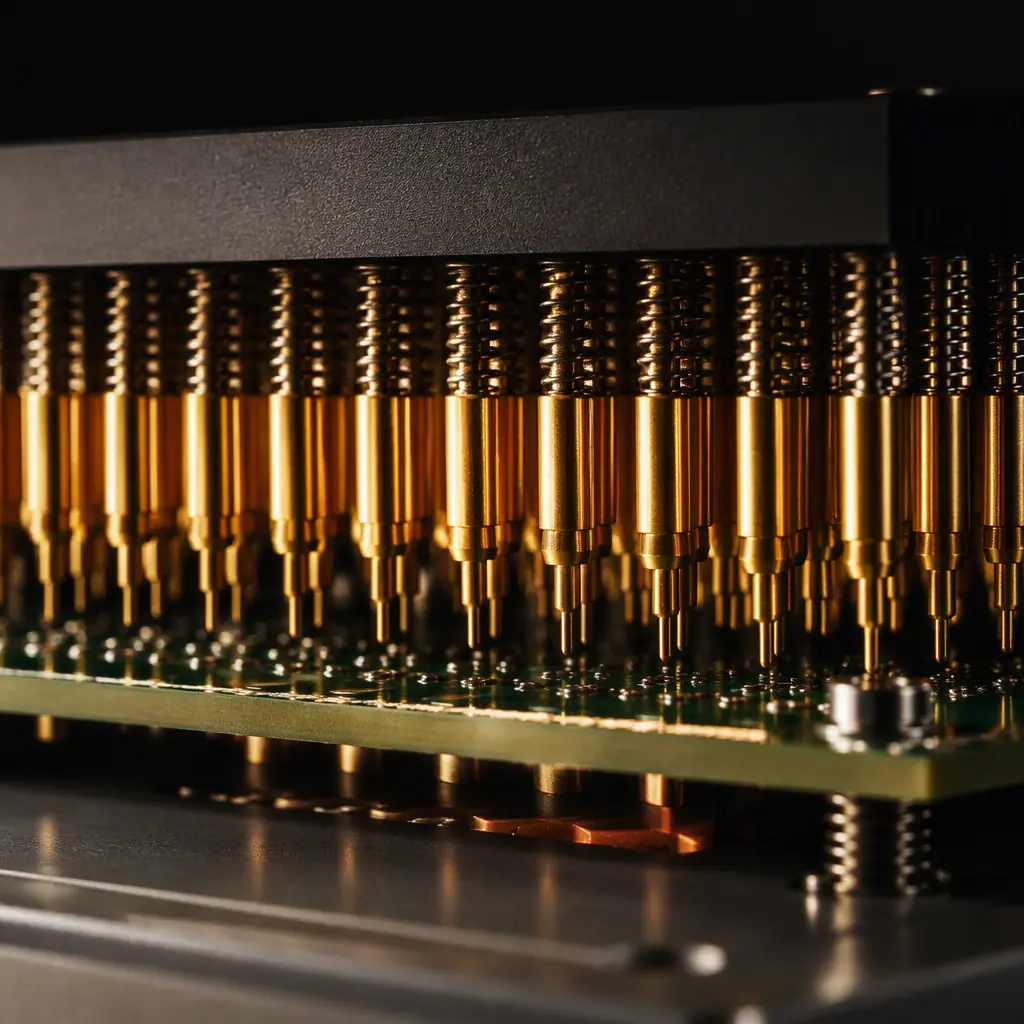
Fixture cost is not a one-time number. A bed-of-nails fixture wears. Pogo pins are consumables rated for tens of thousands of insertions; a board with 200 pad contacts means 200 probes that all need to stay within tolerance.
Plan for Probe Wear and Replacement
Expect to replace spring-loaded probes after a certain number of cycles, and to calibrate the fixture after any disassembly. Add a maintenance line to your annual PCBA budget: typically 5–10% of fixture cost per year, or the fixture quietly degrades and you start shipping escapes.
Fixture Cost Is Tied to Design-for-Testability
A board with proper test points, accessible nets, and adequate spacing tests fast and cheap. A board that hides every net under a BGA needs more probing and costs more to fixture. This is exactly why design-for-testability is worth doing before you release the layout, see our full guide.
Verify Fixture Design With a First Article
Every fixture should be proven against a first article before production. This catches a wrong probe or a missed test point early rather than after 1,000 boards have run. Our first article inspection guide covers the process.
Fitting Electrical Test Into Your Overall Quality Plan
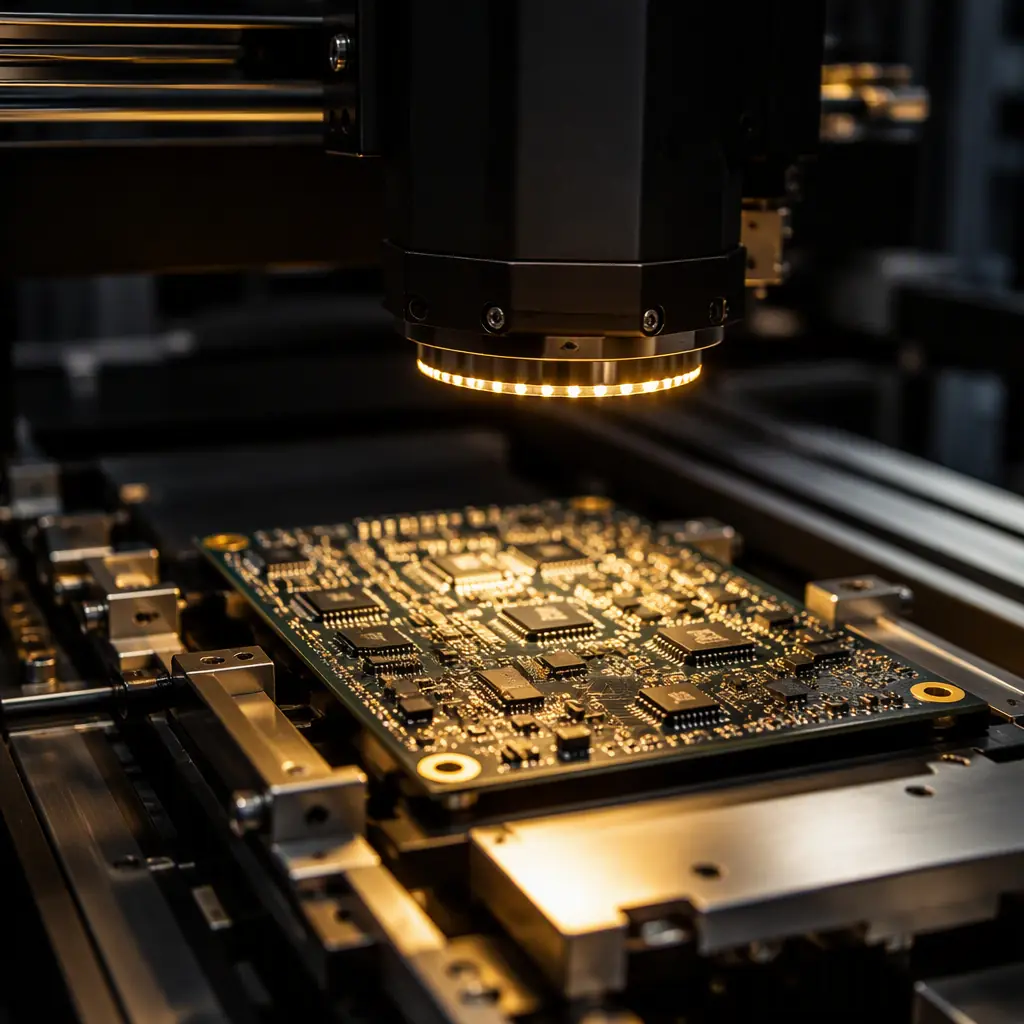
Electrical test is one layer in a stack that also includes AOI, SPI and X-ray. They catch different defects at different stages, solder paste volume before reflow, component presence and orientation after, and net continuity and function last. A robust plan layers them. Our AOI, X-ray and SPI inspection guide and our PCB testing methods guide walk through how these fit together.
And remember, the test you run affects what you accept. If you run bare-board flying probe only, then rely on inspection for the assembled part, you are accepting a real risk that an open joint is never caught. Pair a fixture-based test at volume with an ACL and quality metrics programme . See our AQL sampling guide for the batch-acceptance rules.
Summary, Buy the Fixture When the Volume Says So
A test fixture is the classic "spend money to save money" decision. It is justified when your volume clears the breakeven: typically around the 800–1,500 board mark, and whenever firmware functional test adds protection you cannot get any other way. For everything below that, flying probe and AOI are the right, cost-effective answer.
At Huaxing PCBA we do not push fixtures on projects that do not need them. We quote the test method that fits your real volume, apply a free DFM-for-testability review, and run AOI, SPI and X-ray inline across 8 SMT lines on a 15,000 m² campus. Send your files for a quote and we will show you the test cost on the line item so you can make the call with real numbers.