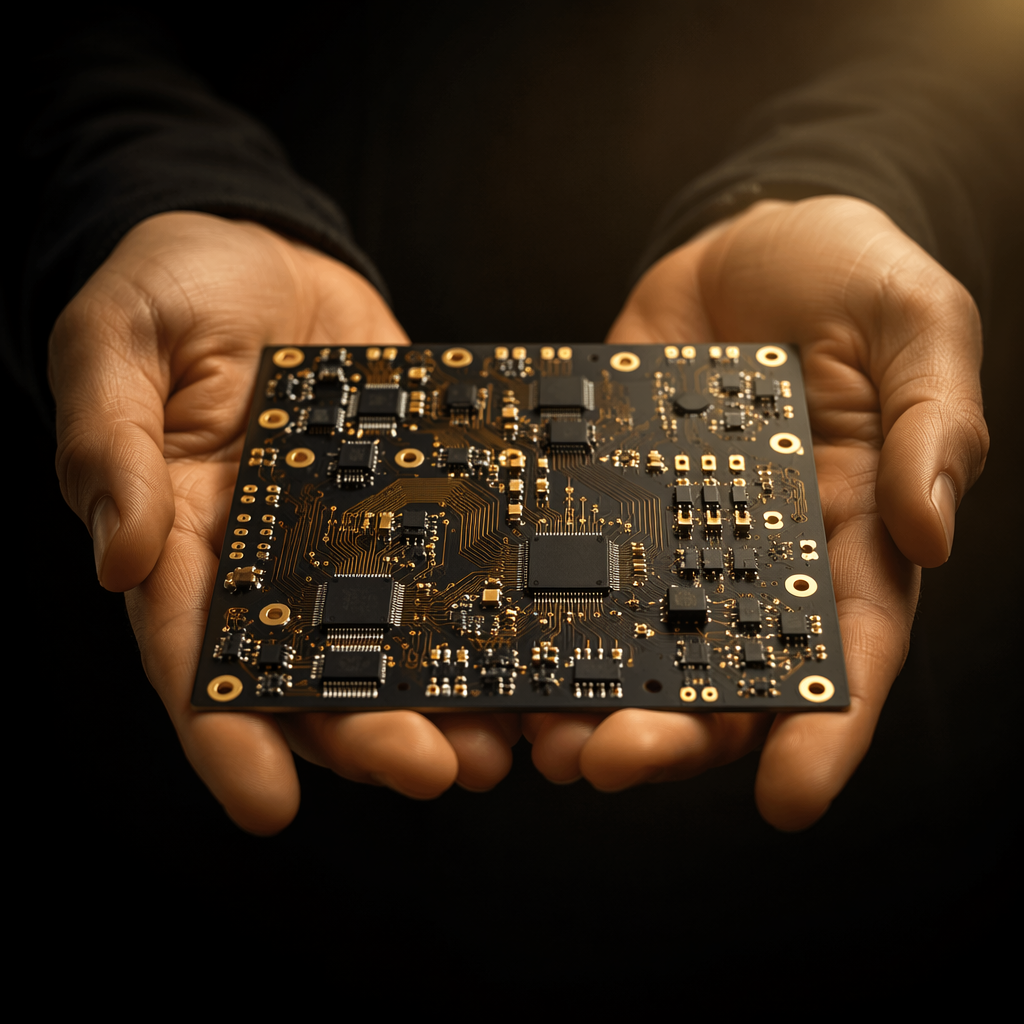
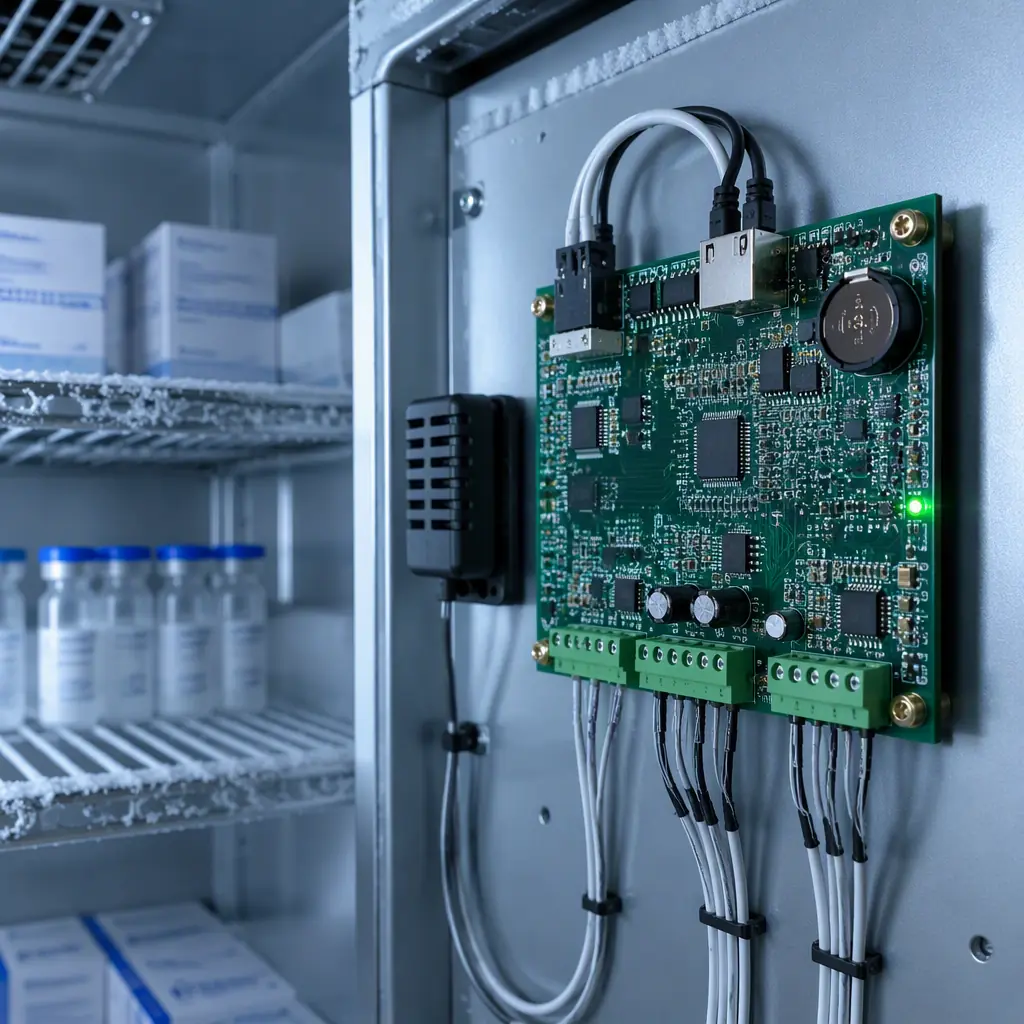
Cold chain is one of the fastest-growing segments in logistics and pharma, and almost every cold-chain product is a small electronics system. The global cold-chain market is now in the $300 billion+ range, with pharmaceutical cold-chain logistics alone growing above 15% a year. That growth creates a steady demand for the control boards and monitors that sit inside walk-in freezers, medical refrigerators, blast chillers, ice makers and GPS-enabled cold-storage telematics. These are not high-volume commodity boards. They are precision instruments with a safety and data-integrity duty. At Huaxing PCBA we build these control and monitoring boards with 8 SMT lines, 0.3 mm pitch and 0201 placement, in a 15,000 m² facility serving 30+ countries.
The Cold Chain Is a Control and Data Problem
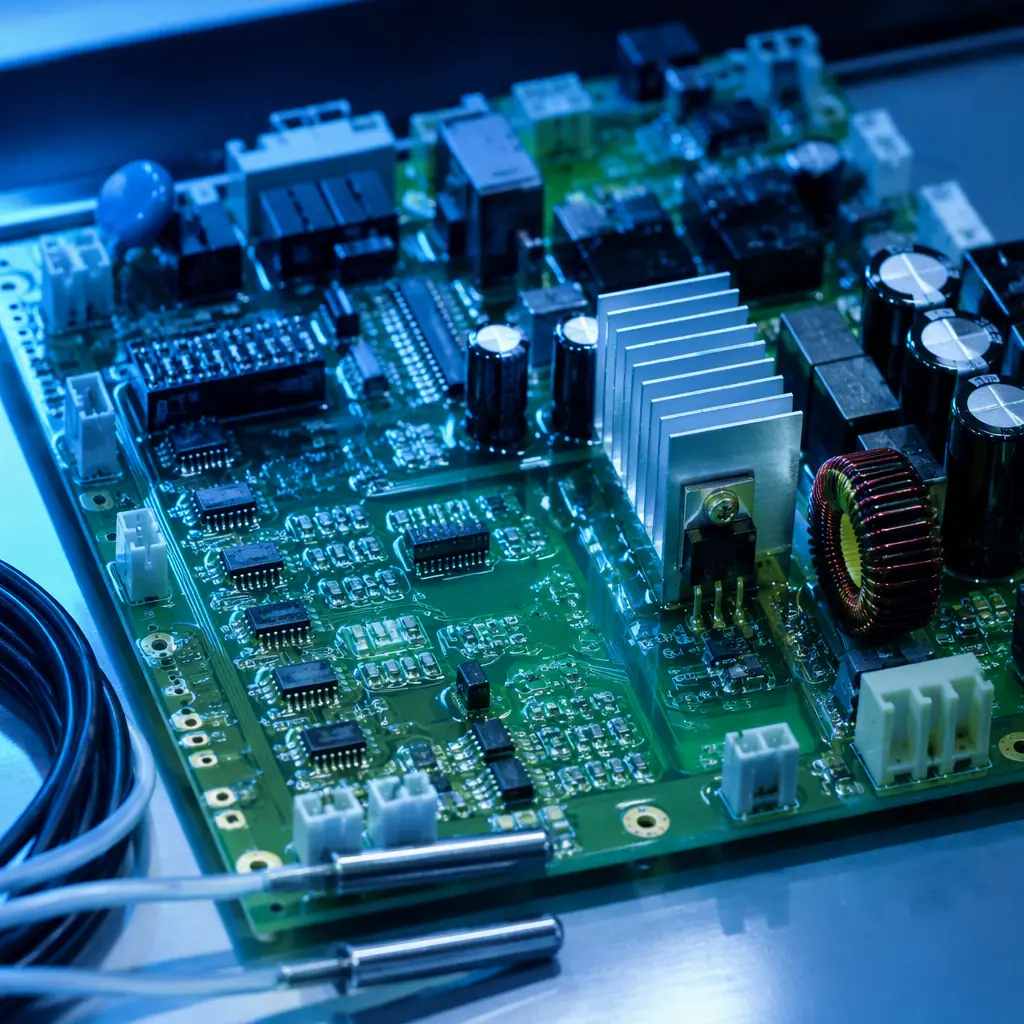
Every cold-chain product has two jobs. The first is keeping the temperature where it belongs, which is a control job. The board has to run a compressor, manage a defrost cycle and reject heat reliably. The second is proving that the temperature stayed where it belonged, which is a data job. The board has to log readings, timestamp them, detect excursions and send them somewhere. The second job is often the more demanding one, because in pharma it is a regulatory requirement, not an optional feature.
| Application | Target temperature | Monitoring accuracy | Primary duty |
|---|---|---|---|
| Vaccine / biologic storage | 2–8°C | ±0.3–0.5°C | Data integrity, alarms, audit trail |
| Clinical & research freezers | -20 to -40°C | ±1°C | Stable pull-down, low-temp seals |
| Food cold storage | 2–8°C / -18°C | ±1°C | Compressor efficiency, energy |
| Blast chiller / freezer | -35°C or lower | ±1.5°C | Fast pull-down, high compressor duty |
| Ice maker / dispenser | Ice production | ±2°C | Cycle control, water management |
The 2–8°C pharmaceutical band is the most unforgiving because the margin is thin and the consequence of an excursion is severe. A board that silently lets the temperature drift is not a minor quality issue, it is a potential batch recall. That is why the sensing, the data logging and the alarm path have to be designed as a whole system, not bolted on.
Pharma 2-8°C: Why ±0.5°C Accuracy Matters
A temperature log is only as good as the sensor and the conditioning in front of it. A cheap NTC thermistor with a sloppy reference may read within a few tenths of a degree, but after calibration error, self-heating and a long lead it can be off by 1°C or more. Which is the difference between an in-spec and out-of-spec reading at 2–8°C. High-performance cold-chain monitors use calibrated thermistors or digital sensors with a rated tolerance of about ±0.2–0.3°C, with the ADC and reference matched to that tolerance.
Sensor placement and redundancy
The sensing point has to represent the product zone, not the air beside the door. Multiple sensing points (supply air, return air, and a probe in the load) let the controller react to a real excursion rather than a localized warm spot. Redundant sensors let the board detect a failed channel, not just a temperature rise. A dead sensor that reads normal is more dangerous than a warm one. Our MEMS and sensor PCB design guide covers reliable signal conditioning.
Data integrity and audit trails
Pharmaceutical cold-chain loggers need to record a timestamped, tamper-evident history so that a regulator can verify the storage conditions after the fact. That means a real-time clock with battery backup, write-protected records, and a design that does not lose data on power loss. The control board and the logger firmware have to agree on the same clock and the same record of events.
Alarm path independence
A silent failure is the worst outcome. A well-designed monitor has an independent alarm path, audible, visual and remote, driven by a fault detection that can survive a primary controller task freeze. Some designs keep the alarm and logging on a separate low-power rail so a watchdog reset in the main MCU does not take the safety record with it.
Key Takeaway: In a 2–8°C pharma application the requirement is not "keep it cold" but "prove, with an unbroken timestamped record, that it stayed cold." The sensing tolerance, the clock and the tamper-evident logging are the real product. Temperature control is a subset of data integrity.
Refrigeration Compressor Control: Variable-Frequency and Inverter Drive
A fixed-speed compressor cycles on and off, which is inefficient and causes large temperature swings. A variable-speed or inverter compressor varies the compressor speed to hold a much tighter temperature band and uses far less energy. The board that drives it is a small power electronics system, an inverter stage switching at tens of kilohertz, a high-side/low-side gate driver, and a motor-current sense doing field-oriented control.
Inverter stage and gate drive
The inverter bridge switches the AC motor coil with PWM, converting the mains to a variable-frequency drive. Gate drive, dead-time and current sensing all have to be right or the compressor stalls, hums or burns out. Proper gate resistors, decoupling and a clean isolated supply are board-level decisions. Our inverter PCB and power electronics PCB guides cover the switching and thermal design.
EMI and EMC on a motor drive
Switching kilowatts at tens of kHz generates conducted and radiated EMI that can corrupt the temperature sensors and the radio on the same board. The layout has to keep the power stage away from the sensing and telemetry sections, use a solid split ground plane, and add filtering. For appliances sold in Europe this has to clear EMC limits, see our EMC/EMI compliance and EMI/EMC design guides for the practical approach.
Brownout and start-up handling
A compressor is the biggest single load in a facility, and the supply may sag when it starts. The board has to survive a low-line condition, a compressor lockout and a rapid cycle. A low-voltage monitor, a soft-start ramp and a controlled restart after a power interruption keep the system from hammering the compressor.
Defrost, Humidity and Condensation Engineering
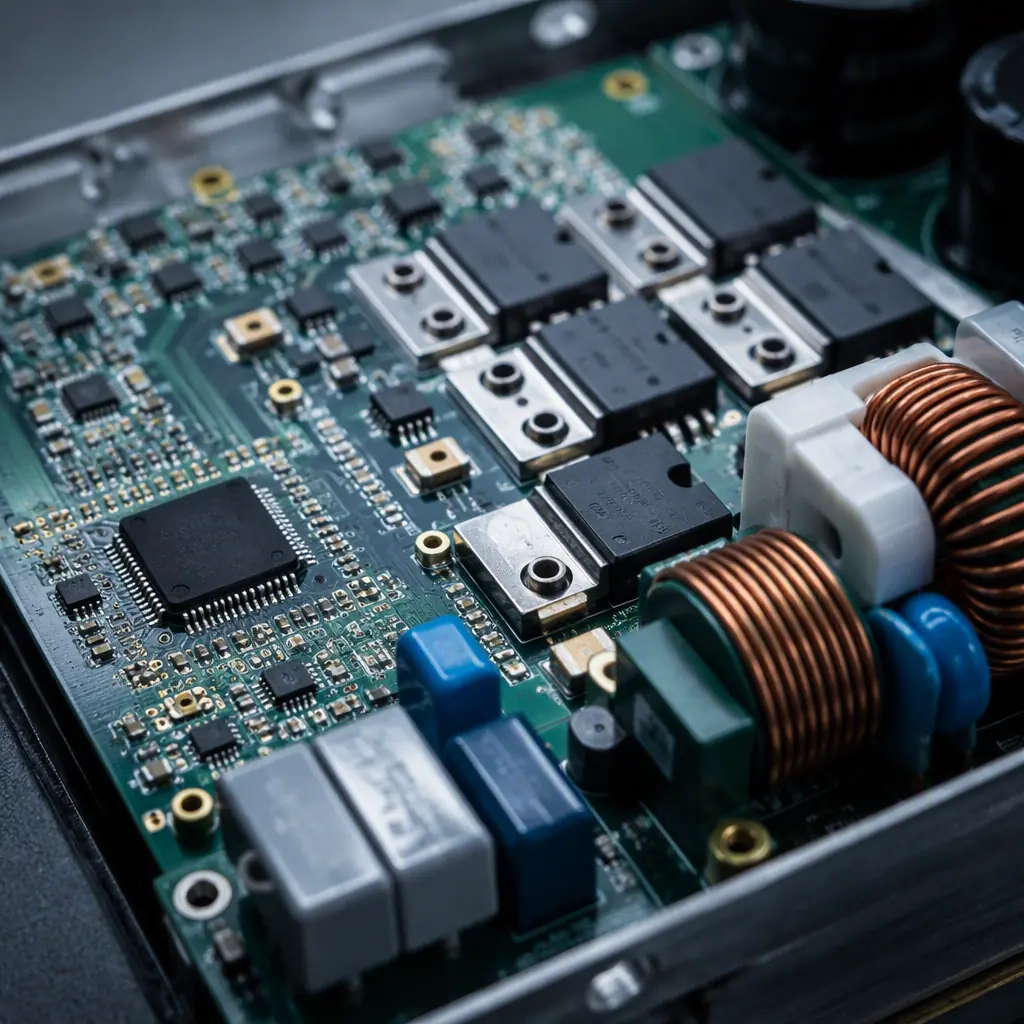
The inside of a refrigerator or freezer is a hostile place for electronics. The compressor and evaporator produce vibration, the coil builds frost, and the warm moist air that enters whenever the door opens condenses on the coldest surfaces. This is where a lot of cold-chain history is written, and where a poor board fails first.
Defrost cycle control
Frost on the evaporator coil throttles heat transfer and wastes energy. The board has to detect frost build-up and trigger a defrost cycle, electric heater, hot-gas bypass, or off-cycle, with careful temperature sensing to avoid over-defrosting or melting product. The decision logic and the heater control are a firmware and board design task, not something a timer alone can handle well.
Conformal coating and potting
Condensation is the number one killer of refrigeration control boards. The board has to be protected from moisture, and the standard answer is a conformal coating that resists humidity and condensation, acrylic or parylene for a thin protective film, or a silicone/urethane coating for tougher service. The correct material depends on the operating environment. Our conformal coating and parylene coating guides are the reference.
Sealed connectors and cable routing
A board is only as sealed as its connectors. Moisture wicks along cables, so the board has to use sealed, polarized connectors and route the sensing cables so they drain away rather than into the electronics. Humidity is often high (RH 85–95%) inside the cabinet, so even the board's own conformal coating matters more than the housing alone.
Real-Time Telemetry: Cellular, LoRa and Edge Buffering
The value of a cold-chain monitor is that it tells the operator where things stand before a shipment is lost. That requires a wireless link, and for cold-chain telemetry the two dominant choices are a cellular module (LTE-M or NB-IoT for low power and wide coverage) and a LoRa or LoRaWAN link for low-cost fleet coverage. Both push power and RF design challenges onto the board.
Modem power and RF layout
A cellular modem can draw peak currents of 1–2 A during a transmit burst, which is a serious load for a battery-backed logger. The board has to supply that burst without sagging the logic rail, and the RF section has to sit on a controlled-impedance trace to a tuned antenna. Our cellular IoT module design and PCB antenna design guides cover the layout.
Edge buffering and store-and-forward
Connectivity is not guaranteed. A warehouse can have dead zones, and a cellular network can drop. A robust logger buffers readings locally and only transmits when the link is available, so no temperature data is ever lost during a blackout. Local non-volatile storage and a store-and-forward firmware design are essential. Our data storage and low-power design guides are relevant.
Low-power idle modes
A cold-chain logger often runs on battery or on a small standby supply. The MCU, sensors and modem have to sleep between measurement intervals and wake fast, drawing microamps when idle. A design that reports a multi-year battery life is a design that has engineered the sleep/wake duty cycle properly.
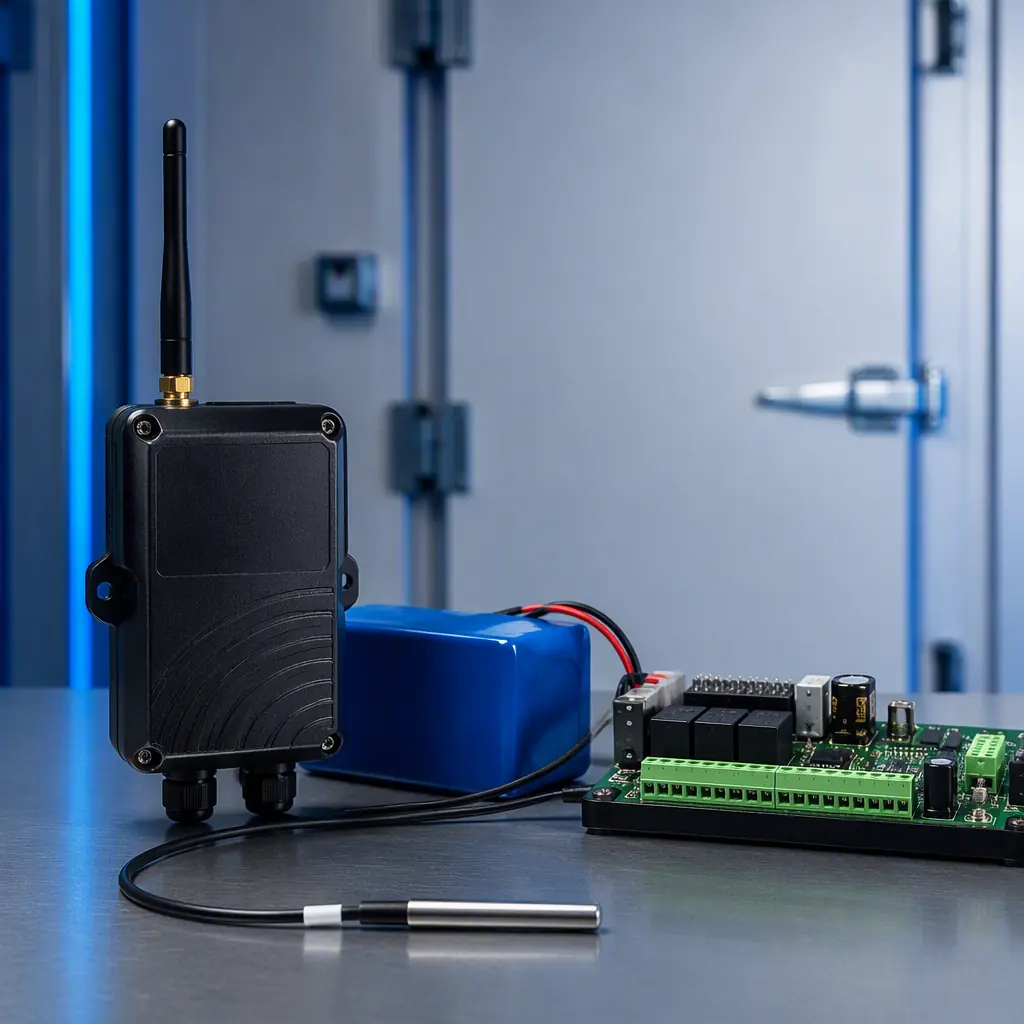
Procurement Tip: Ask the supplier to demonstrate the actual idle current and the transmit burst handling, not just the datasheet figures. A cold-chain logger that survives a brownout and a dead cell zone at the same time is the difference between a batch that is traceable and one that is a liability.
What to Specify With a Cold-Chain PCBA Supplier
Cold-chain boards sit at the intersection of precision sensing, power electronics, RF and environmental hardening. When you a lot them, the items below are the ones that determine whether the unit meets a regulatory audit and survives the real world.
| Specification | What to demand | Why it matters |
|---|---|---|
| Sensor accuracy | ±0.3–0.5°C, calibrated | Meets pharma 2–8°C tolerance |
| Data integrity | Timestamped, tamper-evident, power-loss safe | Passes regulatory audit |
| Conformal coating | Humidity/condensation rated | Survives cabinet moisture |
| Power stage | Inverter capable, EMI filtered | Efficient, compliant compressor drive |
| Telemetry | Edge buffering, store-and-forward | No data lost in a blackout |
At Huaxing PCBA we build cold-chain and refrigeration control boards with 8 SMT lines, 4 DIP lines, 32-layer fabrication and 0201 / 0.3 mm pitch placement, in a 15,000 m² facility with 500+ staff serving 30+ countries. We are ISO 9001, IATF 16949 and UL (E354321) certified, with a 99.2% on-time delivery and 98.7% first-pass yield. Upload your design for a quote or talk to our engineering team about your cold-chain product. For related applications, see our home appliance and medical device guides.