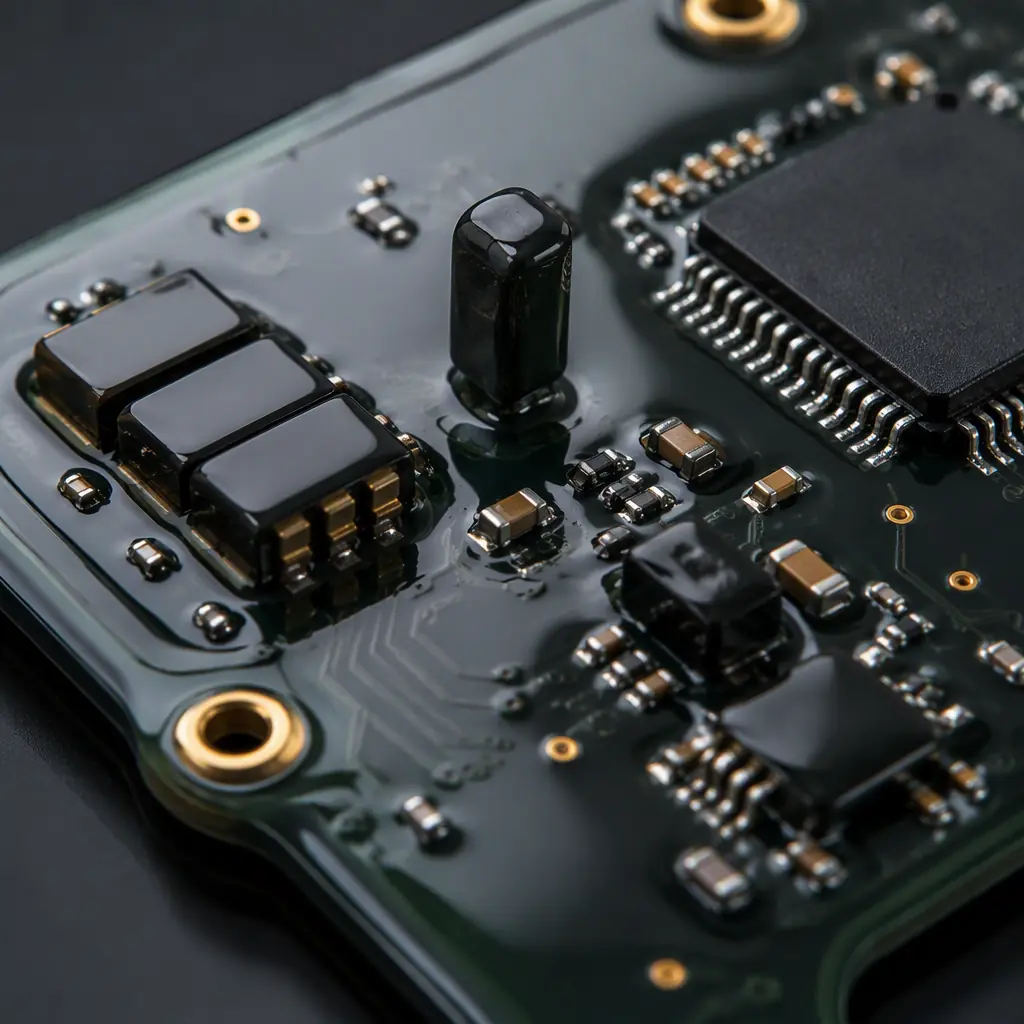
Every conformal coating protects a board. Nearly all of them do it by laying a measurable film of liquid, then curing it. Parylene does something fundamentally different, it grows a polymer film directly on the surface, molecule by molecule, from a vacuum-deposited monomer. Because the film is formed in situ, it reproduces the exact contours of the board, including the sharp points and undercuts where a brushed or sprayed coating thins and fails.
That is why, when a board has to survive for years inside the human body or months in an aircraft wing, buyers do not ask for a generic coating, they ask for parylene. At Huaxing PCBA, parylene is the option we recommend for the most demanding reliability classes, applied on 8 SMT lines and quoted against a documented thickness range. This guide is the selection and specification logic you need before you commit a board to it.
Why Parylene Is Different From Every Other Coating
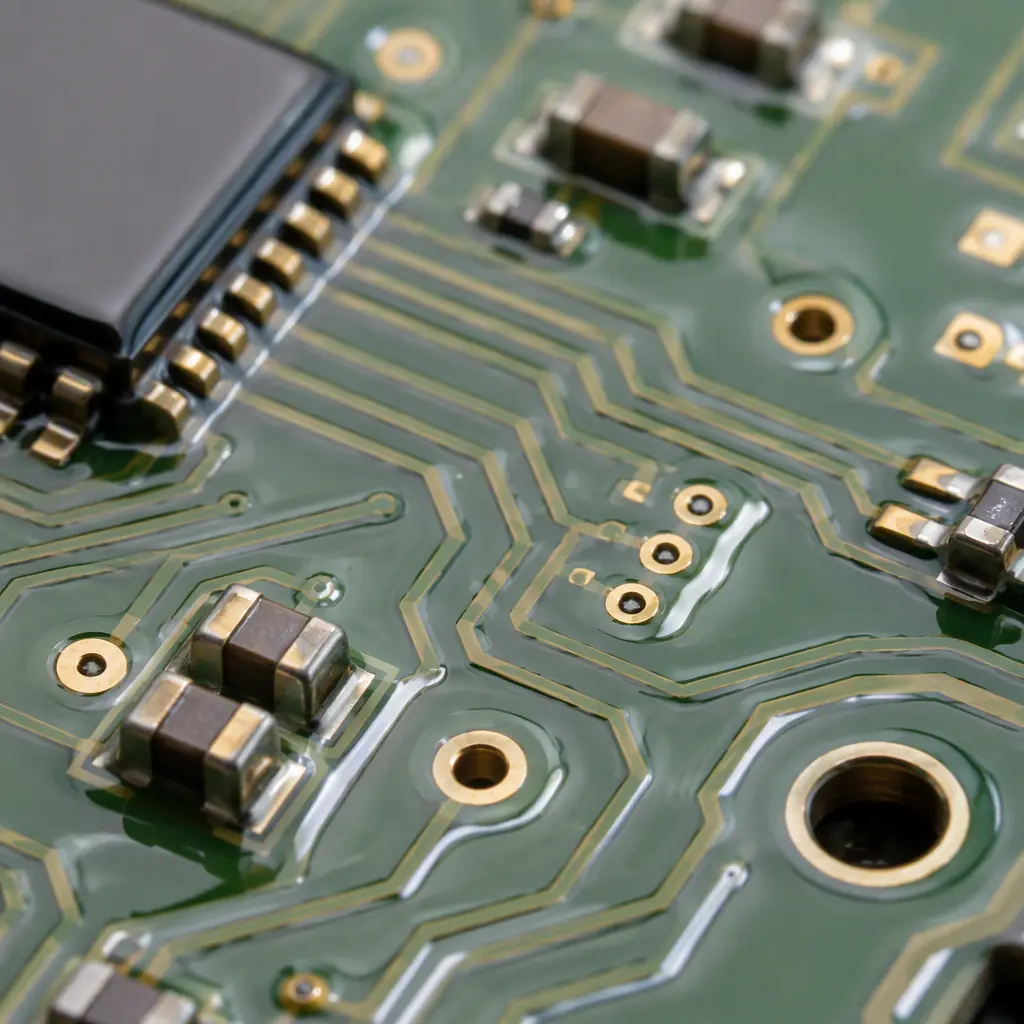
Conventional conformal coatings, acrylic, silicone and urethane, are applied as liquids and rely on surface tension to spread. They pool at component bases, thin at sharp edges, and can bridge closely spaced pads. Parylene sidesteps all of that: the solid dimer is vaporized and pyrolyzed into a reactive monomer, which polymerizes on contact with the board at room temperature. The result is a uniform, pinhole-free film a fraction of a micron to a few microns thick that covers every exposed surface, edges, standoffs, lead tips, and the undersides of components.
Because deposition happens at low temperature and low pressure, parylene is the go-to choice for boards that cannot tolerate the thermal or mechanical stress of other methods, and for the tight geometric tolerance of fine-pitch and high-reliability designs. Where a film's dielectric strength and moisture barrier truly matter, parylene delivers a consistent, measurable result rather than a coat of hope.
Parylene C, D, N and F, Choose the Right Type
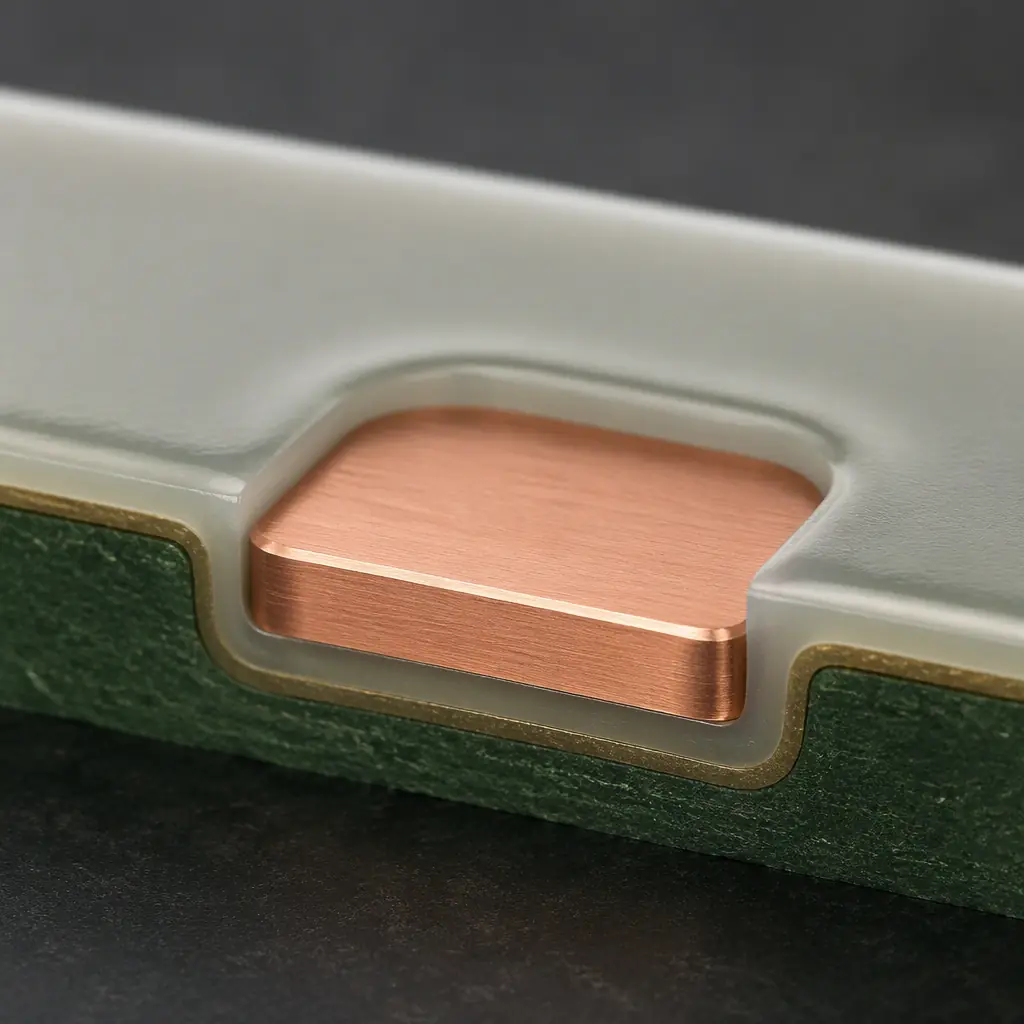
Parylene is a family, not a single material. The four common grades differ in their molecular substitution, which changes thermal, dielectric and barrier properties. Getting the type right depends on what you are optimizing for: barrier performance, heat resistance, or dielectric stability.
| Type | Key trait | Best for | Watch-out |
|---|---|---|---|
| Parylene C | Best overall moisture barrier | Most electronics, implants, PCB protection | Lower continuous temp ≈ 80–125 °C |
| Parylene D | Higher temperature stability | High-temp aerospace, automotive | Deposition is slower, costlier |
| Parylene N | Lowest dielectric constant, high frequency | RF, high-frequency and measurement boards | Lower barrier to gases |
| Parylene F | Highest thermal and UV stability | Long-life LED, harsh-environment optics | Highest material cost |
For the broad majority of reliability applications, Parylene C is the default, it delivers the best moisture-barrier per dollar. But the right answer is always application-specific. Compare this with the simpler, lower-cost coating families in our conformal coating selection guide before you over-order performance you do not need.
The Thickness Range That Actually Matters
Parylene can be deposited from roughly 0.1 µm to 75 µm, but the practical, specified band for electronic assemblies is far narrower. The thickness you set is a balance. And it is a specification you must state, not a default you assume.
0.25–0.5 µm
Common for a very thin passivation or where only a cosmetic, minimal barrier is needed. Rarely used alone for reliability work.
0.5–2 µm
The most widely specified range for PCB conformal protection. It gives a real moisture and dielectric barrier without stressing the assembly.
5–25 µm
Used for chemical and mechanical toughness where the board must survive harsh fluids, abrasion or repeated handling.
Above 25 µm
Reserved for extreme barrier or very specific applications. Above roughly 75 µm, the film becomes brittle and harder to inspect.
Whatever value you choose, put it in the purchase order as a target with a tolerance, and require a DFT reading to confirm it was met. A parylene claim with no thickness number is a parylene claim you cannot verify. For the full acceptance criteria behind coverage and defects, read our IPC-A-610 conformal coating acceptance guide.
Parylene vs Silicone, Urethane and Acrylic, a Decision Table
| Criteria | Parylene | Silicone | Urethane | Acrylic |
|---|---|---|---|---|
| Dielectric strength | Very high (5,000+ V/mil) | High | High | Moderate |
| Moisture barrier | Excellent | Good | Good | Fair |
| Pinhole-free conformal | Yes, conforms to atom level | Partial | Partial | No |
| Rework ease | Hard (needs abrasion/plasma) | Moderate | Moderate | Easy |
| Relative cost | Highest | Moderate | Moderate | Lowest |
Procurement Tip: Parylene shines when the priority is an unforgiving moisture barrier, a truly pinhole-free film, or a coating that must not bridge tight-pitch pads. It costs more and is harder to rework, so it is not the default for every board. It is the default for boards that cannot afford to fail.
When Parylene Is Worth It: Medical, Aerospace and Defense
Parylene earns its cost in the industries where a single coating failure is unacceptable. In medical devices, including implantables and diagnostic instruments, the pinhole-free, bio-stable film and the ability to deposit it at low temperature make it a first choice. In aerospace and defense, its thermal stability and thin, hermetic-like barrier protect boards flying through temperature extremes. The same reasoning extends to downhole oil & gas, immersion-cooled and high-reliability industrial boards. For the design context in the aerospace sector specifically, see our aerospace & defense PCB guide.
Where a board must also be re-workable on the line, or where the coating will be removed later, read our PCB rework & repair guide . Parylene removal is a real process consideration that should be planned for at design time, not discovered in the field.
How to Specify Parylene, and How to Verify It
Because parylene is a vacuum process with tight tolerances, the specification must be written like one. State the type, the target thickness with a tolerance, the areas to be masked (connectors, test points, optics, gold fingers), the relevant material qualification standard: typically IPC-CC-830 . And the inspection evidence you want, including a dry-film-thickness (DFT) reading and pinhole coverage review. Our ionic contamination & cleanliness testing guide covers the adjacent cleanliness verification that matters before coating.
Key Takeaway: Parylene is a precision vacuum coating, not a paint. Its value and its price both depend on the type, the thickness and the deposition control. Specify Parylene C (or the type your application demands), state a thickness band such as 1–2 µm, mask your sensitive zones, reference IPC-CC-830, and require a DFT reading with the shipment. Buyers who write that get a coating they can trust; buyers who write "parylene coated" get a gamble.
At Huaxing PCBA we apply parylene and selective conformal coating across our 8 SMT lines with automated deposition and thickness verification, processing over 8 million placements per day for customers in 30+ countries. We are ISO 9001, IATF 16949 and UL certified, and we quote coating to a documented thickness range against an agreed acceptance level. Upload your files for a quote or talk to our engineering team about your parylene specification.