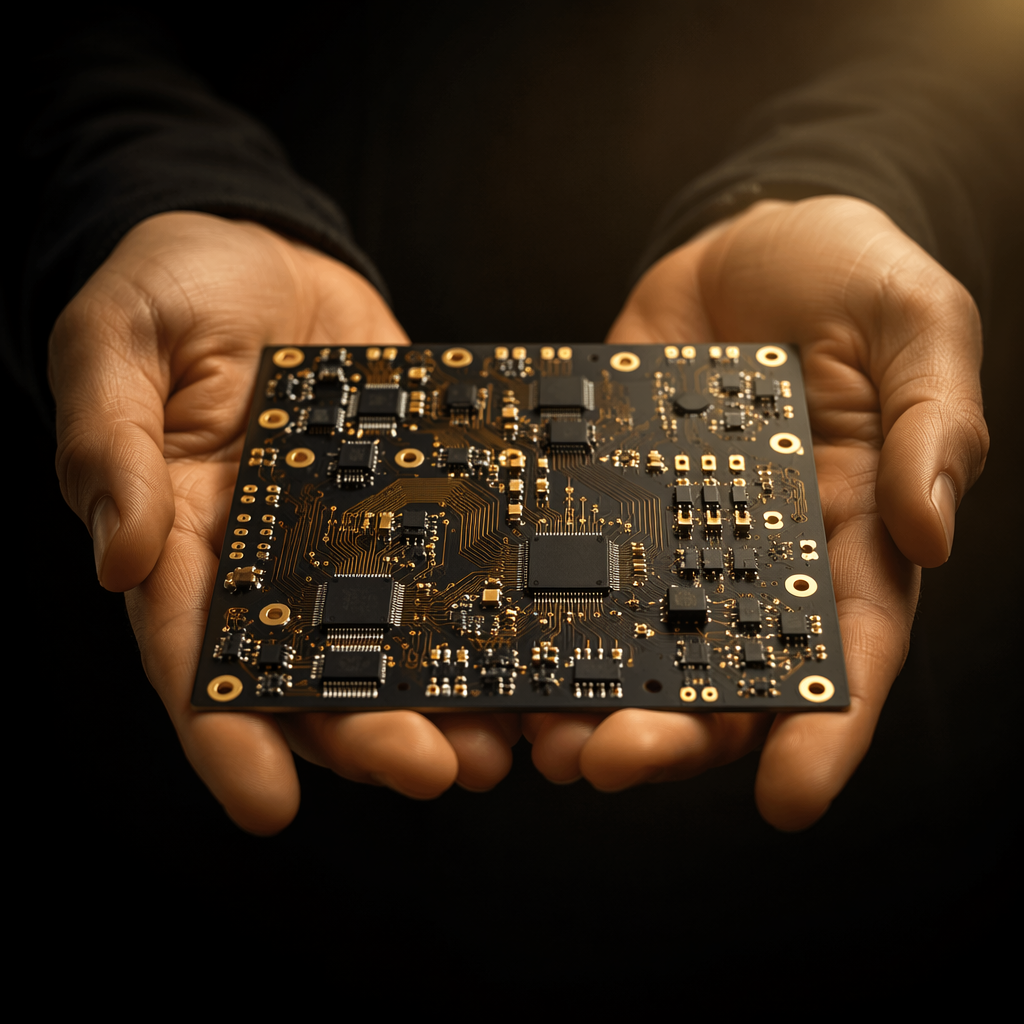
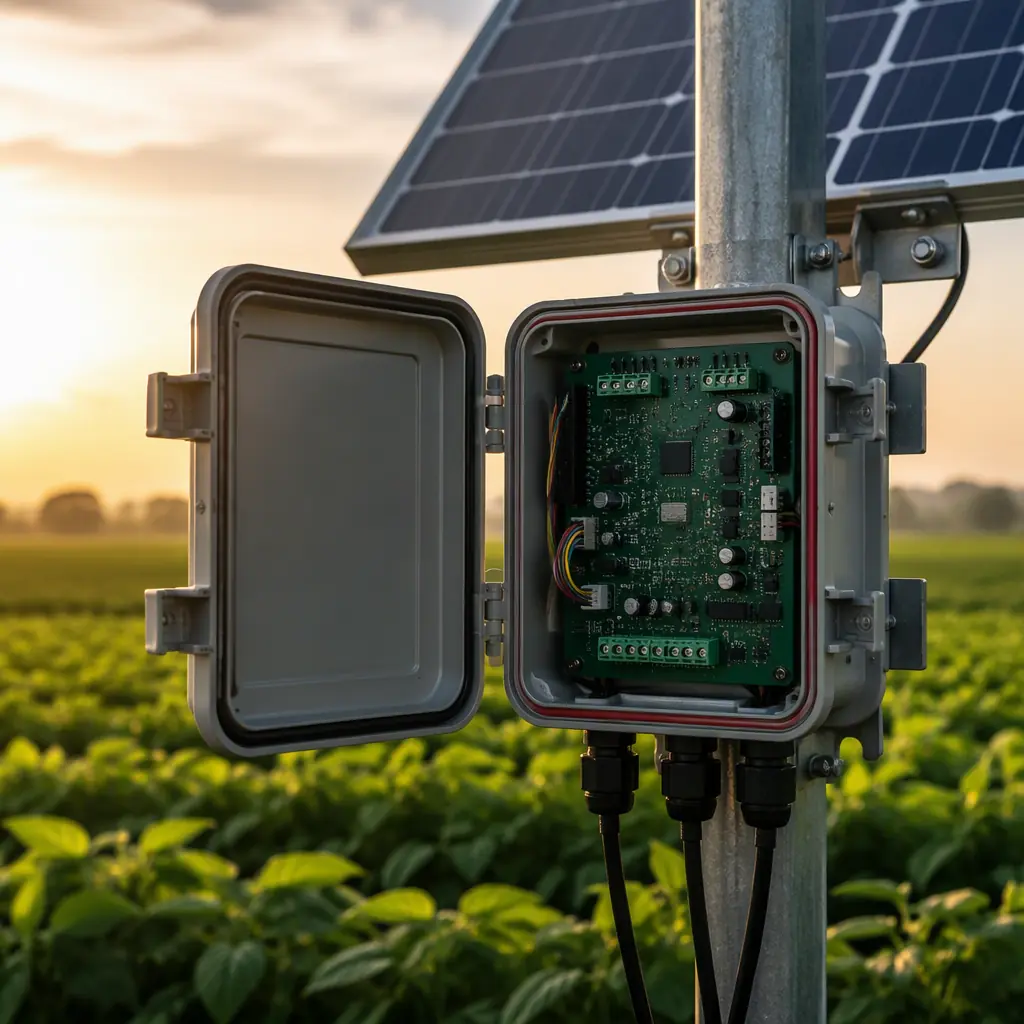
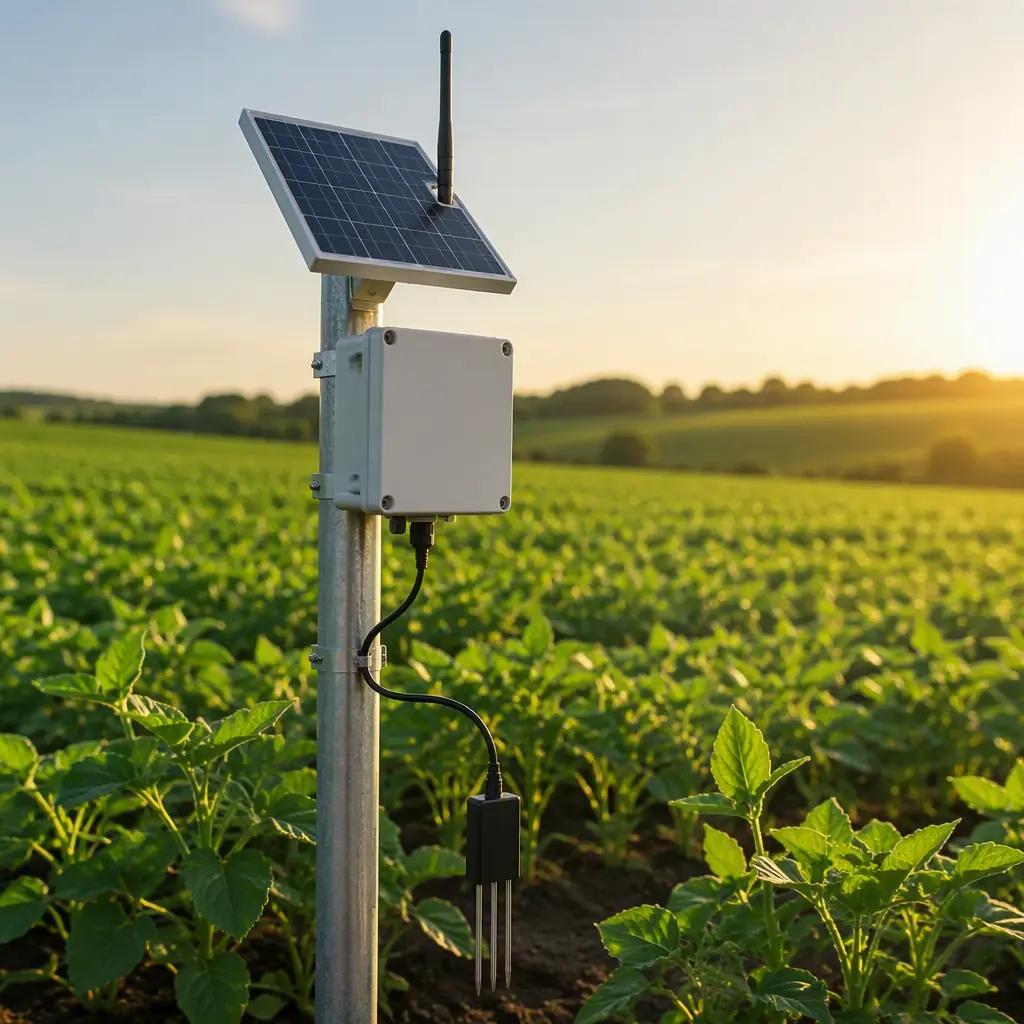
Precision agriculture is a rapidly growing user of custom electronics, soil probes, weather stations, irrigation controllers, drone-based crop monitors and livestock trackers all need boards that keep working after a season in the field. The electronics may be simple, but the operating environment is about as hostile as an industrial PCB gets: wide temperature swings, high humidity, dust, chemical exposure and constant vibration.
This is exactly where a board designed for a bench or a clean cabinet fails. The failure is rarely the silicon. It is the solder joint, the connector, the coating, or the trace that corroded in a humid field box. Huaxing PCBA builds ruggedized control boards on 8 SMT lines with IATF 16949 and ISO 9001 quality systems, and supports conformal coating, potting and full environmental testing to IPC Class 3 standards.
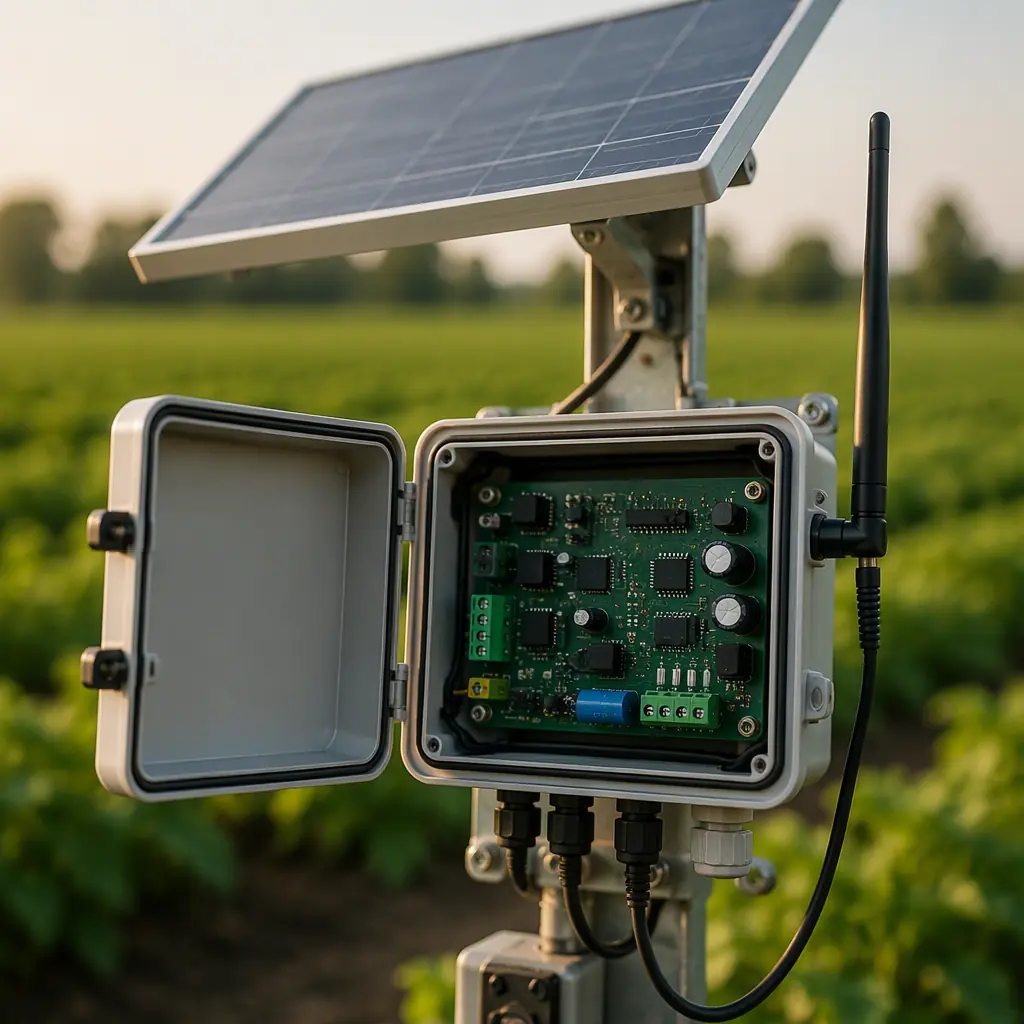
Why Agricultural Electronics Fail In The Field
Understanding the failure modes is the first step to designing them out. Most field failures trace to a handful of causes that are entirely preventable with the right board specification.
Moisture And Condensation
A sealed enclosure still breathes; as the air cools at night, humidity condenses on the board. Over months, that moisture corrodes the copper, migrates between pins and shorts fine-pitch parts. A conformal coating or potting is the standard mitigation, see our conformal coating guide and potting guide.
Temperature Swing And Thermal Cycling
Field electronics see daily cycles from below freezing to well over 40 °C in direct sun. Repeated thermal cycling fatigues solder joints and can crack BGA balls, a classic cause of intermittent field failure. See our thermal cycling testing guide.
Vibration From Machinery And Wind
Controllers mounted on tractors, combine harvesters or irrigation pivots take constant vibration. Loose connectors, hairline cracks and damaged solder joints are the result. Mechanical design, anchors, strain relief and connector locks, is a requirement, not a bonus.
IP67 And Washdown Ruggedization
Many agricultural devices must survive washdown cleaning and rain ingress. IP67, dust-tight and waterproof to 1 m for 30 minutes per IEC 60529, is a common spec, and the board has real responsibilities in achieving it.
Spec The Sealing At The Enclosure And Board
IP67 is a housing rating, but the PCB supports it: robust gasket-interface pads, sealed cable glands, and a board-to-enclosure design that does not create a moisture path. Generous clearance and creepage around high-voltage nets and exposed connector lands matter too.
Pot Or Encapsulate Sensitive Regions
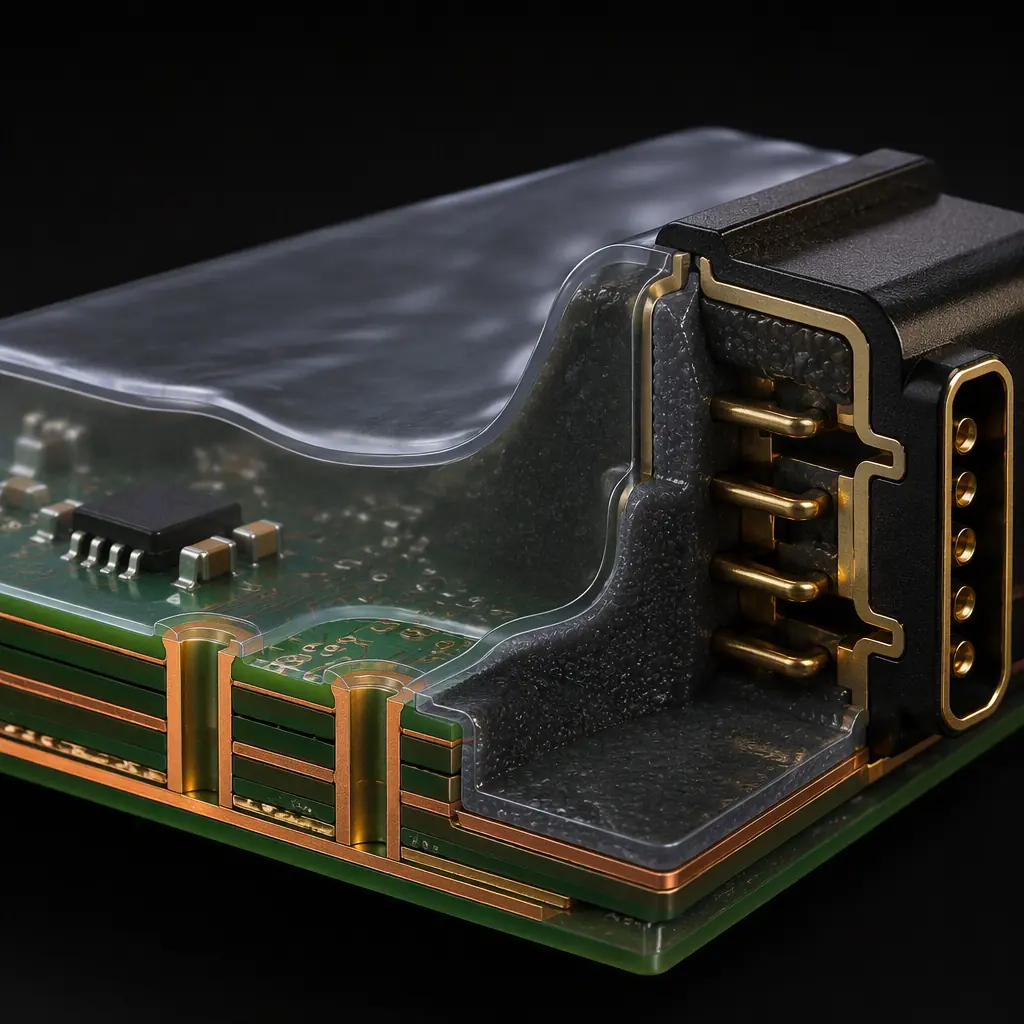
Potting with a flexible polyurethane or silicone seals the entire board edge, and where connectors protrude, a sealing ring stops moisture wicking down the cable. These steps protect the board even when the IP gasket ages. See our encapsulation guide.
Choose The Right Surface Finish
ENIG offers excellent corrosion resistance and is a solid default for field boards; ENEPIG adds nickel-palladium for wire-bonding or connectors. For very corrosive environments, hard gold on contact areas protects against wear. See our surface finish selection guide.
Low-Power And Solar Operation
Remote field sensors rarely have mains power. They run from a small solar panel and a battery, which means every microamp drawn by the board is a week less of autonomy. This drives both the firmware and the hardware design.
A Low-Power PMIC And Sleep Architecture
Design the board to sleep between measurement windows. A low-quiescent-current LDO or DC/DC, a real-time clock that wakes the MCU, and isolated sensor power that is shut down when idle keeps the average draw in the tens of microamps. See our power electronics guide.
Regenerate And Condition The Energy
A solar cell is not a clean source, its output varies with light and temperature. A charge controller and proper battery management are essential, and the layout must handle the charge/discharge current paths cleanly. Our energy harvesting guide covers the design.
Minimise Leakage In Layout
On a low-power board, leakage paths steal current. Keep high-impedance nodes short, use solder-mask openings sparingly, and give the analog and digital power domains clean separation. A well-laid-out board with a clean ground plan pays dividends in both power and signal quality.
Sensor Signal Chain And EMC
Agricultural sensors measure small signals, soil moisture, pH, temperature, gas concentration, that are easily corrupted by noise from switching regulators, motors and radio transmitters. Signal fidelity is what turns a sensor into data you can trust.
Protect And Filter The Analog Front End
Add input protection, an anti-aliasing filter, and a proper reference ground return for the analog signal path. The return path matters as much as the signal path. See our mixed-signal layout guide.
Design For EMC From The Start
Field devices must pass emissions and immunity requirements, and they coexist with radios and motors in close proximity. A solid ground plane, good decoupling and controlled-impedance routing on the RF sections are the foundation. See our EMC/EMI compliance guide.
Keep The Antenna And RF Clean
If the device reports over LoRa, NB-IoT or a cellular link, the antenna and its feed are among the most sensitive areas on the board. Keep the antenna region clear of copper, ground vias and noisy switching parts. See our LoRa design guide and antenna design guide.
What To Verify In An AgTech PCB Supplier
Because the product lives or dies on reliability, procurement should check more than price. These four things separate a board supplier that will keep a field device alive from one that will not.
| Check | What To Look For | Why It Matters |
|---|---|---|
| Quality system | ISO 9001 / IATF 16949 | Continuous, audited quality |
| Acceptance standard | IPC-A-610 Class 3 | Highest assembly reliability |
| Environmental testing | Thermal cycling, vibration, salt | Matches field failure modes |
| Traceability | IPC-1782 lot traceability | Finds root cause on failure |
Verify Certifications Are Current
Ask for the certificate numbers and confirm they are live, not expired. UL and ISO credentials can lapse. See our certifications guide for how to validate a PCB supplier's claims.
Ask For A Reliability Test Plan
A good supplier will propose the environmental and reliability tests your field product needs, thermal cycling, temperature-humidity, vibration and accelerated life. See our testing methods guide and vibration testing guide.
Push For A Remote Audit Or Quality Report
For a field-critical product, a remote factory audit and access to incoming/outgoing quality reports gives confidence before you commit to volume. See our remote factory audit guide and supplier scorecard guide.
Summary, Specifying The Field-Ready Board
Ruggedize for the environment before you optimise anything else: coat or pot the board for condensation, seal every connector path, verify IP67 at the enclosure, and design the power for low-quiescent sleep. Then protect the small analog sensor signals from the noise around them, and hold your supplier to a certified quality system and a real reliability test plan.
At Huaxing PCBA we manufacture ruggedized industrial and IoT control boards on 8 SMT lines with IPC-A-610 Class 3 assembly, conformal coating and potting, and full environmental testing, backed by ISO 9001 and IATF 16949. We offer a free DFM & reliability review of the sealing, power and sensor layout of your agricultural electronics design. Send your Gerber and BOM for a quote or talk to an engineer about your field-hardened project.