"Solderability" sounds like one property, so it is tempting to think one test measures it. In practice, two tests dominate the field — the solder float test and the wetting balance — and they answer different questions. The float test asks a pass/fail question: will solder wet this surface within a defined time under a defined condition? The wetting balance asks a quantitative one: how fast, and how strongly, does this surface pull on molten solder? For an incoming inspection that needs a yes or no, the float test is usually enough. For a process qualification that needs a number to trend and a curve to diagnose, you need the balance. Confusing the two leads to either over-testing or to trusting a number that does not mean what the buyer thinks it means.
This guide covers both methods side by side: the standards behind them, the mechanics of each, what the results actually prove, and how to choose. It goes deeper than the general overview in our PCB solderability testing guide, which covers the J-STD-002 and J-STD-003 landscape and where solderability fits in a purchase order. Here we take the two specific tests apart.
At Huaxing PCBA we run solderability testing as a routine incoming control across 8 SMT lines under IATF 16949 and ISO 9001, and we hold both float-test and wetting-balance capability. The choice of method is written into the inspection plan, not left to whoever runs the bench that day.
What Each Test Actually Does
The two methods differ in how they present the sample to molten solder, and that difference is the reason they answer different questions.
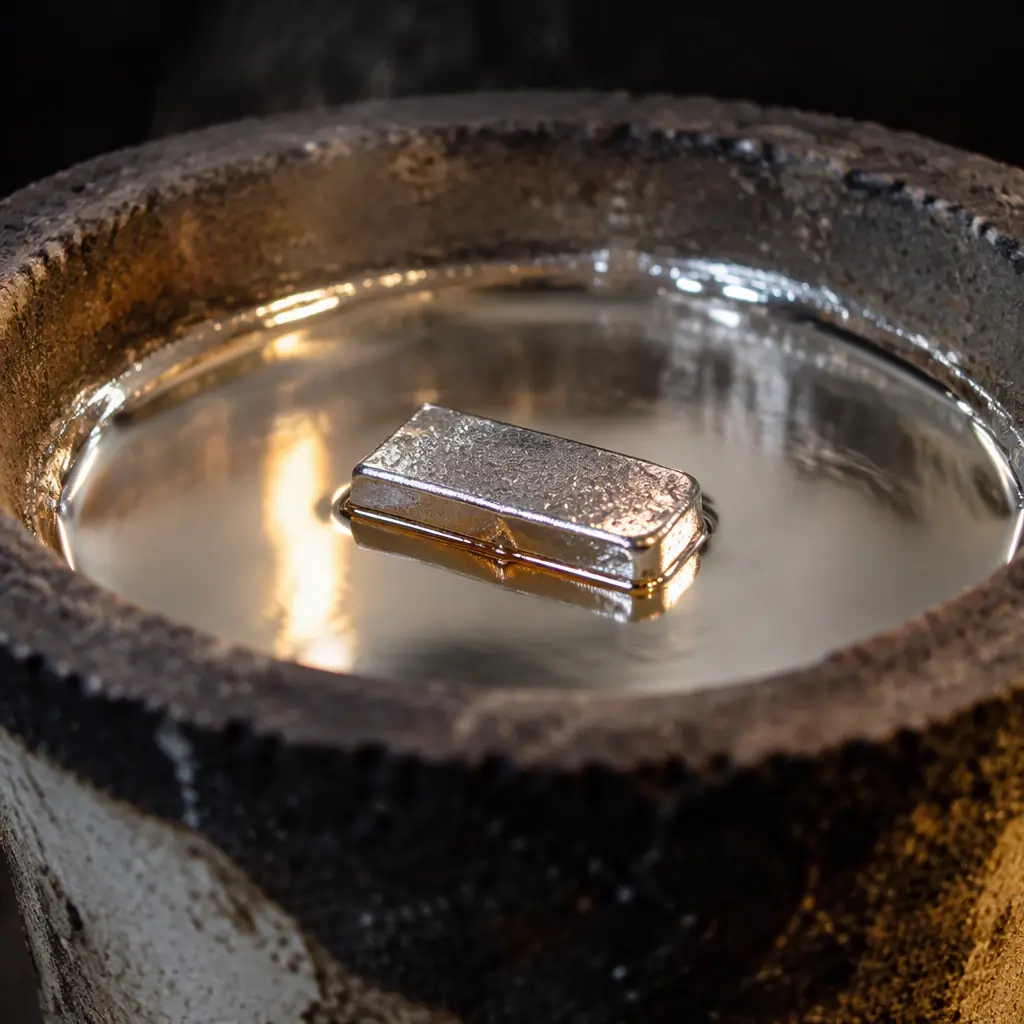
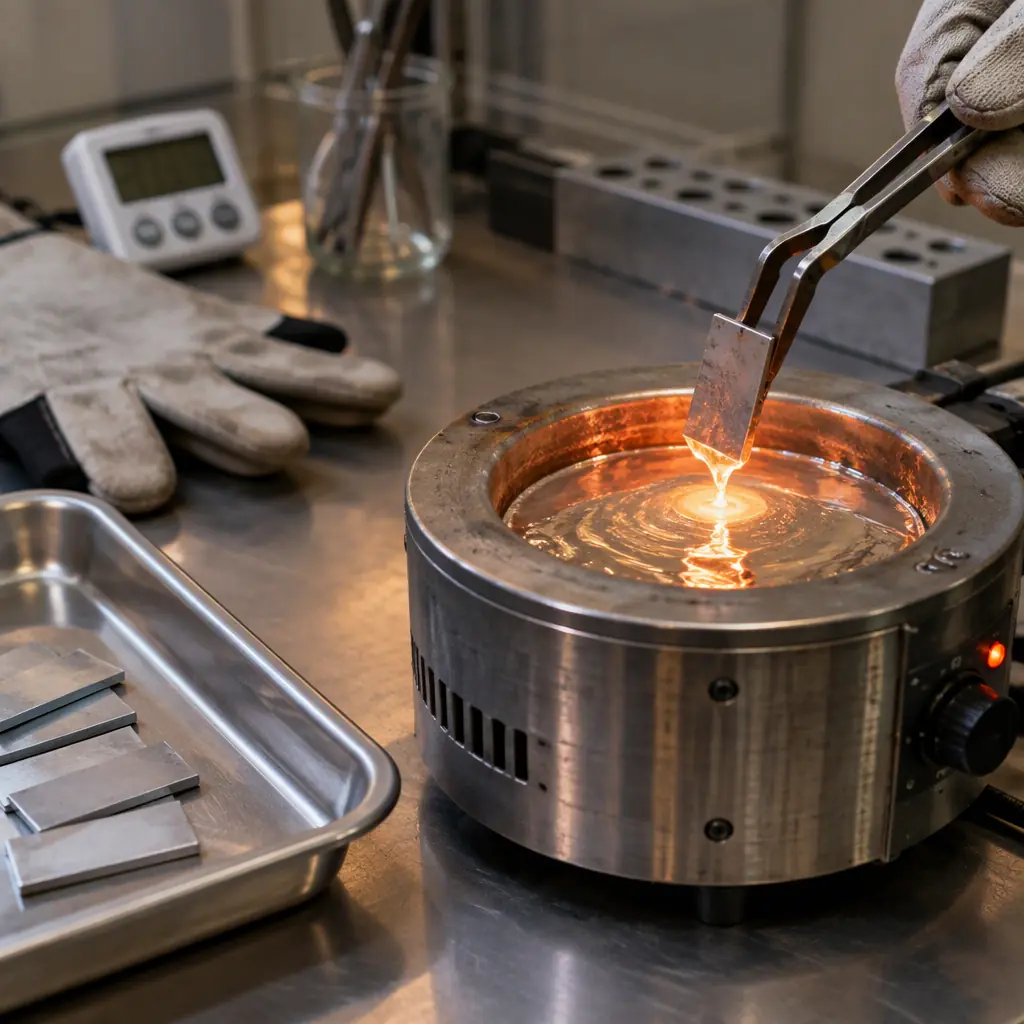
The solder float test is a qualitative steam-approach method. A specimen — typically a plated test coupon or a component lead — is coated with flux and lowered onto, or floated on, a bath of molten solder at a controlled temperature, held for a specified time, then withdrawn and examined. The test asks a simple question: after the specified dwell, is the surface wetted? A pass shows continuous, smooth, adherent solder coverage over the tested area, free of dewetting and non-wetting. A fail shows bare patches, a retracted ball, or solder that did not adhere. It is governed by the J-STD-002 family for component leads and the J-STD-003 family for board surfaces, and it is the workhorse of incoming inspection because it is fast, cheap, and produces an unambiguous pass or fail.
The wetting balance test is a quantitative force method. A specimen is suspended from a sensitive balance, coated with flux, and lowered into molten solder while the balance continuously measures the vertical force on the sample. The resulting force-versus-time curve — the wetting curve — shows the buoyancy and wetting behaviour over the test interval. From that curve you extract numbers: the time to reach zero force, the time to reach maximum wetting force, and the maximum force itself. The shape of the curve also diagnoses behaviours a pass/fail cannot: slow wetting, weak wetting that never reaches a good maximum, or de-wetting where the force rises and then falls. It is governed by J-STD-002 for leads and the corresponding methods for surfaces, and it is the tool of choice whenever you need a trend or a diagnosis rather than a verdict.
Key Takeaway: The float test gives a verdict — pass or fail — and the wetting balance gives a measurement — how fast and how strongly the surface wets. Use the float test to screen, and the balance to diagnose or to trend. A float test can tell you a surface failed; only a wetting curve tells you why.
Side-by-Side Comparison
Placed next to each other, the strengths of each method become clear. Neither is superior; they answer different questions and belong at different stages of control.
| Attribute | Solder Float Test | Wetting Balance Test |
|---|---|---|
| Output type | Pass / fail (qualitative) | Force–time curve with numeric values |
| Question answered | Will it wet in the specified time? | How fast and how strongly does it wet? |
| Standards | J-STD-002 (leads), J-STD-003 (boards) | J-STD-002, J-STD-003 wetting balance methods |
| Equipment cost | Low — solder pot and fixture | High — precision balance and data system |
| Operator skill | Moderate — visual judgement of coverage | Higher — curve interpretation |
| Speed per sample | Fast | Slower, but automated curves |
| Trend capability | Poor — pass/fail has no gradient | Excellent — numeric values trend over time |
| Best use | Incoming inspection, accept/reject | Process qualification, supplier comparison, diagnosis |
| Reports on | Coverage after dwell | Wetting speed, wetting force, dewetting onset |
The practical reading of that table: the float test is the screen, the balance is the instrument. Most incoming-inspection programmes run float tests as the routine gate and reserve the wetting balance for the cases the float test flags or for periodic supplier comparison. Running the balance on every lot is expensive and slow; running only float tests leaves you unable to prove improvement or diagnose a marginal surface.

Reading the Results Correctly
Both tests are easy to misread, and the errors run in opposite directions.
Float-test errors. The most common mistake is judging coverage by eye on a curved or irregular specimen, where shadowing hides a bare patch or a reflective area looks wetted when it is not. The second is running the bath at the wrong temperature or dwell time, so the pass criterion is applied to the wrong condition. Both errors are addressed by fixed, documented test conditions and by inspecting under consistent illumination against the acceptance criteria, ideally with a low-power magnification. A float test is only as good as the discipline of the person reading the coupon. See the solderability testing overview for the acceptance criteria detail.
Wetting-balance errors. The most common mistake is comparing curves taken at different flux activities, different solder temperatures, or different immersion depths — none of which are comparable. The second is reading only the maximum force and ignoring the time to maximum, when the time component is often the more sensitive indicator of a marginal surface. A surface can reach an acceptable maximum force but take too long to get there, which is exactly the failure a float test would miss and a production reflow would punish. Always record and trend both the force and the time.
One further distinction matters for both. Solderability testing measures the surface as it arrives, not as it performs in production. A surface that passes a float test today can fail after storage, after a bake cycle, or after a handling step that oxidises it. That is why soldering controls extend beyond the test: the surface has to be protected between receipt and reflow. See PCB storage and moisture control and solder paste storage and handling for the storage side.
Choosing Between Them for Your Inspection Plan
The choice follows from what you need the test to do. Match the method to the job rather than defaulting to whichever bench you already own.
Use the float test for routine incoming acceptance
When the question is simply whether a delivered lot of leads or boards will accept solder, the float test answers it cheaply and quickly. Run it on a defined sample plan per lot, under fixed conditions, and record the pass/fail. It is the right gate for high-volume receiving where the vast majority of lots should pass and the cost of testing has to stay low.
Use the wetting balance when you need to trend or diagnose
When a float test flags a lot and you need to know whether the surface is marginally poor or badly oxidised, the wetting curve answers it. When you are qualifying a new supplier or a new surface finish, the numeric values give you a baseline to compare against future lots. When you are chasing an intermittent production wetting problem, the curve shape points to the cause. The balance is the diagnostic tool the float test cannot be.
Match the standard to the specimen type
Use the component-lead methods for leads and terminations, and the board-surface methods for plated coupons and bare-board surfaces. The specimen type determines which part of the standard applies and what the acceptance criteria are; applying the wrong clause gives a result that looks valid but is not. J-STD-002 and J-STD-003 are the two governing families. See the solderability guide for the split.
Fix the flux and temperature before you compare anything
Neither test is comparable across different fluxes or solder temperatures. Both activate the surface differently, so a pass at one flux activity and a fail at another tell you about the test condition, not the surface. Lock the flux type, the bath temperature and the dwell, and change one variable at a time if you are investigating a problem. Documented, fixed conditions are what make two results from two days comparable.
Specify the method in the purchase order
Solderability testing only protects you if it is written into the order with the method, the standard, the sampling plan and the acceptance criteria named. "Solderability tested to J-STD-002" without the method or sample plan is not enforceable. Specify whether acceptance is by float test or by wetting-balance thresholds, how many specimens, and at what interval. See the specification and RFQ guide for how these clauses sit alongside your other requirements.
Connect the test result to the storage and handling controls
A soldering test result is a snapshot of a surface at a moment, and the surface degrades after that moment. Whatever method you use, connect the result to the storage and handling controls that keep the surface good: shelf-life limits, moisture control, packaging, and floor-life rules. A lot that passed on receipt and was left unprotected for months can fail at reflow. See PCB storage and moisture control.
Procurement tip: Ask your supplier which soldering test they run and what the acceptance criteria are in writing. A supplier who can name the method, the standard clause and the sampling plan is one whose soldering control is real. A supplier who says only that "materials are tested" is one whose result you cannot rely on.
How the Two Methods Fit Together
The strongest programmes use them in sequence rather than choosing one. The float test screens every lot cheaply; anything marginal goes to the wetting balance for a curve and a number; the curve numbers are trended over time to catch slow drift that no pass/fail would ever reveal. That layering gives you the low cost of the screen, the diagnostic power of the instrument, and — because the balance produces numbers — a way to prove the process is stable rather than merely acceptable today. Screening without the instrument cannot see drift, and instrumenting everything is unaffordable. The two together are what make solderability control both affordable and meaningful.
It helps to see this in the context of the wider testing programme. Solderability testing is one control among several, alongside ionic cleanliness testing, x-ray inspection and functional test, and each covers a different failure mode. See PCB testing methods for how they fit together, and ionic contamination testing for the surface-cleanliness control that most directly neighbours solderability.
Summary: Screen With One, Measure With the Other
The solder float test and the wetting balance are not competitors. The float test answers whether a surface will wet in the specified condition and is the right routine gate for incoming inspection. The wetting balance answers how fast and how strongly it wets, and is the right tool for diagnosis, supplier comparison and trend. Choosing between them is a matter of deciding which question you actually need answered — and the best programmes use both, the float test as the screen and the balance as the instrument behind it.
At Huaxing PCBA we run soldering and cleanliness controls as routine incoming and in-process checks across 8 SMT lines under IATF 16949 and ISO 9001, with both float-test and wetting-balance capability available and the method written into the inspection plan per order. Send your Gerber and BOM and we will confirm the soldering test and acceptance criteria for your build and return a quote inside 24 hours, or talk to our quality team about a wetting problem you are chasing.