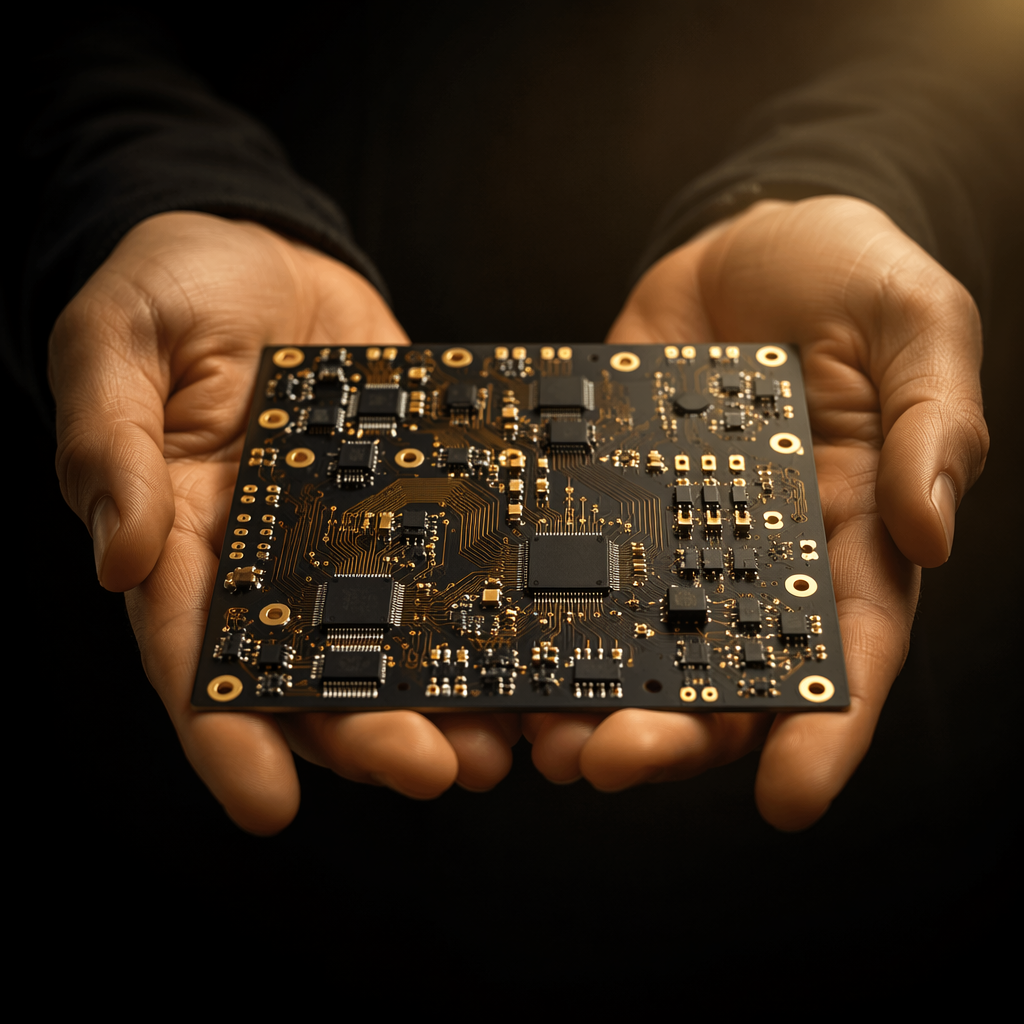
A customer once called with a batch of perfectly good boards that started failing after a few months in service. Every one of them had been stored on a shelf for a quarter before assembly. The problem wasn't the board, it wasn't the solder. It was that the boards had absorbed moisture in the storage environment, and that absorbed water had exploded into steam during reflow, creating internal voids and delamination that only showed up as an intermittent field failure. This is the quiet, invisible cost of poor PCB storage, and it is almost always preventable.
Storage matters for bare boards and for assemblies, in a fab, a warehouse, a reel of components, and a sealed bag. At Huaxing PCBA we process 8 million placements per day across 8 SMT lines and 5 DIP lines, and moisture control is part of how we keep yield high and field returns low. Here is the storage and handling logic, aligned to IPC-1601 and the moisture-sensitivity rules that govern how components and boards behave.
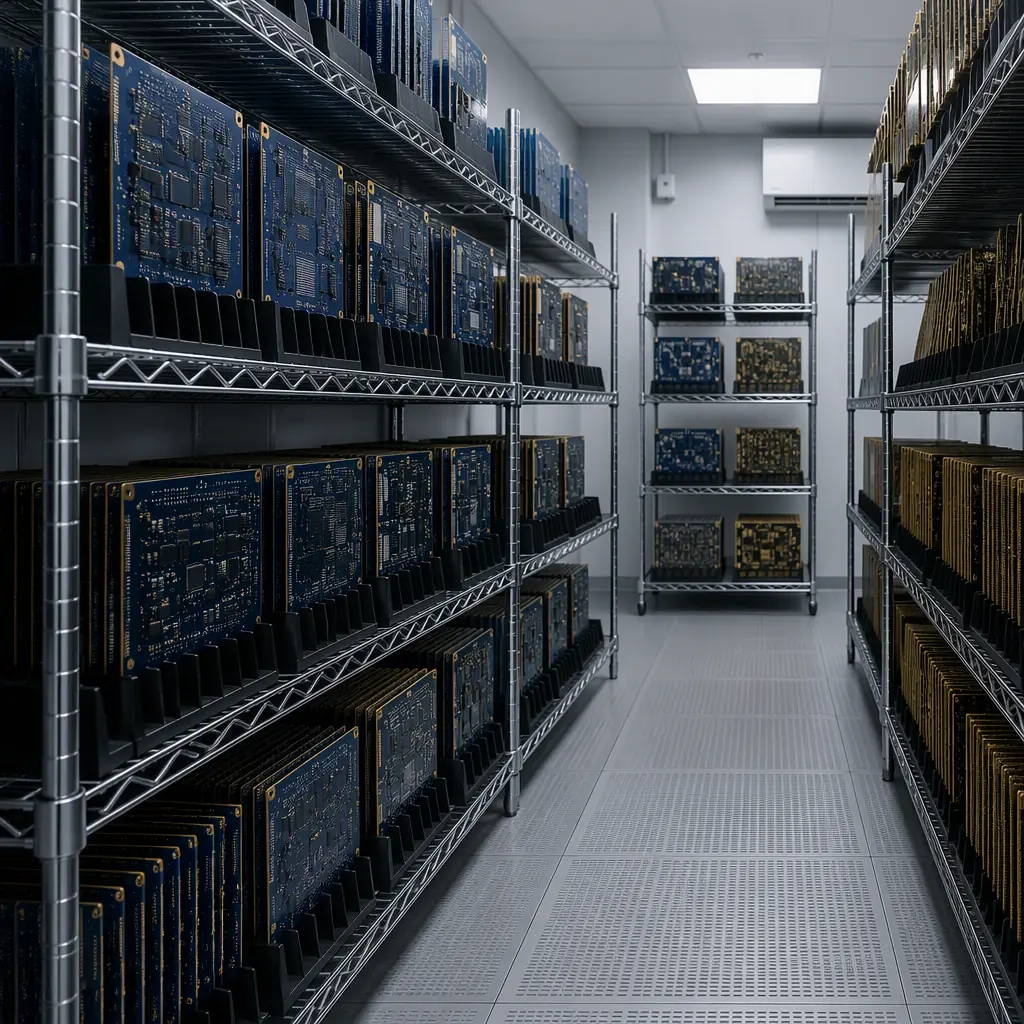
Why Moisture Is the Real Enemy
The FR-4 laminate that makes up a bare board is hygroscopic. It sits in the air, and it absorbs moisture through its surface and its drill holes, even when it is stacked in a box. For a bare board, that absorbed moisture is a problem because it is about to be heated through a reflow profile of 240–260 °C. When that board is heated, the absorbed water turns to steam far faster than it can escape. The pressure can literally bubble the copper, delaminate the laminate, and create "popcorn" voids that are undetectable to the naked eye.
Delamination and "popcorning"
Steam pressure inside the laminate causes the layers to separate, delamination, that is a functional and reliability failure even if the board still conducts. In a packaged part, the same phenomenon is called popping, and it happens below the package.
Reflow voids, solder balls and poor joints
Moisture in the board outgasses during reflow, creating voids in the solder joints and, in worst cases, projecting solder out of the joint. This is especially damaging on BGA and other fine-pitch packages where joint quality is everything. The result is higher DPPM and more costly rework.
Corrosion and electrochemical migration
Long-term moisture promotes corrosion of exposed copper and, with bias, can drive conductive anodic filament (CAF) growth and dendritic migration between traces. This is a slow, creeping failure rather than a sudden one. Which is exactly why it is so hard to trace back to storage.
Key Takeaway: Moisture damage is invisible at the moment of storage and reveals itself as delamination, voids and corrosion later. The fix is cheap and procedural: understand the absorption limit, control the environment, and dry-pack or bake-out when you exceed it.
IPC-1601: The Standard for Storing Printed Boards
IPC-1601 is the standard that governs handling and storage of printed boards, and it is the reference most procurement teams never read. It sets out how bare boards should be handled, packed, and stored so that they arrive and stay free of moisture, corrosion, and physical damage. For a deeper view of the acceptance and handling rules around assemblies, see our IPC-A-610 acceptance guide.
Packaged bare boards: store in their moisture-barrier bag
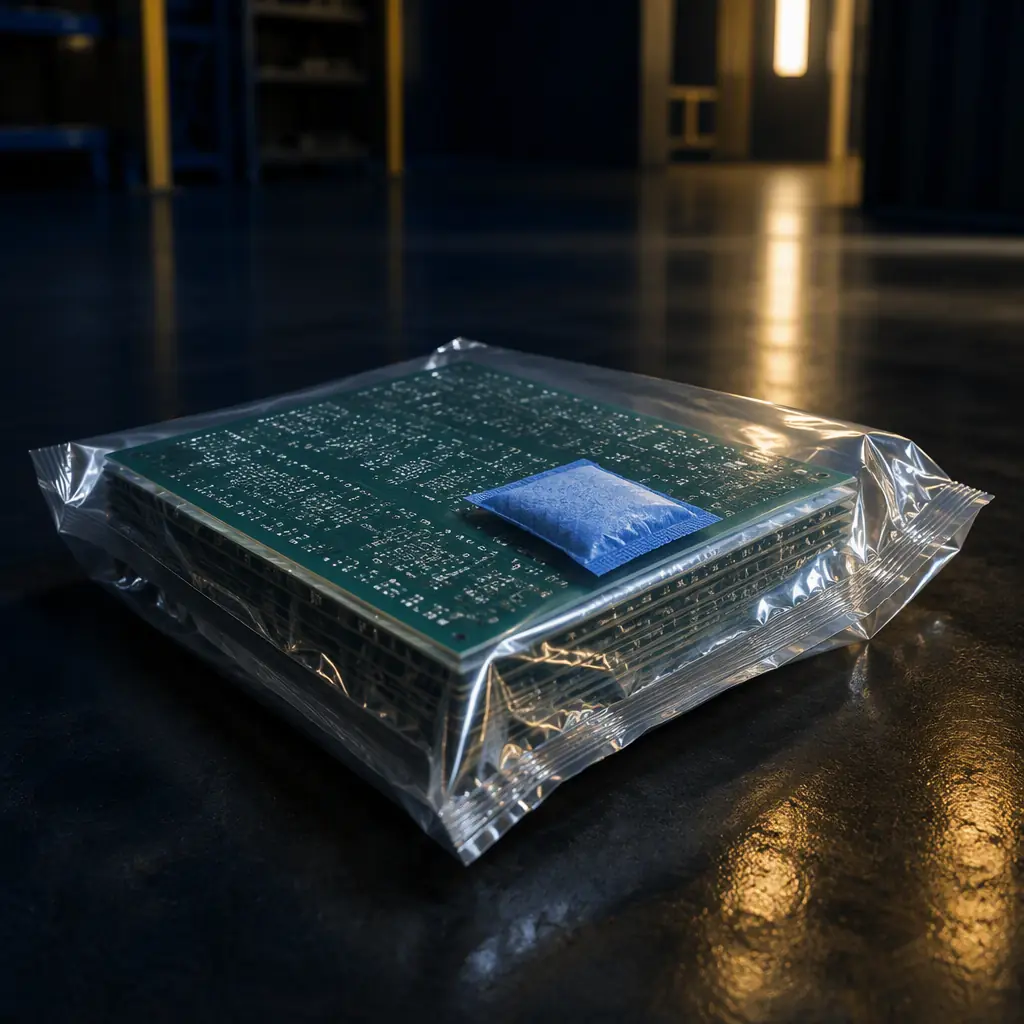
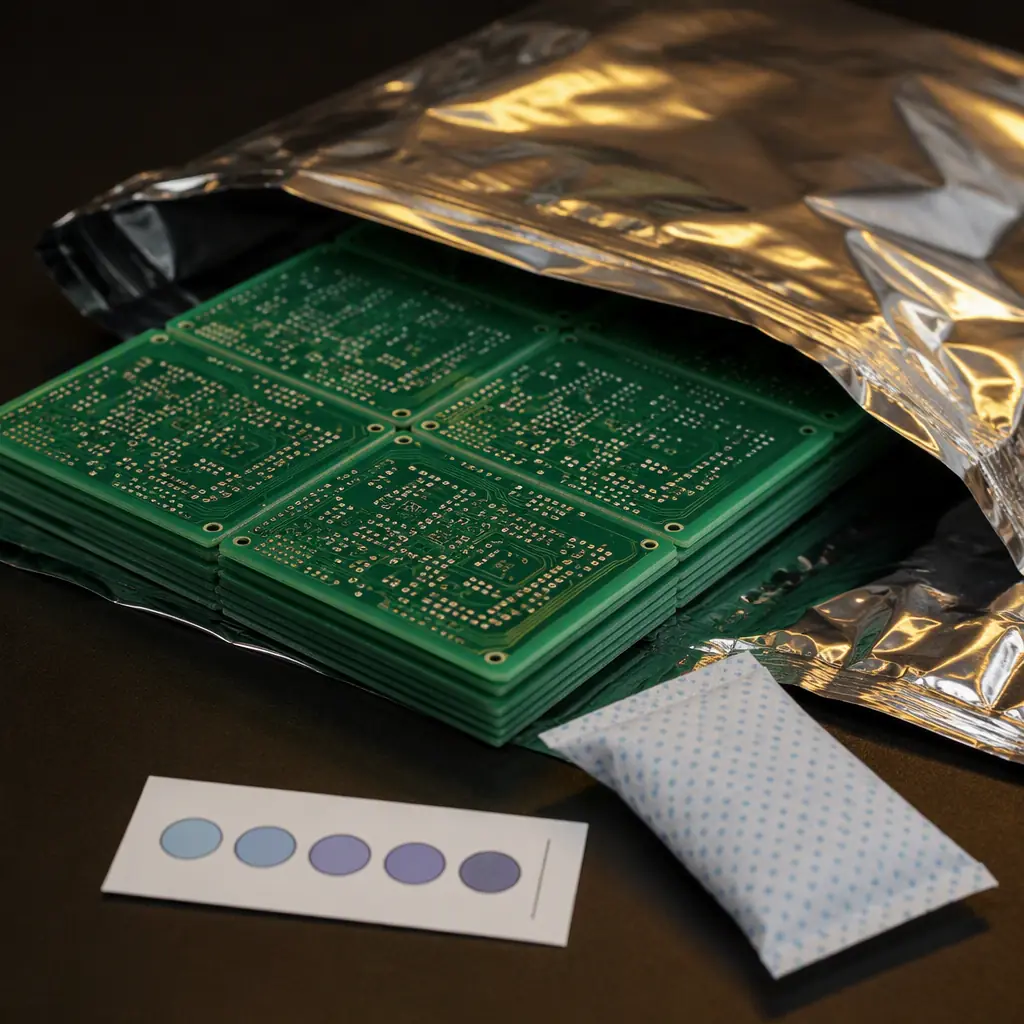
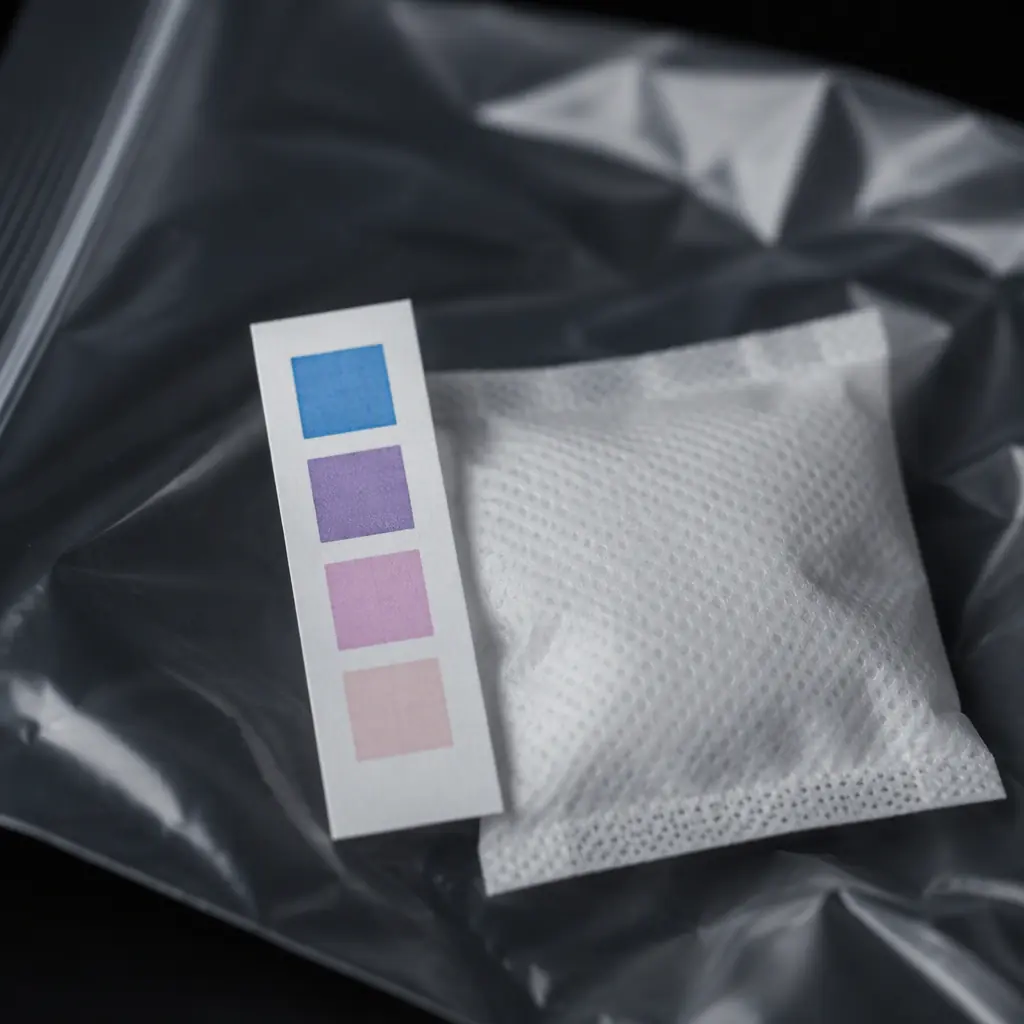
Boards that leave a factory in a clean, sealed moisture-barrier bag with desiccant and a humidity indicator card (HIC) should stay in that bag until they are ready to be used. Once the bag is opened and the boards are exposed to the air, the "floor life" clock starts, and it depends on the board's moisture-sensitivity level.
Store flat, off the floor, away from the doors
Boards warp under their own weight over time if they are leaned or stacked unevenly, and they absorb more humidity near open doors, vents, and loading docks. Store boards flat on a rack, off the floor, and climate-controlled. For warpage, see our reflow warpage prevention guide.
Control the environment, not just the bag
IPC-1601 references room conditions for the storage area and the length of time boards can be exposed before they need re-drying. Typical guidance is to keep bare boards below roughly 60% RH and to limit ambient exposure time. If you cannot control the room, the bag and desiccant are your safeguard.
Control ESD alongside moisture
Moisture and ESD control go together, and the same handling discipline applies. Anti-static bags, floor mats, wrist straps and ionizing bars keep the boards safe from both hazards. See our ESD control program and ESD packaging standards for the full picture.
Procurement Tip: Ask your supplier whether the boards ship in a sealed moisture-barrier bag with a desiccant and humidity indicator card, and what the floor-life and bake-out requirements are. A supplier that can tell you the exact exposure limit and re-dry schedule understands moisture control; one that can't is guessing.
MSD / DSD: Moisture-Sensitive Components and Boards
Moisture sensitivity is most famous for packaged components. The MSL (moisture sensitivity level) rating that determines how long a reel of parts can sit out after its moisture-barrier bag is opened. But the same logic extends to boards. The higher the board's absorption sensitivity and the more aggressive the reflow, the tighter the floor-life budget becomes.
| MSL level | Typical floor life (after bag opened) | What it means |
|---|---|---|
| MSL 1 | Unlimited (at ≤30°C / 85% RH) | No special dry-packing concern |
| MSL 2 | 1 year | Very safe, but track exposure |
| MSL 3 | 168 hours (7 days) | Common for small-mount parts; watch the clock |
| MSL 4 | 72 hours (3 days) | Requires careful scheduling |
| MSL 5/5a | 48/24 hours | Bake-out or dry-packing essential |
| MSL 6 | Must re-bake before use | High-risk; no floor life |
When you exceed the floor life, or the humidity indicator card changes color, the cure is a controlled bake-out or re-drying. The exact bake profile (temperature and duration) depends on the material. You cannot just blast a board at a high temperature, because too much heat can also damage it. This is a document from the assembly team, not a guess.
Bake-Out and Dry-Packing Best Practice
Dry-pack the moment boards leave the line
The best time to put a board into a moisture-barrier bag is right after it is desmear-driven, baked, and has not had time to reabsorb. Ideally, the bag goes on within a couple of hours of processing. Desiccant goes in every bag and a humidity indicator card tells you at a glance whether the seal held.
Bake before reflow when in doubt
If a bare board has been exposed to ambient humidity for more than the allowed floor life, a controlled pre-reflow bake drives the moisture out. This is a non-negotiable step on high-reliability or incoming work where the cost of a field failure is far higher than a few extra hours of bake time.
Track shelf life and floor life in inventory
The best systems tag every board or reel with its open date and its floor-life budget, so nothing is used "just this once" past its window. This is a simple, cheap database that pays for itself in avoided rework. It ties into our component obsolescence and stock management approach.
Real Factory Data: The single biggest driver of a moisture-related reflow defect is the gap between the storage environment and the reflow process. At Huaxing we dry-pack bare boards in sealed moisture-barrier bags with desiccant and a humidity indicator card, and we bake boards that exceed their exposure window before reflow. Boards that arrive dry and stay sealed are the ones that reflow clean.
The 10-Second Buyer's Checklist
Key Takeaway: Moisture damage is invisible at receiving and shows up as delamination, voids and corrosion months later. Control the environment, keep bare boards in a sealed moisture-barrier bag with desiccant and a humidity indicator card, respect the floor-life limit, and bake out before reflow when you exceed it. If a supplier can't tell you their exposure and re-dry limits, that's a red flag.
Summary, A Simple Process That Prevents a Quiet Failure
Moisture control is one of the cheapest, least-glamorous and most impactful reliability measures in electronics. By storing bare boards and assemblies correctly per IPC-1601, tracking MSL and floor life, dry-packing at the source, and baking before reflow when needed, you prevent a whole class of field failures that are otherwise invisible until they hurt.
At Huaxing PCBA we dry-pack printed boards in sealed moisture-barrier bags with desiccant and humidity indicator cards, and we bake boards that exceed their exposure window before they reach reflow. We run 8 SMT lines and 5 DIP lines processing 8 million placements per day, and we are ISO 9001, IATF 16949 and UL certified. Request a quote or ask our engineering team about your storage and handling specification.