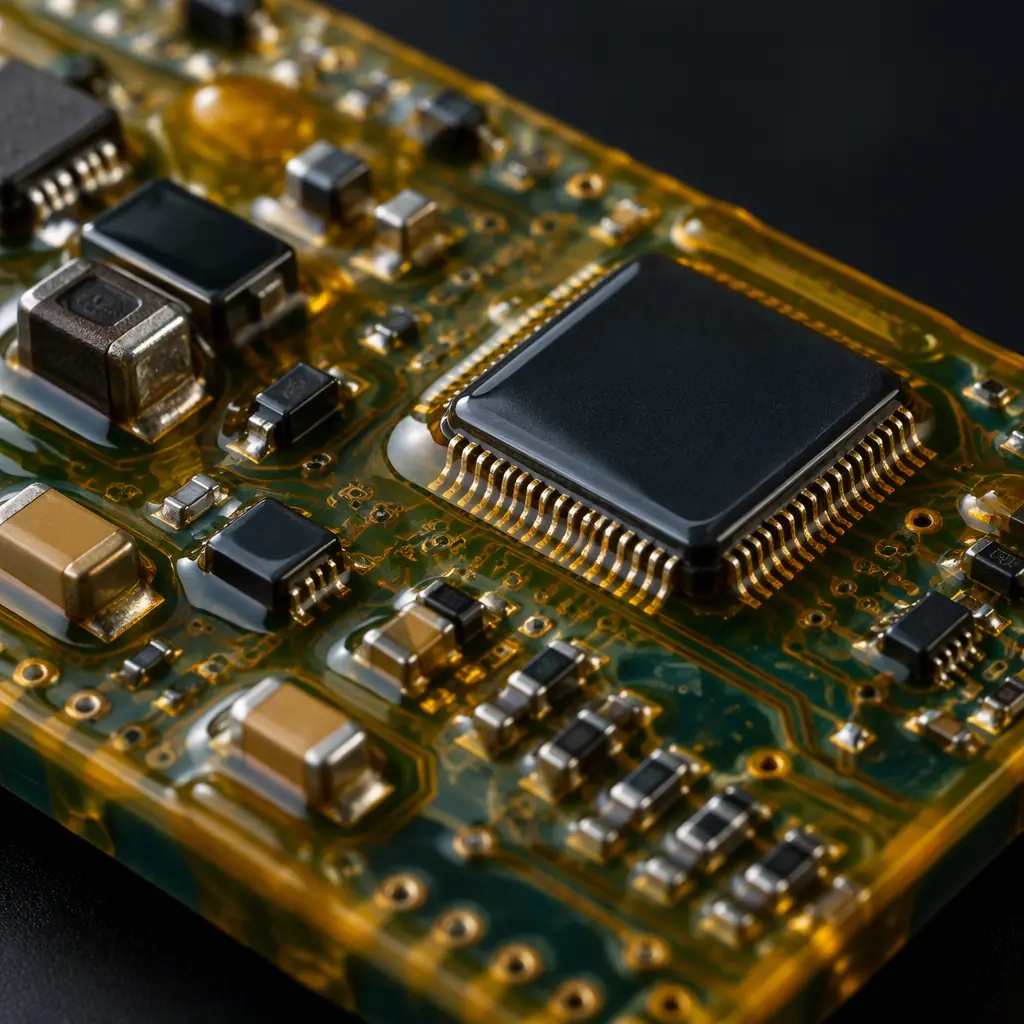
There is a sentence that appears in almost every conformal coating datasheet and almost every supplier capability statement: “meets IPC-CC-830.” Buyers read it as reassurance. Quality engineers who have been through a qualification audit read it as a question — meets it in what sense, for which material, and evidenced how? The answer matters, because IPC-CC-830 is narrower than most people assume, and the gap between what it covers and what a program actually needs is where coating failures live.
This guide explains what IPC-CC-830 qualifies, what it deliberately does not, how it relates to the two other standards buyers constantly conflate with it, and the specific documents you should be able to request from any supplier making the claim. It sits alongside our guides to IPC-A-610 coating acceptance, coating thickness control and coating chemistry selection.
At Huaxing PCBA we coat assemblies for automotive, industrial and defense programs, which means the CC-830 question comes up on nearly every coated build. We keep the qualification documentation for every coating material we run, because the standard only helps a buyer if the evidence is retrievable.
What IPC-CC-830 Actually Qualifies
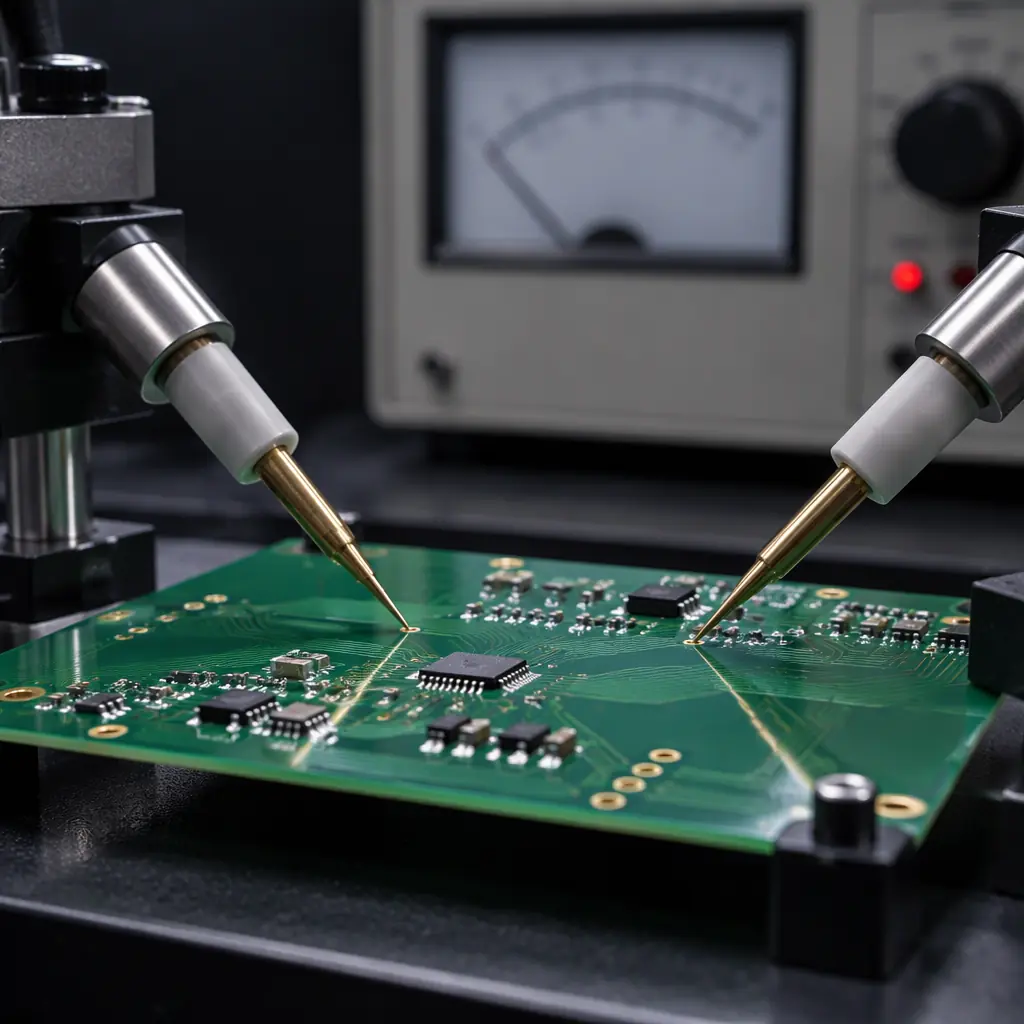
IPC-CC-830, Qualification and Performance of Electrical Insulating Compound for Printed Board Assemblies, is a material qualification standard. Read the title carefully, because every word is doing work.
It qualifies an electrical insulating compound — a coating chemistry in a specific formulation, as supplied by a manufacturer. It does not qualify a process, a coating thickness, a board design, or an assembly. When a coater says a coating “meets IPC-CC-830,” the accurate reading is that the material, tested in the prescribed way, meets the standard’s generic performance requirements. Whether your specific assemblies are properly coated is a separate question governed by process and visual standards.
This distinction is not hair-splitting. A coating material can hold a valid CC-830 qualification while the boards running through your program are undercoated, contaminated underneath, or applied over a surface the chemistry does not wet. Material qualification is a necessary input; it is not an assurance of outcome.
Key Takeaway: IPC-CC-830 answers “is this coating chemistry good enough for electronics?” It does not answer “is my assembly properly coated?” Those are two different standards, and a supplier should be able to speak to both.
The Qualification Test Set
The standard establishes a defined set of performance tests that a coating material must pass to be considered qualified. The tests are designed to establish that the cured film provides durable electrical insulation under the conditions electronics actually meet. The core list, and what each test is really probing, is below.
| Test | What it establishes | Why it matters to a buyer |
|---|---|---|
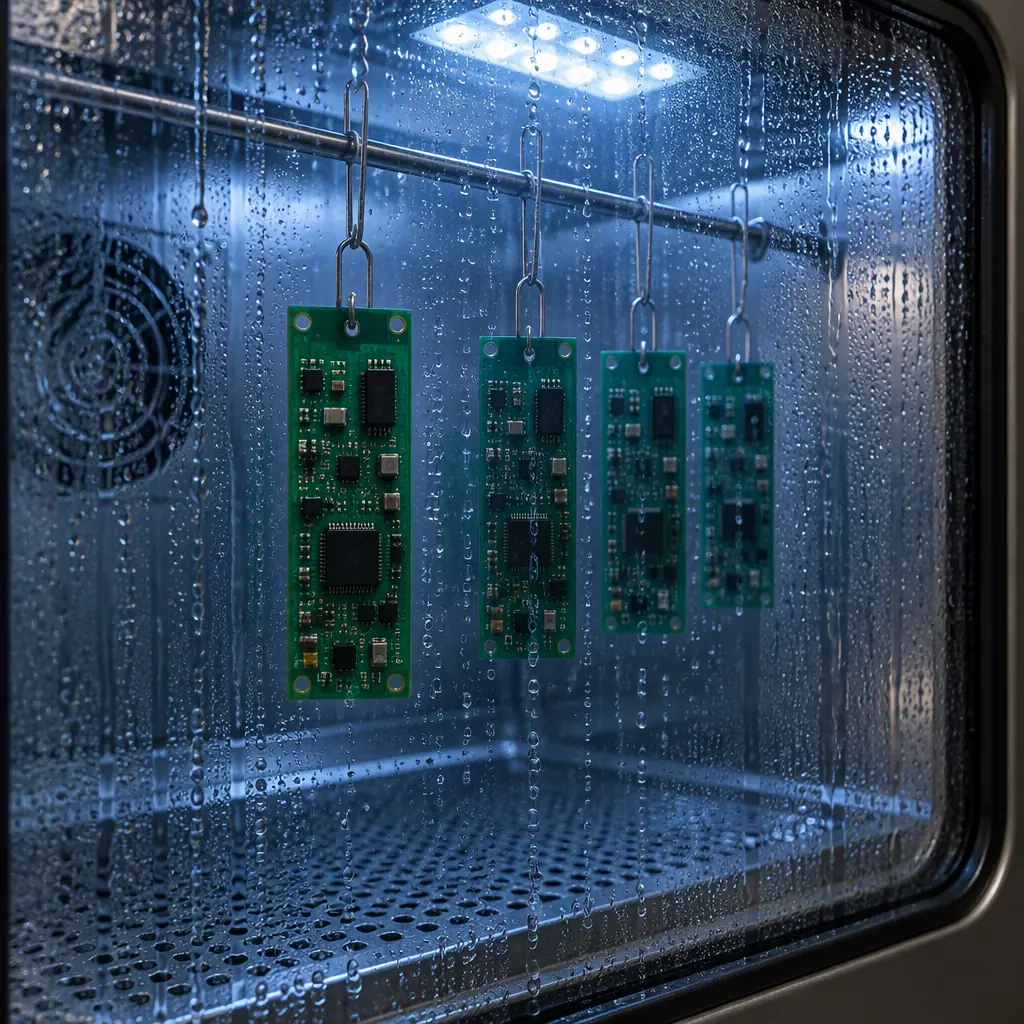
| Moisture & insulation resistance | Insulation resistance retained after humidity exposure | The core electrical function; fails on contaminated or poorly cured films |
| Dielectric withstanding voltage | The film withstands a high potential without breakdown | Determines suitability for higher-voltage assemblies |
| Thermal shock | Film survives rapid temperature excursions | Cracks here show up later as leakage paths |
| Flexibility | Film bends with the substrate without cracking | Critical for flex, rigid-flex and thermally cycled boards |
| Fungus resistance | Material does not support fungal growth | Required for humid, tropical and outdoor deployments |
| Hydrolytic stability | Film resists degradation by moisture over time | Long-life and high-humidity programs |
Each test is a pass/fail against a threshold defined in the standard, run on prepared specimens rather than on a production assembly. That is the point of a material qualification standard: it produces a repeatable verdict on the material that any qualified laboratory can reproduce.
Qualification (QC) Versus Conformance (QM and QPL)
The single most useful distinction a buyer can hold about CC-830 is the difference between a material being qualified and a material being listed. The standard defines qualification requirements (often referenced as the “QC” requirements). A separate mechanism — the Qualified Products List — is how a specific manufacturer’s specific product is recognised as having met them.
In practice this means three tiers of claim, and a supplier may offer any of them:
- Tested to CC-830 by the material manufacturer. The coating vendor ran the tests and reports results. This is the most common claim and the easiest to make, because it rests on the vendor’s own data.
- Qualified to CC-830 with retrievable reports. The supplier can produce the laboratory test reports for the exact material and revision in use. This is what an audit should ask for.
- Listed on a Qualified Products List. The material appears on a recognised QPL, meaning a third party has validated the qualification. The strongest form of the claim, and the one some defense and aerospace programs require outright.
When someone says “meets IPC-CC-830” without qualification, they are usually describing the first tier. There is nothing dishonest about that — but for a program where coating protects a safety-relevant or expensive assembly, the third tier is what you write into the purchase order.
The 40-second answer: IPC-CC-830 qualifies a coating material, not a process, thickness or board. It sets pass/fail performance tests (moisture resistance, dielectric withstanding voltage, thermal shock, flexibility, fungus, hydrolysis) run on specimens. It does not cover your coverage, thickness, cure or cleanliness — those belong to J-STD-001 and IPC-A-610, verified on your assemblies.
What IPC-CC-830 Does Not Cover
This is where most coating problems actually originate, because the standard is silent on them by design. Buyers who assume a CC-830 coating guarantees a CC-830 outcome miss four control points entirely.
Thickness. The standard is about the material, not how much of it lands on a board. Thickness targets are set by the coating type, the environment and the program, and verified separately — the discipline we cover in coating thickness control, where wet-film, cured-film and microsection measurement each answer a different question.
Coverage. A qualified material applied to 80% of a board is still unqualified protection on the other 20%. Coverage is a visual and inspection matter, handled under IPC-A-610 acceptance criteria for coating, including pinholes, voids and edge coverage.
Process and workmanship. Cure schedule, cleanliness before coating, masking and the reflow of the coating over components are process variables governed by J-STD-001 and your supplier’s process control plan — not by the material standard.
Cleanliness underneath. Coating over ionic contamination seals the contamination in place, where it accelerates electrochemical migration once moisture arrives. That is why ionic cleanliness testing matters before coating, as covered in ionic cleanliness testing.
How the Three Standards Fit Together
The confusion around CC-830 largely dissolves once the three relevant standards are placed side by side. Each answers a different question, and a complete coated build satisfies all three.
| Standard | Answers the question | Applied to |
|---|---|---|
| IPC-CC-830 | Is this coating material good enough? | The material, on test specimens |
| J-STD-001 | Was the coating applied correctly? | The process, on your assemblies |
| IPC-A-610 | Does the finished coating look acceptable? | The result, by visual inspection |
A supplier whose coating program is genuinely complete will answer questions at all three levels without prompting — which material, qualified how; which process parameters, held how; which visual criteria, inspected how. A supplier who can only say “CC-830” has answered one third of the question.
The Six Documents to Request
Turning a CC-830 claim into CC-830 evidence takes six requests. None is exotic, and a serious coater will have all six on file.
Material qualification test report for the exact chemistry and revision in use — not for a product family, and not an expired revision.
The material safety datasheet and technical datasheet for that same revision, so thickness and cure recommendations can be checked against the process.
Process control plan or coating work instruction, showing the cure schedule, cleanliness gate and thickness targets actually run.
Cleanliness evidence from before coating — ionic contamination or surface insulation resistance results for a representative batch.
Thickness verification records, by whatever method the program specifies, with the measurement method named.
Visual acceptance records against the applicable IPC-A-610 criteria, including any pinhole or void disposition.
Asking for all six in one request is itself a useful filter. A supplier that can produce them is running a coating process, not just operating a coating machine.
Where Coating Meets Stricter Programs
For defense and aerospace work, CC-830 is frequently the entry point rather than the ceiling. Military specifications impose additional requirements on the coating system, and space programs layer on outgassing limits that CC-830 does not address at all — a topic we cover in detail in the guide to coating outgassing and vacuum compatibility. Automotive programs typically thread coating through PPAP, which is why the coating evidence package becomes part of PPAP for conformal coated assemblies.
The pattern is consistent: the material standard gets you into the conversation, and program-specific requirements decide what you actually have to prove. Knowing which is which before the first build saves a great deal of rework later.
The Bottom Line
IPC-CC-830 is a material qualification standard, and it is a good one — it exists precisely so that buyers do not have to test coating chemistry themselves. The mistake is treating it as a whole-program guarantee. It qualifies the chemistry; J-STD-001 governs the process; IPC-A-610 governs the visual result; and your own cleanliness and thickness controls close the loop.
For a buyer, the practical test is simple. Ask which coating material is used, how it is qualified, and whether the reports are retrievable. Then ask for the process control plan and the cleanliness evidence. A supplier that answers all of it is coating to a standard. A supplier that answers only the first has told you what it bought, not what it does.
Our coating lines run IPC-CC-830-qualified materials across automotive and industrial programs, with the qualification file kept against the batch records for the assemblies produced. If you are qualifying a coated build or auditing an existing one, we are glad to walk you through the evidence package.