
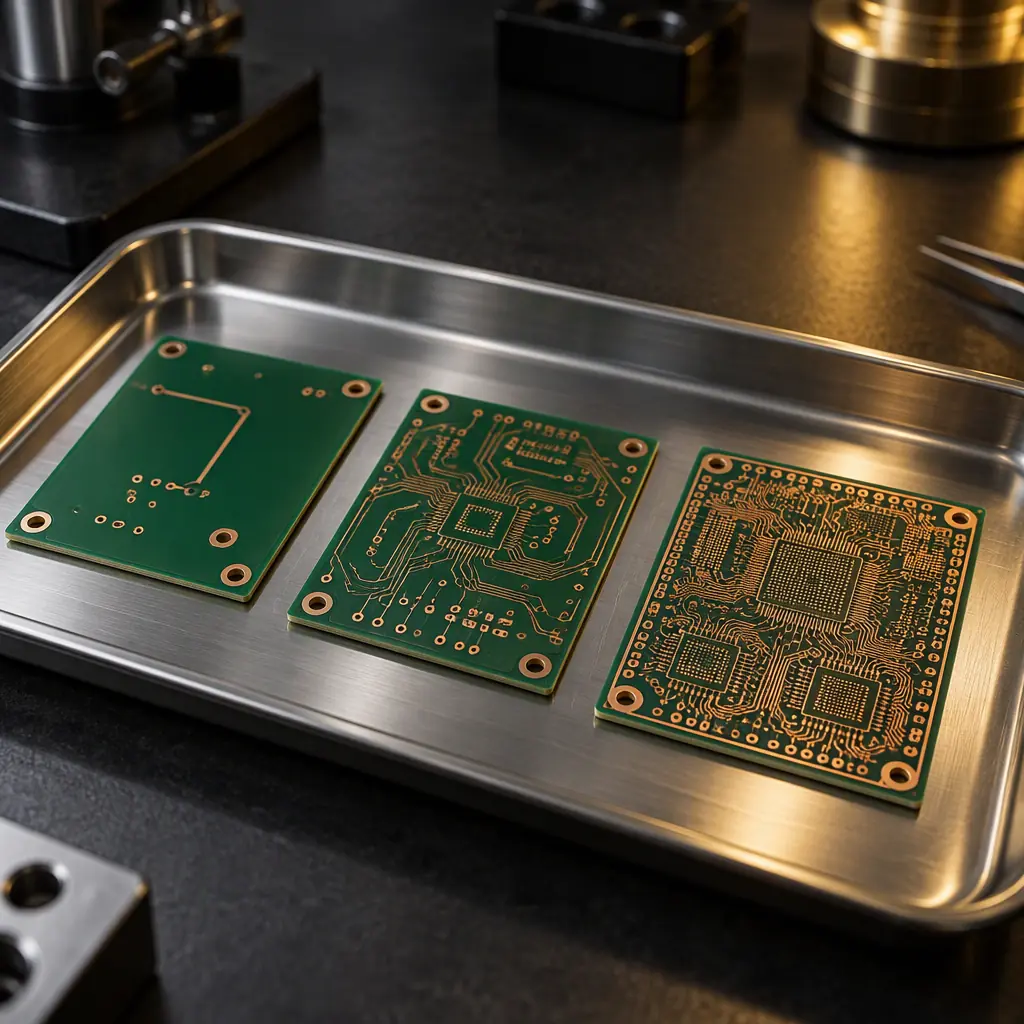
A golden sample is the reference unit both sides point at when a dispute starts. It is also, in most programmes, a single board in a sealed bag with no defined build history, no measurement record and no stated deviation from the drawing. When a buyer says "this batch looks different", the supplier opens the bag and says "it looks the same to me" — and there is no third opinion available, because nobody wrote down what the reference actually was.
This guide is for buyers, quality engineers and programme managers who need a reference unit that holds up six months later. It covers which build should become the golden sample, what the sign-off document must contain to be enforceable, how long to retain it and in what condition, and the four things a golden sample can never cover no matter how carefully it is run.

What Is a Golden Sample, and Why Is It Not the Same as FAI?
A golden sample is a physical unit that has been formally agreed between buyer and supplier as the visual and dimensional reference for a part number. A first article inspection report is a record: measurements, material certificates, a list of results against the drawing. The two are usually produced at the same time and then treated as if one substitutes for the other. They do not.
The FAI report tells you what the measurements were on the day. The golden sample tells a human on a shop floor what the part is supposed to look like in the hand — solder fillet shape, mask colour and gloss, the way the legend sits, whether the board edge shows fibre tear. Those are the things that start disputes, and none of them appear in a dimensional report.
The confusion causes a predictable failure. A programme produces a 40-page FAI report, files it, and keeps a random board from the same lot as the "sample" — often a board that failed and was reworked, or one that came off the line after the settings changed. The sample is then not a reference to anything. Everything downstream inherits the ambiguity.
Which Build Should Become the Golden Sample?
This is the decision most programmes get wrong, and it is worth spending a meeting on. Three candidate builds are usually available, and only one of them is a defensible reference.
| Candidate build | Use as golden sample? | Why |
|---|---|---|
| Hand-built engineering sample | No | Not made under the process that will run production. References a capability the line does not have. |
| Boards from pre-production (PVT) line, off-tool | Yes, preferred | Made on production tooling at production settings, from the released revision, and still inspected closely enough to be a known-good unit |
| A unit from the first volume lot | Conditional | Acceptable if the lot passed FAI and OQC, but the reference then includes any drift already present in that lot |
| A reworked or re-touched board | Never | References a repair process, not the build process. Rework traces become part of what "normal" looks like. |
The practical rule that has held up across the programmes we build: take the golden sample from the PVT build, immediately after FAI acceptance and before ramp, and take three units rather than one. One stays with the supplier at the line, one goes to the buyer, and one is sealed as the tie-breaker. A single sample held by a single party is a reference nobody can check.
What the Sign-Off Document Must Contain
An approval signature on a drawing is not a golden sample agreement. The document has to pin down the part it refers to, the build it came from, and the tolerances of what is being accepted. In practice, six fields do the work — omit any one of them and the reference becomes arguable.
- Exact part number and revision, including the fabrication revision letter and the assembly revision, stated separately. A golden sample approved against rev C does not transfer to rev D, and the document should say so explicitly rather than leave it to interpretation.
- The build identifier it came from — work order number, date code, panel position if relevant. Without this, the sample cannot be traced back to the process settings it represents.
- The measuring basis. Was approval by visual comparison against the drawing, by dimensional measurement, or both? If visual, the acceptance criteria must cite the standard used — typically IPC-A-610 Class 2 or Class 3 — rather than "looks acceptable".
- A deviation register. Every place where the sample differs from the released drawing, listed with the reason. This is the field most often left blank and the one that causes the most disputes: a sample that carries an undocumented deviation teaches the line that the deviation is correct.
- Cosmetic acceptance statements that cannot be measured but do get argued about: solder mask colour and gloss batch, legend ink shade, the presence or absence of via tenting on the top side, the finish colour of the pad. If these matter to your product, they belong in writing.
- Signatures with names, roles and dates from both sides — not a company stamp. A golden sample accepted by "the supplier" is a reference with no owner.
Factory reality: the single most common defect in golden sample programmes we audit is an approval sheet that names the finished assembly revision but not the bare-board revision. Three months later the fabricator changes a solder mask batch and the coating colour shifts a half-step. The board is fully compliant to the drawing. The argument is unresolvable, because no document ever said which mask colour was accepted.
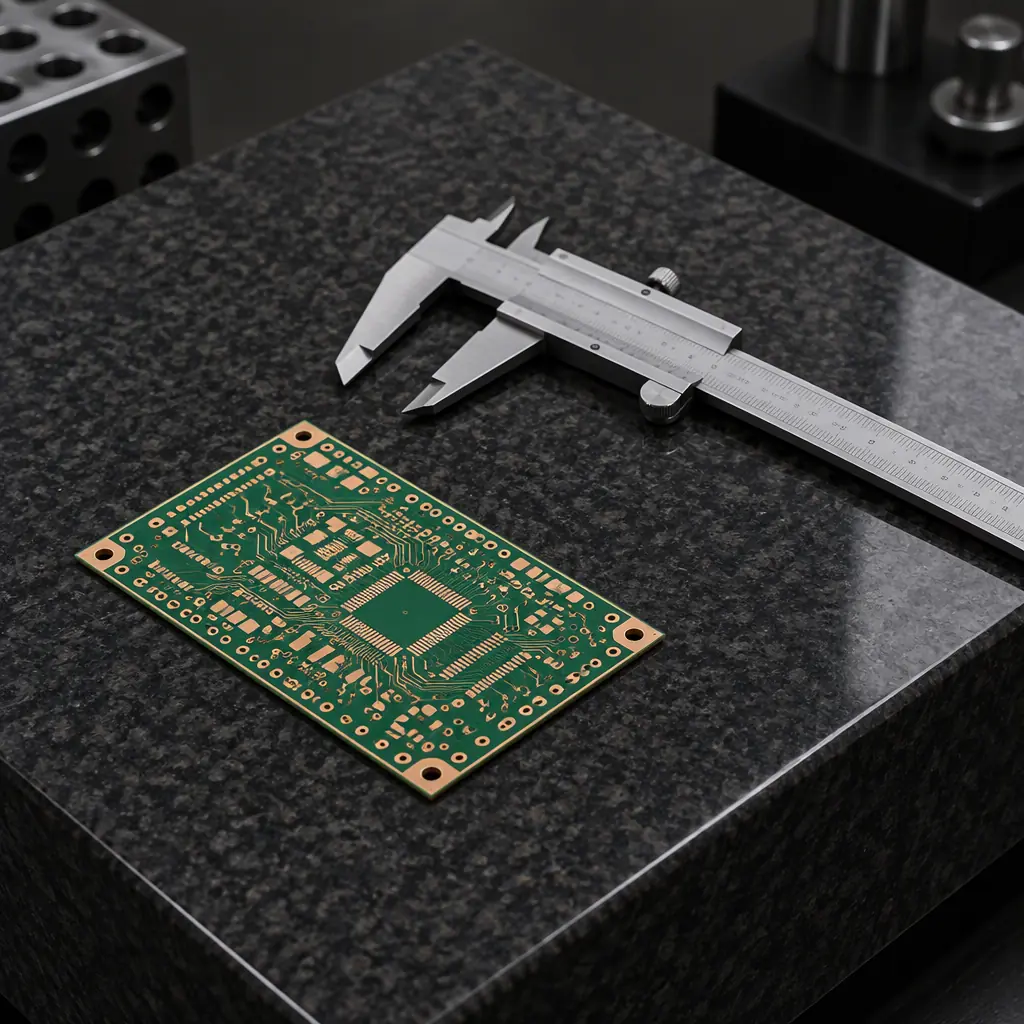
Where Should the Golden Sample Live, and for How Long?
Retention is a supply-chain decision described as a storage decision. Standard practice in electronics manufacturing is to retain samples and records for the life of the programme plus a defined tail — commonly 3 years for industrial product, 7 to 15 years where the end product is medical or automotive and the traceability obligation runs long. What matters more than the number is that the retention period is written into the agreement and is longer than the warranty period you offer your own customer.
Storage conditions decide whether the sample is still a reference when you need it. A board kept in a drawer oxidises: HASL pads dull within months, ENIG darkens, and a no-clean flux residue yellows. Six months later nobody can tell whether a batch difference is real or whether the reference itself aged. Practical controls:
- Seal it. Dry-pack with desiccant in a moisture-barrier bag, labelled with the date and work order. This mirrors the storage rules in our PCB storage and moisture control guide, and it matters for the same reason: an oxidised surface stops being a valid reference for solderability.
- Keep it dark and out of the inspection area. Fluorescent light and handling at the bench degrade both the sample and the trust in it.
- Keep one copy per site. A supplier holding the only sample controls the only reference. The buyer's copy is not a courtesy; it is the tie-breaker.
- Log it. Date sealed, who sealed it, which work order, and every time it was opened for comparison. An opened sample has a visible history whether or not you record it.
How the Golden Sample Fits the Production Routine
A golden sample that is only opened during a dispute is doing half its job. Its real value is routine: it makes the first-off comparison on a new lot fast and non-arguable. A workable rhythm looks like this.
- First-off against the sample at the start of every production run and after every significant changeover — new paste lot, new stencil, new operator on a manual station. Comparison is visual and fast, not a full inspection.
- Periodic comparison at a defined interval during a long run, so drift is caught while the lot is still on the line rather than after shipment.
- Pre-shipment verification against the sample as part of the outgoing check, alongside the dimensional and functional gates covered in our pre-shipment inspection process.
- A defined change path. When the sample and the drawing disagree, the drawing wins and the sample is updated by a formal re-approval — never by quietly swapping in a newer board.
The governance half of this sits in the quality agreement rather than the shop floor. Sampling frequency, the acceptance standard and what counts as a defect belong in an AQL clause that both sides can enforce; the mechanics are set out in our AQL sampling guide for PCB and PCBA inspection. The FAI report that usually accompanies the sample is a separate document with its own failure modes, covered in the first article inspection guide.
Four Things a Golden Sample Cannot Cover
This is the part buyers are rarely told, and it is where golden sample programmes quietly fail. The sample is a physical reference for appearance and geometry. It cannot stand in for any of the following, and no amount of careful signing changes that.
- Long-term reliability. A unit that looks perfect on day one can fail thermal cycling, vibration or humidity. Those are proven by test — accelerated thermal ageing, thermal cycling, vibration and shock — not by the existence of a good-looking sample.
- Electrical performance inside tolerance bands. A sample does not record impedance, insertion loss or standby current. If the assembly is high-speed or RF, the reference has to be measured, not photographed.
- Internal quality. Voiding under a thermal pad, barrel plating thickness, insufficient fill in a via-in-pad: none are visible from outside. These are the domain of X-ray and cross-section, and a golden sample with hidden internal defects will validate every subsequent lot that copies it.
- Material and process conformity. The sample says nothing about whether the laminate is the specified grade, the solder alloy is what the PO states, or the coating is the agreed type. Those are verified by incoming checks and analytical methods, and the distinction between what looks right and what is right is the whole argument of our counterfeit component verification guide.
There is also a contractual gap worth naming. A golden sample defines what you will accept; it does not define who owns the tooling and design files that produced it, or what happens to them if you leave the supplier. That is a separate agreement, and we cover it in tooling and design-file ownership. Programmes that conflate the two discover at exit that they have a perfect reference unit and no way to reproduce it anywhere else.
Common Failure Modes, and the Clause That Prevents Each
Five patterns account for most of the golden sample disputes we see. Each has a single contractual fix that costs nothing at negotiation stage and is nearly impossible to retrofit later.
| Failure mode | What it looks like later | Clause that prevents it |
|---|---|---|
| Sample not tied to a work order | "That was a development build" | Sample identity must cite work order and date code |
| Undocumented cosmetic deviations | Every later lot is "also compliant" | Deviation register is a required attachment to the sign-off |
| Single sample held by one party | No available tie-breaker | Three units: line, buyer, sealed |
| No re-approval trigger | Sample silently describes an obsolete revision | Approval expires on any revision change or material substitution |
| Sample treated as a quality certificate | Buyer accepts internal defects never inspected | Sign-off states explicitly what the sample does not certify |
The last row is the one that matters most and is the cheapest to fix. A one-sentence limitation clause — the sample certifies appearance and geometry against the stated drawing revision, and does not certify reliability, internal quality or material conformity — removes an entire category of later argument. It also forces the programme to specify how those other things actually get verified, which is where most of the real quality risk sits.
At Huaxing PCBA we build the golden sample from the PVT run, supply three sealed units with the work order and inspection record attached, and issue the deviation register as part of the sign-off pack rather than as a later addendum. Assemblies are built to IPC-A-610 Class 2 and 3 on 8 SMT lines with in-house X-ray and cross-section capability, so the parts a sample cannot cover are inspected rather than assumed. Send your drawing and assembly revision for a quote, or ask an engineer what a golden sample agreement should contain for your programme.