Every manufacturing relationship accumulates assets — the files, tooling and knowledge that let a factory make your board. While the relationship is good, nobody thinks about them. The moment it turns — a price increase you cannot accept, a quality slide, a shift to a lower-cost region, or a supplier who simply stops prioritising your order — those assets decide whether you can move or whether you are stuck.
The uncomfortable truth is that most buyers do not discover who owns what until they try to leave. The Gerbers may be clear, but the stencils, the ICT fixture, the test programme and the panelisation the supplier created are often paid for, held and — in the supplier's mind — owned by the supplier. Recovering them, or paying to rebuild them, becomes the price of switching. This guide is about removing that surprise by deciding the terms up front.
At Huaxing PCBA we work with customers who explicitly want their manufacturing to stay portable, and we provide files, tooling documentation and transfer support on terms agreed at the quotation stage. This guide describes what to secure in any supplier relationship, including ours.
What Actually Counts as Your Tooling and Files
When buyers say "my files," they usually mean the Gerbers. That is a fraction of what is at stake. The full list is worth writing down, because each item is a switching cost if you cannot take it with you.
Design data. Gerber files, fabrication and assembly drawings, the ODB++ or IPC-2581 package, the CAD source files (Altium, KiCad, OrCAD), the BOM, and the pick-and-place data. These are the most obviously owned by the customer, but the format matters — a supplier who holds only their own internal workfiles has not preserved your design data.
Fabrication tooling. Drill programs, photo-tooling or laser-direct-imaging data, panelisation layouts designed by the supplier, and any dedicated fixtures for fabrication. The panelisation is a subtle one: it belongs to the manufacturable version of your board and can be non-trivial to recreate.
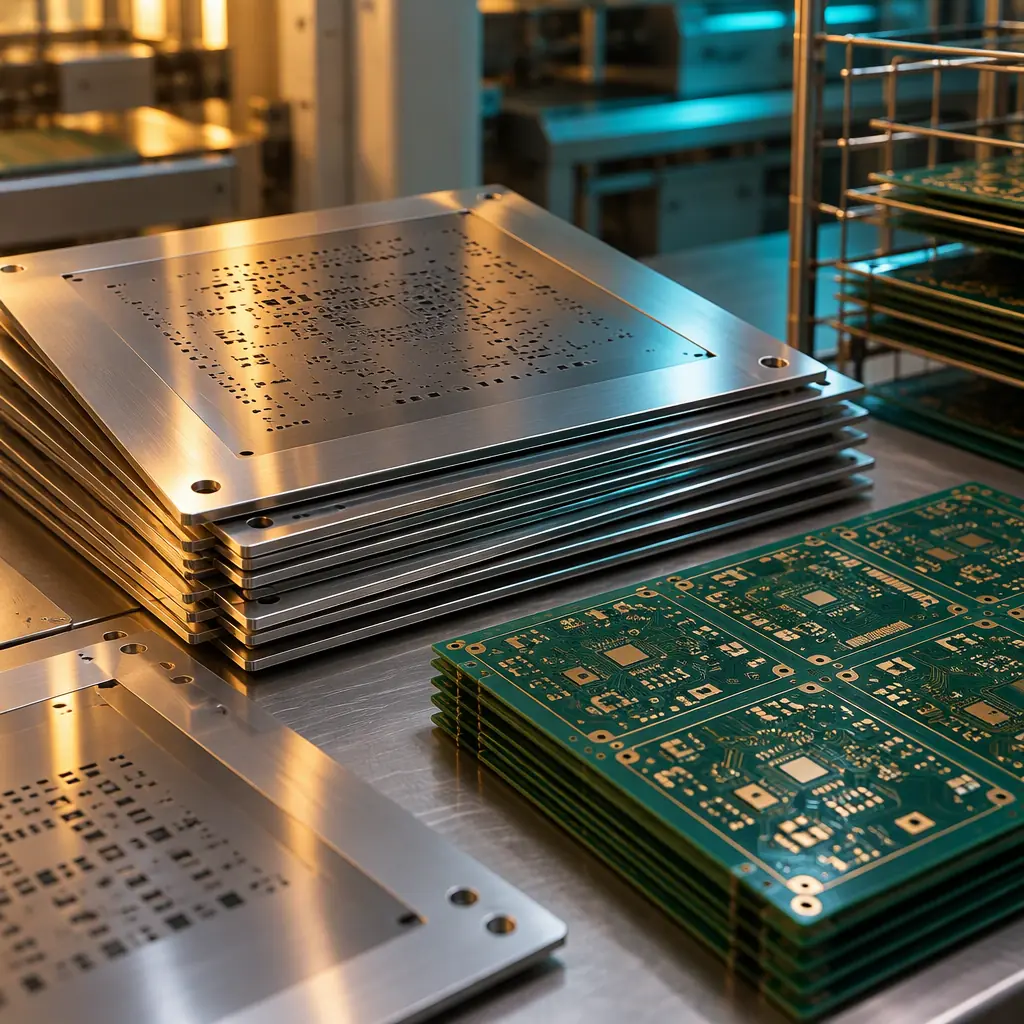
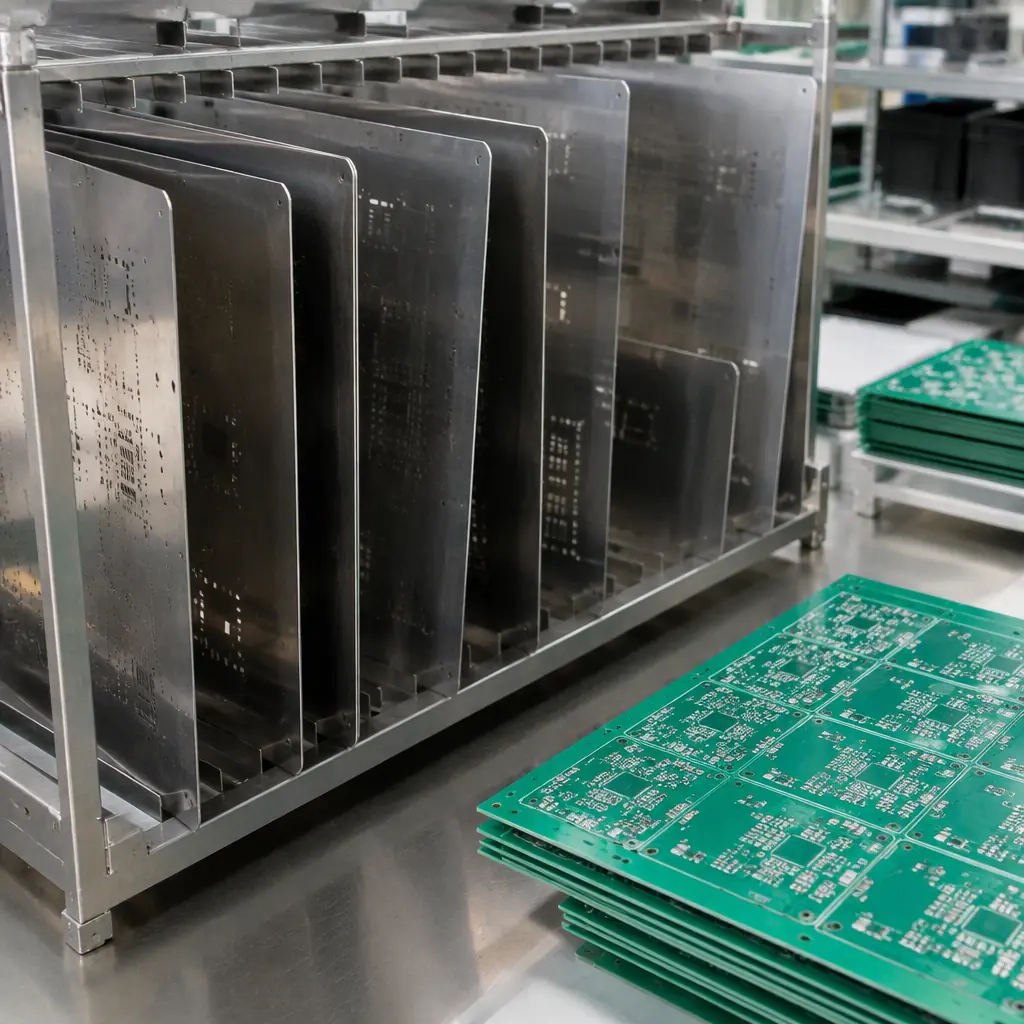
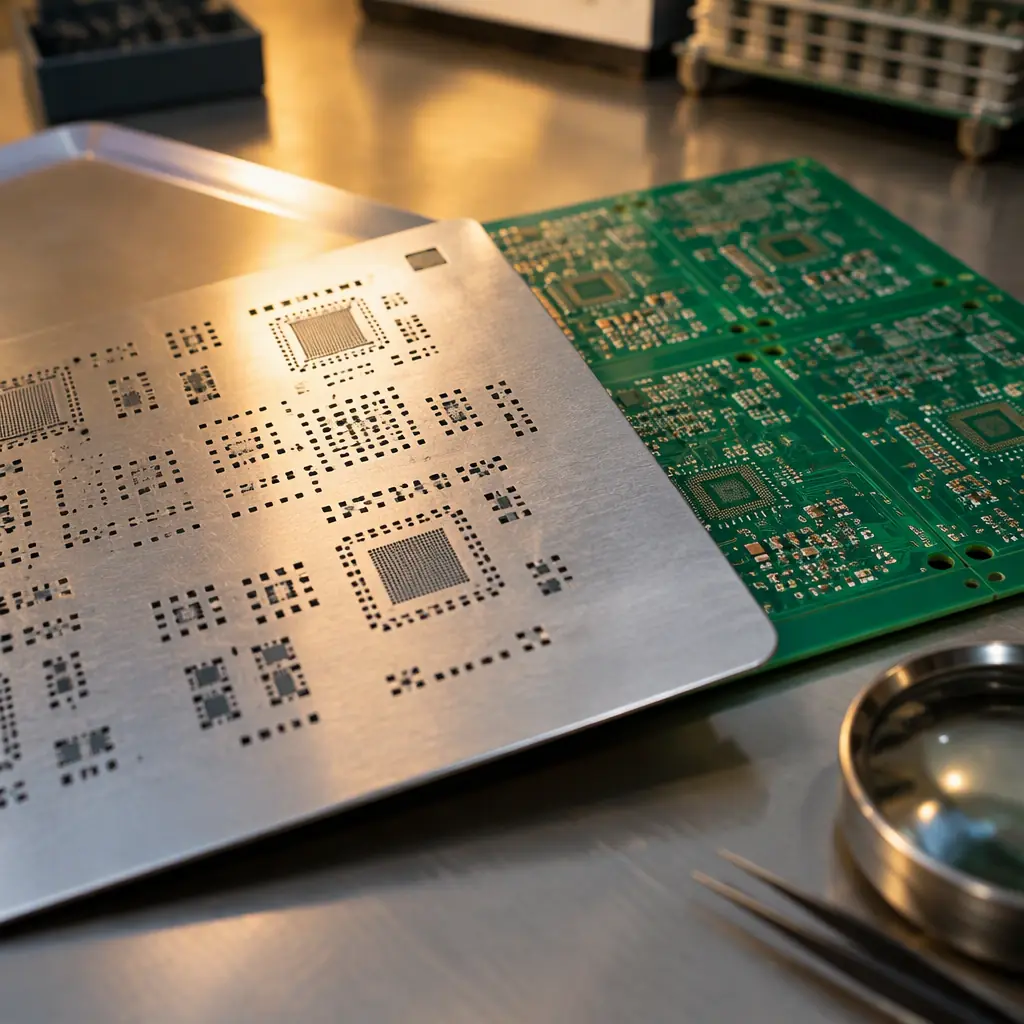
Assembly tooling. Solder-paste stencils, screens, SMT carrier and support fixtures, reflow pallets. Stencils are consumables in the supplier's eyes and capital in yours — four or five stencils per revision at a few hundred dollars each adds up across a product's life.
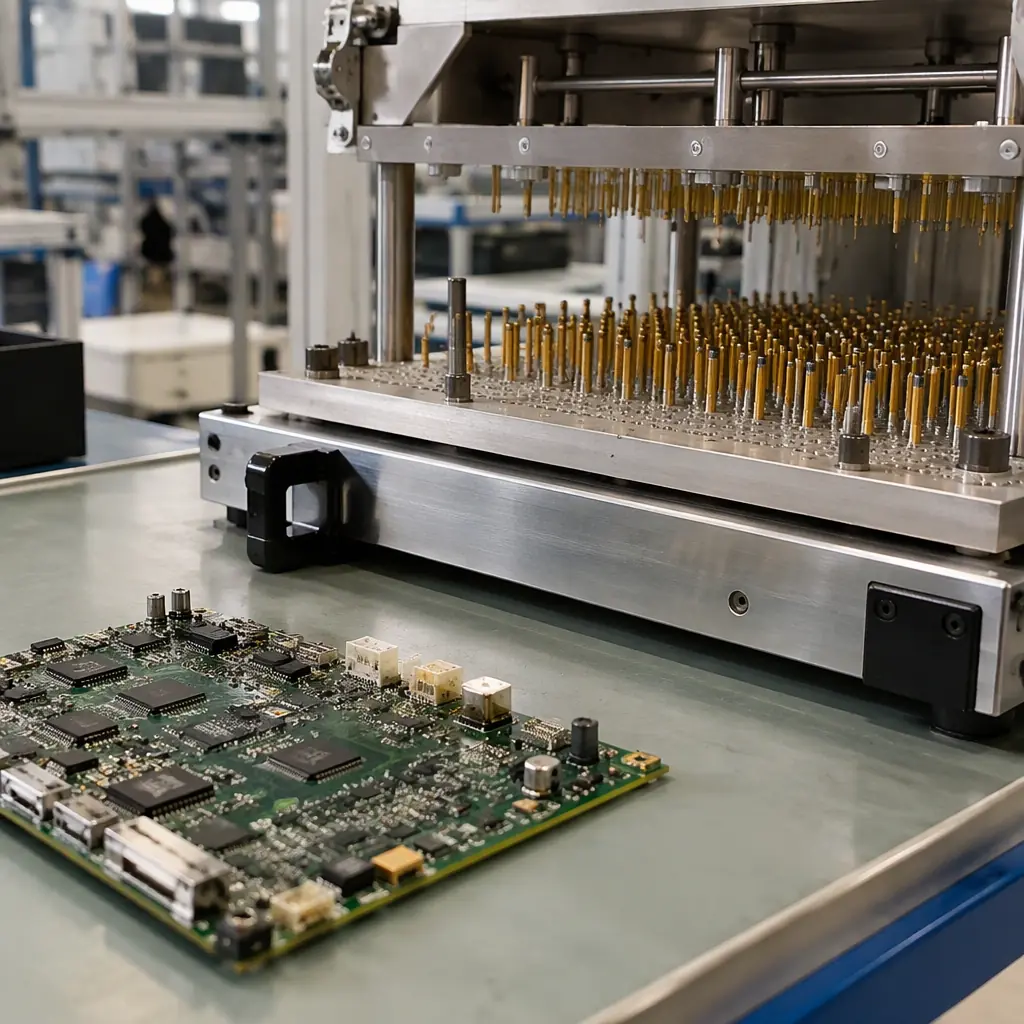
Test assets. ICT and FCT bed-of-nails fixtures, flying-probe programs, test software, functional test harnesses, and the test specification itself. These are often the largest single switching cost, which is why their ownership is the most contested.
Programmed and configured items. Programmed microcontrollers, CPLD/FPGA bitstreams, calibration data, and configured assemblies. If the supplier owns the only copy of your programmed part's firmware, you do not own your product.
Knowledge assets. Golden boards, first-article references, process recipes, and the accumulated know-how of the line. These may not be transferable at all, which means a transition plan leans more on documentation than on asset recovery.
Who Owns What by Default
In the absence of a written agreement, ownership falls into three informal buckets, and the boundaries are exactly where disputes occur.
Design IP is almost always the customer's. The circuit design, the schematic and the intellectual property in the product belong to whoever created them — normally you. A supplier has no claim on your design, though they may have obligations of confidentiality about it.
Manufacturing tooling is the grey zone. This is where default practice varies and where most buy-back disputes live. If the customer paid the NRE that produced the stencil or the fixture, the customer can reasonably argue ownership — but a supplier may counter that the tooling was built into their process and priced separately, and that it stays with them. Whether you own it often depends on what the invoice and the contract say, not on what feels fair.
Third-party tooling has its own owner. A fixture built by an external test house may belong to that test house, or to you, or be licensed. Software licenses for test equipment may not transfer at all. These need to be traced individually.
The practical conclusion is that "who owns it" is not a fact of nature — it is a term. If it matters to you, it must be written down. Our guide to PCB NRE and tooling costs explains what you are paying for in the first place, since ownership claims are stronger when you can point to what your NRE actually bought.
Why This Becomes a Problem at Exit
The value of all this becomes clear at the worst possible moment — when you want to leave.
Hostage pricing. A supplier who owns the fixtures and the test programme knows that switching costs you a full re-qualification. That knowledge shows up as a price increase you cannot negotiate down, because the alternative is more expensive than the increase.
Non-transferable fixtures. Even when you physically own an ICT fixture, it may be built to the supplier's tester software and hardware. Another supplier with a different tester cannot use it without a new programme. Ownership without portability is weak ownership.
Rebuild costs. If the tooling cannot be recovered, a new supplier charges NRE to rebuild it — new stencils, a new fixture, a new test programme. A transition that looked like a straightforward move becomes a full new-product introduction.
Lost time. Rebuilding tooling and re-qualifying takes weeks. In a market where the reason you are switching is a schedule or a cost problem, the delay can cost more than the direct rebuild spend.
None of this requires a hostile supplier. It is simply what happens when portability was never designed in. The defence is to treat it as a term to settle at the start, in the same conversation as the price. How this fits into a wider sourcing strategy is covered in our guide to PCB supply-chain risk management.
Contract Terms That Protect You
The terms below are the ones that make a transition possible. They belong in the master agreement or the quotation, not in a verbal understanding.
Explicit ownership clause for tooling and files
State that all tooling, fixtures, stencils, test programmes, panelisation data and source files paid for by the customer are the customer's property, and list them. Ambiguity is the enemy; the clause should enumerate, not generalise.
Data portability — files delivered on request
The supplier must deliver the complete manufacturing data package, in a usable format, on request and at any time. This covers not just the Gerbers but the panelisation, the drill data, the pick-and-place and the test specification. "On request, within a stated number of days" is the phrase to secure.
A defined tooling buy-out price
If the supplier holds physical tooling you want to take, agree the price — or the formula — for buying it out now, while you have leverage, rather than negotiating it under pressure at exit. A fixed buy-out schedule removes the hostage dynamic.
Confidentiality and who may build
An NDA that binds the supplier against using your design for anyone else, plus a restriction that your design and tooling are used only for your production. Without it, a supplier could run your board for a competitor, or use your design as a reference.
Escrow for critical assets
Where the risk of the supplier failing to deliver matters — a single-source programme, a long product life — escrow the critical files and tooling data with a neutral third party, released on defined trigger events.
Each of these is cheap to agree at the start and expensive to negotiate at the end. The asymmetry is the whole argument for settling them early. Where a customer needs a second source, the same terms make the transition from one approved supplier to another a planned move rather than a crisis — which is also how obsolescence and redesign work is made less painful when a part or a supplier reaches end-of-life.
Escrow and What It Should Cover
Escrow is a legal hold on assets — files, tooling data, sometimes funds — released to the customer when a defined trigger occurs. It is the mechanism for assets a supplier would not normally hand over while the relationship is healthy, but that you cannot risk losing.
The critical design decisions are what goes in and when it comes out. What goes in: the complete manufacturing data package, and ideally a physical or documented set of tooling assets. What triggers release: the supplier ceasing business, a persistent breach, a material failure to deliver, or a termination event defined in the agreement. A good escrow agreement also defines verification — how you confirm the deposited materials are complete and current — because escrow that holds outdated files is worse than none, since it creates false confidence.
Escrow is most justified for single-source, long-life programmes and for products where the design and the tooling are the bulk of the value. For a short-life, multi-source product, a strong data-portability clause may be enough.
Planning a Supplier Transition
Transitions go well when they are planned and badly when they are improvised. The sequence that works begins with a request, not a departure: ask for the full data package and the tooling inventory in writing, so you know exactly what exists before you need it.
Then build the incoming supplier's knowledge from the outgoing one's records — process parameters, test specifications, first-article references, and any qualification data. Expect to re-qualify: a new supplier needs first articles and, depending on the industry, a PPAP package of their own. Where a fixture must be rebuilt because it is not portable, budget the NRE and the lead time rather than being surprised by them. The work of qualifying that new supplier is described in our PPAP guide and, for the sourcing decision itself, our comparison of US vs China PCB sourcing and our Shenzhen manufacturer guide.
Key Takeaway: Portability is a term, not a hope. Agree ownership, data delivery, the tooling buy-out price and escrow at the start of the relationship — while you still have leverage — and a transition becomes a planned project instead of an emergency.
What Huaxing PCBA Commits To
At Huaxing PCBA we treat manufacturing portability as a customer right, not a negotiation to be won later. Across 8 SMT lines under IATF 16949 and ISO 9001, we agree ownership of tooling and files at quotation, deliver the manufacturing data package on request, and support orderly transitions — because a customer who can leave on fair terms is a customer who stays for the right reasons.
If keeping your manufacturing portable matters to your programme — and for most buyers it should — the time to fix the terms is before the first order, not after the first disagreement.
Send your Gerber and BOM with your tooling-ownership and transfer requirements and we will confirm our terms and return a quote inside 24 hours, or talk to our team about the ownership and escrow structure your programme needs.