

Every supplier reports a yield number, and almost every yield number is measured at the wrong place. A supplier's internal first-pass yield counts the defects they detected and reworked — it says nothing about the defects they missed. Those missed defects are the escape, and they arrive on your receiving dock as a functional failure, a field return or a line stoppage. The cost of an escape is not the cost of the defect; it is the cost of finding it after it has been built into your product.
This guide is about closing that gap contractually. It defines escape rate precisely, shows how to set a DPMO acceptance figure on a purchase order, explains where inspection coverage actually leaks, and gives you an audit checklist for the supplier's outgoing quality gate. It complements our PCBA test strategy and coverage planning work and uses the metrics framework from our SPC and Cpk guide.
At Huaxing PCBA we report outgoing quality as a measured DPMO against an agreed acceptance figure, with AOI, ICT and functional test coverage documented per assembly so that an escape can be traced back to the inspection step that should have caught it.

Definitions: Yield, PPM, DPMO and Escape Rate
These four terms are used loosely in supplier conversations and precisely in quality engineering. Mixing them up lets a bad number sound like a good one.
First-pass yield (FPY). The percentage of units that pass all inspection and test without rework. A high FPY means the process is stable. It says nothing about what got through undetected, because FPY is measured on defects you found.
PPM (parts per million). Defects per million opportunities, but conventionally used as defects per million units. It is a scaled version of a defect rate and is only meaningful when the unit of measure is stated — "500 PPM" could mean 500 defective boards per million, or 500 defect occurrences across a million opportunities, which can differ by orders of magnitude.
DPMO (defects per million opportunities). Counts each individual defect opportunity — every solder joint, every placement, every test point — as a chance to fail. A board with 5,000 solder joints and 3 defects has 600 DPMO. This is the metric that scales sensibly across board complexity, which is why it is the right one to contract against.
Escape rate. The most direct measure: defects found downstream of the supplier's final gate, divided by units shipped. In practice it is measured at your receiving inspection, at your in-circuit test, at final assembly, or in the field. An escape is any defect the supplier's outgoing quality gate passed but which was in fact present.
| Metric | Measured By | What It Tells You | What It Hides |
|---|---|---|---|
| First-pass yield | Supplier, internal | Process stability | Everything that escaped |
| Internal PPM | Supplier, internal | Defect generation rate | Detection effectiveness |
| DPMO | Either party | Defect rate scaled by opportunity | Whether defects were caught |
| Escape rate | Customer, downstream | Detection effectiveness | Nothing — this is the customer's cost |
Key Takeaway: A supplier with high yield and high escape rate has a detection problem, not a process problem. Those require completely different corrective actions — do not let one number stand in for both.
Why Escapes Happen: The Detection Gap
Escapes do not occur because a supplier decided not to inspect. They occur because inspection coverage has structural holes that nobody documented. Four categories account for most of them.
1. Coverage holes by defect type. AOI detects visible defects — missing parts, tombstones, insufficient solder, polarity, bridging. It does not reliably detect joint-internal defects like voiding, cracked solder joints beneath a BGA, or a partially filled barrel under a component body. ICT detects electrical opens and shorts but not marginal solder joints that pass cold. Functional test catches what the test program exercises and nothing else. A board can pass all three and still ship with a defect in the region no technique covers — voiding beneath a thermal pad is the classic example.
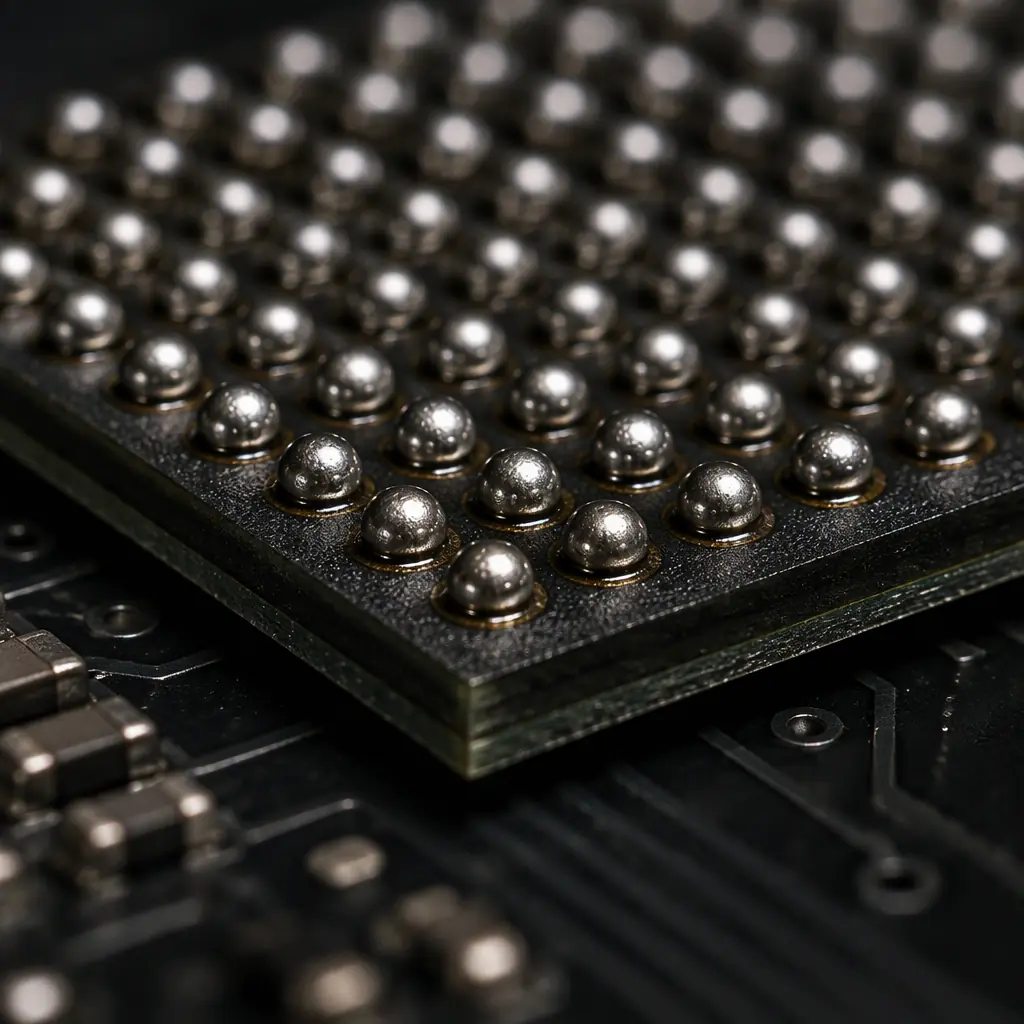
2. Escape-prone part types. Fine-pitch and area-array packages are the highest-risk escapes because their joints are invisible to optical inspection and their failure modes are marginal rather than hard. A BGA with 20% voiding is not an open circuit today; it is a field return in eighteen months. Coverage for these parts has to be planned deliberately — X-ray, thermal cycling, or boundary scan — not inherited from a generic test program.
3. Test program gaps. ICT programs are written to catch manufacturing defects, and they do so well for opens and shorts. But a test net that is shared between two nodes, or a power rail with no current measurement, or a component with a wide tolerance, can pass a functional check while being functionally wrong. Test coverage is a design activity — our coverage planning guide covers how to map it.
4. Sampling instead of full inspection. Any inspection gate that samples rather than inspects 100% has a defined escape rate proportional to the sampling plan. AQL-based sampling is a commercial compromise, not a guarantee, and it should be applied to attributes that are genuinely low-risk. Applying it to a safety-critical attribute is how escapes reach the field.
Setting a DPMO Acceptance Figure on the Purchase Order
The most effective way to control escapes is to specify an outgoing quality figure that the supplier must measure and report against. The figure has to be achievable, measurable and enforceable — an unreachable number simply gets ignored or worked around.
Choose DPMO, not PPM-per-board
DPMO scales with board complexity and lets you compare a 500-joint board to a 5,000-joint board fairly. Define the opportunity count per assembly so both parties count the same way.
Set a realistic target band
For mature SMT assembly, a common commercial target is in the low hundreds of DPMO for visible defects and considerably higher for complex area-array assemblies. Ask the supplier for their last 90 days of data before agreeing a number.
Define the measurement point
State whether DPMO is measured at the supplier's final gate, at your receiving inspection, or both. Escape rate must always be measured downstream, so agree the reporting mechanism and frequency explicitly.
Require per-gate coverage documentation
Ask for the inspection coverage matrix — which defect classes each gate (AOI, X-ray, ICT, FCT, visual) is responsible for detecting. Gaps in the matrix are the escape risks.
Define the containment response
Specify what happens on a breach: containment of the affected lot, root cause within a stated period, corrective action report, and verification of effectiveness. Our 8D and CAPA guide covers the report format to require.
The commercial structure matters as much as the number. A DPMO target with no containment clause is a metric; a DPMO target with a defined containment and corrective-action process is a control. Buyers who get this right find that the supplier's own process improves, because the containment loop forces the detection gap into the open.
Auditing the Outgoing Quality Gate
When you audit a supplier, the outgoing gate is where you verify whether the escape-rate claim is real. Four questions do most of the work:
Is the gate independent of production? If the same team that builds the board also decides whether it passes, there is commercial pressure on every marginal judgement. An independent quality function, reporting outside production, is the structural safeguard.
Is the AOI program validated? AOI is only as good as its program. Ask for the program's detection rate against a known defect sample — the classic check is a golden board or a defect panel run through the machine at intervals. A machine that has never been challenged for detection rate is a machine whose escape rate is unknown.
Are escapes tracked after shipment? The definitive test of a supplier's quality system is whether they track defects reported by customers and feed them back into the process. A supplier who can show you a Pareto of customer-reported escapes, with the corrective actions taken, is running a closed loop. One who cannot is running an open one.
Is rework controlled and traceable? Rework is often where escapes are created, not prevented — a joint reworked without re-inspection, or a reflowed BGA whose underfill was not re-checked. Rework must have its own inspection step and its own traceability, logged against the unit serial. Our labelling and traceability guide covers the serialisation that makes this possible.
Key Takeaway: Rework is the most common source of escapes in a nominally well-inspected factory, because reworked units leave the line by a different path than first-pass units. Require re-inspection and traceability for every reworked unit.
Moving From Detection to Prevention
Reducing escape rate permanently requires shifting the effort upstream. The fastest lever is usually failing faster — instrumenting the process so that a drift is detected before it produces defects, rather than detecting the defects after they are made. That is the domain of SPC control charts and Cpk on critical parameters. A process under statistical control has a predictable defect rate; a process being chased by inspection does not.
The second lever is designing escapes out at the front end, through DFM review that flags the un-inspectable features — buried joints, inaccessible test points, components with no reliable inspection path. This is why our DFM review is a quote-stage deliverable rather than a production-stage problem, and it connects directly to our DFM guidelines and test coverage planning.
The third lever is agreeing the metric with the supplier before the first shipment. A DPMO target, a coverage matrix and a containment clause turn a vague quality promise into something measurable on every lot. In practice this is the difference between a supplier relationship that improves and one that generates incidents.
The Bottom Line
Escape rate is the only quality metric that maps directly to your cost, and it is the one most purchase orders leave unspecified. Define it as defects found downstream per million units shipped, measure it at receiving or at your test gate, and put a DPMO target, coverage documentation and containment clause on the PO. Then audit the outgoing gate with four questions: is it independent, is the AOI validated, are escapes fed back, and is rework re-inspected.
Do that and the supplier's quality system becomes something you can verify rather than believe. Our team reports outgoing quality per lot with a documented coverage matrix and a closed-loop corrective action process — we are happy to share the quality plan for your assembly, alongside our supplier audit framework and control plan.