CE marking is the most common question a European importer asks a Chinese electronics manufacturer, and it is also the most misunderstood. A common belief is that a manufacturer or a factory “provides the CE certificate” for the product. In reality, CE is a self-declaration by the person who places the product on the EU market, backed by a technical file and a signed Declaration of Conformity (DoC). The PCB and the assembled board are components; the CE mark attaches to the finished product. At Huaxing PCBA we build ISO 9001, IATF 16949 and UL (E354321) certified boards and assemblies in a 15,000 m² facility serving 30+ countries, and we regularly produce the material and test data that makes your CE file possible.
CE Is a Product Attestation, Not a PCB Certificate
CE marking is the manufacturer’s or importer’s assertion that the product complies with the EU directives that apply to it. For an electronic product that generally means the Low Voltage Directive, the EMC Directive, and where it has a radio, the Radio Equipment Directive, plus the RoHS Directive for restricted substances. The mark is affixed to the product, not to a bare PCB. A bare board or an unassembled PCBA on its own is a component and typically does not carry its own CE mark; it is the assembled, functional end product that is CE marked.
This matters for a procurement decision. When you ask a Chinese supplier “can you provide CE?” the honest answer depends on what you are buying. If you are buying a finished, branded product, the supplier can ship it CE-marked after producing the required file. If you are buying a bare board or a PCBA you will integrate into your own product, then you own the CE responsibility and the supplier’s job is to hand you the data that supports it.
The Directives That Apply to a PCB / Assembled Product
The relevant directives depend on the finished product, but for electronics they fall into a small set. Getting them right at the start avoids a painful retrofit.
| Directive | What it governs | Typical harmonised standard |
|---|---|---|
| LVD (2014/35/EU) | Electrical safety, voltage limits | EN 62368-1 |
| EMC (2014/30/EU) | Electromagnetic compatibility | EN 55032 / EN 61000 family |
| RED (2014/53/EU) | Radio equipment | EN 300 / EN 301 families |
| RoHS (2011/65/EU) | Restricted hazardous substances | EN 63000, substance limits |
If your product is mains-powered, LVD and EMC both apply. If it has a radio (Bluetooth, Wi-Fi, LoRaWAN, cellular), RED applies and it absorbs the EMC requirements into the radio conformity. Our EMI/EMC design and UL certification guides cover the design side of getting there.
What Your Chinese PCBA Supplier Can Provide
A competent electronics contract manufacturer cannot write your DoC, but it can and should hand you the evidence that makes yours fast and defensible. This is the practical checklist to put in your supplier agreement.
Material and substance declarations
Copies of RoHS and REACH declarations and any test reports for the laminates, solder, finishes and components on your board. This is the raw evidence for RoHS conformity. See our RoHS compliance and REACH/WEEE/TSCA guides.
Build and inspection reports
First-article reports, IPC-A-610 acceptance records, test reports (ICT/FCT, flying probe, X-ray) and any X-ray/AOI data. These support the quality and reliability claims in your technical file.
EMC pre-compliance data
If your supplier runs emissions pre-scan on a reference unit, that points you at where the design stands before you pay for a full test-house cycle. It is not a substitute for final certification of the finished product, but it de-risks it. See our EMC/EMI compliance guide.
Component BOM and approvals
A clean BOM with the manufacturer part numbers, and the safety approvals of the key parts (transformer, connector, power supply) that feed into your safety assessment. See our certifications & compliance guide.
The Declaration of Conformity and the Technical File
The DoC is your signed statement that the product meets the applicable standards. It names the product, the directives, the harmonised standards, and who is responsible. Behind it sits the technical file, design documentation, schematics, the BOM, test reports and risk analysis, which you must be able to produce if the authority asks. There is no single authority that “approves” the DoC for most directives; you and your responsible person sign it, and you keep the file.
Who signs the DoC
Typically the importer or the manufacturer placing the product on the EU market. If you are the importer, you are the one signing, so you need the technical file in your hands. The supplier should hand it over, not hold it.
What goes in the technical file
Design and schematic, BOM, assembly drawings, the test reports, the material declarations, and the risk assessment. A supplier that keeps these together and releases them on request makes your life far easier. This is part of a well-run box-build or turnkey engagement.
Keep it current
If the design changes, the file and the DoC have to be updated. A change to the BOM, to a component or to the construction can invalidate a conformity assessment, so treat the technical file as a living document. See our engineering change guide for revision control.
EMC Pre-Compliance vs Final Certification
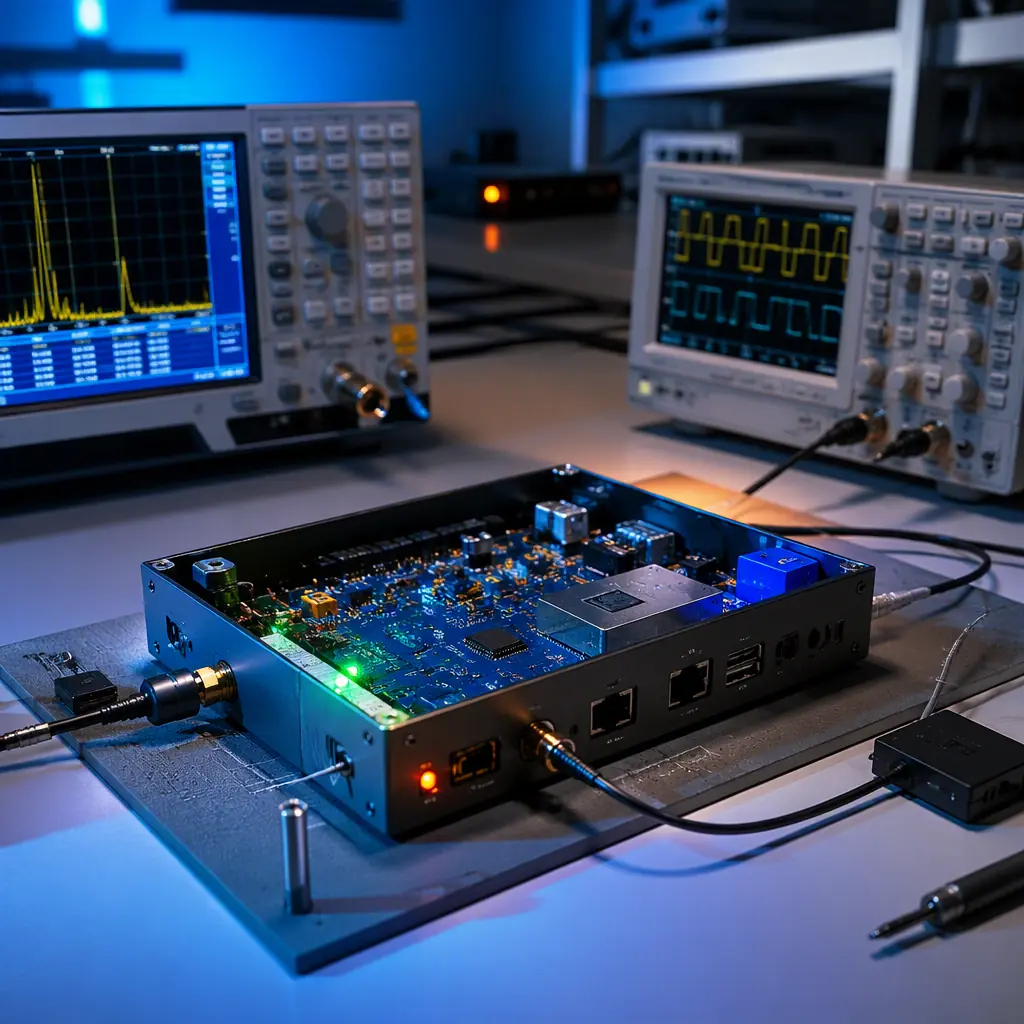
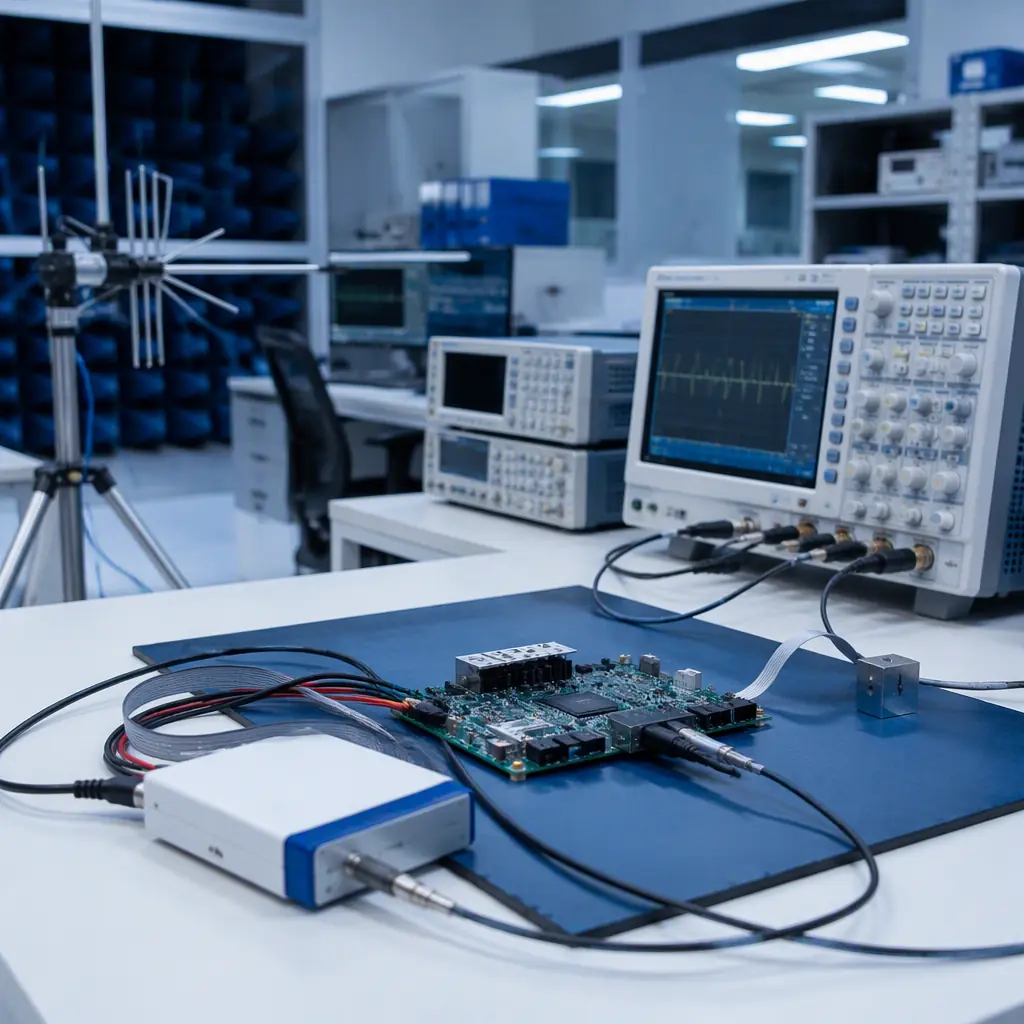
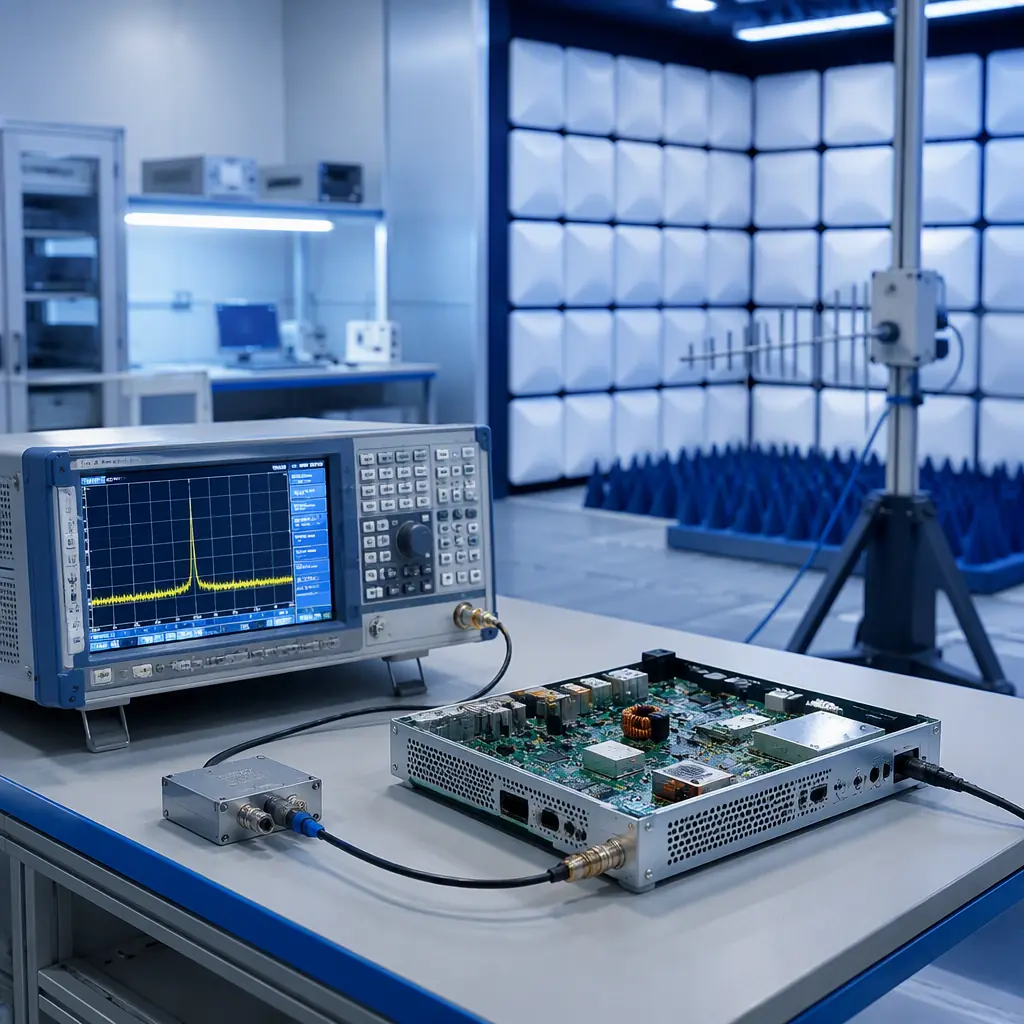
One of the biggest cost surprises is EMC. Pre-compliance testing at a Chinese factory or a local lab is cheap and points out the big problems, but the final EMC conformity for the shipped product is the responsibility of the party placing it on the EU market, and it is done on the finished unit. The two are not equivalent. Pre-scan tells you the design is close; a full pass against EN 55032 and the EN 61000 immunity family on the production sample tells you it is compliant.
The practical path is to use the design-time EMC design rules, get a pre-scan at the prototype stage, and budget a full test-house cycle for the finished product. A good supplier will flag the risk areas, switching supply, clock routing, cable routing, up front.
Where LVD and Electrical Safety Bite
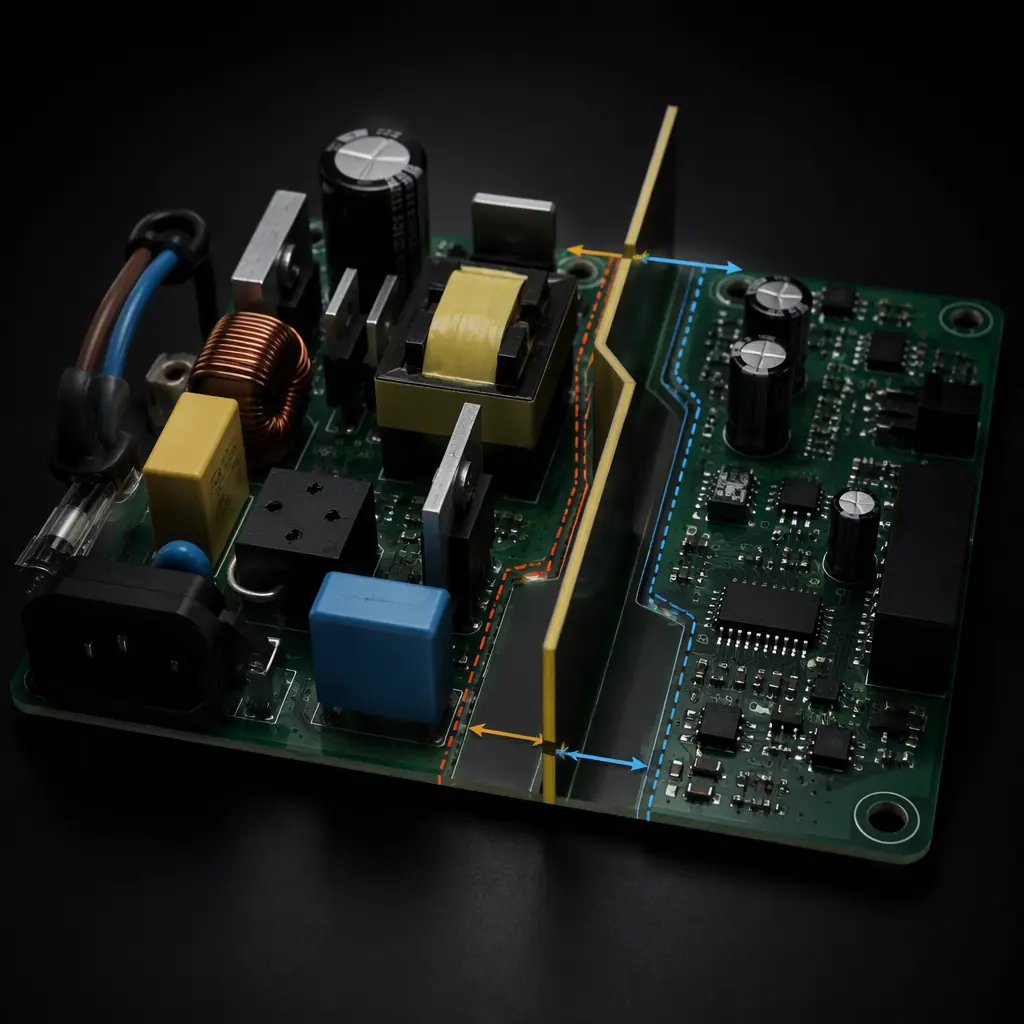
For a mains-powered product, LVD is where a genuinely good supplier earns their keep. Clearance and creepage at the mains, isolation between high and low voltage, insulation of the enclosure and the safe discharge of the supply, these are designed in, not added later. The selection of the PCB material, the high-voltage design rules and the certified mains parts all feed the safety assessment.
Procurement Tip: Never take “we provide CE” at face value. Ask specifically: do you supply the material declarations, the build and test reports, and the EMC pre-compliance data for a finished unit, and will you release the technical file so we can sign the DoC? A supplier that can answer yes on all three is a real partner; one that just says “yes CE” is not.
The Checklist to Put in Your Supplier Agreement
| Item | Demand from supplier | Enables |
|---|---|---|
| Material declarations | RoHS/REACH for laminate, solder, finish | Substance conformity |
| Build & test reports | FAI, IPC-A-610, ICT/FCT, X-ray | Quality evidence in the file |
| EMC pre-scan | Emissions pre-test on reference unit | De-risk final test cycle |
| BOM & approvals | Mfr part numbers + part safety approvals | Safety and compliance |
| Technical file release | Full file + drawings, on request | Sign the DoC |
At Huaxing PCBA we build ISO 9001, IATF 16949 and UL (E354321) certified boards and assemblies, with 8 SMT lines, 8M placements/day and 0.3 mm pitch / 0201 capability in a 15,000 m² facility, and we are happy to provide the material declarations, build and test reports, and engineering support you need for your CE technical file. We serve 30+ countries with 99.2% on-time delivery. Order your boards or ask our engineering team what compliance evidence we can provide for your program.