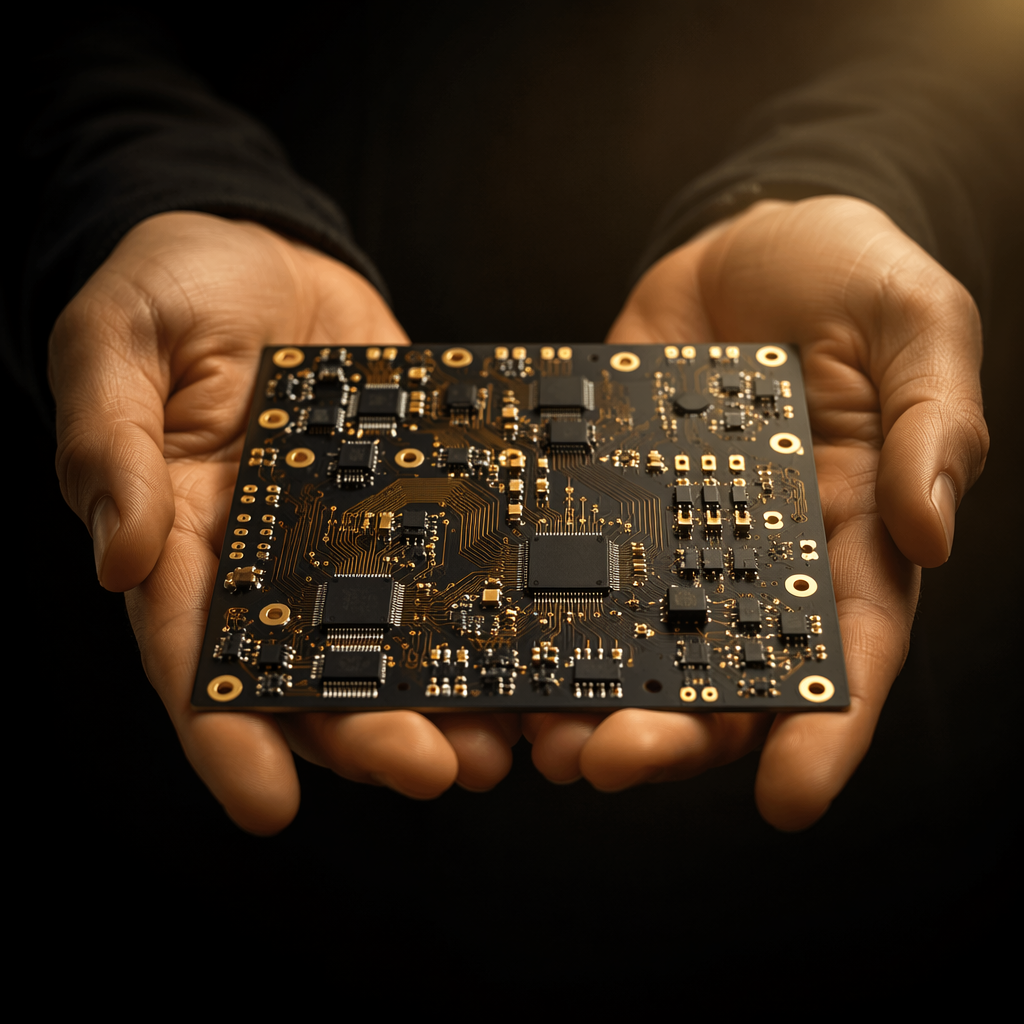

You've spent 18 months and hundreds of thousands of dollars developing your PCB design. The Gerber files, BOM, and assembly drawings represent your company's core intellectual property. When you send those files to a contract manufacturer in Shenzhen, what actually protects them? If you're relying on a one-page NDA and a handshake, you're taking a risk that no procurement manager should accept.
At Huaxing PCBA, we process over 5,000 unique PCB designs annually across 8 SMT lines, and we've seen the full spectrum of IP protection practices — from Fortune 500 legal frameworks to startups with nothing but an email thread. Here's the contract framework that separates protected buyers from exposed ones.

Why Standard NDAs Alone Are Not Enough
Most buyers start with a Non-Disclosure Agreement and assume they're covered. The reality is more nuanced. A standard NDA signed with a Chinese manufacturer creates a contractual obligation, but enforceability across borders depends on specific provisions that generic templates almost never include.
Chinese contract law (governed by the PRC Civil Code, effective January 2021) recognizes and enforces NDAs — but the agreement must specify concrete obligations, not vague promises of confidentiality. A clause stating "the manufacturer shall keep all information confidential" is far weaker than one that specifies exactly what qualifies as confidential, who can access it, and what happens when the relationship ends.
Key Takeaway: Your NDA must define "Confidential Information" with a closed list — Gerber files, BOM, schematics, assembly drawings, test specifications, firmware binaries, and client lists. Generic language like "all information shared between parties" creates ambiguity that courts cannot enforce.
The 8 Contract Terms That Protect Your PCB Design IP
Bilateral NDA with PRC Governing Law Clause
Always specify that the NDA is governed by PRC (People's Republic of China) law, with dispute resolution through CIETAC (China International Economic and Trade Arbitration Commission) or HKIAC (Hong Kong International Arbitration Centre). This gives you a real enforcement path. Avoid "neutral" jurisdictions like Singapore unless both parties have legal presence there — a Chinese court will enforce a CIETAC award against a Chinese manufacturer far more readily than a foreign judgment. For a deeper look at supplier qualification, see our PCB supplier audit checklist.
Design File Access Control & Need-to-Know Segmentation
Your contract should specify exactly which roles within the factory can access your files. A typical specification: CAM engineers (Gerber processing), process engineers (assembly programming), and QA (test fixture design) — but not sales staff, administrative personnel, or workers on unrelated production lines. Require the manufacturer to maintain an access log. Modern ERP systems at facilities like ours track every file access by user ID and timestamp. This is not just legal protection — it's a practical deterrent against unauthorized copying.
Post-Contract Data Destruction Certificate
Generic NDAs often say "return or destroy confidential information upon termination" — but rarely require proof. Add a clause requiring the manufacturer to issue a signed data destruction certificate listing every system from which your files were purged: CAM stations, SMT programming terminals, test fixture computers, backup servers, and email attachments. For additional quality assurance practices, read our guide on PCB pre-shipment inspection.
Non-Compete & Non-Use Provisions — Beyond Confidentiality
Confidentiality means "don't share my files." Non-use means "don't use my files to build products for anyone else, including yourself." This distinction is critical. A manufacturer might keep your Gerber files confidential but still use the knowledge gained — layer stackup strategies, material selections, impedance matching techniques — to improve designs for your competitors. An explicit non-use clause prohibits this. Specify that manufacturing knowledge acquired from your design shall not be applied to any third-party project in your industry vertical for 3 years post-contract.
Liability Cap & Liquidated Damages for IP Breach
Most manufacturing agreements cap liability at the contract value — typically $50,000–$200,000 for a PCB production run. But an IP breach can cause damages far exceeding the contract value: lost market exclusivity, competitor undercutting, and brand erosion. Negotiate a separate, higher liability cap for IP breaches — ideally 3–5x the contract value, or a fixed sum calibrated to your R&D investment in the design. Include liquidated damages (a pre-agreed penalty amount) to avoid the burden of proving actual damages in arbitration. For more on negotiating with Chinese manufacturers, see how to negotiate PCB prices.
Warranty of Title & Indemnification Against Third-Party Claims
Require the manufacturer to warrant that it has not and will not use your IP in a way that exposes you to third-party infringement claims. More importantly, require indemnification: if a third party sues you claiming the manufacturer stole their design and incorporated it into your boards, the manufacturer covers your legal costs and damages. This sounds unlikely — until you discover your "unique" PCB layout appeared in a competitor's product six months after production.
Source Code & Firmware Escrow Provisions
If your PCB includes programmed MCUs, FPGAs, or custom ASICs with proprietary firmware, you're sending not just hardware designs but executable IP. Require the manufacturer to hold your firmware in encrypted storage, decryptable only at the programming station with a key you control. Specify that firmware binaries must be deleted from all programming equipment within 48 hours of production completion. For complex assemblies, our PCB box-build assembly guide covers firmware programming workflows.
Audit Rights — Physical and Digital Inspection
Reserve the right to audit the manufacturer's IP protection practices. This includes: physical inspection of server rooms and CAM workstations, review of access logs, and verification of data destruction certificates. Pre-COVID, on-site audits were standard for large buyers. Today, remote audits using video walkthroughs and screen-sharing are practical alternatives — see our guide on remote PCB factory audits. Specify audit frequency (annual or per-production-run) and require remediation of findings within 30 days.
Warranty Periods: What's Standard and What's Negotiable
Beyond IP, the warranty clause defines your recourse when boards arrive defective. Industry standard for PCB fabrication is 12 months from delivery, covering manufacturing defects (opens, shorts, delamination, plating voids) but not design errors or field damage. PCBA (assembled boards) typically carries a shorter warranty — 90 days to 6 months — because assembly defects manifest quickly during testing.
| Warranty Element | Industry Standard | Negotiable Upgrade | Cost Impact |
|---|---|---|---|
| PCB fabrication defects | 12 months | 24 months | +2-3% unit price |
| PCBA assembly defects | 90 days | 12 months | +3-5% unit price |
| Latent defects (plating) | Excluded | 12 months with IST testing | +$500-800 IST setup |
| Conformal coating failure | 6 months | 24 months with salt-spray validation | +$1,200 test batch |
| Solder joint reliability | 12 months | 36 months (IPC Class 3) | +15-25% unit price |
The warranty should also specify the remedy: repair, replacement, or refund. Most manufacturers prefer replacement (they build new boards), but expedited replacement — same lead time as original, not requeued — must be written into the contract. A buyer waiting 6 weeks for warranty replacement boards has already lost their production schedule.
Liability Limitation: Where Buyers Get Burned
The most dangerous clause in a PCB manufacturing contract is the one buyers read least carefully: the limitation of liability. A typical clause reads "Manufacturer's liability shall not exceed the purchase price of the order." This means if a $15,000 batch of defective PCBs causes your $500,000 product launch to fail, you can recover at most $15,000.
Procurement Tip: Always carve out IP breaches, gross negligence, and willful misconduct from the liability cap. These should carry uncapped or separately capped liability. If the manufacturer refuses, ask yourself: what scenario are they protecting themselves from, and should you be comfortable with that?
Consequential damages (lost profits, business interruption, recall costs) are almost always excluded in standard terms. Larger buyers can negotiate a consequential damages cap — typically 2-3x the contract value — for high-reliability applications where field failures carry catastrophic costs (medical devices, automotive safety systems, aerospace). See our guide on ISO 26262 functional safety requirements for automotive-grade liability considerations.
Practical IP Protection Measures at the Factory Level
Contract terms matter, but they work best alongside physical and digital safeguards at the manufacturing facility. When evaluating a PCB manufacturer, ask about these specific controls:
Air-Gapped CAM Workstations
The computers that process your Gerber files should not have internet access. This prevents remote exfiltration of design data. Files are transferred via encrypted USB or local secure server, processed, and the workstation is wiped between unrelated customer projects.
Per-Customer Network Segmentation
Production data for different customers should reside on logically separated network segments. If Customer A's data is breached, Customer B's data should not be accessible from the same compromised system.
Employee IP Training & Non-Compete Agreements
Factory workers and engineers should sign individual confidentiality agreements with the manufacturer, not just rely on the corporate NDA. Ask whether the manufacturer conducts annual IP protection training and whether IP breaches are grounds for immediate dismissal under Chinese labor law.
Camera & Phone Restrictions on Production Floor
Cameras on the production floor are a simple but effective control. A worker snapping a photo of a test fixture or assembly layout can capture months of design work in seconds. The best facilities require phones to be stored in lockers before entering SMT and assembly areas.
What to Do Before Sending Your First Gerber Files
Before you transmit any design files to a new manufacturer, complete these three steps:
1. Execute a bilateral NDA with PRC governing law. Do not accept the manufacturer's one-page template without review. If your order volume is meaningful (above $10,000/year), the manufacturer should be willing to negotiate.
2. Watermark your Gerber files. Embed a subtle, non-removable identifier — a specific via pattern, a silkscreen mark, or a unique copper pour shape — that proves the design originated with you. This costs nothing and creates forensic evidence in the event of a dispute.
3. Split your BOM. Send the manufacturer component part numbers and quantities, but withhold proprietary component selection rationale, alternative source lists, and firmware until after the NDA and manufacturing agreement are fully executed. This limits what an untrustworthy party can do with partial information. For turnkey projects, read our PCB turnkey assembly guide for the full component sourcing workflow.
At Huaxing PCBA, every customer project is protected by air-gapped CAM processing, per-customer network segmentation, and employee IP protection agreements that exceed industry standards. Our ISO 9001:2015 and IATF 16949 certified facility has processed confidential designs for automotive Tier 1 suppliers, medical device OEMs, and defense contractors without a single IP incident in over a decade of operation. Contact our engineering team to discuss your project's IP protection requirements.