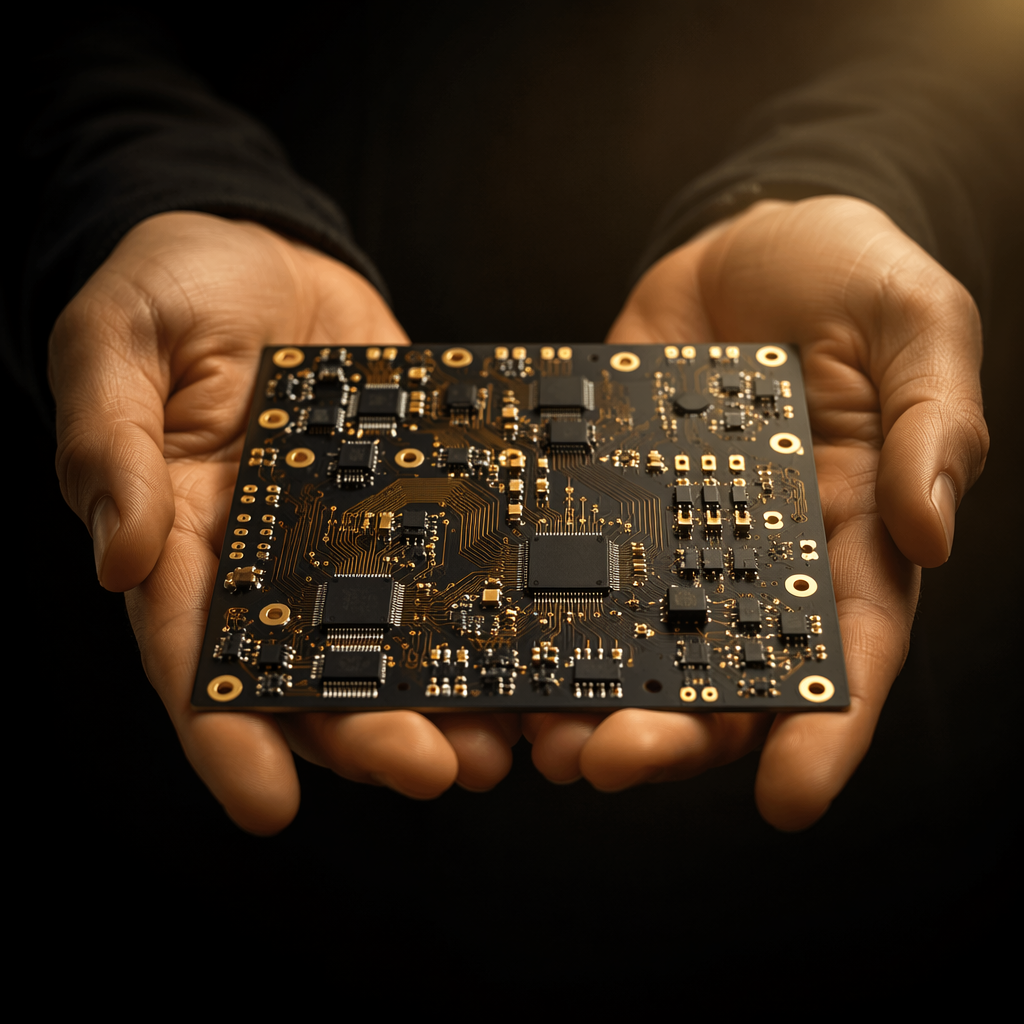
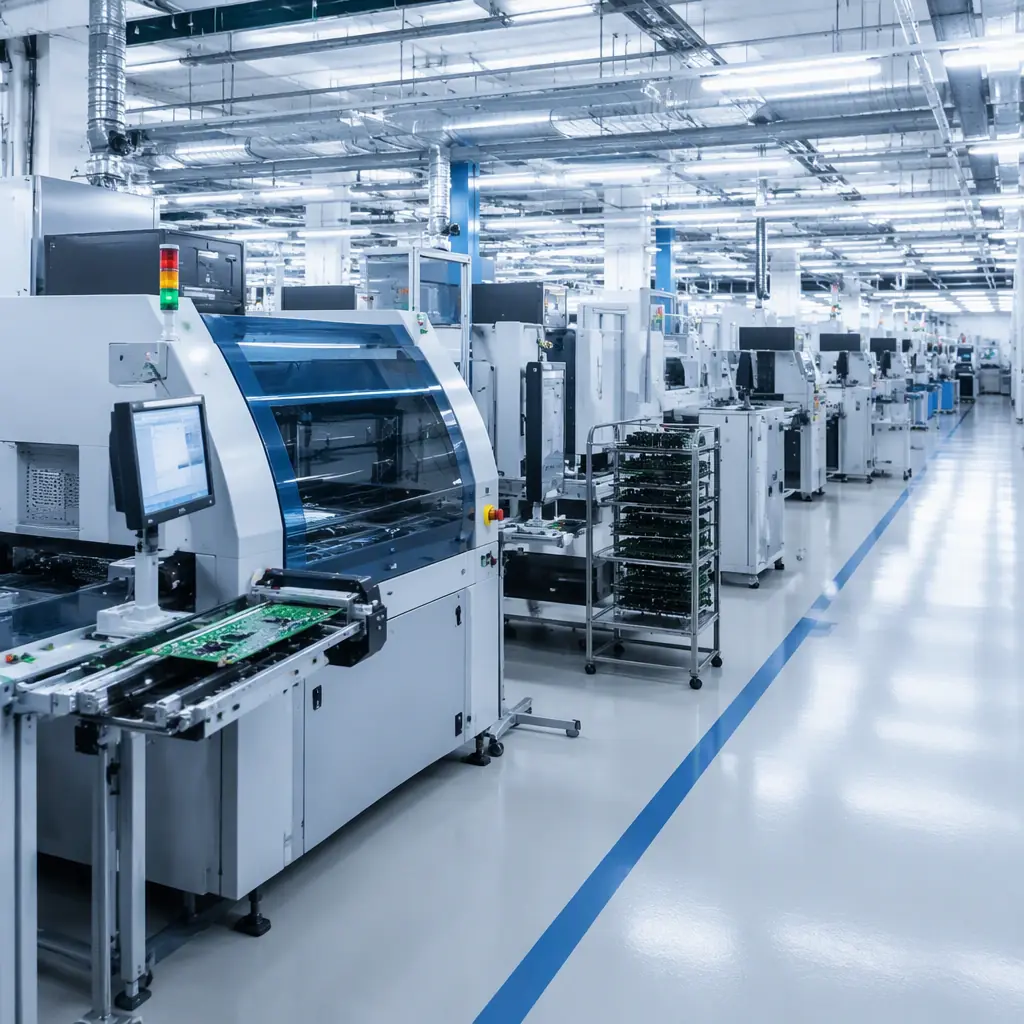
Every electronics buyer has seen the acronyms OEM, EMS and ODM on supplier websites, and most suppliers blur them. The distinction matters because it decides who owns the design files, who pays for tooling, who buys the components, and what happens to your product if you switch partners. The choice is not about prestige; it is a risk-and-cost allocation decision that should change with your product's stage: a startup prototype, a scaling product and a mature line usually need different models.
This guide defines the four roles without the marketing fog, compares them on cost, IP, control and time-to-market, and gives a decision framework a procurement manager can apply in an afternoon. It closes with the qualification checklist we use when buyers audit Huaxing PCBA as an EMS partner, the same checklist works for any factory. For the deeper operational mechanics, our turnkey assembly guide and consignment vs turnkey comparison go into the day-to-day detail.
The Four Roles, Defined Without the Fog
The industry uses four terms, and the boundary between them is exactly where the confusion, and the contract risk, lives.
| Role | Owns the Design | Owns Tooling/IP | Buys Components | Builds |
|---|---|---|---|---|
| OEM (brand owner) | Yes | Yes | Sometimes | No, outsources |
| EMS (contract manufacturer) | No, builds yours | No | Usually (turnkey) | Yes |
| ODM (design + build) | Yes, for you | Yes (licensed) | Yes | Yes |
| OBM (own brand) | Yes, its own | Yes | Yes | Yes |
OEM: the brand owner who outsources production
In the electronics supply chain, the OEM is the company whose name goes on the box, it owns the product definition and the design, and it contracts manufacturing out. Apple is the classic OEM: it designs, and EMS partners build. When a supplier calls itself an "OEM manufacturer," it usually means the factory builds for brands, not that it is a brand.
EMS: electronics manufacturing services
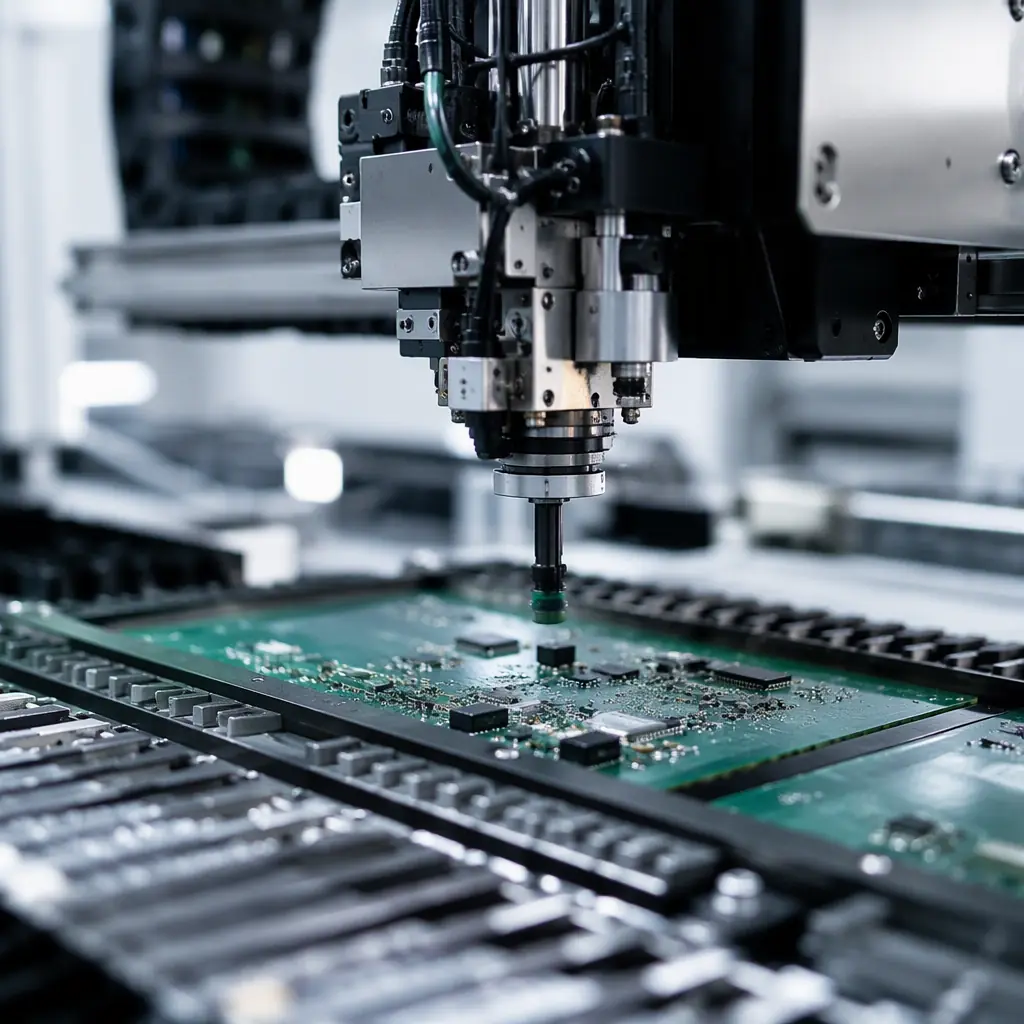
An EMS company builds to your files: PCB fabrication, SMT assembly, testing, box-build, sometimes design-for-manufacturing input. It does not own your design, you send Gerbers and a BOM, you get boards. The EMS model is the default for companies that have their own engineering team. The supplier audit guide covers how to vet one properly.
ODM: original design manufacturer
An ODM designs a product (or a platform) and sells it to you to brand and sell. You get a product without building an engineering team, but the design IP typically stays with the ODM under a license, the reason many ODM contracts include exclusive-territory clauses. ODM makes sense for commodity-style products; it is the wrong model when your competitive advantage is the hardware itself. The IP protection guide covers the contract terms that matter.
Key Takeaway: The single most important question to ask any supplier is "who owns the design files and what happens if I leave?" The answer tells you whether you are talking to an EMS or an ODM, regardless of what their marketing page says.
Cost and Risk: What Each Model Really Costs You
The visible unit price is only a fraction of the story. The four axes that decide the total economics are NRE (non-recurring engineering), unit cost, IP control, and speed. The table below is the comparison we use in buyer conversations:
| Axis | EMS (build your design) | ODM (design + build) |
|---|---|---|
| NRE (tooling, setup) | You pay tooling, no design fee | Design fee or amortized NRE |
| Unit cost | Lowest at scale, no design margin | Includes design amortization |
| Design IP | Yours, retained | Supplier's, licensed to you |
| Time to first units | Weeks (your design exists) | Months (design from scratch) |
| Switching cost | Low, files are yours | High, redesign or relicense |
| Engineering load on you | High (you design) | Low (they design) |
Do the total-cost math, not the unit-price math
A $0.50 lower unit price on 10,000 units is $5,000. Less than the cost of one engineering week spent redoing a design the factory can't build. The total cost of ownership guide walks through the full model: NRE, yield losses, logistics, quality escapes and the cost of a recall. The quote comparison guide shows how to compare quotes that are structured differently.
Volume is the pivot between models
Below roughly 1,000 units a year, the fixed costs (tooling, programming, test fixtures) dominate, and an ODM-style or quick-turn EMS engagement can be cheaper in total. Above that, your own design with an EMS partner compounds value: every improvement is yours, and the per-unit cost falls with competition. The prototype vs production guide covers the transition thresholds.
IP protection is a contract feature, not a promise
Whichever model you choose, the contract must define ownership of Gerbers, source files, test programs and any DFM improvements the factory makes. Many buyers are surprised that a factory's suggested layout fix can become the factory's IP if the contract is silent. Our IP protection guide lists the exact clauses to demand.
Inside the EMS Model: Turnkey, Consignment and Box-Build
If you choose an EMS partner, the next decision is how much of the supply chain the factory runs for you. The three standard scopes are turnkey, consignment and box-build. And the boundary between them is where cost and risk hide.
Turnkey: the factory buys everything
In turnkey, the EMS procures all components, so it manages supplier risk, lead times and shortages. You pay a handling margin (typically 5-10% on component cost) but you transfer the procurement headache and get a single accountable party. The turnkey assembly guide explains the model end to end.
Consignment: you buy, they build
In consignment, you purchase the components (often to capture volume pricing or use approved distributors) and ship them to the factory. You keep control of the parts, and the liability for shortages, excess and shelf-life. The consignment vs turnkey comparison shows when consignment actually saves money (large volumes, stable BOMs) and when it just moves risk onto your desk.
Box-build: from boards to finished products
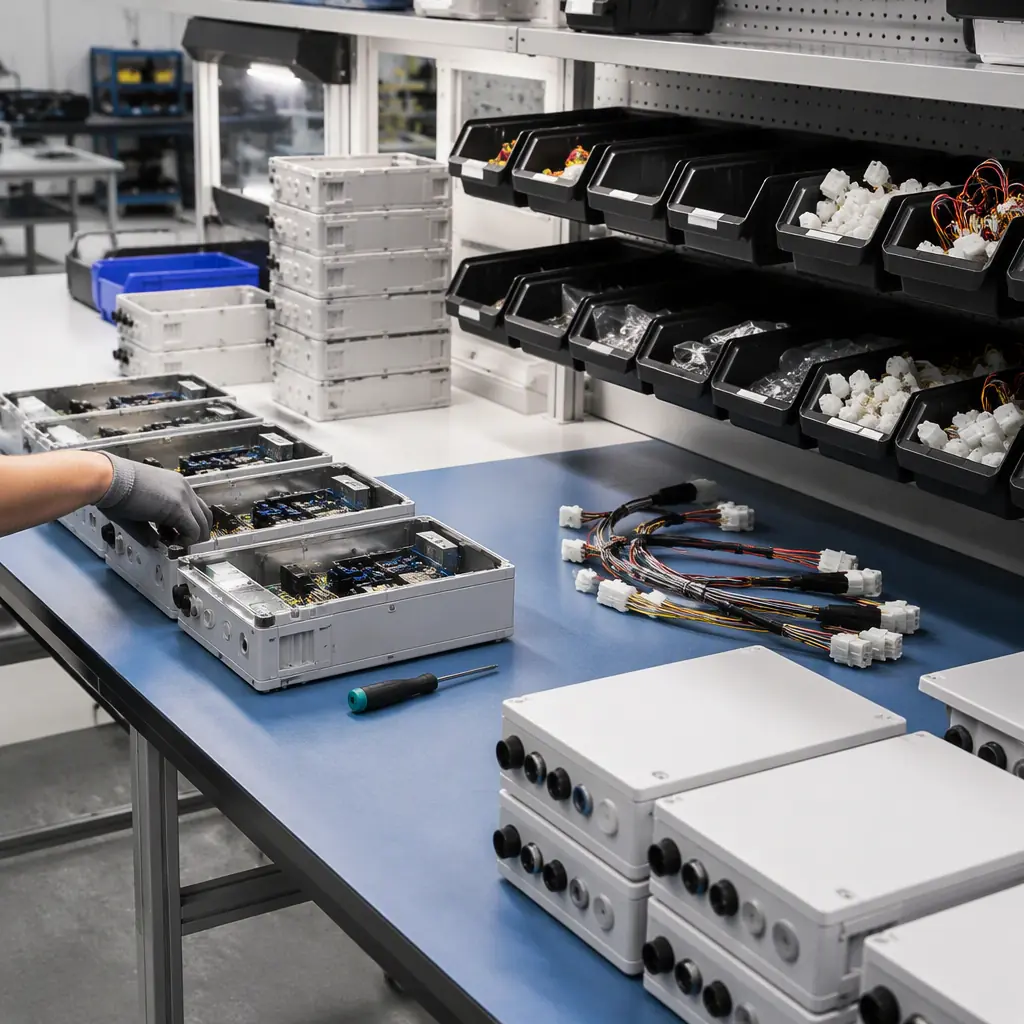
Box-build extends assembly to the whole product: enclosure, cable harnesses, displays, final integration, labeling and full functional test. It reduces your supplier count from four to one and moves the quality responsibility for the finished unit to the factory. The box-build guide covers the capability questions to ask before trusting a factory with your finished product.
A Decision Framework You Can Use This Week
The model choice reduces to five questions. Answer them honestly and the right structure falls out.
Do you have (or want) an in-house engineering team?
Yes → EMS, with your files. No, and the product is commodity-like (power supplies, standard IoT modules) → ODM. No, and the hardware is your differentiator → hire design help and use EMS, never let your differentiator's IP live in a supplier's vault.
What is your realistic 12-month volume?
Under a few thousand units: favor speed and flexibility, a quick-turn EMS with DFM input. At scale: an EMS with component purchasing power and test automation. The MOQ and cost guide has the break-even math.
How fast do you need to move?
An EMS builds your existing design in weeks; an ODM needs months to design it first. If the window is a trade show or a customer commitment, the model with the shorter path wins even at a slightly higher cost.
Who should carry the component risk?
If your BOM has long-lead or allocation-constrained parts, turnkey shifts that risk to the factory (which has the buying relationships). If you already have distributor agreements, consignment keeps your pricing, and your exposure.
What happens if you switch partners?
Walk through the exit: an EMS gives you your files and you re-quote in days; an ODM exit means a redesign or a license negotiation. If you cannot accept the exit cost, do not sign the model that creates it.
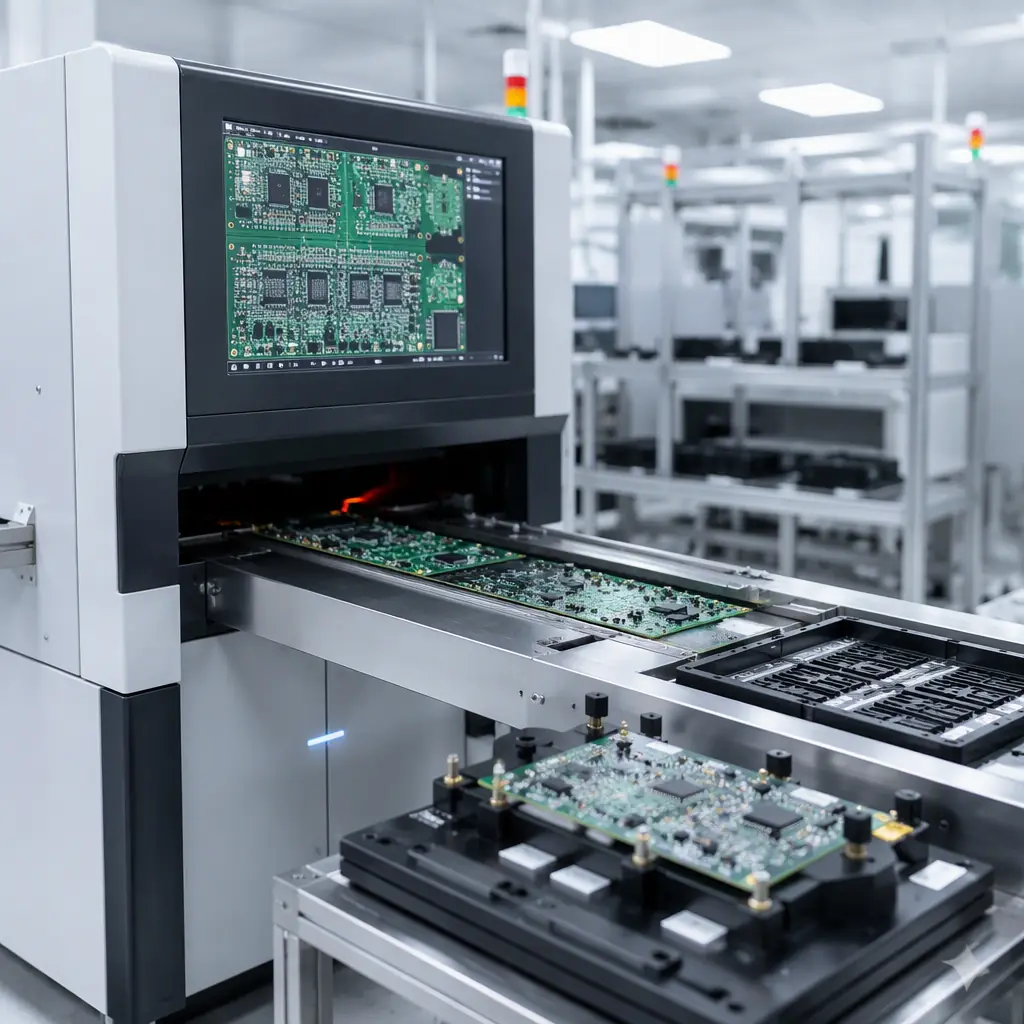
Qualifying an EMS Partner: The Checklist
Once you pick the model, the partner qualification decides whether the theory holds. This is the checklist we see in the strongest buyer RFQs, and the one we ask buyers to verify on any factory, including ours.
Verify the claimed capabilities, on paper and on site
Ask for the machine list (line count, placement accuracy, reflow capability), certifications (ISO 9001, IATF 16949, UL) and test capacity (AOI, X-ray, ICT, functional). Then verify in a live audit, the remote audit guide covers how to check a factory you cannot visit.
Test their NPI process with your actual files
A serious EMS runs a structured NPI: DFM review, design-for-test input, first-article inspection and a controlled ramp. Send a real (non-confidential) board and watch how they respond, the response quality predicts the production experience. The NPI process guide lists the deliverables to demand.
Stress-test quality metrics and dispute handling
Ask for DPPM data, first-pass yield and their quality-dispute process in writing. The factories with real systems publish numbers; the others publish adjectives. The quality metrics guide explains what good numbers look like, and the dispute resolution guide covers the contract terms that keep a disagreement from becoming a lawsuit.
Plan the transition before you need it
Even a great partnership should have a documented exit: file ownership, test program handover, component inventory settlement. The supplier transition guide shows how to structure a move that takes weeks, not quarters.
Choosing the Model That Matches Your Strategy
The OEM/EMS/ODM question is a strategy decision, not a vocabulary test. If your product's value is in the hardware you designed, an EMS partner builds it while you keep the IP, that is the model for differentiated products. If your value is in the brand, distribution and service, an ODM can deliver a platform you brand, as long as you price in the license and accept the exit cost. And if you are early, the fastest path is an EMS with strong DFM and NPI support that grows with you from prototypes to volume. Run the five questions, do the total-cost math, and put the file-ownership clause on the table in the first conversation. The supplier who answers it cleanly is the one you can work with for a decade.
Huaxing PCBA works as an EMS partner under turnkey, consignment and box-build scopes, with structured NPI, first-article inspection and full test coverage across 8 SMT lines, and your design files stay yours, defined in writing. Read our turnkey assembly guide for the operational detail, or send your BOM and files . We'll return a DFM review and a scope proposal (turnkey, consignment or box-build) within 24 hours.