
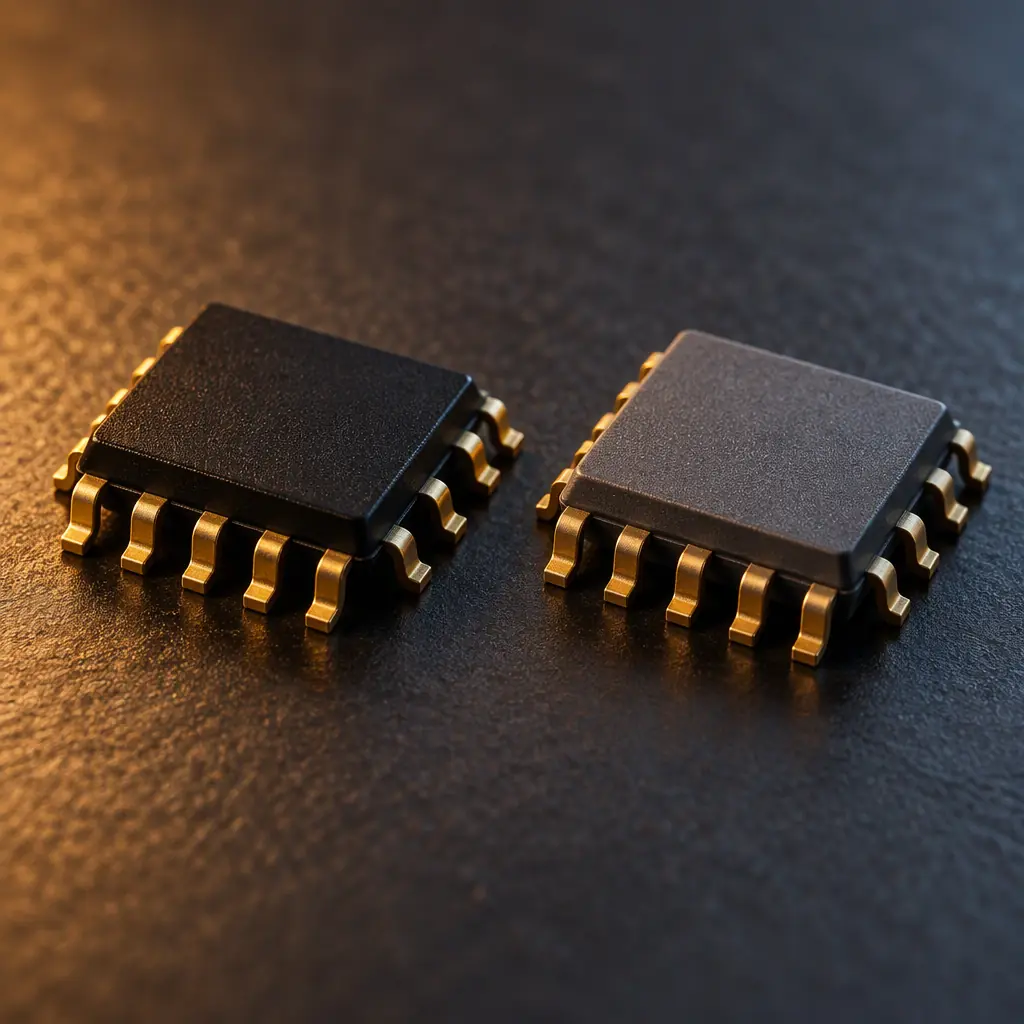
A second source is not a cheaper equivalent. It is a new part that happens to sit in the same footprint, and it is only a second source once the form, fit, function, derating margin and the qualification evidence behind it have been written down and approved. Everything else is a substitution, and substitutions discovered at final test are one of the more expensive ways a BOM goes wrong.
The commercial case for a second source is straightforward: single-source parts carry lead-time and price risk, and a BOM with 140 lines will usually contain eight to twelve parts where one supplier controls availability. The problem is that the approval work is unglamorous and gets skipped under schedule pressure, so the second source arrives as a line-side decision by whoever is short of parts that week.
This page sets out an approval workflow with a numeric risk tier, the specific things an alternate must not change silently, the certification consequences in three regulated industries, and how to reconcile a substitution that already happened. For the wider supply-risk framing, our component shortage mitigation playbook covers the BOM risk matrix; this page covers what to do with the parts that matrix identifies.

What Makes an Alternate Actually Valid
Five conditions, all required. If any one is missing the part is a candidate, not an alternate.
- Form and fit. Same package outline per JEDEC, same lead pitch, same terminal finish family, same pin-1 orientation in tape. Tape orientation is the one that gets missed: a part with reversed tape direction will be placed rotated by 180 degrees and will pass AOI if the package is symmetric.
- Function. Same electrical specification within the tolerances the circuit actually needs, not the tolerances on the datasheet headline. A 10% capacitor tolerance is only equivalent if the circuit was designed with 10% margin.
- Derating margin. The alternate must meet the same derating rules the original was selected under. Our capacitor selection and derating guide covers the voltage and temperature derating arithmetic; the same logic applies to resistors, inductors and semiconductors.
- Tolerance stack position. If the part sits in a stack where its worst-case value drives a specification, the alternate must be evaluated in the same stack, not on its own line.
- Qualification evidence. The evidence set has to cover the alternate, not the family. A supplier's AEC-Q200 report for one case size does not transfer to another case size from the same family without an explicit statement that it does.
The most common failure in practice is the third one. Alternates are approved on datasheet headline values and then run at 92% of rated voltage where the original was selected at 70%, because nobody re-ran the derating check. The part is electrically "the same" and thermally is not.
A Numeric Risk Tier For Approval Depth
Approving every alternate to the same depth is wasteful and approving them all lightly is how silent changes get in. Four tiers, assigned by the part's role in the product, keep the effort proportional.
| Tier | Part role | Approval evidence required | Typical lead time |
|---|---|---|---|
| 1 — Critical | Safety function, certification-defining, or single point of failure | Full qualification to the same standard as the original; sample build and test; PPAP-equivalent submission | 4–8 weeks |
| 2 — Major | In the tolerance stack of a published specification, or in a thermal path | Datasheet comparison, derating re-run, sample build with functional test | 2–3 weeks |
| 3 — Standard | Decoupling, pull-up, indication, non-critical filtering | Datasheet comparison with derating check, first-article inspection | 3–5 days |
| 4 — Form only | Mechanical, hardware, connectors with no electrical function beyond continuity | Dimensional check and plating verification | 1–2 days |
The tier is a property of the position on the board, not of the part type. The same 100 nF capacitor is Tier 1 when it sits on a medical isolation barrier and Tier 3 when it decouples a microcontroller supply. Assign the tiers once, at design release, and store them on the BOM line; retrofitting tiers during a shortage is where the discipline collapses.
What an Alternate Must Never Change Silently
These six items are the ones that turn a legitimate second source into an unreported product change. Each one has caused a field failure in published industry incident reports at some point, and each one is invisible on an assembly drawing.
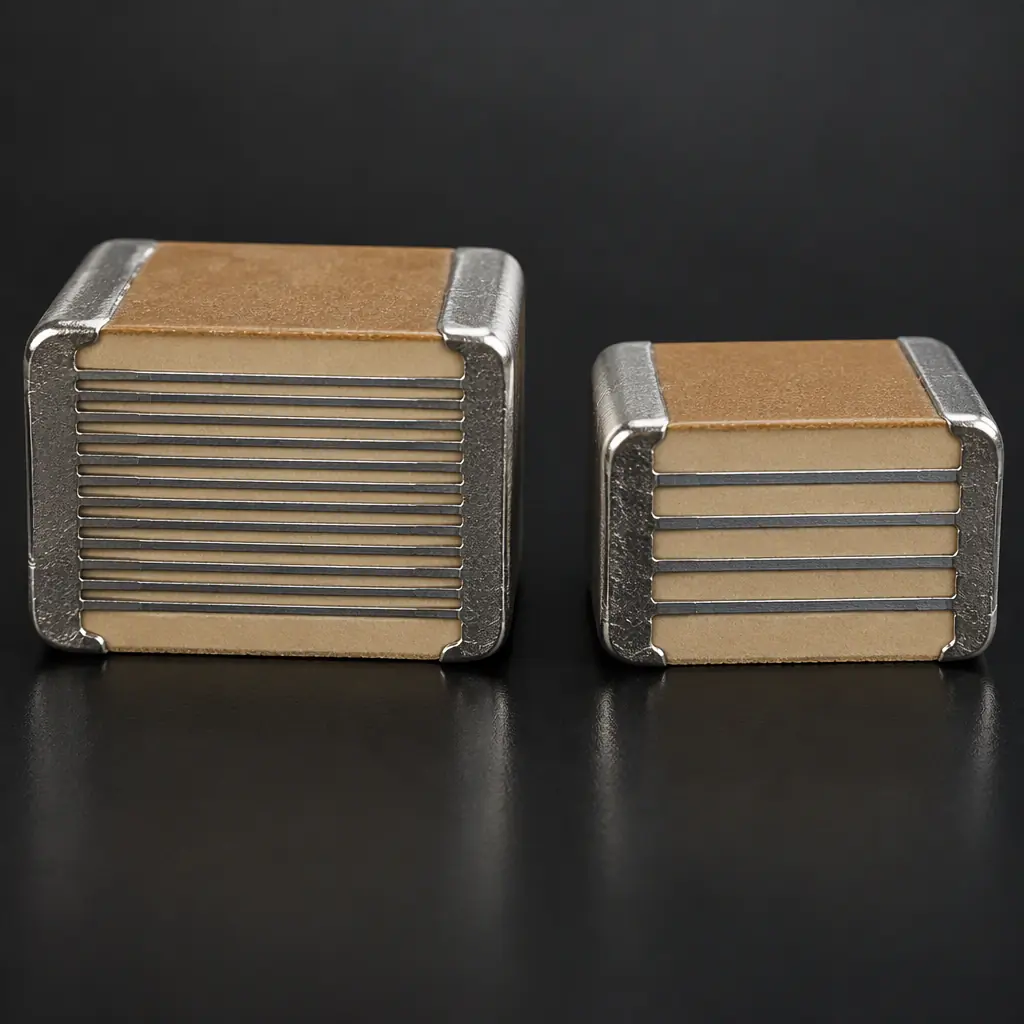
- Dielectric material class in a capacitor. X5R to X7R is usually safe; X5R to Y5V at the same nominal value in the same case size loses more than half its capacitance at temperature and DC bias.
- Terminal finish. Matte tin to tin-bismuth changes the solder joint metallurgy and the reflow profile. Tin-lead to matte tin changes the whisker risk profile, which is a documented failure mode on long-life boards.
- Tape and reel orientation. As above. It is a placement defect that AOI cannot catch on symmetric packages.
- Moisture sensitivity level. An MSL 3 part substituted for an MSL 1 part introduces a floor-life constraint the assembler was not planning for, and a popcorning risk the buyer will never see until reflow.
- Internal construction of a magnetic or a crystal. Two inductors with the same inductance and the same footprint can differ in saturation current by 40%, which only shows at load.
- Firmware or trim state of a programmable part. A microcontroller with the same part number suffix family but a different memory option will accept the hex file and behave differently at the last 4 KB.
Write these six into the approval form as a mandatory checklist. A form that asks the six questions is faster to complete than a form that asks everything, and it catches the failure modes that actually occur.
Certification Consequences By Industry
The evidence burden for an alternate is set by the certification the product carries, not by the assembler's preference. Three patterns cover most of what we build.
Automotive (IATF 16949, PPAP). Any component change that affects a customer-designated characteristic requires customer notification and a PPAP submission at the appropriate level, and the alternate enters the control plan. Practically, this means a Tier 1 or Tier 2 alternate cannot be introduced inside a running production window without a submission, so the approval work has to start before the shortage, not during it. Our PPAP guide for PCB assembly lists the 18 elements and which ones change when a part changes.
Medical (ISO 13485, IEC 60601-1). A component change on an isolation barrier or in a risk-controlled function requires a risk-file review, and depending on the regulator a letter to file or a new premarket submission. The trigger is not the component value; it is whether the component appears in a risk control or in the essential performance justification. Substituting a Y-capacitor is a different category of event from substituting a pull-up resistor.
Industrial and consumer (UL, IEC 62368-1). UL recognition follows the component's file number, so a UL-recognised alternate with an equivalent rating is usually acceptable within a recognised construction, but a part that is not UL-recognised may invalidate the mark even if it is electrically superior. Ask for the UL file number, not the datasheet compliance statement.
In all three cases, the rule is the same: the certification owner approves the alternate, not the purchasing team. A second source approved by purchasing and discovered by the auditor is a finding, and findings are more expensive than the lead time you were trying to save.
True Cost Of A Second Source
The saving is the price delta times annual volume. The cost is the approval work plus the test evidence plus the inventory of both parts during changeover. Modelling both makes the decision defensible.
Take a part at 12,000 units per year with a $0.34 unit price, where the alternate quotes $0.26. The gross saving is $960 per year. The approval at Tier 3 costs roughly 20 engineering hours across purchasing, quality and design, plus a first-article inspection, plus a small sample build if one is needed. At a loaded engineering rate that is often $1,200 to $1,800 before any inventory effect, which means the first year is negative and the payback is eighteen months. Where the second source pays for itself immediately is where the part is at Tier 1 or 2 and the alternative to a second source is a line stop: the approval cost is trivial compared with a week of lost output.
This arithmetic is the reason second sourcing should be rationed by risk rather than applied across the whole BOM. The parts worth the work are the long-lead, single-supplier, high-value ones. Approving an alternate for a 0.1% resistor is effort spent where the risk was never material.

Reconciling A Substitution That Already Happened
Sooner or later a build arrives with a part that was not on the approved BOM. The instinct is to reject the lot. The better response is a structured reconciliation, because the build may be perfectly good and the real problem is the process gap behind it.
- Identify the part by marking, not by the label on the reel. Marking codes are not always enough on their own; use X-ray on a sample and, where the part is critical, decapsulation or XRF for finish verification. Our counterfeit component verification guide covers the inspection sequence.
- Obtain the alternate's datasheet and run the Tier 1–4 assessment retroactively. If it lands at Tier 3 or 4 and the derating holds, the build is usable with a documented deviation rather than a rejection.
- Open a formal record. A substitution without an approved change is a nonconformance even when the part is fine. Our engineering change order guide covers how the record closes properly, and the deviation versus waiver distinction matters here: a deviation covers a known departure before it happens, a waiver covers one after.
- Check whether the substitution is systemic. One substituted reel is an incident. Three builds in a row with the same substitution is a purchasing process that has decided the approved vendor list is advisory.
- Decide on the population, not just the lot. If the part is Tier 1 or 2, ask which earlier shipments might contain it. This is the step that gets skipped, and it is the one that becomes a recall when a field failure appears.
The reconciliation process is also the fastest way to learn whether your supplier's change control works. A supplier who reports the substitution before you find it is running a controlled process with a communication gap. A supplier who ships it silently and cannot tell you which lots are affected is a different level of risk, and the answer should change how much incoming inspection you buy.
The Approval Form That Actually Gets Used
Approval workflows fail when the form is longer than the decision. Ours fits on one page and has six fields: the position on the board and its tier, the original part number and the alternate part number, the six silent-change checks, the derating re-run result, the certification owner's signature, and the effective date and BOM revision it attaches to.
That last field is the one that makes the system work. An approval that does not reference the BOM revision number will drift out of sync the next time the BOM changes, and a second source approved against revision C is not automatically approved against revision D. Our BOM preparation guide covers the revision discipline; the connection between the two documents is what keeps an approved alternate from becoming an unapproved one eighteen months later. Obsolescence planning runs on the same records, so see the component obsolescence management guide for the last-time-buy side of the same risk.
The Cross-Reference Table Nobody Maintains
Every second source lives in a cross-reference table: original part number, approved alternates, tier, approval date, certification owner sign-off. In most organisations that table exists in three places at once, none of them authoritative: the buyer's spreadsheet, the assembler's approved vendor list and the design team's component database. When they disagree, the line uses whichever one the shortage email was answered from.
The fix is administrative rather than technical, and it takes one decision: name the table that is authoritative and require the other two to reference it. Practically this means the BOM revision carries the approved alternate list as an attribute, and the assembler's AVL is a derived view rather than an independent document. Two consequences follow immediately, and both are worth the effort.
- Part numbers that are not on the list cannot be built without a deviation. The line-side decision becomes visible rather than silent, because the goods-in system rejects an unlisted part number instead of accepting it with a note.
- The tier travels with the part position, not the part number. When the same capacitor moves from a decoupling position to an isolation barrier in a redesign, the tier changes with the schematic, and the approval depth follows automatically. This is the single highest-value property of maintaining the table at BOM line level rather than part level.
Our own practice is to publish the cross-reference with every PPAP submission and every annual BOM review, so the buyer sees the table the assembler is working from rather than discovering it during an audit. For buyers managing several contract manufacturers, that submission is the cheapest early-warning system available: a table that has grown by forty lines without a corresponding set of approvals is a process drifting.
When A Second Source Is The Wrong Answer
Second sourcing is not universally good practice, and three situations make it actively worse than the risk it removes.
When the part is in a matched set. Some components are selected as a pair: an inductor and its output capacitor, a crystal and its load capacitors, a shunt and its amplifier. Approving an alternate for one half without re-qualifying the pair can move a resonance or a gain margin outside the design window, and the failure appears at temperature extremes rather than at first article.
When the volume does not justify the inventory. Holding two part numbers means two reels, two line-side locations, two sets of MSL handling rules and two expiry dates. On a 300-unit annual build, the administrative cost of a second source often exceeds the lead-time risk it removes, and the second reel expires before it is consumed.
When the shortage is a pricing event, not a supply event. If the single-source part is available at every distributor and the alternate is cheaper, you are not managing risk; you are renegotiating price with extra engineering hours attached. Our shortage mitigation playbook separates the two cases, and the distinction changes the answer: price pressure is answered with volume commitments and forecast visibility, not with a qualification project.
The general rule that holds across all three: a second source is worth the approval work in proportion to the cost of a line stop. Where a line stop costs a week of output, the work pays back in the first event. Where it costs a resequencing of the build schedule, the cheaper answer is usually a buffer stock and an honest forecast.