
A counterfeit component is any part that is misrepresented as something it is not — a recycled or relabelled part sold as new, a lower-grade part sold as a higher grade, an unqualified part sold as an authorised-line part, or a part that simply does not work to the datasheet. The reason it matters to a PCB buyer is not the price of the part. It is that a counterfeit can pass incoming electrical test, sit undetected in your assembly, and fail in the field months later — where the cost is a return, a warranty claim, a recall, or a lost customer.
The risk is not confined to bargain-basement brokers. Counterfeit, recycled and grey-market parts have been documented entering authorised channels and defence supply chains. The defence and aerospace industries formalised their response first, through standards such as AS5553 and AS6081, and those standards now define what a credible counterfeit-control programme looks like anywhere. A buyer selecting a PCB assembly partner is really asking one question: does this manufacturer have a process that keeps unverified parts out of my build, and will they stand behind it in writing?
At Huaxing PCBA we source through authorised and franchised distribution, screen incoming parts against the component's data, and hold the sourcing chain under IATF 16949 and ISO 9001 with a counterfeit-parts programme. This guide describes the tools and terms you can demand from any supplier, including us.
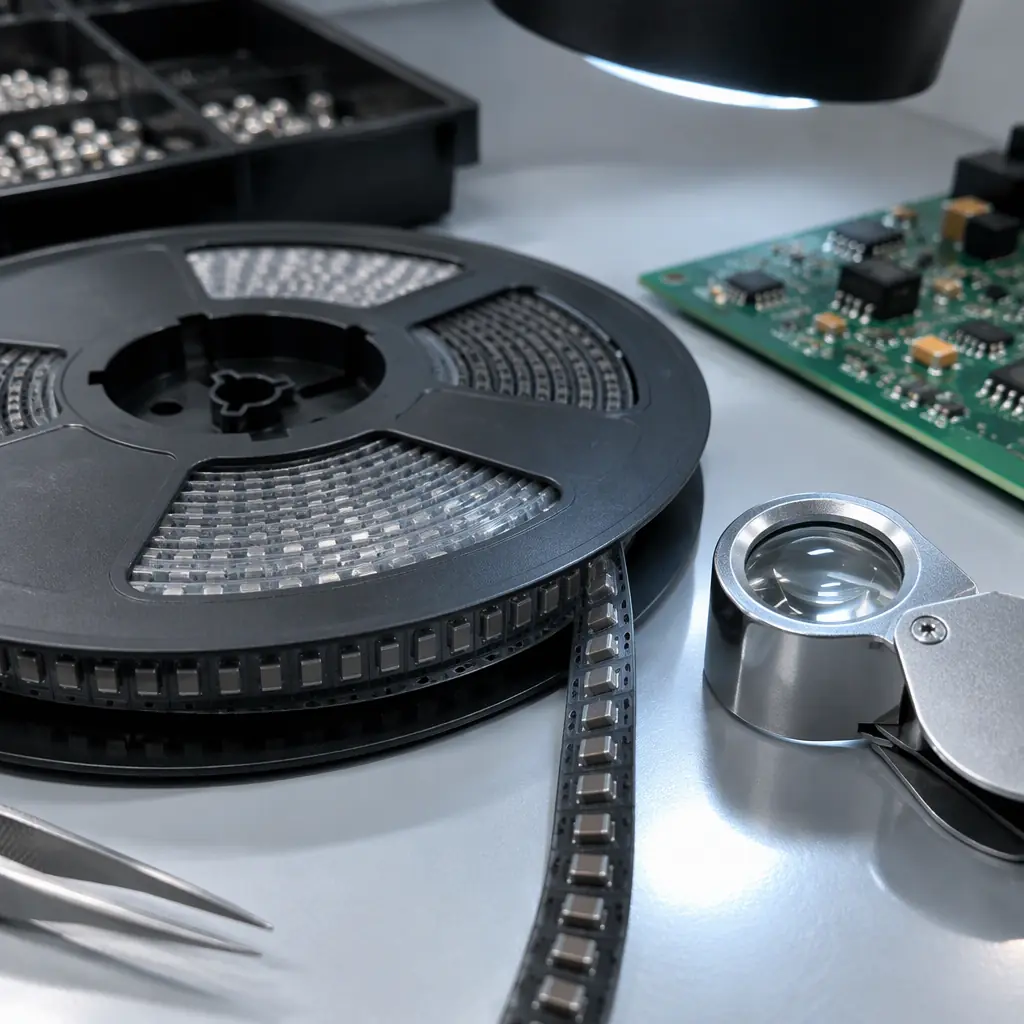
How Counterfeit Parts Enter a Legitimate Supply Chain
Counterfeiters do not usually invent a component. They exploit the gaps created by scarcity and price. Understanding the entry points is what tells you where to look.
Recycled and refurbished parts. Components stripped from scrapped assemblies are cleaned, re-marked, re-taped and sold as new. They may work, but their solderability, moisture history and thermal exposure are unknown, and their reliability in a reflow process is a coin toss. This is the single most common class of counterfeit in the open market.
Re-marked and mislabelled parts. A cheaper part is relabelled as a more expensive one — a lower speed grade sold as a higher one, a commercial-temperature part sold as industrial, an old date code refreshed to look recent. The part is real; the specification is a lie.
Over-production and out-of-spec diversion. Parts made by a legitimate fab but outside the authorised distribution agreement, or failing final test, are diverted to the grey market. They can be genuine dies that did not meet spec, which is why they pass a casual look but fail under stress.
Scarcity spikes. When a part goes on allocation or reaches end-of-life, brokers with unexpected stock appear. Genuine surplus exists, but scarcity is also when counterfeiters strike hardest, because buyers are under pressure and skip verification to keep a line running. Our guide to component shortage mitigation covers how to manage that pressure without cutting corners, and component obsolescence management covers the end-of-life planning that reduces the need to buy from the open market at all.
The Three Buying Models and Their Real Risk
Every component you buy comes through one of three channels, and the risk and cost profile of each is different. Buyers who treat them as interchangeable are the ones who get surprised.
| Channel | Traceability | Counterfeit Risk | Typical Cost |
|---|---|---|---|
| Authorised / franchised distributor | Full, to the manufacturer | Lowest | List price |
| Manufacturer-directed sourcing (OCM) | Full, manufacturer-supplied | Lowest | Highest where scarce |
| Independent / broker / grey market | Often none or unverifiable | Highest | Variable, sometimes below market |
Key Takeaway: Authorised distribution costs more because it carries the traceability that makes the part's history provable. The premium buys you a documented chain from the manufacturer to your line; the grey market sells the part without that chain, which is precisely why it is cheaper and why the risk transfers to you.
The practical rule is not that the grey market is always wrong. It is that grey-market sourcing must be paired with independent verification, because the channel itself provides no guarantee. A grey-market part purchased without testing is an unverified part, whatever the seller says.
Incoming Inspection: The Verification Ladder
Verification is not a single test. It is a ladder — cheap, fast checks first, escalating to destructive and laboratory methods only when suspicion justifies it. A credible manufacturer runs rungs in proportion to the risk of the source and the criticality of the part.
Documentation and traceability review
Check the chain first: certificate of conformance, date codes, lot numbers, packaging, and whether the seller is an authorised distributor for the manufacturer. Missing or inconsistent paperwork is a red flag on its own, and it is free to check before a single part is touched.
Visual and marking inspection
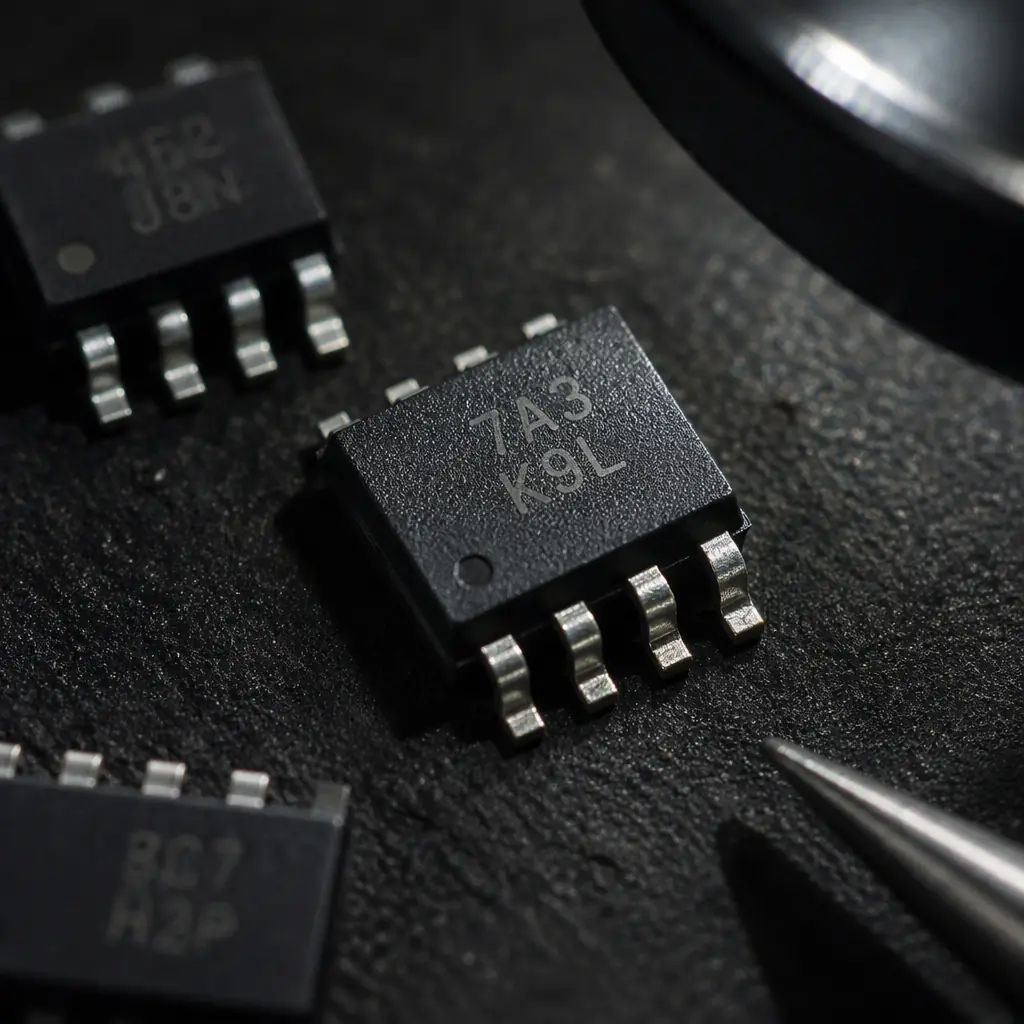
Examine the part under magnification for re-marked text, inconsistent fonts, wrong logo placement, sanding marks, blacktopping, and changes in the finish of leads. Compare against a known-good reference part. Marking permanency — resistance to solvent and abrasion — is a standard test because genuine laser marking survives and cheap re-ink does not.
X-ray inspection
X-ray reveals die presence, die size and internal construction. A package that should contain a large die showing a small one, or an empty cavity, is conclusive. X-ray is non-destructive and fast, which makes it a practical first escalation.
X-ray fluorescence and material analysis
XRF checks the elemental composition of terminations and finishes. A lead-free part that tests positive for a banned finish, or the wrong metallurgy under the plating, is a sign the part is not what it claims to be.
Electrical test and curve tracing
Measure the parameters the datasheet specifies, and compare across the lot. Out-of-tolerance values, or a wide spread within a supposedly single-date-code reel, indicate mixed or misrepresented stock.
Decapsulation and destructive physical analysis
When the stakes are high, decapsulation exposes the die for inspection of its markings, mask layout and construction. DPA is destructive and laboratory-based, so it is reserved for critical parts or a confirmed suspicion — but it is the test that ends the argument.
The ladder matters because it is a matter of proportion. Running every rung on every part would be unaffordable; running none is how fakes get through. A good programme sets the depth of inspection by the source risk and the consequence of failure.

The Standards That Define a Counterfeit-Control Programme
You do not have to invent the requirements. Several standards describe a counterfeit-parts programme, and referencing them in your sourcing documents is how you turn a vague expectation into a testable one.
AS5553 is the aerospace standard for counterfeit electronic parts: avoidance, detection, mitigation and disposition. It defines how a supplier should manage the risk of counterfeit parts entering a product and how to deal with them when they are found.
AS6081 is the companion for independent distributors — the requirements an independent distributor must meet to be considered a trustworthy source for aerospace and defence parts. Requiring AS6081 from a broker is one of the most practical controls a buyer can put in place.
AS6171 and IDEA-STD-1010 define the test and inspection methods themselves — the marking permanency, X-ray, XRF, decapsulation and electrical tests that make up the verification ladder. They give you a common vocabulary for what "inspected" means, so a supplier cannot claim verification while doing nothing.
The value of naming these standards is that they convert an unenforceable request into a clause your supplier must meet or formally refuse. In regulated products — automotive, medical, aerospace and defence — they are often a contractual flow-down requirement rather than a choice. Where they apply, see how they sit alongside AS9100 supplier certification and aerospace and defence PCB manufacturing.
Writing Counterfeit Controls Into Your PO and Supplier Qualification
The verification ladder and the standards only protect you if they are required. That happens in two documents: your purchase order and your supplier qualification.
In the purchase order, specify that the supplier must source through authorised or franchised distribution unless otherwise agreed in writing, and that any independent-distributor sourcing must meet AS6081 with test reports provided. Require a certificate of conformance with full traceability to the original manufacturer for every lot. Require notification and approval before any substitution.
In the supplier qualification — through a PPAP-style package, which our PPAP for PCB assembly guide describes — require a documented counterfeit-parts programme, a defined incoming-inspection procedure, records of inspection for the parts on your build, and a disposition process for parts found counterfeit. Add the right of audit, so the programme is verifiable rather than merely promised.
The point of all of this is indemnity and clarity. When the requirements are on the order and in the qualification record, responsibility for a counterfeit part is unambiguous — and the supplier has a reason to run the inspection ladder before the part reaches your board.
Red Flags in a Quote or BOM Response
Most counterfeit problems are visible before the part is bought, in how the quote behaves. The signals are consistent:
Pricing clearly below the market for a part that is scarce or on allocation, with no explanation of the source. Genuine surplus exists at a discount; deep discounts on hot parts are a warning.
Unexpected availability of a part that is end-of-life or on a long lead time, especially in large quantities and on short notice. This is the classic counterfeit entry point.
No traceability offered or a refusal to name the distributor. A supplier who cannot or will not say where the part came from cannot be providing a verified part.
No questions asked about the application, the specification or the operating conditions — a supplier who does not care what the part is for is not screening it for your product. For how supply-chain risk like this sits in a wider picture, see our guide to PCB supply-chain risk management.
What Huaxing PCBA Does
Counterfeit control is a sourcing discipline as much as an inspection one, and at Huaxing PCBA it runs across 8 SMT lines under IATF 16949 and ISO 9001. We source through authorised and franchised distribution by default; where an independent source is unavoidable we apply the verification ladder in proportion to the risk of the part, provide the inspection records, and flag any substitution before it is made.
If you are qualifying a supplier — or worried about parts already in a BOM — the right first step is to state your counterfeit requirements up front, at quotation, rather than discovering the gap when a board fails.
Send your Gerber and BOM with your counterfeit-control and traceability requirements and we will confirm our sourcing and inspection approach and return a quote inside 24 hours, or talk to our engineering team about the verification level the right part for your product justifies.