The most expensive reliability data in a program is the data a customer already paid for and did not ask to see. We routinely receive qualification packages where the thermal cycling report says “pass” and nothing else: no coupon construction, no temperature endpoints measured at the time of test, no failure distribution, no statement of what was inspected after the last cycle. It is a document that certifies a decision rather than a result, and it is impossible to extend to a different board.
Reading these reports properly is a skill with a short list of checks, and it matters because the difference between a passing report and a useful one determines whether the test has to be repeated when the design changes, the laminate changes, or the second source is added. A test whose conditions and acceptance criteria are recorded survives a design change. One that only records a verdict does not.

The First Check: What Was Actually Tested
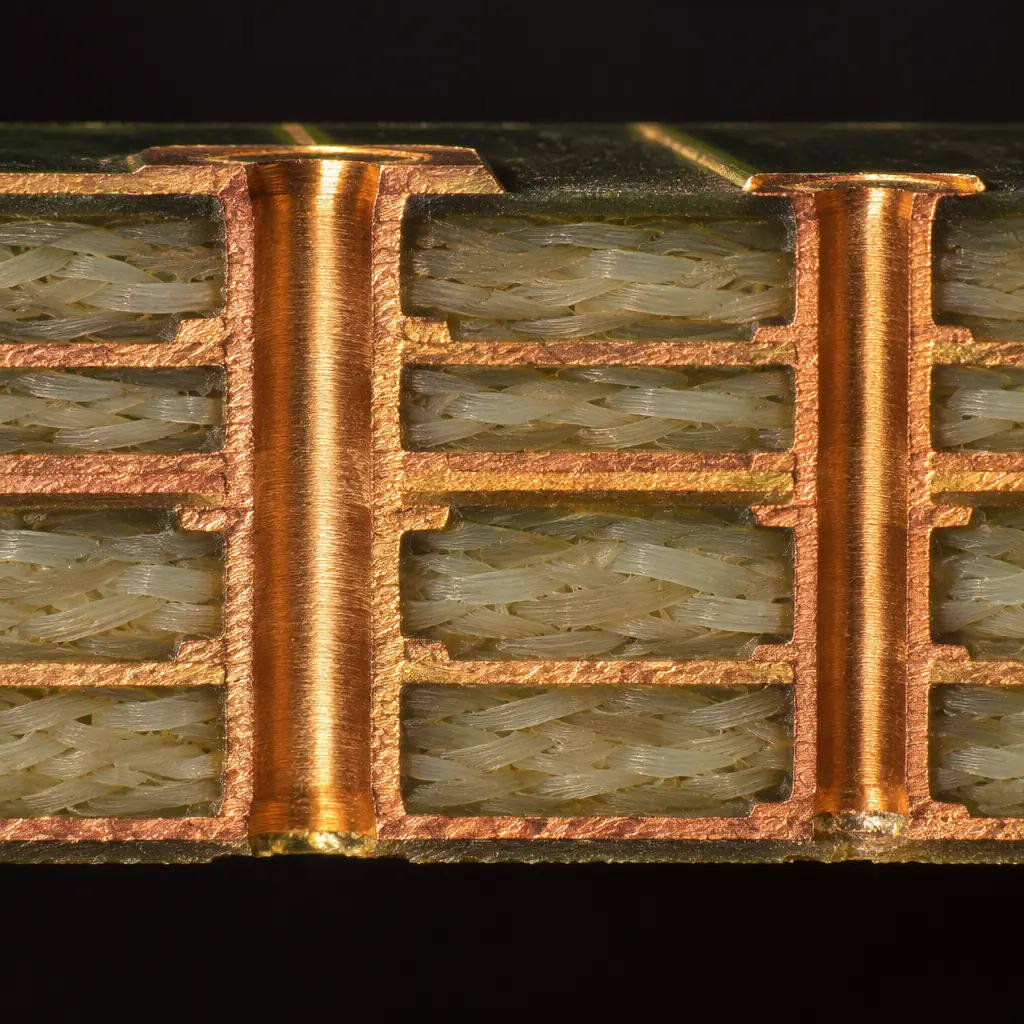
A thermal cycling result means nothing until the coupon construction is identified. The test is performed on a daisy-chain coupon built from the same stackup, same laminate batch and same plating process as the product, or it is performed on something adjacent. The report should state: layer count, dielectric material and thickness per layer, via type (through, blind, buried, stacked or staggered), via diameter and aspect ratio, surface finish, and whether the coupon came from the same panel as product or from a separate qualification panel.
The distinction between a stacked and staggered microvia structure alone changes the expected cycles to failure by a factor of two or more, so a report that omits via construction cannot be compared to a different report. When a second source is being qualified, the first question is whether their coupon construction matches the incumbent's. If it does not, the two test results are not comparable and the comparison is an opinion dressed as data.
| Report field | What it must contain | Why it matters downstream |
|---|---|---|
| Coupon construction | Layer count, laminate and thickness per layer, via type, diameter, aspect ratio | Without it the result cannot be compared to a second source or reused after a stackup change |
| Test profile | Temperature endpoints, dwell, ramp rate, cycles run, chamber load | Defines which standard the result maps to: IPC-9701, JESD22-A104, or a customer profile |
| In-situ monitoring | Resistance limit, measurement interval, number of nets | Failure detection method sets the cycle count; manual checks report fewer failures |
| Failure data | Cycles to first failure per coupon, number of failures, test vehicle count | Enables a Weibull fit; a pass with no failures at the target cycle is a censored result, not a distribution |
| Post-test inspection | Cross-section count, location, acceptance criteria | Determines whether a pass means no cracks or means no opens, which are different claims |
The fifth row is where most packages fail a technical review. A daisy chain detects electrical opens. A microvia that has cracked through 60 percent of its barrel may still conduct, pass the resistance check, and fail in the field after another year of thermal load. A report that reaches a pass verdict on resistance alone and states no cross-section sample size is a partial result. Insist on the number of coupons sectioned and what was found at the worst-case via location — usually the corner of the array and the via nearest the board edge.
Interpreting a Pass Without Failures
Many qualification reports in this industry read: 1000 cycles, JESD22-A104 condition G, no failures, pass. That is a legitimate result and it is also less information than it appears. Zero failures in N coupons tells you the characteristic life is above some value with a confidence that depends on N, and the report usually does not state N per cell. With two coupons tested and zero failures, the lower confidence bound on characteristic life is barely above the test duration. With twelve coupons and zero failures, the bound is materially better.
For a design that will live at a given thermal load, the useful question is not whether the coupon survived the test but what the projected life at field conditions is. That projection requires a Coffin-Manson fit, which requires failures, which means accelerated testing beyond the qualification cycle count. This is why a qualification programme that stops at the pass point gives no answer when a field return appears three years later. The IPC-9701 thermal cycling testing reference covers the profile definitions, and IST vs thermal shock explains when a faster via-reliability test is an acceptable substitute for a full cycling programme.
For incoming review, the pragmatic acceptance rule is: a report that shows a pass with in-situ monitoring, stated coupon construction, and cross-section of at least three coupons at worst-case locations is usable. A report that shows a pass on resistance alone is a screening result and should be labelled that way in the qualification file, not filed as reliability evidence.
Reading HAST and 85/85 Results
Humidity testing produces different reading problems. A biased HAST result is reported as a conditions box (for example 130 degrees Celsius, 85 percent relative humidity, 96 hours, bias applied) and a pass or fail. The critical missing field is the bias voltage and which structures were biased. HAST without bias tests moisture ingress and ionic contamination; HAST with bias tests electrochemical migration between the biased features — two entirely different failure mechanisms that a single conditions line does not distinguish.
For a board with fine-pitch features, a no-clean flux residue and a conformal coating, the biased result is the one that matters, because the failure mode in the field is dendritic growth between adjacent conductors under humidity and voltage, not bulk delamination. A report that shows 96 hours of unbiased HAST at 130/85 says almost nothing about that risk. If the qualification file contains only that, the correct action is a supplemental biased test at the actual operating voltage, not acceptance of the existing result.
The same reading applies to 85/85 steady-state testing. One thousand hours at 85/85 with bias and in-situ resistance monitoring is a meaningful result. Two hundred and forty hours without bias is a production screen. Both appear in packages as “humidity testing passed”, and the difference determines whether the result can support a claim about coating coverage under components or about the cleanliness of a no-clean process.
Reading CAF and Electrochemical Test Results
Conductive anodic filament growth is a laminate failure, and its test reports are often the least legible in a package. The relevant conditions are temperature, humidity, applied voltage, test duration, and whether the test vehicle uses the production hole-to-hole spacing rather than a generic coupon. A CAF result on a coupon with 1.0 mm hole spacing does not qualify a design with 0.65 mm spacing, because the failure probability rises steeply as spacing falls and the glass style changes.
When reviewing, check the spacing first. If the report does not state hole-to-hole spacing and glass style, the result cannot be mapped to a design and should not be cited in a supplier qualification. Our CAF reliability page covers the mechanism and the spacing dependence in more detail.
The Check Sheet for a Qualification Package
Before accepting a package, go through these items on each test report. If any of them is missing, ask for it. Suppliers that can produce them will, and the request itself separates a supplier who ran a controlled test from one who assembled a document.
The list to request: coupon construction with stackup and via geometry; test standard and the exact conditions including bias; in-situ monitoring method and resistance failure criterion; number of test vehicles per cell and cycles to first failure for each; post-test cross-section sample size and locations; and a statement of what was inspected, not only what was measured. For humidity tests, add bias voltage and the feature geometry under bias. For CAF, add hole-to-hole spacing and glass style.
Beyond the individual reports, ask for the correlation between the coupon and the product. Some suppliers qualify on a dedicated test vehicle and never confirm that the product panel behaves the same. The confirmation is cheap: a first-article cross-section on the product panel at worst-case via locations, taken from the same build as the qualification coupon. If it does not exist, the qualification has a gap exactly where field failures occur. The qualification report readiness checklist covers how to build a package that survives this review, and PPAP for PCB suppliers shows how these reports fit into the broader part approval submission.

Summary
A useful qualification report states coupon construction, test conditions including bias, the monitoring method and failure criterion, cycles to first failure per coupon, and post-test cross-section results. A report that states only a verdict cannot be compared to a second source, cannot be reused after a stackup change, and cannot project field life. Read the five fields, ask for what is missing, and confirm the coupon-to-product correlation before the package goes into the qualification file.