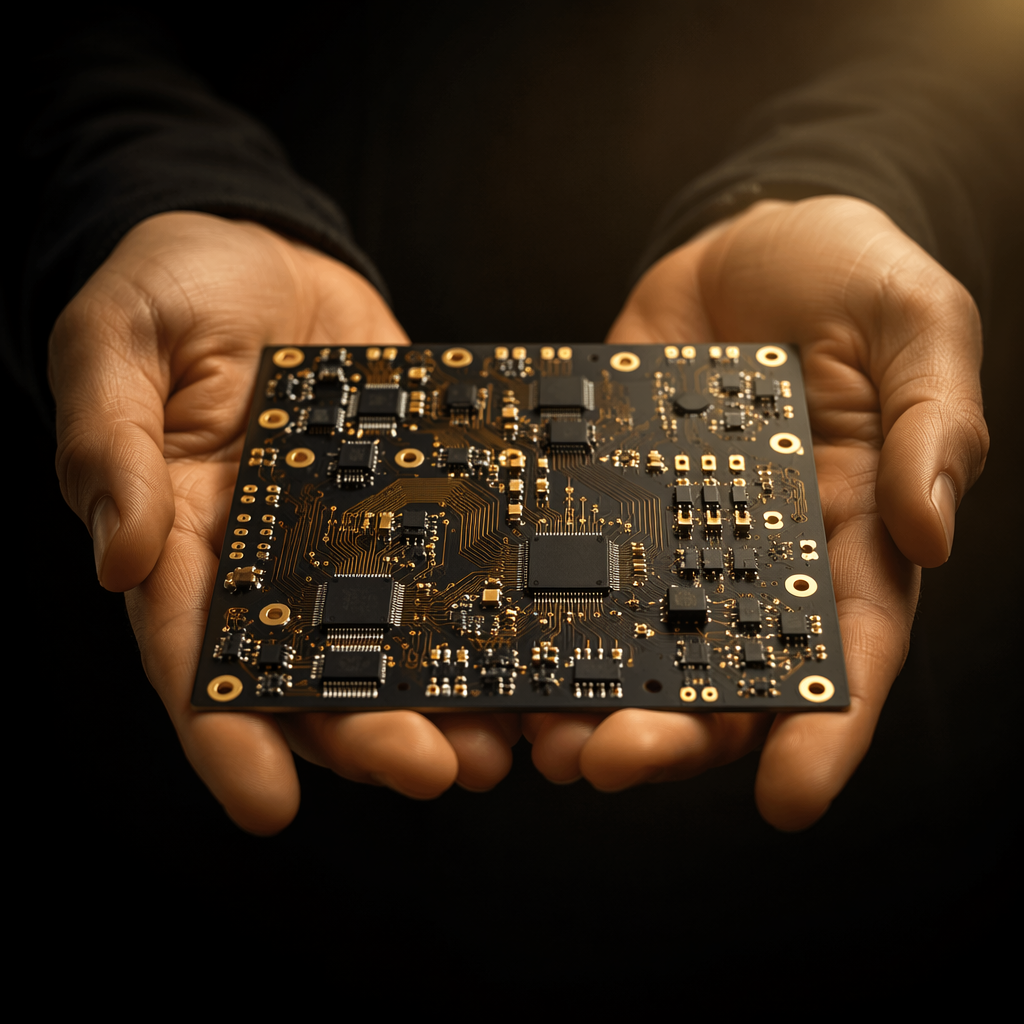
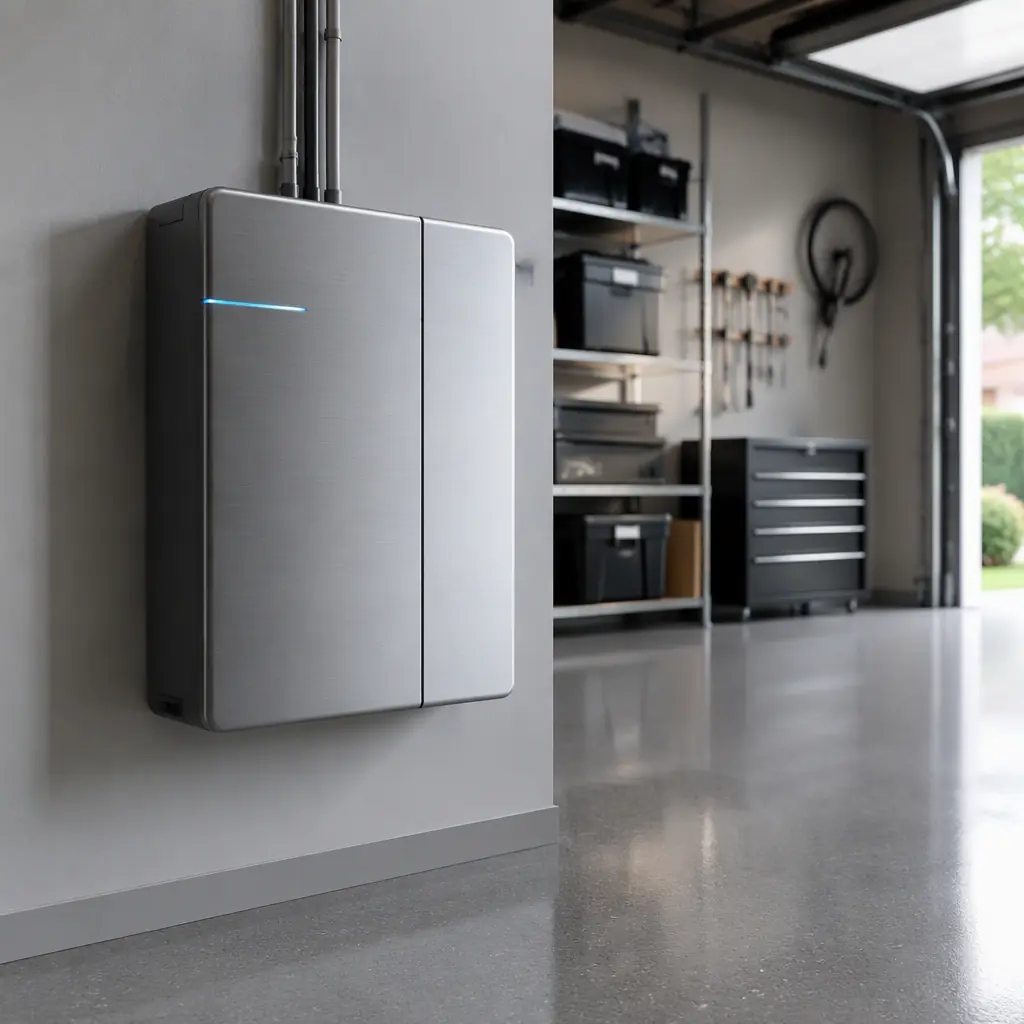
Residential energy storage is the fastest-growing corner of the battery industry, and it is being built by teams that mostly don't come from a PCB background. The result is a repeatable pattern: a product that works in the lab, passes UL, and then fails in year three when the isolation degrades, the BMS board that balances 16 cells in series drifts, or a power stage that ran 20 °C hotter in production than in the prototype. This guide is the board-level checklist that prevents that outcome.
At Huaxing PCBA we build power and BMS boards from 2 to 32 layers with 0.5 oz to 6 oz copper, so we see the full range of how residential storage boards are actually specified, and where they most often get their margins wrong.
Residential vs Utility-Scale Energy Storage, Why the Board Is Different
The single most common mistake is treating a home battery like a small utility-scale ESS. The electrical functions look similar, but the mechanical, thermal and safety envelope is completely different. The differences cascade directly into PCB specification:
Voltage Architecture: 48V vs 400V
Most residential systems now use a high-voltage battery pack, 96 cells in series giving around 400 V DC . Because it doubles round-trip efficiency and halves copper cost versus a 48 V stack. But that means the board must survive creepage and clearance rules for 400 V+ working voltage, and every trace to the battery connector is a potential arc path. If you stay at 48 V (the low-voltage route many brands still ship), you trade efficiency for a much simpler safety design. See our thermal management guide for the high-current side of that decision.
The Hybrid Inverter Is the Whole Product
Unlike a grid-scale container, a home unit packs a PV MPPT input, a bidirectional battery converter, a grid-tie inverter and an off-grid output into a single 600 mm-wide box. Each of those stages has its own isolation boundary, switching frequency and thermal profile, and they share one board or a tight set of daughterboards. Crosstalk between the MPPT stage and the inverter stage is a real failure mode, not a theoretical one.
Conformal Coating Is Not Optional
A garage and a roof soffit subject a board to condensation, dust and temperature swings that a server room never sees. The assembly needs a proper conformal coating with the right thickness over the isolation distance, this is where many products get their conformal coating guide wrong. Specify the coating viscosity, coverage and cure carefully, and verify it does not bridge isolation gap under the semi-permeable edge of the coating.
UL 9540 Is a System Certification, Not a Board Certificate
Crucial point: UL 9540 certifies the complete energy storage system, and the PCB is a component inside it. Your fabrication drawing will be audited as part of that system. That means consistent materials, traceable laminates and documented creepage calculations, exactly the things a fast-turn supplier without a solid quality system gets wrong. See our certifications and compliance guide for how to structure the documentation.
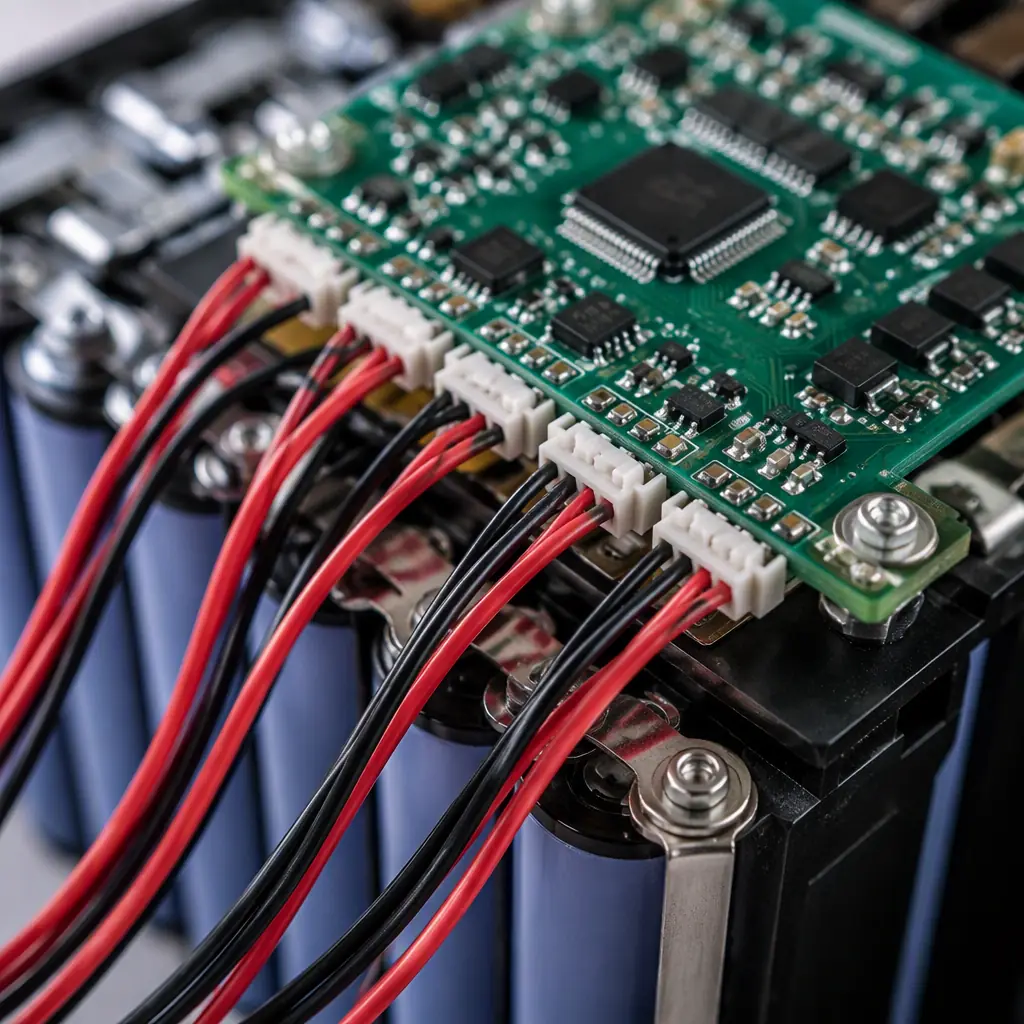
The BMS Board, Where Cell Balancing and Isolation Meet
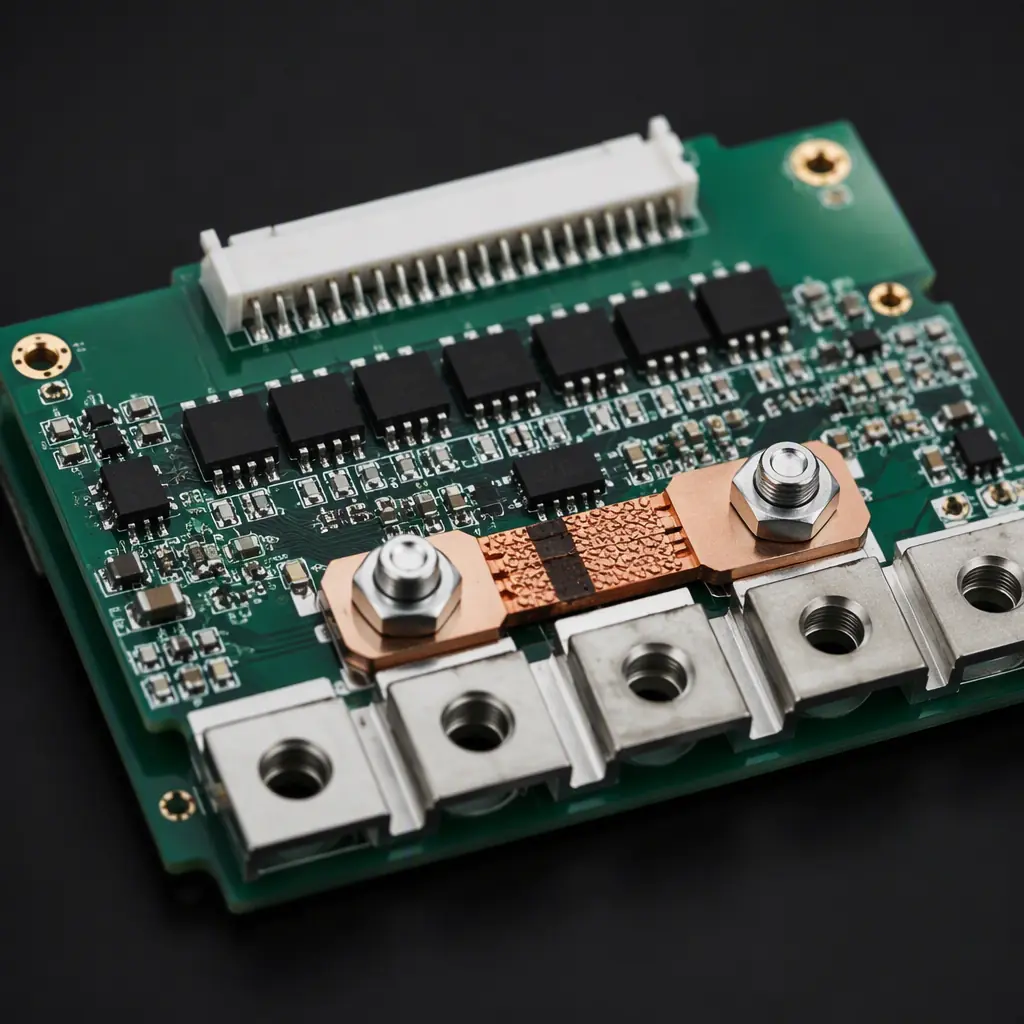
The battery management system board is the part most buyers think of as "the electronics." It has to do three jobs at once, and each one pulls the design in a different direction.
Cell Monitoring and Balancing
A 96-cell series stack needs either a centralized BMS with long balanced wiring, a nightmare for noise and isolation, or a distributed architecture with per-module boards that communicate over a daisy-chain. The daisy-chained approach keeps analog front-ends close to each cell group and dramatically reduces the high-voltage wiring that is the most common isolation risk. Our EV BMS guide covers the balancing topology in detail.
High-Voltage Isolation Boundaries
Between the battery voltage and the communication/control side there must be reinforced isolation: typically a digital isolator with a rated working voltage well above the pack voltage, plus proper creepage on the PCB. This is where a 400 V system forces a real design change: you cannot route the isolated signal plane back across the barrier without adding slots or dedicated isolation islands. Plan the barrier layout before you route anything else.
Current Sensing and Shunt Accuracy
State-of-charge estimation depends on accurate current measurement. A Kelvin-connected shunt with a tight layout is mandatory, and the sense traces must be routed away from high-current switching node noise. For the full treatment of accurate sensing layout, see our trace width and current capacity guide.
Battery Precharge and Contactor Control
When the system connects the pack to the bus, inrush current can destroy capacitors and weld contactors. A precharge circuit limits this. The PCB needs a clean, high-current path and well-controlled gate drive for the MOSFET or IGBT that carries it. See our power electronics PCB guide for the switching-stage design rules.
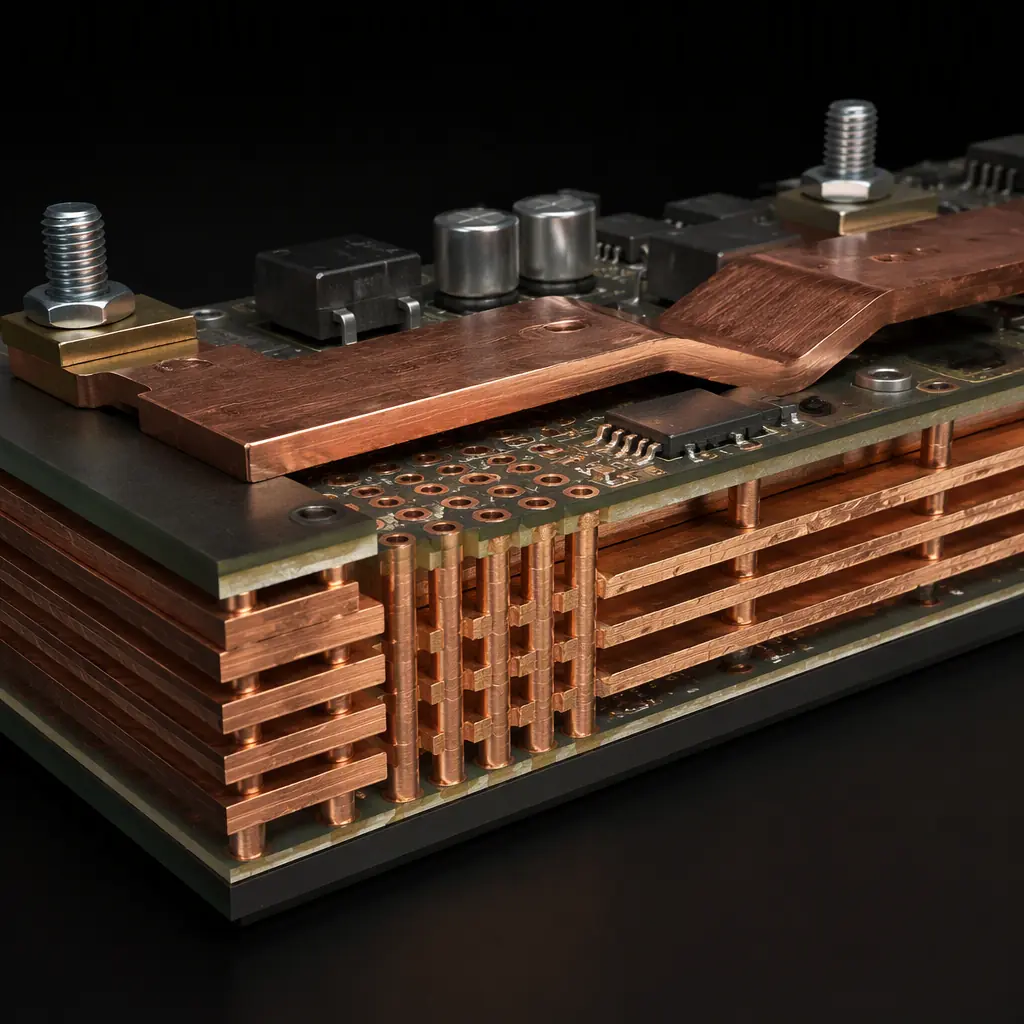
High-Current and Thermal Design on the Power Stage
The converter boards in a home storage system carry real current, a 10 kWh system with a 5 kW hybrid inverter pushes 12 A at 400 V on the battery side, but on the low-voltage side of an MPPT or battery DC-DC it can be 40 A or more. Copper, thermal and layout all intersect here.
| Design Factor | Why It Matters | What to Specify |
|---|---|---|
| Copper weight | High current needs low resistance to keep temperature down | 2 oz outer, 1 oz inner minimum; 4 oz+ on battery DC stage |
| Thermal vias | Move heat from switching nodes into the board plane | Arrays under IGBT/MOSFET pads, tented, with relief |
| Material | High-Tg for repeated thermal excursions in the enclosure | High-Tg FR-4 (Tg 170 °C+) |
| Creepage | Prevents arcing across 400 V isolation boundaries | Slots or conformal-coated gaps per UL 9540 table |
On the low-voltage high-current side, the classic mistake is treating the board as a current-carrying wire and forgetting thermal vias to a copper pour or a metal core. For the highest-density heat spots, some designers move to a metal-core or heavy-copper construction. See our metal core PCB guide and heavy copper guide for when those are worth the cost.
Enclosure, Assembly and the 10-Year Field-Life Question
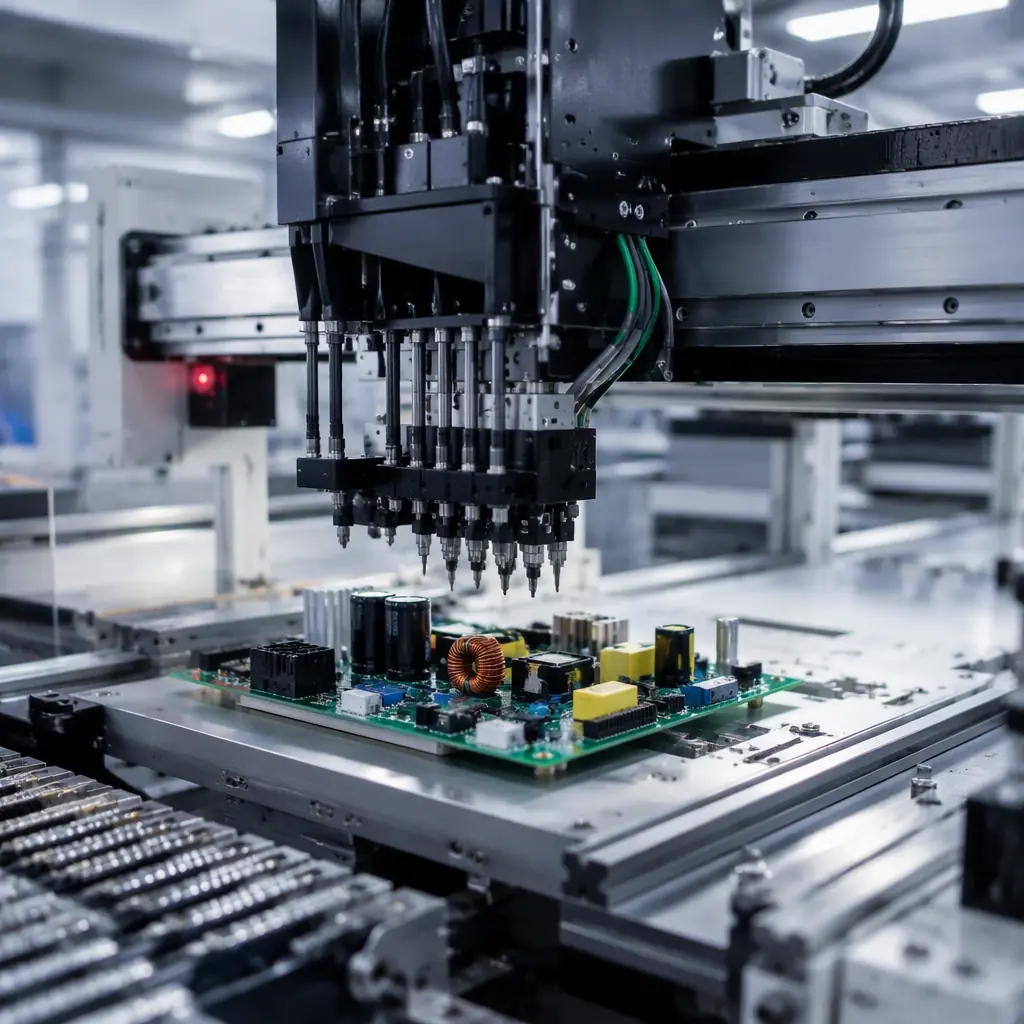
Home storage products are expected to run for a decade in an unconditioned space, which pushes the assembly and test requirements well past a typical consumer board.
Vibration and Transport
Even a wall-mounted unit gets shaken in freight. High-mass components like capacitors, inductors and heat sinks need proper anchoring through the board, through-hole where possible, or adhesive on heavy SMT parts. Our vibration and shock testing guide covers the qualification approach.
Environmental Sealing
The enclosure is a sealed metal box with a thermal path to a heat sink, but condensation still forms on cold nights. The board must be coated and the connectors sealed. This is a combined mechanical and chemistry problem, see our thermal cycling testing guide for how the coating behaves across a year's temperature swings.
Testing for a 10-Year Product
A residential ESS is both a safety device and an energy investment. The board needs burn-in, functional test and, critically, high-voltage hipot testing of the isolation barrier. Our burn-in and ESS guide and testing methods guide give you the procurement checklist.
Summary, Specifying a Home Energy Storage PCB
Start from UL 9540 and work backwards. Get the voltage architecture right first. 48 V is safer and simpler, 400 V is more efficient and needs real isolation discipline. Then design the BMS around balanced cell monitoring with clean daisy-chain communication, keep the power stage on heavy copper with thermal via arrays, and confirm the coating and vibration scheme will hold for a decade in a garage. Do that, and the PCB stops being the weakest link in your home battery product.
At Huaxing PCBA we build power, BMS and inverter boards from 2 to 32 layers with controlled impedance and IPC Class 2/3 acceptance, backed by IATF 16949 and ISO 9001 quality systems. We offer a free DFM review on the creepage, thermal and isolation-drawing elements that decide whether your residential storage product passes certification the first time. Send your files for a quote or talk to an engineer about your battery and inverter board.