The global micromobility market, e-bikes, e-scooters, e-mopeds, and light electric delivery vehicles, is projected to exceed $68 billion by 2030, driven by urban decarbonization mandates and last-mile delivery growth. Behind every e-bike motor controller, every swappable battery pack, and every cellular-connected fleet telematics unit is a PCB assembly that must survive vibration, moisture, temperature swings, and continuous high-current operation, all while fitting into extremely compact enclosures.
At Huaxing PCBA, we manufacture 8 million SMT placements daily across 8 production lines, with full capability for the heavy copper, HDI, and conformal coating processes that micromobility electronics demand. Our IATF 16949-certified quality system, designed for automotive-grade reliability, applies directly to the rigors of outdoor mobility applications.
4 PCB Types Powering Every Micromobility Vehicle
A modern e-bike or e-scooter isn't just a motor and battery, it's a distributed electronic system with four distinct PCB assemblies, each with unique manufacturing requirements:
Motor Controller PCB, The Heart of the Powertrain
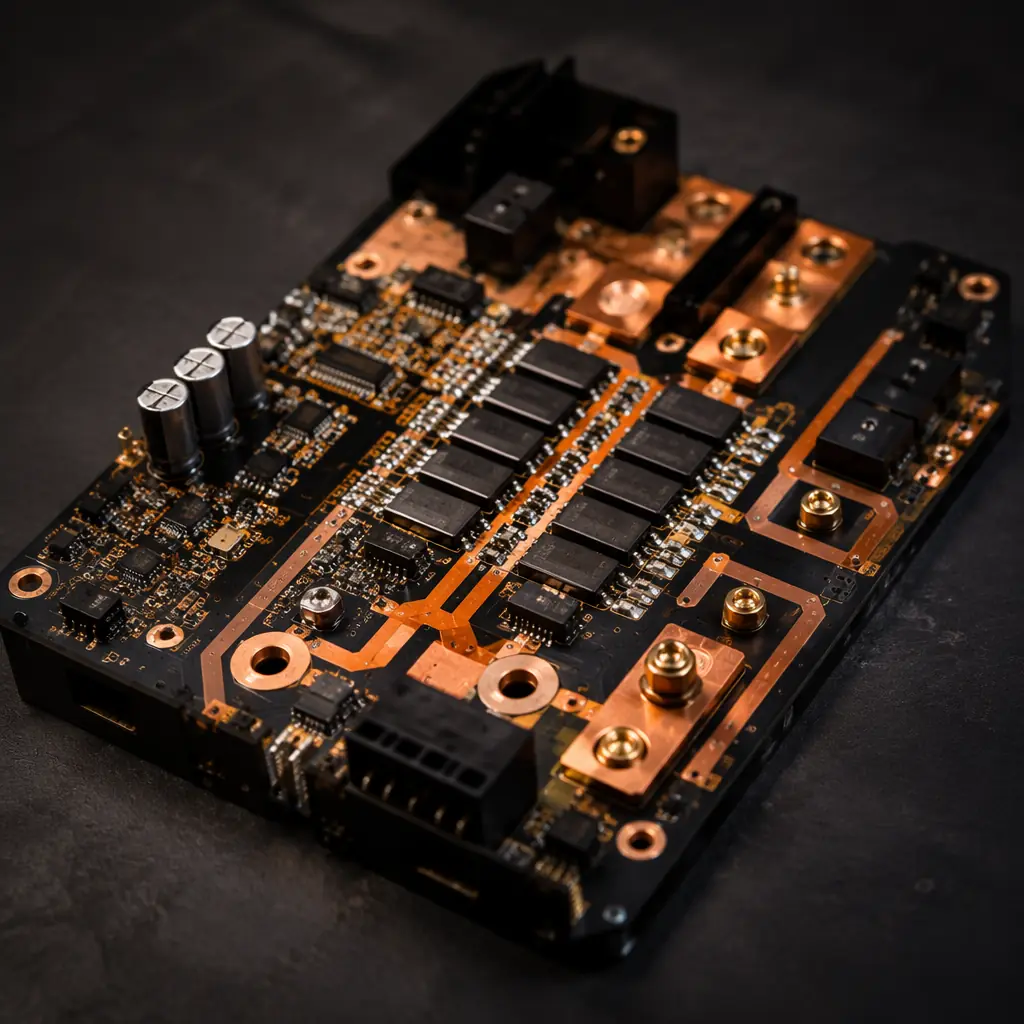
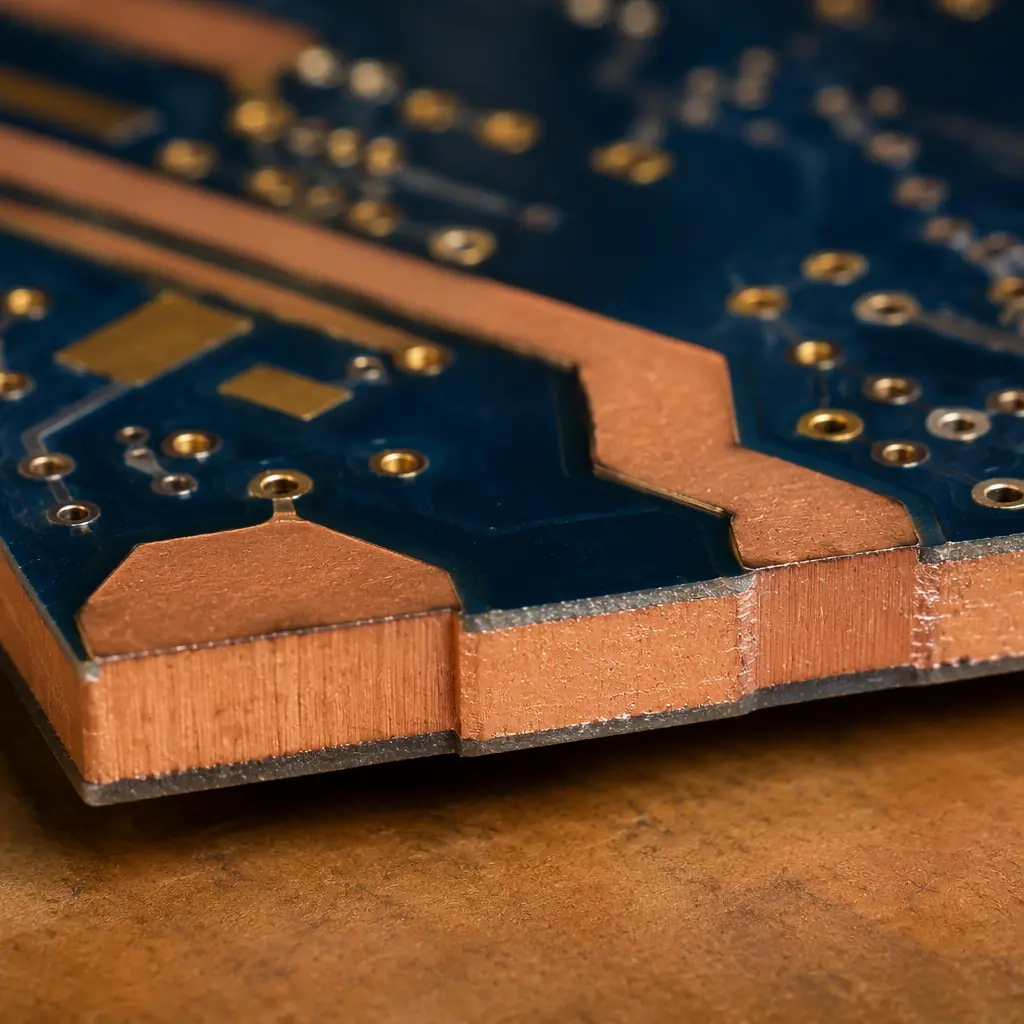
The motor controller converts battery DC power to the three-phase AC waveform that drives the BLDC hub motor. These boards operate at 36V-72V with continuous currents of 15A-40A, demanding heavy copper PCB technology (4oz-6oz on power layers) and FET arrays that require careful thermal management. Key specifications: minimum 4-layer stackup with dedicated power and ground planes, heavy copper on outer layers, MOSFET gate drive traces kept under 15mm with matched lengths, and integrated current sensing (shunt resistors or Hall-effect sensors). See our Power Electronics PCB Design Guide for the full thermal management methodology.
Battery Management System (BMS) PCB, Safety-Critical Electronics
E-bike battery packs (typically 36V-52V, 10S-14S Li-ion configurations) require a BMS that monitors individual cell voltages, controls charge/discharge FETs, balances cells, and triggers protection on over-voltage, under-voltage, over-current, and over-temperature conditions. BMS PCBs operate adjacent to high-energy Li-ion cells, making creepage and clearance distances critical for safety. Manufacturing requirements: 4-6 layer PCB with isolation barriers between high-voltage and low-voltage sections, conformal coating to prevent moisture-induced leakage currents (especially in swappable battery stations exposed to rain), and 100% AOI plus ICT testing on every board. For high-voltage design principles, our High-Voltage PCB Design Guide covers creepage and clearance requirements in detail.
IoT Connectivity & Telematics PCB, Fleet Management Intelligence
Commercial micromobility fleets (Lime, Bird, Tier, Dott) and delivery e-bikes require 4G LTE, GPS/GNSS, Bluetooth, and sometimes UWB connectivity on a single compact PCB. These are RF-intensive mixed-signal designs typically built on 6-8 layer HDI boards, combining high-speed digital (LTE Cat-M1/NB-IoT modem), sensitive RF front-ends (GNSS antenna matching), and power management (battery input to regulated rails). Manufacturing considerations include: impedance control at ±5% for RF traces, low-loss substrate materials for antenna feedlines, and EMI shielding to prevent digital noise coupling into GNSS receivers. See our RF PCB Design Guide and Mixed-Signal PCB Design Guide for grounding and partitioning strategies.
Display & HMI PCB, Rider Interface
The handlebar-mounted display, showing speed, battery level, assist mode, and navigation, combines a microcontroller, LCD or TFT driver, ambient light sensor, and button inputs on a compact 2-4 layer PCB. While electrically simpler than the motor controller, these boards face the harshest environmental exposure: direct sunlight (UV degradation), rain (IP65+ sealing), and continuous vibration transmitted through the handlebar mount. Key requirements: wide-temperature-range components (-20°C to +70°C), conformal coating for moisture protection, and flexible PCB or rigid-flex construction for displays that integrate with curved handlebar housings. Our Flex PCB Design Guide covers rigid-flex solutions for compact enclosures.
Industry Insight: The shift from 36V to 48V and 52V e-bike systems is accelerating, driven by demand for higher torque and longer range. Higher voltage means more stringent creepage/clearance requirements on motor controller and BMS PCBs. If your next-generation design targets 48V+, your PCB partner must demonstrate IPC-2221 high-voltage design compliance, not just "experience with e-bikes."
5 Manufacturing Requirements Unique to Micromobility PCBs
Standard consumer electronics PCB manufacturing doesn't cut it for micromobility. These boards face conditions closer to automotive under-hood electronics than to smartphone internals:
| Requirement | Why It Matters | Manufacturing Solution |
|---|---|---|
| Heavy copper (4oz-6oz) | Motor phase currents of 25A-40A continuous, standard 1oz copper overheats and delaminates | Sequential lamination with heavy copper inner/outer layers; 2oz-6oz capability on all 8 SMT lines |
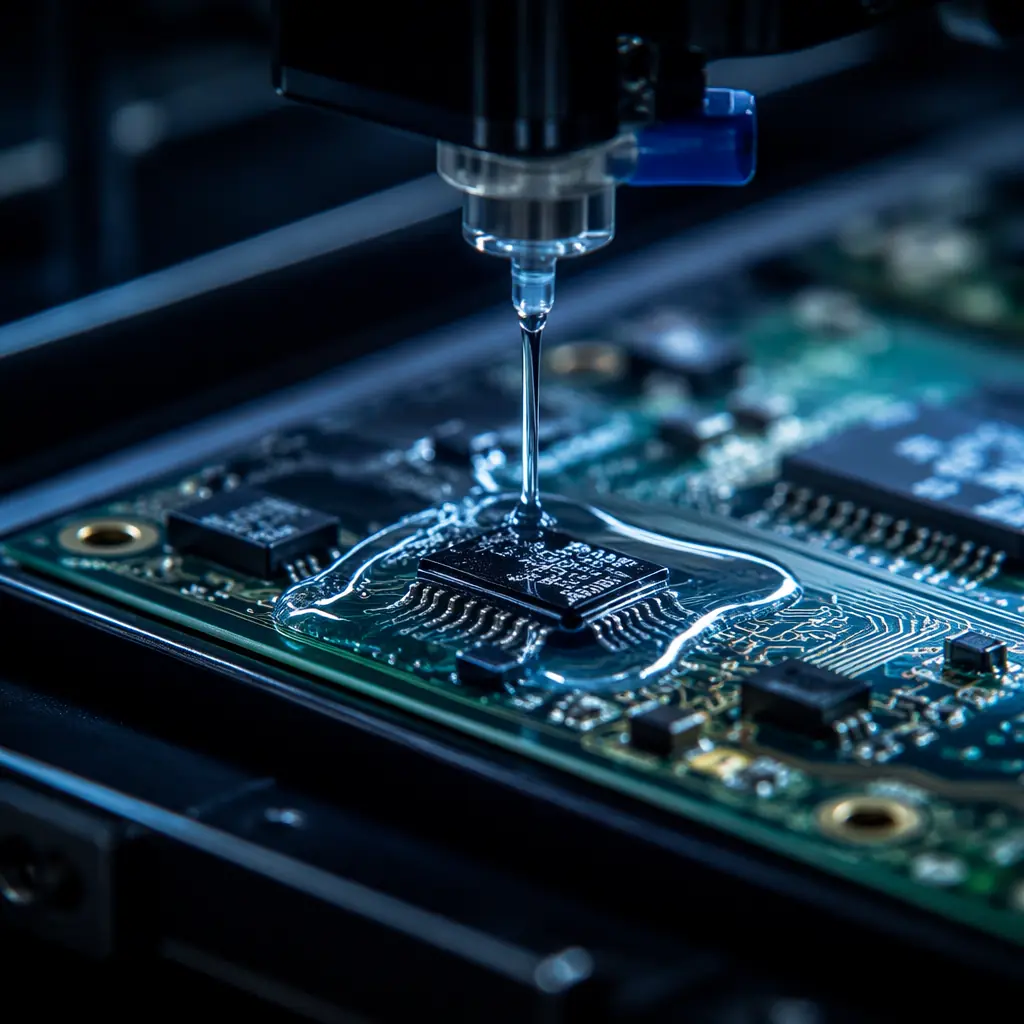
| Conformal coating (IP65+) | E-bikes operate in rain, snow, road spray; uncoated PCBs develop leakage currents and corrosion within months | Automated selective coating (acrylic or silicone); 100% UV inspection for coating coverage |
| Vibration resistance | Handlebar-mounted electronics see 5G-15G vibration; solder joints crack without mechanical reinforcement | Underfill for BGA/CSP; staking compound for large through-hole components; IPC-A-610 Class 3 workmanship |
| Wide temperature range | From -20°C winter commutes to +60°C direct sun on parked vehicle, component ratings and solder joint reliability both tested | Thermal cycling qualification per IPC-TM-650; high-Tg FR-4 (Tg≥170°C) for all boards; burn-in testing |
| Miniaturization + thermal density | Motor controllers and BMS boards must fit compact downtube or hub enclosures while dissipating 15W-40W of heat | Metal-core PCB or aluminum-backed boards for thermal dissipation; thermal vias under power FETs; see PCB Thermal Management Guide |
IoT and Fleet Connectivity: The PCB Design Challenge
Connected micromobility, where every vehicle reports GPS location, battery state-of-charge, and ride diagnostics to a cloud platform, adds a significant PCB design complexity beyond the powertrain. The telematics module combines four RF systems (LTE, GPS, Bluetooth, and sometimes UWB for precise docking) on a single board that sits inches from a high-current motor controller generating electromagnetic interference.
The critical PCB design challenges are: EMC isolation between the motor controller's PWM switching noise (typically 16-20 kHz with harmonics reaching into MHz range) and the LTE modem's receive band; antenna placement and impedance matching when the PCB is enclosed in a metal frame or battery housing that acts as a Faraday cage; and power sequencing to ensure the modem doesn't brownout when the motor draws peak startup current. Our experience with PCB EMC/EMI compliance design and impedance control (±5% at GHz speeds) directly addresses these challenges.
For fleet operators managing thousands of vehicles, PCB reliability directly impacts operational costs. A failed telematics board means a "lost" vehicle that can't be located or rented, costing $5-15/day in lost revenue per unit until recovered. This is why tier-1 micromobility operators specify IPC Class 3 or automotive-grade manufacturing for their telematics PCBs, not consumer-grade. See our IPC Class 2 vs Class 3 comparison for the reliability difference.
Choosing the Right PCB Partner for Micromobility Manufacturing
When evaluating PCB assembly suppliers for your e-bike or e-scooter electronics program, look beyond standard capabilities to mobility-specific expertise:
Heavy Copper Capability on Production Lines, Not Just Samples
Many factories can do 4oz copper on prototype boards but can't sustain it in volume production (yield drops, delamination, etch uniformity issues). Verify: minimum weekly 4oz volume, cross-section reports showing plating uniformity, and thermal cycling qualification data. Huaxing PCBA runs 6oz copper on production SMT lines with 98.7% first-pass yield.
Conformal Coating as an Inline Process, Not a Manual Afterthought
Automated selective coating with programmed spray patterns, viscosity control, and UV inspection ensures uniform coverage edge-to-edge. Manual brush coating, still common at smaller factories, leaves inconsistent thickness that fails IP testing. Verify coating type options (acrylic, silicone, urethane), thickness measurement capability, and adhesion testing per IPC-CC-830.
Functional Test Capability, Not Just ICT
A motor controller PCB that passes in-circuit test (ICT) can still fail when driving a real motor under load. Your assembly partner should offer functional test development, simulating actual motor load, battery input, and communication bus signals, to catch failures that ICT misses. Our Flying Probe vs ICT vs Functional Test comparison explains when each method matters.
With 500+ employees, 15,000 sqm of manufacturing space, and certifications including ISO 9001, ISO 14001, and IATF 16949, Huaxing PCBA brings automotive-grade manufacturing discipline to micromobility electronics at competitive pricing. Our quick-turn prototyping service delivers functional motor controller samples in 5 days, letting you validate your design before committing to volume production.