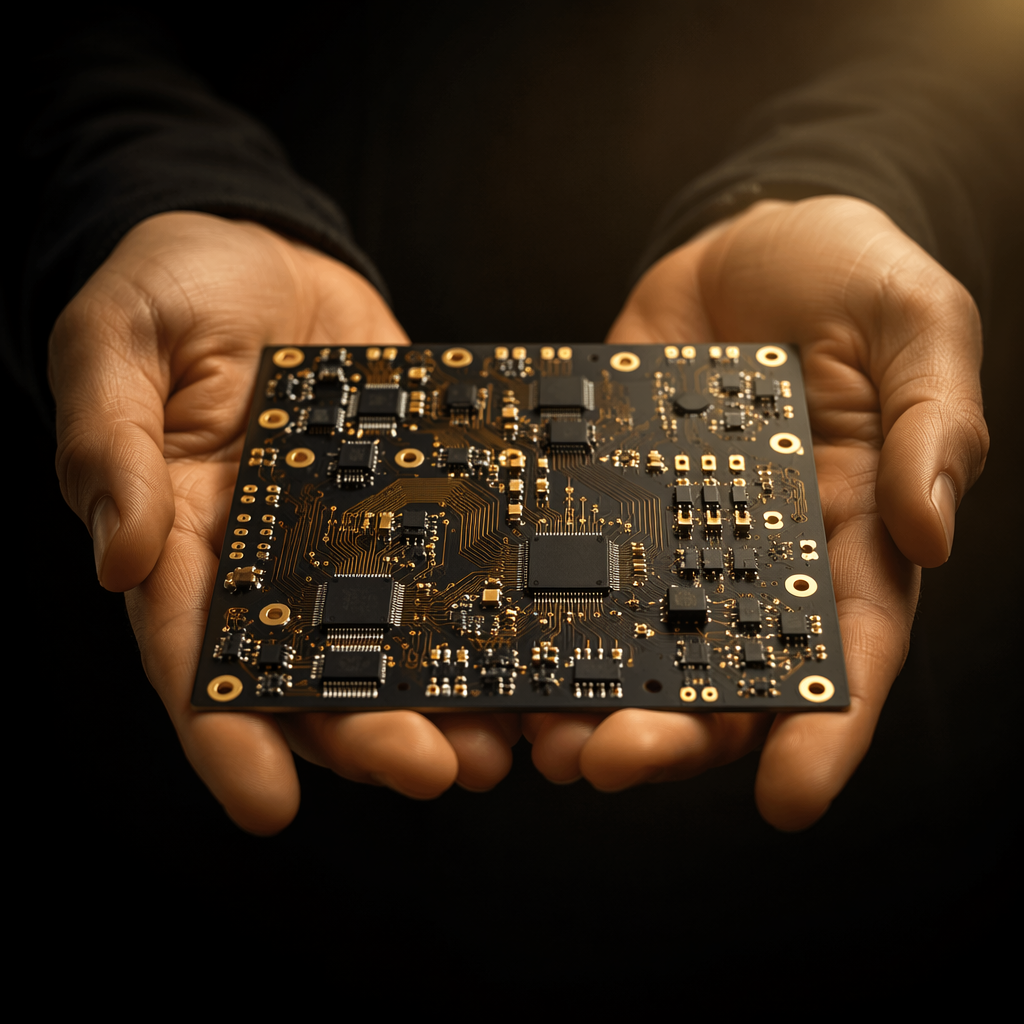
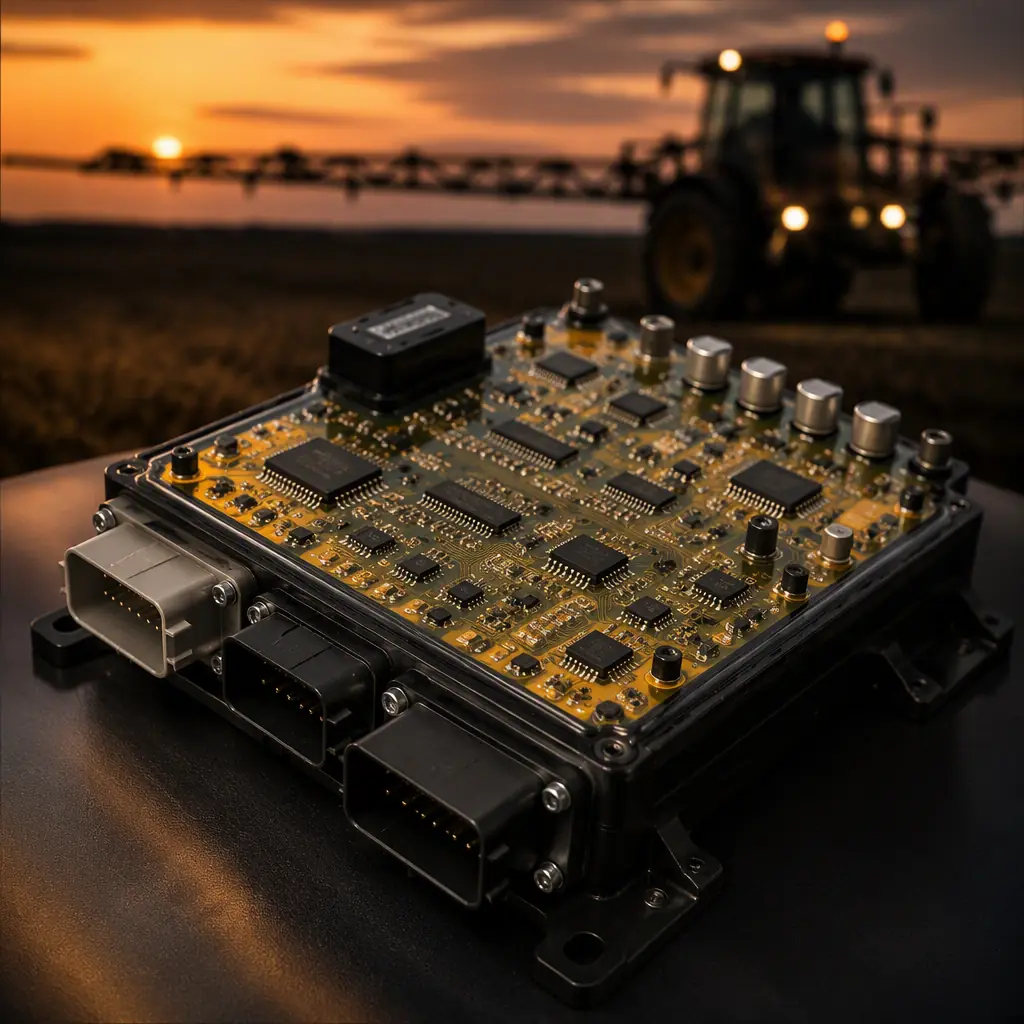
There is a reason farm equipment electronics are built like avionics: a combine harvester, a self-propelled sprayer or a centre-pivot irrigation controller does not sit in a climate-controlled cabinet. It runs at high vibration all day, in dust, in rain, across a 60 °C field surface and a −20 °C off-season, and it has to be serviceable in a shop without a cleanroom. When a board fails mid-harvest, the entire machine stops. And with it a revenue window that does not re-open.
The failure rate you should expect from a properly specced agricultural control board is very low, but only if the electronics partner treats the environment as a first-class design input rather than an afterthought. At Huaxing PCBA, agricultural and off-highway controls run across our 8 SMT lines and 4 DIP lines, with AOI, X-Ray, SPI, ICT and FCT inspection and a documented IATF 16949 and IPC Class 3 quality system. This guide is the reliability checklist to use when you send a farm-machinery board out for assembly.
Why Agricultural Electronics Fail in the Field
Most farm-board failures are not exotic. They trace back to a handful of predictable mechanisms, and knowing which one you are defending against tells you exactly what to specify. The dominant field failures are solder-joint fatigue from vibration, conductor corrosion from moisture and chemical exposure, and connector and sealing breakdown under washdown.
Vibration and mechanical shock
A tractor or combine at work delivers continuous broadband vibration with discrete shock events at the chassis mount points. Underfill on BGA and large components, proper potting around sensitive modules, and robust connector anchoring are the countermeasures. See our vibration and shock testing guide for the test regime that proves a board survives.
Moisture, dust and chemical ingress
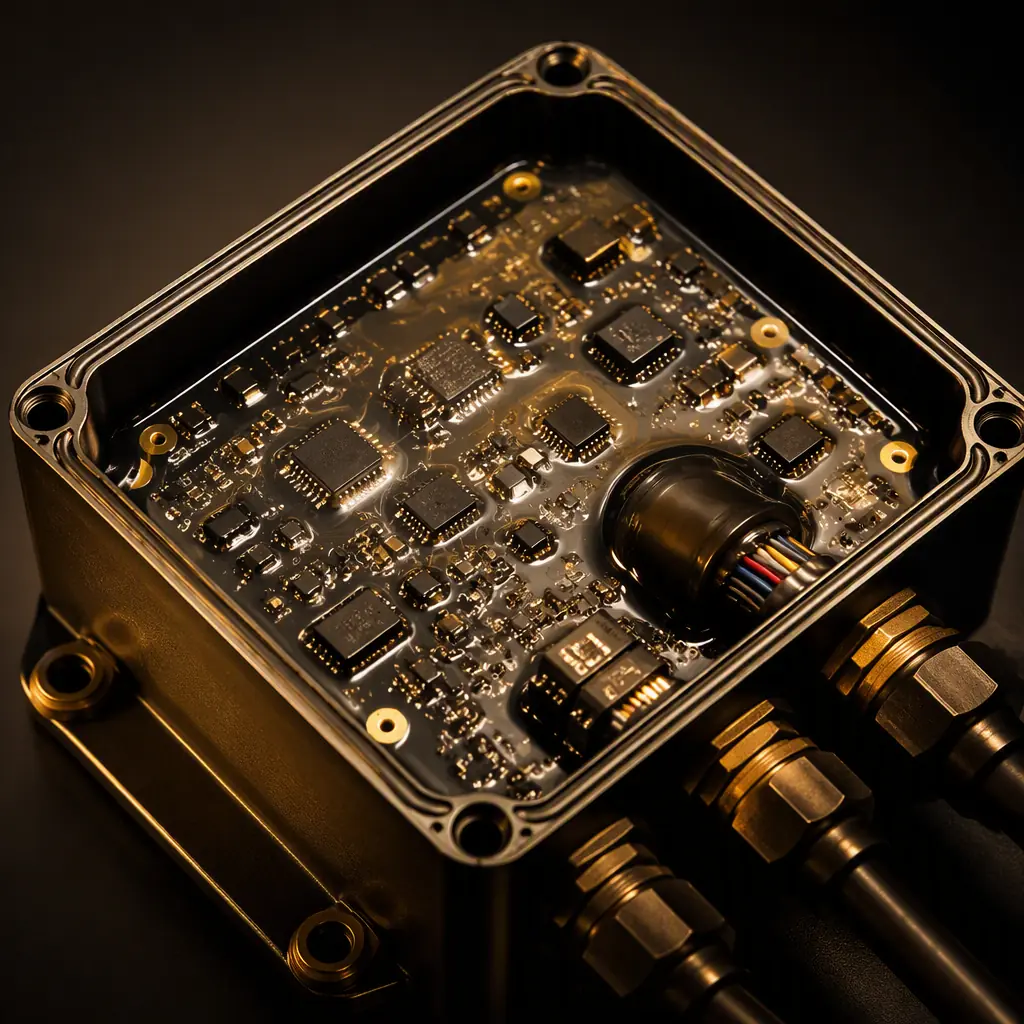
Fertiliser, pesticide, diesel and cleaning agents all attack exposed solder and traces. This is where a conformal coating, parylene or a fully potted sealed enclosure earns its cost. Our conformal coating guide and potting guide cover the protection options in depth.
Thermal cycling and temperature extremes
Day-to-night swings and season-to-season extremes accelerate solder fatigue and drive condensation cycling. A board rated to survive −40 °C to +85 °C with thermal cycling screening is the baseline. Our thermal cycling testing article explains why cycling matters more than a single high-temperature rating.
Key Takeaway: Field failure is not a mystery, it is vibration, moisture and thermal cycling. The RFQ should name which of these you are defending against, and the supplier should document how, not just say it builds "rugged" boards.
The Protection Stack to Specify: Class 3, Contingency and Sealing
For farm equipment, the right starting point is IPC Class 3 build and inspection plus an IP-rated enclosure. Rather than a single protection decision, a reliable agricultural board layers several. Where machine downtime cost is extreme, add a burn-in and environmental stress screen before the board ships to you, so the infant-mortality failures never reach the field.
| Reliability measure | What it adds | Where to state it |
|---|---|---|
| IPC Class 3 build & inspection | Stricter workmanship, soldering and cleanliness | State Class 3 in the assembly spec |
| Conformal coating / parylene | Barrier against moisture and chemicals | State material, thickness, selective zones |
| Potting / encapsulation | Mechanical and complete moisture protection | State resin, cure, thermal limits |
| Underfill (BGA / large package) | Prevents solder-joint fatigue from vibration | Reference underfill criteria per package |
| Conformal + potted connector lands | Protects the highest-risk ingress points | Define masked vs sealed zones |
| Burn-in / ESS screening | Culls infant-mortality units | State temperature, duration and cycle count |
The Vibration and Thermal Test Regime That Actually Proves It
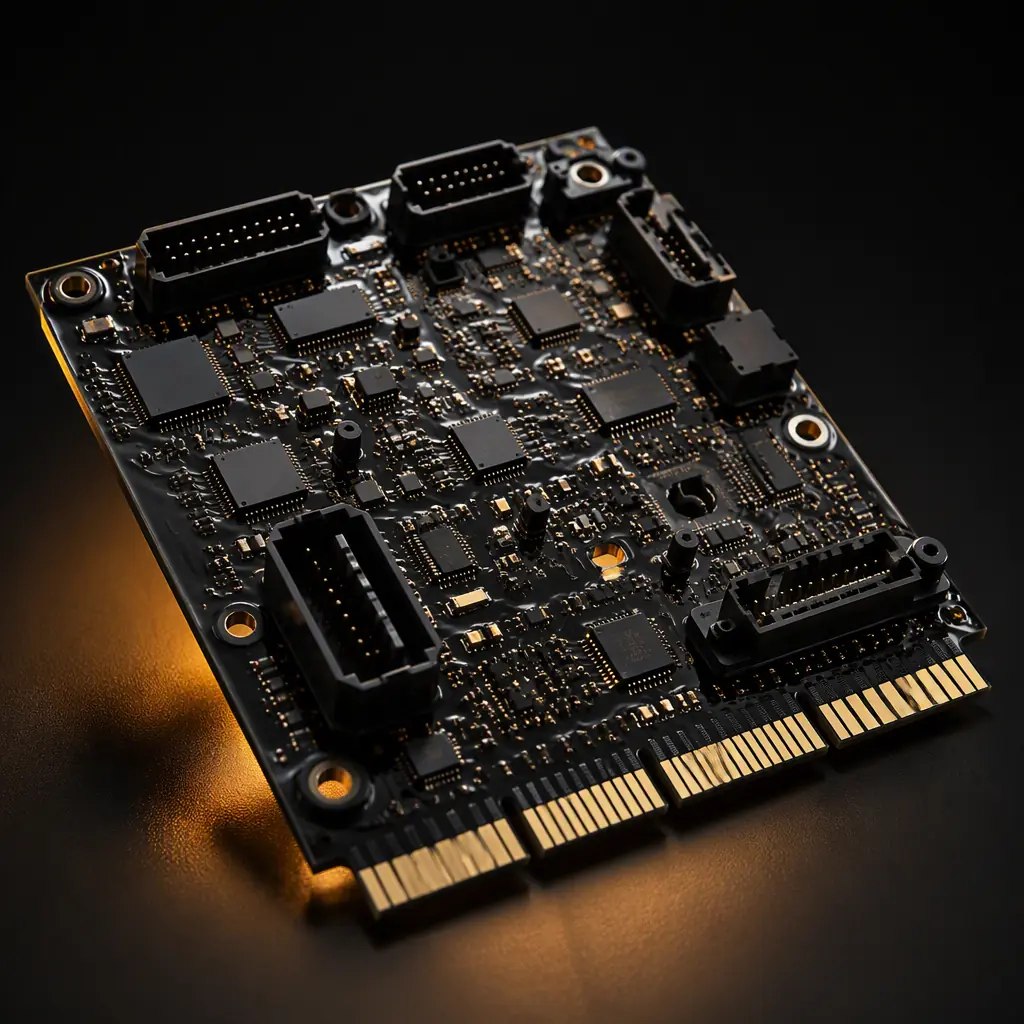
A wall of claims means nothing without the test data behind it. When you specify a control board for a harvester or a sprayer, ask for the specific qualification tests and the pass criteria, not just the words "tested and qualified." The three tests that matter most for mobile agricultural electronics are those that map directly to the failure modes above.
Random vibration with the machine's real profile
Sinusoidal sweep alone does not reproduce tractor vibration. A random-vibration profile derived from the vehicle's measured ground input, with a documented acceleration spectral density and duration, is what proves the board survives its mounting point.
Thermal cycling over the full operating range
A cycle count and temperature range that covers both the field surface heat and the off-season cold, with dwell times long enough to reach equilibrium, is the screening that finds marginal solder joints.
IP-rated sealing and washdown verification
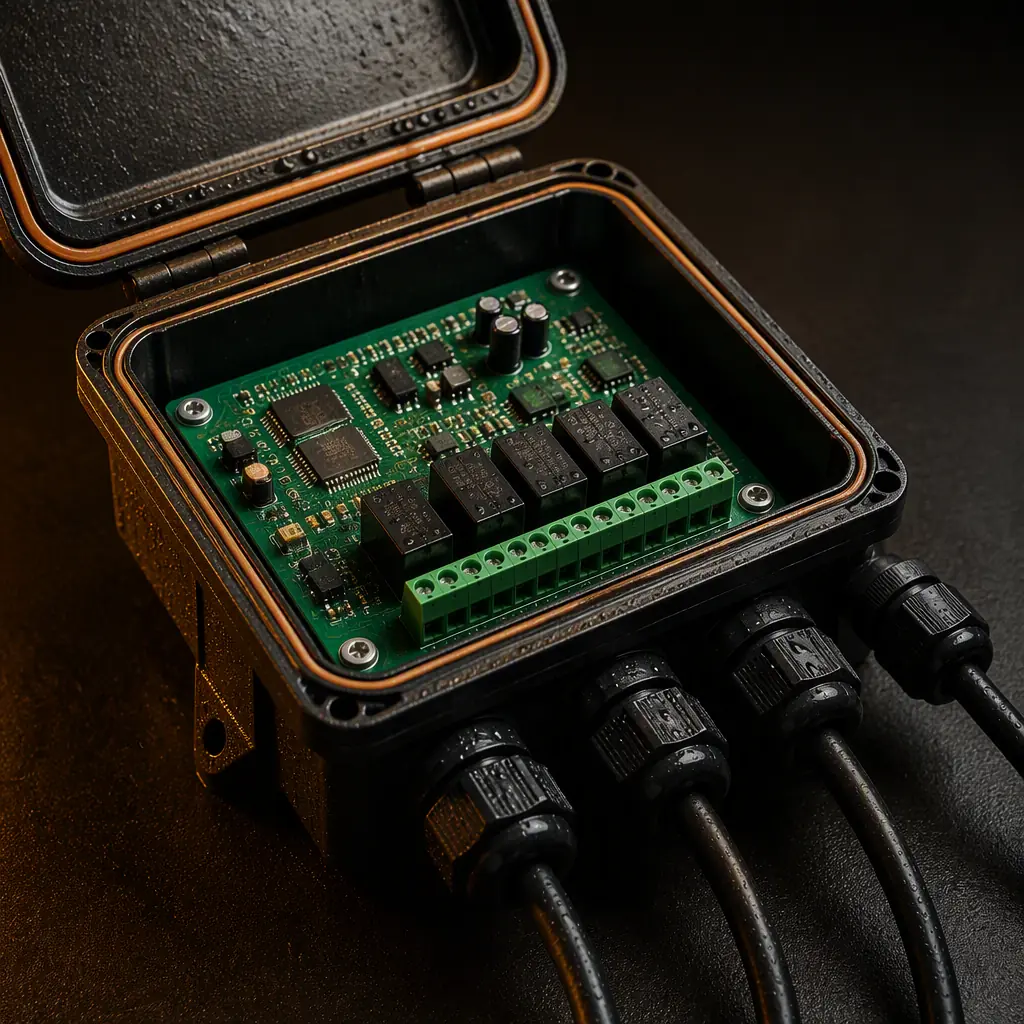
If the board sits in a sealed junction box, the enclosure and its gasket, not the board, are the water barrier, verify the IP67 or NEMA rating at the interface, not just on the datasheet. Our washdown equipment PCB application rundown covers the same sealing logic for a different industry.
Procurement Tip: Lock the pass criteria in writing. A vibration test "passed" is meaningless unless the profile, duration, and the acceptance threshold (functionally dead, or full electrical performance retained) are stated. Demand the report, not the assertion.
What to Verify in an Agricultural PCBA Supplier
Choosing a supplier for farm machinery boards is a judgment about process maturity, not just price. The questions below separate a supplier that has genuinely built for the field from one that sells a standard board with a marketing tagline.
Real automotive-grade quality certification
An IATF 16949 automotive quality management system is the strongest signal that the shop runs the control plans, FMEA and traceability the farm-equipment sector needs. It is not a guarantee, but it is a strong floor. See our IPC Class 2 vs Class 3 article for the workmanship distinction.
100% electrical test plus a documented test fixture
ICT, flying probe or a custom functional test fixture is the difference between shipping known-good boards and hoping. Ask whether testing is 100% and whether the fixture and test program are documented and version-controlled. Our PCB testing methods guide details the options.
Conformal coating and potting in-house, not subcontracted
If coating or potting is farmed out, the handoff is where coverage gaps and contamination creep in. In-house protection under the same quality system is the more defensible position. Our coating types comparison helps you frame the selection.
Supply-chain robustness for a seasonal product
Farm equipment is seasonal: you often need to build inventory before the season and scale fast. A supplier with managed component sourcing and a documented obsolescence and risk plan keeps you from a single-source shortage. See our supply-chain risk management guide.
Key Takeaway: Agricultural machinery PCs are a reliability product with a hard deadline. The supplier should demonstrate Class 3 build, 100% test, in-house protection and a documented qualification regime. And should be able to show the test reports, not just the brochure.
For the broader AgTech design picture, sensor signal chains, solar power and EMC on field boards, read our agricultural electronics PCB design and smart agriculture PCB design guides, which cover the sensing and connectivity layer your control boards tie into.
At Huaxing PCBA we run 8 SMT lines, 4 DIP lines and dedicated coating and potting stations inside a 15,000 m² facility with 500+ staff, processing over 8 million placements per day for customers in 30+ countries. We are ISO 9001, IATF 16949 and UL (E354321) certified, and we document a Class 3 build, a 100% test plan and a vibration and thermal qualification regime for the boards we assemble. Upload your files for a quote or talk to our engineering team about your farm-equipment specification.