
Short answer: yes, there is a real PCB shortage, and it is concentrated in high-layer-count boards and the materials that make them. On 19 November 2026 the Global Electronics Association, the US-based trade body formerly known as IPC, issued an industry alert saying demand across the entire chain, from glass fabric, resin and copper foil through to finished boards, now exceeds supply. Its projection is that the constraint lasts at least until the first half of 2027, with no meaningful relief before mid-2028.
This page is written as a running reference rather than a news item. Every figure below is attributed to the body that published it, because the useful question for a buyer is not whether a shortage exists but which number in a quotation is going to break first. As the situation develops, the revision date at the top of the article changes and the new data is added in place.
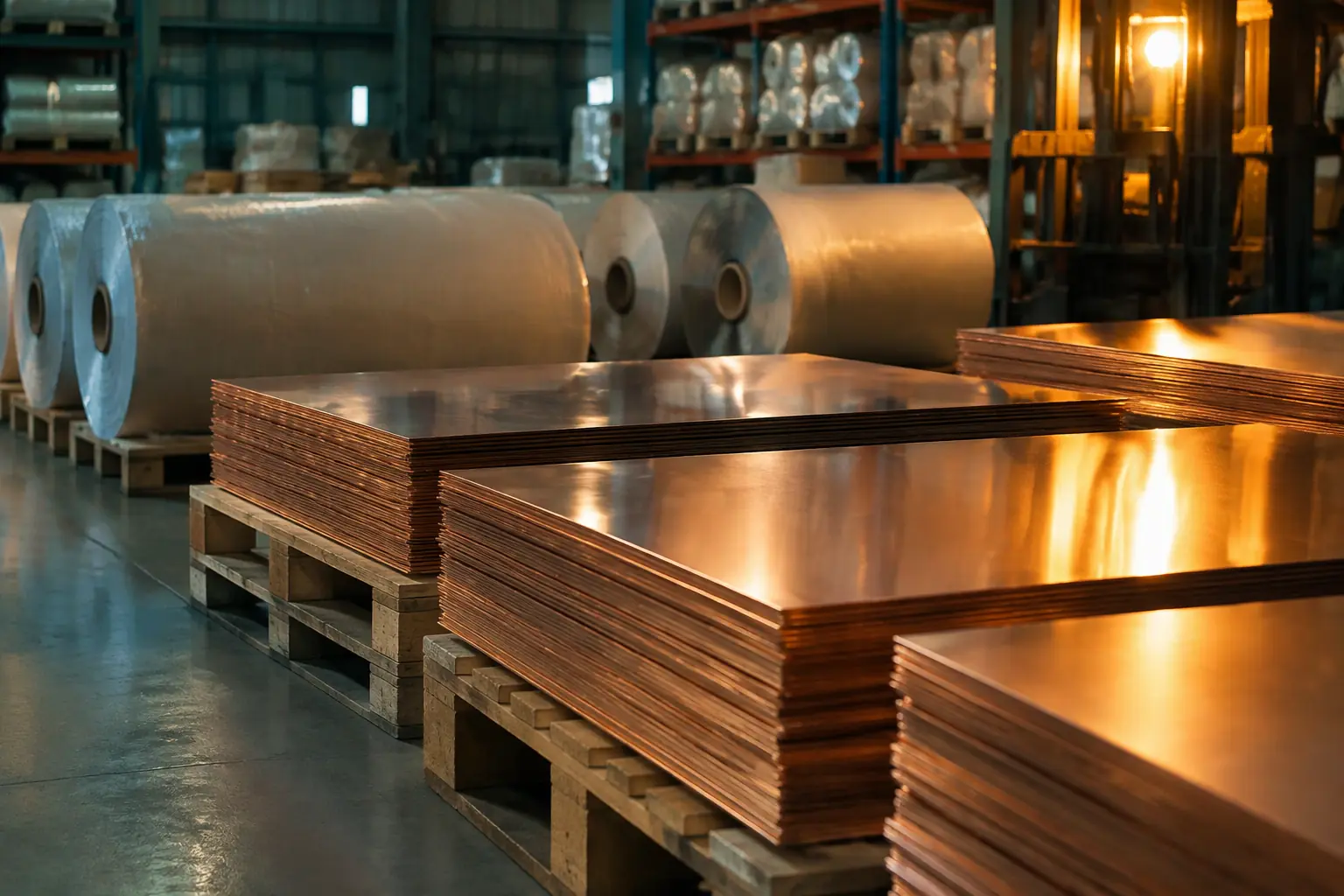
PCB Shortage 2026: What the Association Actually Reported
The November 2026 alert rests on the association's North American PCB statistical programme as well as on material supply data from members. Three numbers carry the argument, and they are worth reading in their original form because the widely reproduced Chinese-language versions of this story have shifted what they mean.
| Indicator | Reported value | What it is measuring |
|---|---|---|
| Bookings, year to date through September 2026 | +56.1% YoY | Value of new orders booked, North American PCB statistical programme |
| Shipments, year to date through September 2026 | +13.3% YoY | Value of boards actually shipped, same programme |
| Book-to-bill ratio, September 2026 | 1.77 | Orders received divided by orders billed, rolling three-month average |
| Lead time, high-layer-count boards | 16–20 weeks or more | Quoted delivery from order acceptance, advanced boards |
| Expected duration of constraint | At least H1 2027; relief not before mid-2028 | Association projection, not a measurement |
Two clarifications matter for anyone quoting these numbers internally. First, 56.1% and 13.3% are year-to-date comparisons of the North American statistical programme, not global production. Second, a book-to-bill of 1.77 does not mean demand is 77% above supply in a steady state; it means the order book is building far faster than the industry is currently able to bill, which is exactly the condition that stretches lead times and pushes delivery dates out.
The one line worth memorising: the association states that the primary risk is availability, not price. Price increases are a symptom. The failure mode a buyer actually experiences is a confirmed order that cannot be built, or a date that moves twice.
Why AI Server Boards Absorb So Much Capacity
The mechanism is layer count, and layer count is a materials multiplier. A conventional consumer or industrial board is roughly 12 layers. AI server boards have moved to 20–40 layers, with core backplanes at 40–50 layers and flagship platforms quoted well above that. Each added layer consumes additional glass fabric, resin, copper foil and laminate before a single board is drilled.
That has produced a market that is splitting in two rather than rising evenly. Yole's projection is that boards of 18 layers and above grow at 15.7% a year through 2031, while 4–6 layer boards grow at about 2.3%. AI-related boards and materials are estimated at roughly 30% of the PCB market today, crossing half by 2031. For a buyer of ordinary industrial or consumer boards, this is the important structural point: your board is not competing with an AI accelerator for capacity, but it does buy from the same laminate supply pool.
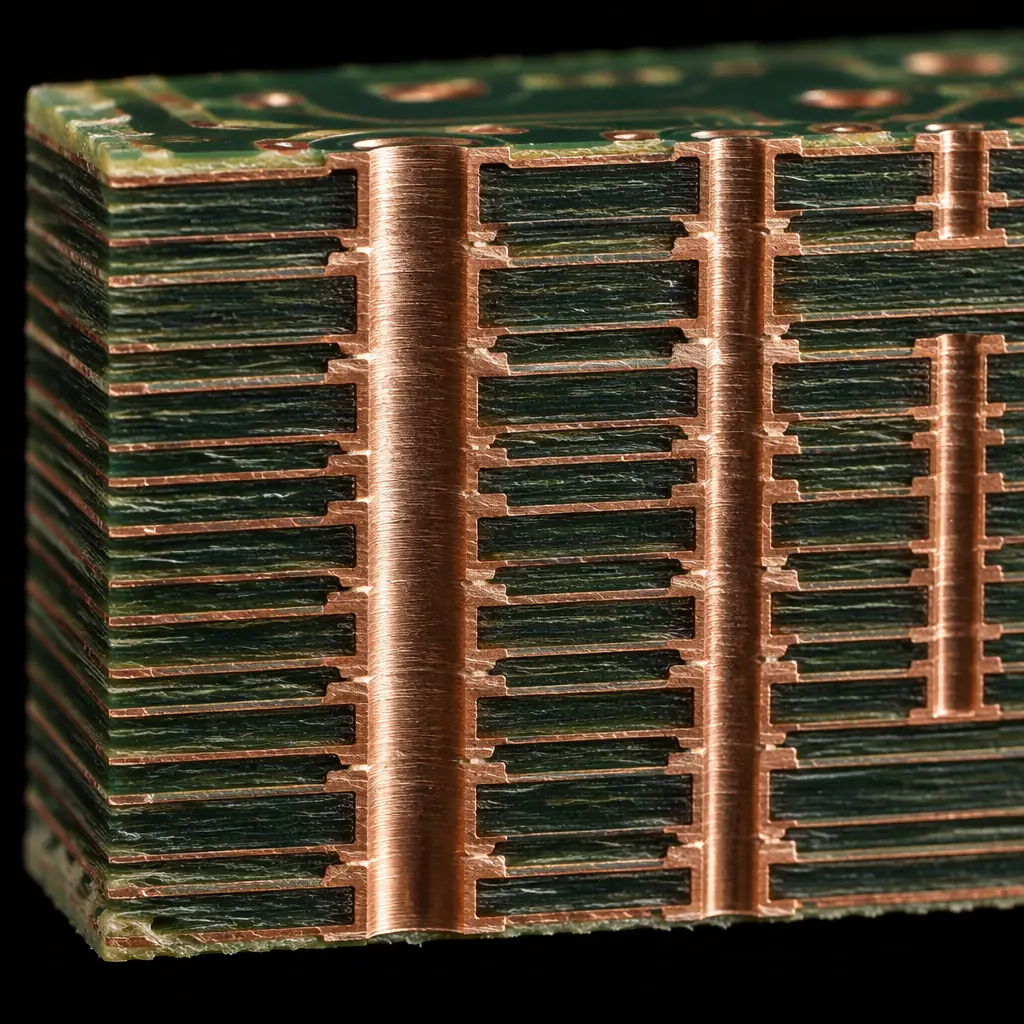
The crowding-out is not hypothetical. Automotive, industrial, medical, defence and telecom programmes are reported as being pushed back in the queue because hyperscale buyers are reserving capacity and material ahead of them. For a European or North American OEM running a qualified automotive BOM, that queue position, not the unit price, is the thing that threatens the launch date.
The Real Bottleneck Is Upstream, and It Has a Name
Adding board shops does not fix material shortage, because a new line needs the same glass fabric, resin and foil that are already short. Industry estimates put at least USD 10 billion into new PCB plants in Southeast Asia over the past three years, with at least as much invested in China over the same period. That capacity arrives with a material requirement attached.
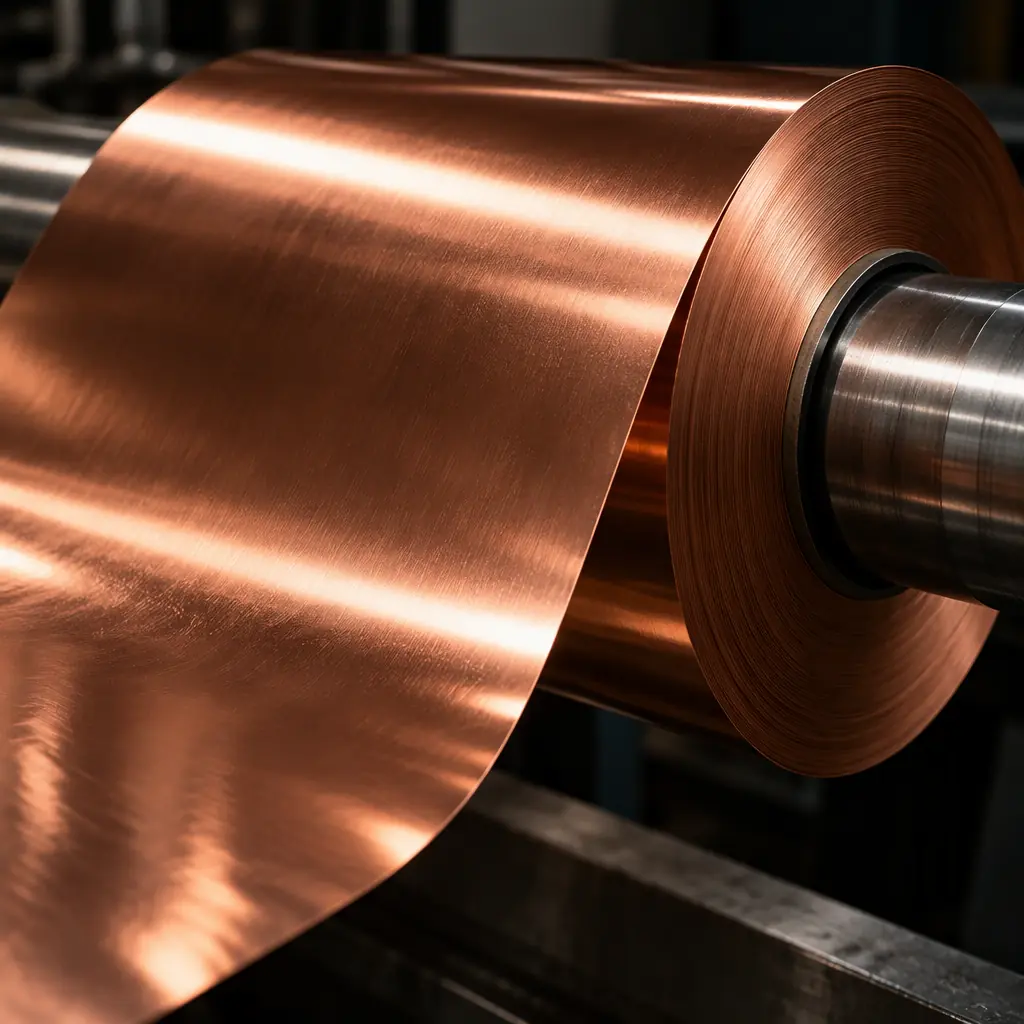
Among the upstream items, one is materially harder to close than the rest: high-frequency copper foil. HVLP foil, the very-low-profile copper used in high-speed stacks, accounts for roughly 40% of copper-clad laminate cost. Demand for it is projected above 3,000 tonnes a month in 2026 against effective capacity of roughly 1,300 tonnes. Imported HVLP4 carries a processing fee of about RMB 200,000 per tonne, and domestic equivalents of the same generation trade at a premium of around 43%. Copper and glass are cyclically recoverable; a sub-micron surface-roughness capability built on proprietary additive chemistry and a multi-stage surface treatment line is not, which is why this grade is the part of the shortage with no fast answer.
Price Increases So Far: The Upstream Record
Price is the measurable symptom rather than the cause, and it is worth tracking because it tells you how much of a quotation is exposed. The public record through 2026:
| Date | Upstream event | Reported magnitude |
|---|---|---|
| Throughout 2026 | KB Laminates price notifications | Eight rounds issued during the year; latest raised laminate and prepreg using 2116 and thinner glass by 15% |
| 1 September 2026 | Panasonic copper-clad laminate increase | Up to 30% on some product lines |
| October 2026 | Electronic glass fabric and yarn | 7628 fabric +RMB 1.5 per metre; G75 yarn +RMB 3,000 per tonne; 2116 and 1080 thin fabric +RMB 2.5 per metre |
| 2026 | HVLP copper foil | Imported HVLP4 processing fee around RMB 200,000 per tonne; domestic premium around 43% |
Market-level forecasts put the PCB industry at USD 85.8 billion in 2025, up 16.7%, crossing USD 100 billion in 2026, with AI server PCB and copper-clad laminate each projected at tens of billions of dollars by 2028. Those forecasts are the reason the material investment is happening at all; they are also why no upstream producer is discounting.
Practical rule for a 2027 quotation: ask which laminate grade and thickness your price is based on, and what the price looks like if that grade is substituted. A quote built on a single thin-glass grade with no substitution path is the quote most exposed to the next notification letter.
What Shenzhen's Cluster Actually Changes
Almost all PCB capacity sits in Asia, and the concentration is extreme at the demand end: the United States accounts for roughly 3% of global PCB production and Europe about 1–2%. The consequence is that a European or American buyer's recovery time from a supply shock depends on how quickly their Asian partner can re-source material, not on how quickly their own region can build a board shop.
Shenzhen is the densest version of that cluster. Fabrication, laminate distribution, surface finishing, component distribution and assembly sit within a short drive of each other, and the market-level evidence is in the throughput: Huaqiangbei, the electronics market district, receives more than 8,000 overseas buyers a day, with peak days above 10,000, and the local shorthand for the cycle is design in the morning, prototype samples in the afternoon, volume the next day. That is a claim about iteration speed on new designs, and it is only available where the material and process steps are physically co-located.
For a shortage period, the advantage of that geography is narrower and more specific than "we are in Shenzhen". It is that when a laminate grade is short, the alternative grade, the distributor who holds it, and the shop that can re-qualify the stackup are all reachable in a day rather than a quarter. It shortens the re-sourcing loop; it does not repeal the upstream constraint.
Continuous Production: What It Does and Does Not Fix
High-volume electronics assembly in Shenzhen runs continuously, on multiple shifts, because the equipment cost per hour is high and idle time is the expensive state. At our own facility that means nine SMT lines and five DIP lines in a 45,000 m² plant in Bao'an, with in-line 3D SPI, pre- and post-reflow AOI and X-ray, a stated capacity of 8 million placements per day, and PCB fabrication including high-layer-count rigid boards up to 58 layers under the same roof.
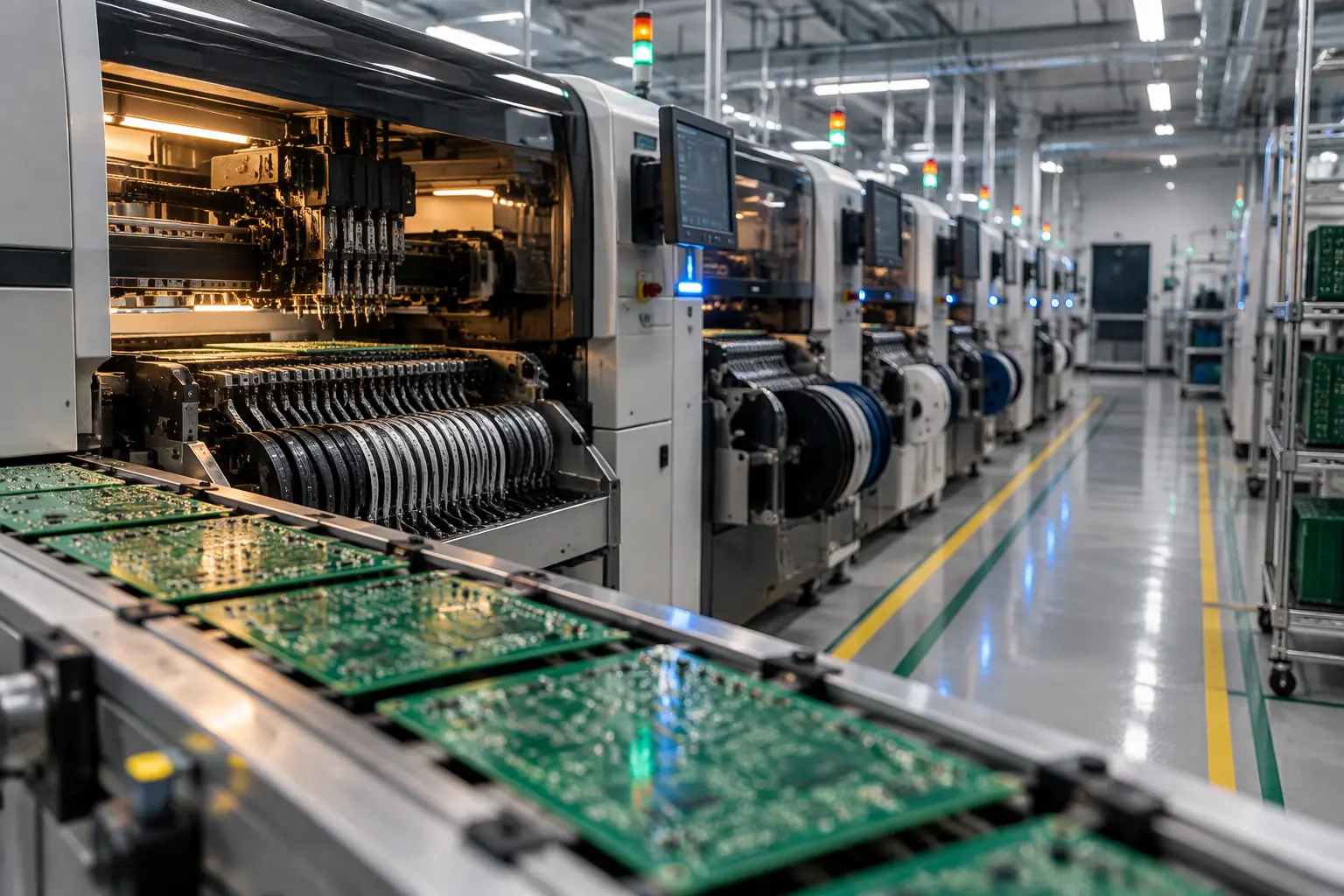
What that buys a customer is queue position and process control: the line is already staffed and the inspection stack is already inline, so an approved order does not wait for a shift to be created. What it does not buy is material that does not exist. Any supplier claiming a shortage has no effect on them is describing either a very narrow product range or a story. The honest version is that line capacity and material availability are two separate clocks, and a credible partner tells you which one your date is set by.
The Lead Time Commitment You Can Actually Hold Us To
This is the section worth forwarding to a colleague. "No delays" is not a verifiable statement, so we do not make it. What follows is the commitment structure we will put in writing on a quotation, and the questions that make any supplier's promise checkable.
Named material, named thickness, stated stock position
A quotation states the laminate grade and thickness the price is built on, and whether that material is in stock today, on order with a confirmed arrival, or unpurchased. Those are three different risk levels and they should not look the same on paper. If you are buying a high-layer stackup, ask for the material position before you ask for the price.
A lead time with a named start event
"Two to three weeks" is meaningless until you know what day zero is. Fabrication lead time should be quoted from a defined event: material released to the floor, not PO received, not artwork approved. Our standard structure is 5–7 working days for prototypes and 2–3 weeks for volume, counted from material release, and the quotation states which event starts the clock. See our breakdown of the six components that make up a PCB lead time for why the distinction changes the number.
Long-lead material flagged before the order, not after
During a material constraint the honest failure is a late flag. If your stackup needs a grade we cannot secure inside your window, that has to be said at quotation, with the alternative grade and the requalification cost stated. The mechanics of doing this properly are covered in PCB supply chain risk management.
A stated remedy if the committed date slips
A delivery commitment without a consequence is a hope. Ask what happens if the date moves: notice period, expedite options, and who carries the air freight. For capacity-level commitments the contract mechanics are in verifying a capacity reservation, which covers what a factory can and cannot commit to.
Stackup frozen early enough for material to be bought
The cheapest way to lose four weeks in 2027 is to finalise a stackup late. Freeze the layer count and laminate family at design freeze rather than at order release, so long-lead material can be purchased against a design that will not change. This is a scheduling decision, and it is the one item on this list fully inside the buyer's control.
Verification that the commitment was kept
Ask for the material lot and receipt date against the order, and for the fabrication traveller showing when the panel was released to the floor. Both are ordinary production records. If a supplier cannot produce them on request, the lead time was never a commitment in the first place. Our ten-question supplier audit covers the rest of the verification set.
Who We Are, Since It Is Fair to Ask
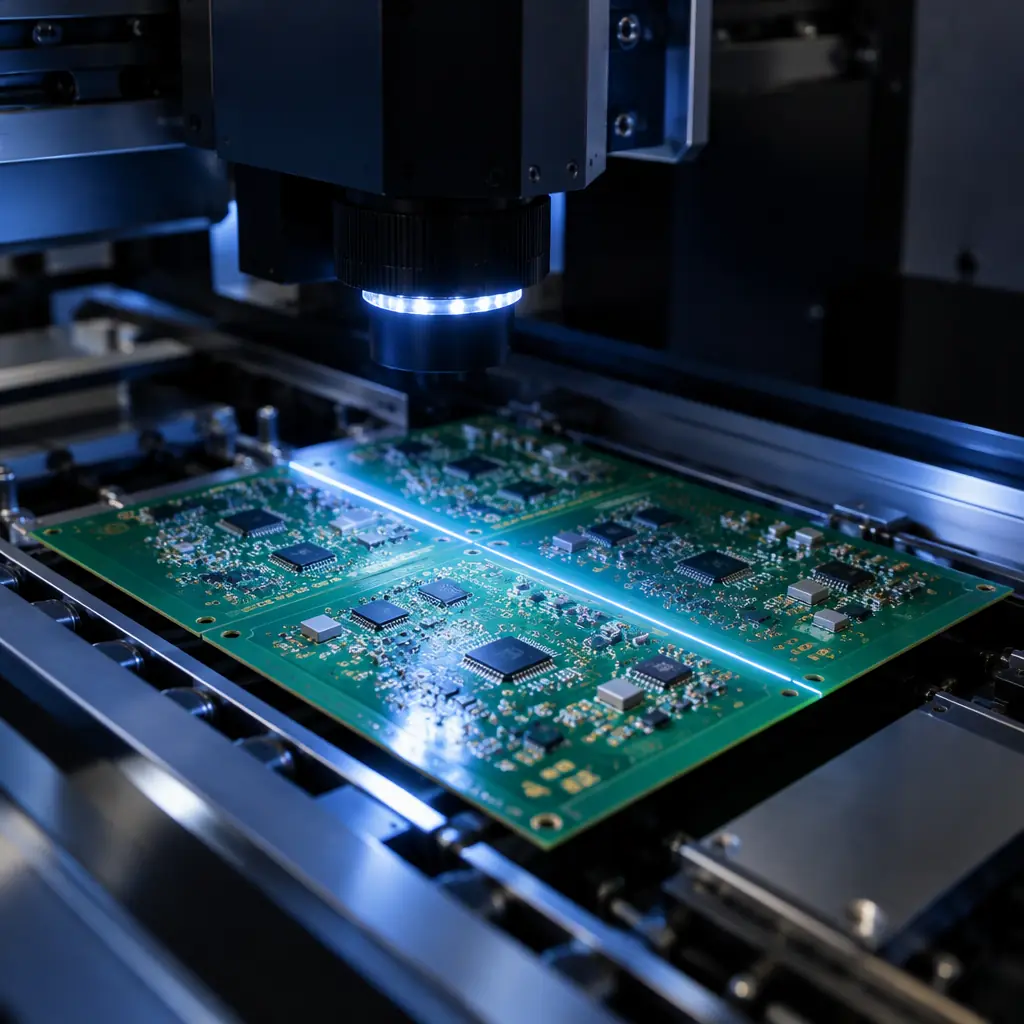
Huaxing PCBA has manufactured in Shenzhen for over 25 years, with a 45,000 m² facility in Bao'an housing PCB fabrication, SMT assembly, DIP, box-build and testing under one roof, and holds ISO 9001:2015, IATF 16949, AS9100D, UL, RoHS and REACH. That history is relevant to a shortage discussion for one reason only: 25 years of buying laminate in Shenzhen means an established position with the distributors, which is what determines whether a short grade is obtained in weeks or quarters.
It does not mean the material constraint does not apply to us. It means that when a grade is short, we can tell a customer quickly whether their date holds, offer the qualified alternative, and put the answer in writing rather than protecting the order until it slips.
What to Watch in the Next Two Quarters
For a buyer tracking this themselves, these are the indicators that will move first, all of them published rather than private:
Book-to-bill ratio, monthly
The association publishes a North American PCB book-to-bill figure each month. A ratio persistently above 1.2 means the order book is still outrunning output; a move back toward 1.0 is the first credible sign of relief. A ratio below 1.0 with lead times still long would indicate cancellations rather than recovery, so read it with the lead time, not instead of it.
Laminate and glass fabric price notifications
The pace of notification letters is the visible pulse of the material shortage. During 2026 laminate producers issued multiple rounds and every one was framed as upstream cost pass-through. A quarter with no new notification is more informative than any forecast.
Start-up dates for announced foil and laminate capacity
Announced projects are a schedule, not output. Several Chinese copper foil and laminate projects are scheduled to begin production in the second half of 2027, which is consistent with the association's mid-2028 relief estimate. Watch for slippage in those dates; it maps almost directly onto when your own queue position improves.
Bottom Line
The shortage is real, it is concentrated in high-layer-count boards and high-performance materials rather than spread evenly, and the binding constraint is upstream material availability rather than board shop capacity. The association's own reading is that the risk is being able to secure supply at all, and its projection is no meaningful relief before mid-2028.
For a buyer, the correct response is not to stockpile boards but to make lead time contractual: named material, a start event, a flag before the order rather than after, and a remedy if the date moves. At Huaxing PCBA we would rather quote you a date you can build a launch plan on and defend it with records, than quote an optimistic number and protect it with silence. If your 2027 build plan depends on a stackup we have not seen yet, send the stackup and the target date and we will tell you which clock your schedule is set by.