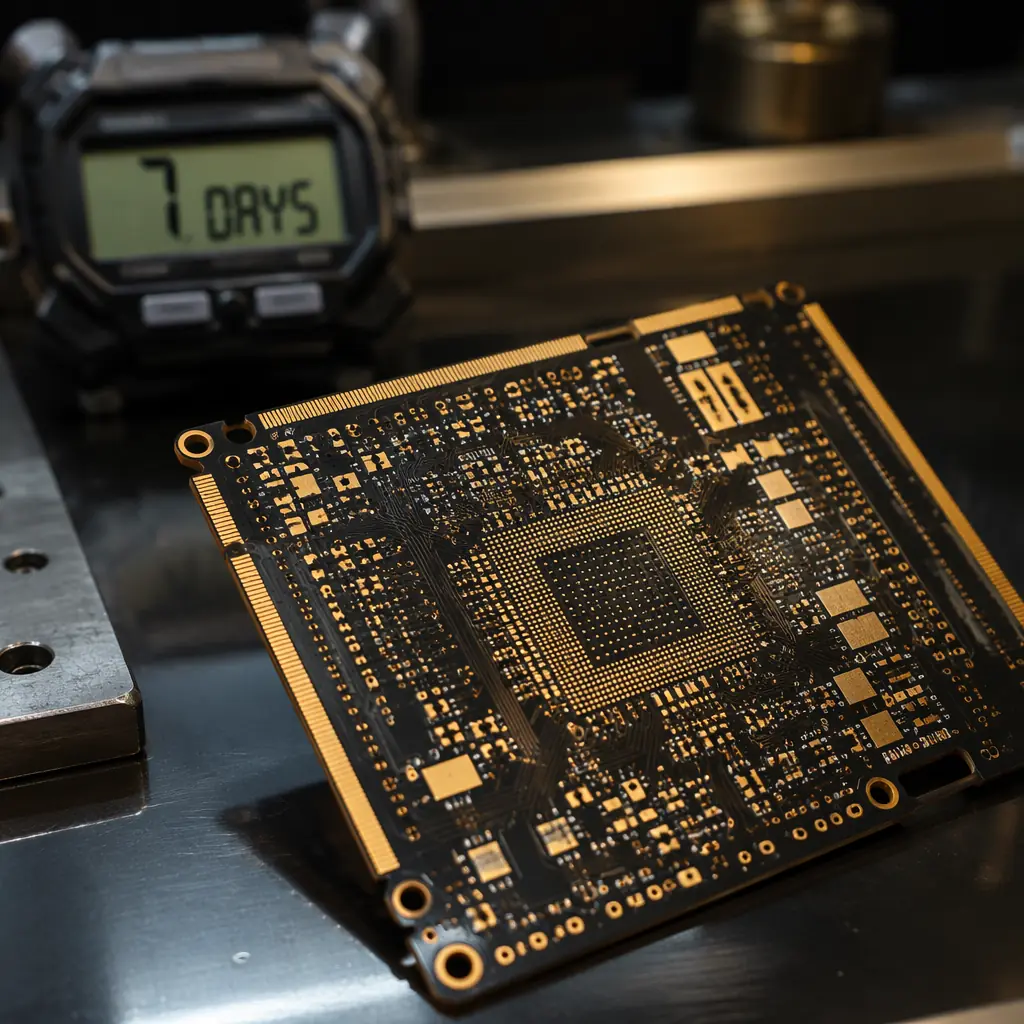
When a procurement manager asks "how long will this take," they are not asking about factory throughput. They are asking about every hour between the PO and the delivery dock . Engineering review, material procurement, tooling, inner layer fabrication, lamination, drilling, plating, outer layer imaging, solder mask, surface finish, electrical test, final inspection, and shipping. A standard 4-layer PCB from a Shenzhen factory typically takes 15-20 business days end-to-end. The same board, with the same specifications, can arrive in 7 days, if you know which levers to pull. This guide covers every one of them.
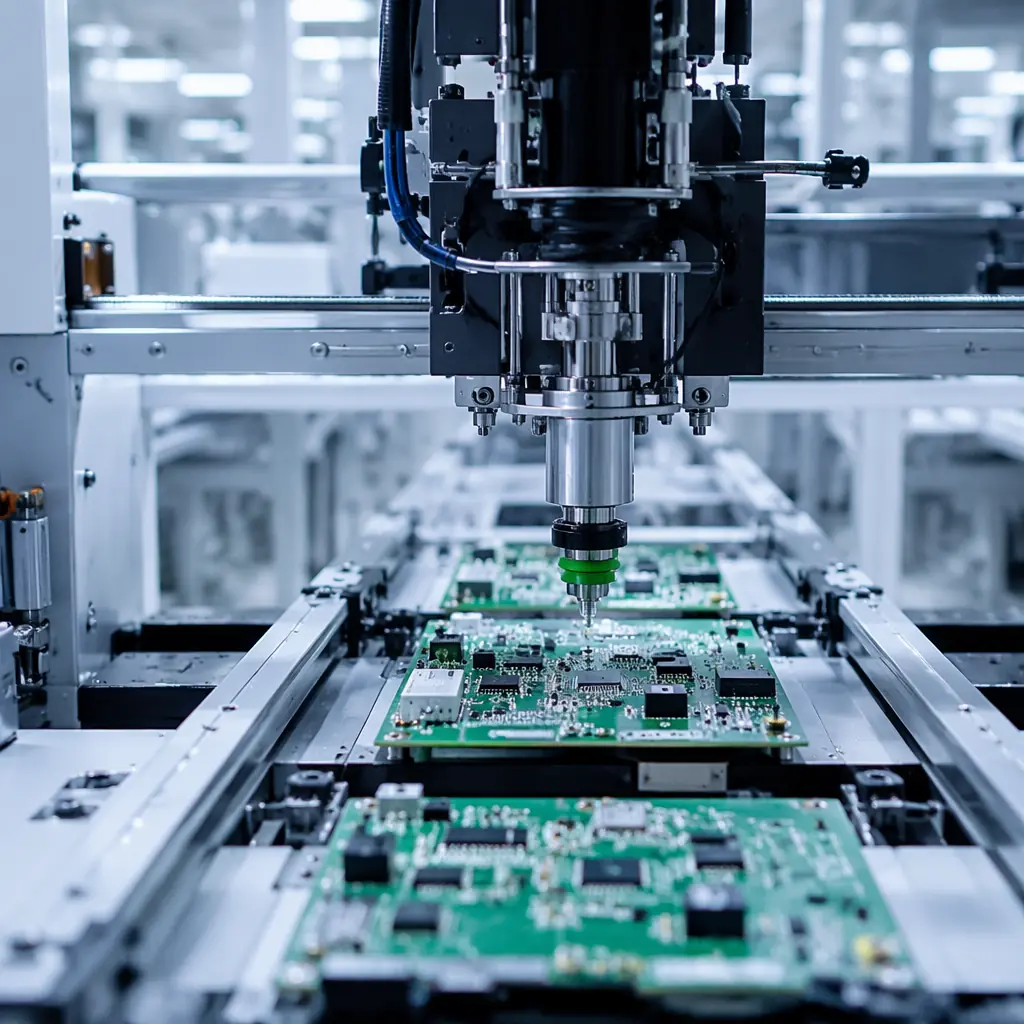
Why PCB Lead Times Vary, The 6 Components That Add Up
Every PCB order, regardless of complexity, passes through six time buckets. Understanding which bucket dominates your order is the first step to cutting it:
Engineering Review (1-3 days)
Your Gerber files, drill files, and fabrication notes are reviewed by a CAM engineer before anything touches copper. Incomplete or ambiguous specs trigger questions, and every email exchange adds 24 hours. Fix: Include a fabrication drawing with stackup, impedance targets, and material callouts. A good drawing eliminates 80% of engineering queries on first pass.
Material Procurement (1-7 days)
Standard FR-4 (TG 130-140) is always in stock. But specify TG 170, halogen-free, or a specific laminate brand (Isola, Rogers, Panasonic) and the factory may need to order it. Procurement impact: a Rogers 4350B stackup can add 5-7 days of material lead time. Know this before you commit to a material spec.
Inner Layer Fabrication (2-4 days)
Inner layer imaging, etching, AOI inspection, and lamination. Layer count is the dominant variable: a 2-layer board passes through this stage once; a 12-layer board passes through it 6 times. Design lever: can you achieve the same functionality in 8 layers instead of 12?
Drilling and Plating (1-3 days)
Drill count, hole sizes, and aspect ratios drive time. A board with 2,000 holes takes longer than one with 200. Blind and buried vias add separate drill + plate cycles. Back-drilling adds yet another step. Design lever: reduce via count, avoid unnecessary blind/buried vias.
Solder Mask, Surface Finish, and Silkscreen (1-2 days)
Standard green solder mask + HASL (lead-free) is the fastest combination. Specialty solder mask colors (black, red, blue) or ENIG/ENEPIG surface finishes add time, the line needs to be configured differently. Trade-off: is the aesthetic or performance gain worth the extra day?
Electrical Test and Final Inspection (1-2 days)
Flying probe test is fast for prototypes. Bed-of-nails fixtures take time to fabricate but test faster at volume. IPC Class 3 requires 100% netlist test, non-negotiable but plan for it. Don't skip test to save time. A day saved here costs weeks in rework later.
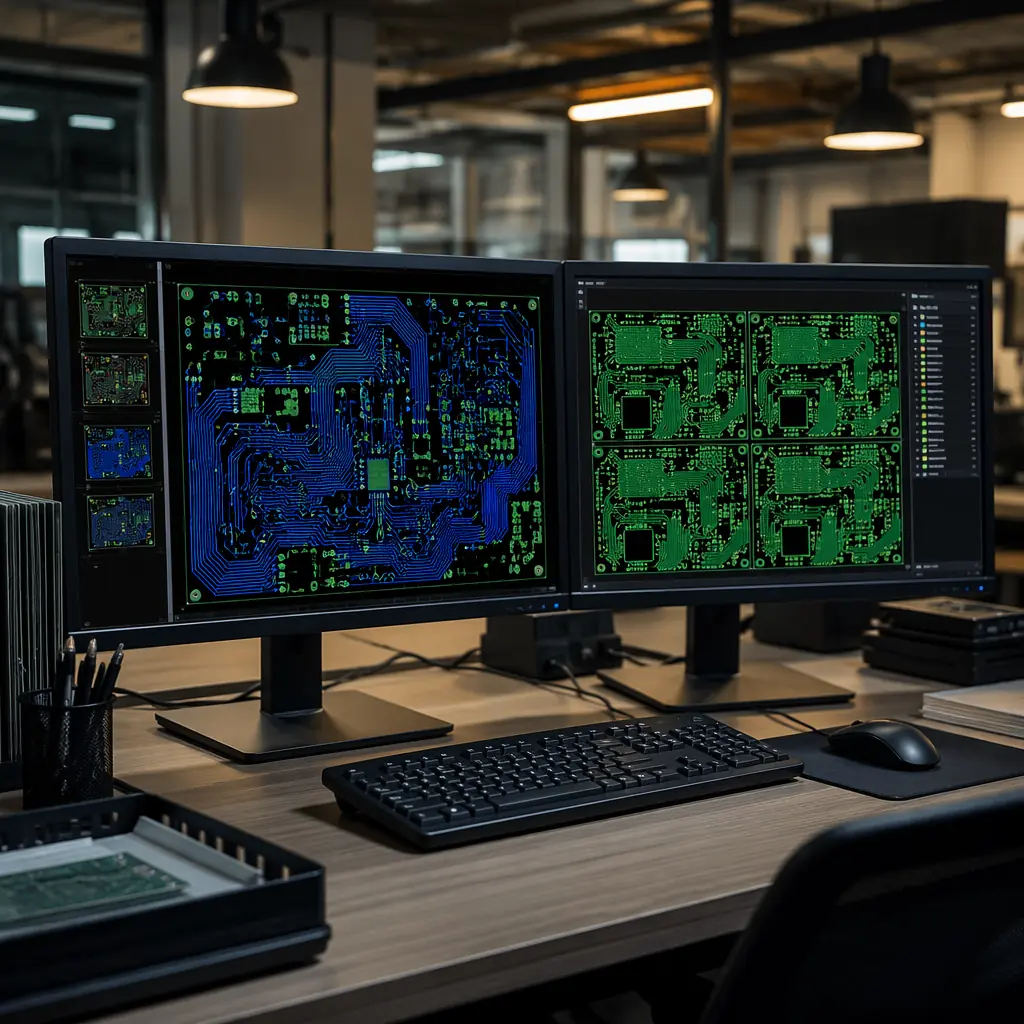
Design Decisions That Cut Days Off Your Timeline
The fastest way to reduce lead time is not negotiation, it is design hygiene. Factories do not charge for DFM review, but they do charge (in time) for the back-and-forth that follows a messy file set.
Five design decisions with outsized lead time impact:
Standardize Your Stackup
Every factory has a library of pre-approved stackups, laminate thicknesses and prepreg combinations they keep in inventory. If your impedance calculator spits out a 0.127mm prepreg that no one stocks, the factory substitutes it. That substitution triggers an engineering change notice, a re-simulation, and your approval. Fix: ask the factory for their standard stackup table before you route the board. Design to what they already have.
Use Standard Drill Sizes
0.30mm, 0.35mm, 0.40mm, these are standard. 0.33mm or 0.37mm? Non-standard, requires a special drill bit order. Every non-standard drill size adds time. Fix: specify all holes to 0.05mm increments (0.30, 0.35, 0.40, etc.) and avoid anything below 0.20mm unless mechanically necessary.
Keep Copper Balanced
Uneven copper distribution, a solid ground plane on layer 2 and sparse routing on layer 3, causes warpage during lamination. The factory compensates by adjusting prepreg flow, which adds process time. Fix: fill empty areas with copper pours (hatched or solid) to balance copper weight across the stack.
Specify Surface Finish by Function, Not Habit
ENIG adds 1-2 days over HASL. Immersion silver adds 1 day. ENEPIG adds 2-3 days and introduces a separate plating chemistry. Decision rule: if your board has fine-pitch BGA (0.5mm or below), you need ENIG for coplanarity. If you are assembling through-hole connectors and SOIC packages, HASL (lead-free) is faster and cheaper. Pick the finish your assembly actually requires.
Panelize Before You Submit
If you submit a single board and the factory panels it, which they will, you are adding an extra engineering step. A pre-panelized design (with tooling rails, fiducials, and breakaway tabs or V-score lines) skips this step entirely. Fix: panelize in your CAD tool and include the panel Gerber as a separate layer. Note the panelization method (V-score or tab-route) in your fab drawing.
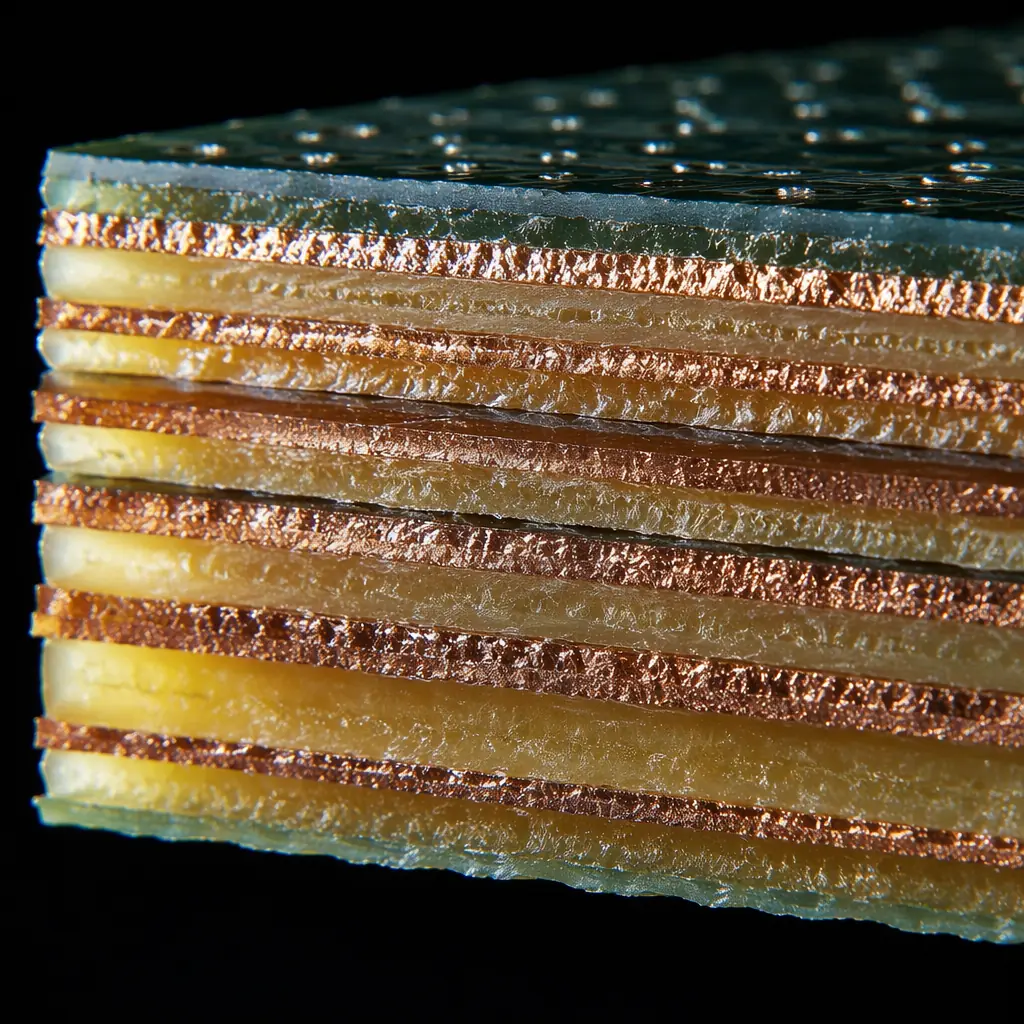
Material Selection: The Silent Lead Time Killer
In 2024-2026, material availability has become the single largest variable in PCB lead time. A board designed around a laminate that is on allocation can sit in queue for weeks while the factory waits for delivery.
The availability hierarchy (Shenzhen supply chain, 2026):
| Material | Availability | Typical Lead Time Impact |
|---|---|---|
| FR-4 TG 130-140 (Shengyi, Kingboard) | Always in stock | 0 days |
| FR-4 TG 170-180 | Stocked, high volume | 0-1 day |
| Halogen-free FR-4 | Moderate stock | 1-2 days |
| High-speed (Megtron 6, TU-872 SLK) | Limited, allocation-constrained | 3-7 days |
| RF (Rogers 4350B, 4003C) | Imported, lead time varies | 5-14 days |
| PTFE-based (Rogers 5880, Taconic) | Special order only | 10-21 days |
Procurement strategy: If you are transitioning a design from prototyping to production and your prototype used a Rogers stackup "because the RF engineer specified it," ask whether a lower-loss FR-4 (like TU-872 SLK or IT-968) can meet the same insertion loss budget. The answer is often yes for frequencies below 10 GHz, and the lead time drops from weeks to days.
Quick-Turn vs Standard: When to Pay the Premium
Quick-turn services promise 24-72 hour fabrication. The economics are brutal: a standard 4-layer board that costs $2.50/unit at 1,000 pieces might cost $18/unit on a 48-hour quick-turn. That premium is 720% . But it makes sense in specific scenarios.
When quick-turn justifies its cost:
Prototype Validation
You need 5 boards to validate a new design before committing to a 5,000-unit production run. Paying $90 for quick-turn boards that save 2 weeks of engineering idle time is a rounding error compared to the cost of a delayed product launch.
Production Line Bridge
Your production run arrives in 3 weeks but you exhausted safety stock today. 50 quick-turn boards bridge the gap and keep the SMT line running. The cost of an idle SMT line ($2,000-5,000/day) dwarfs the quick-turn premium.
Regular Production Orders
Using quick-turn as your default production mode is a procurement failure, not a strategy. If you are repeatedly paying quick-turn premiums, the root cause is forecasting or supplier management, not PCB fabrication speed. Fix the pipeline, not the order type.
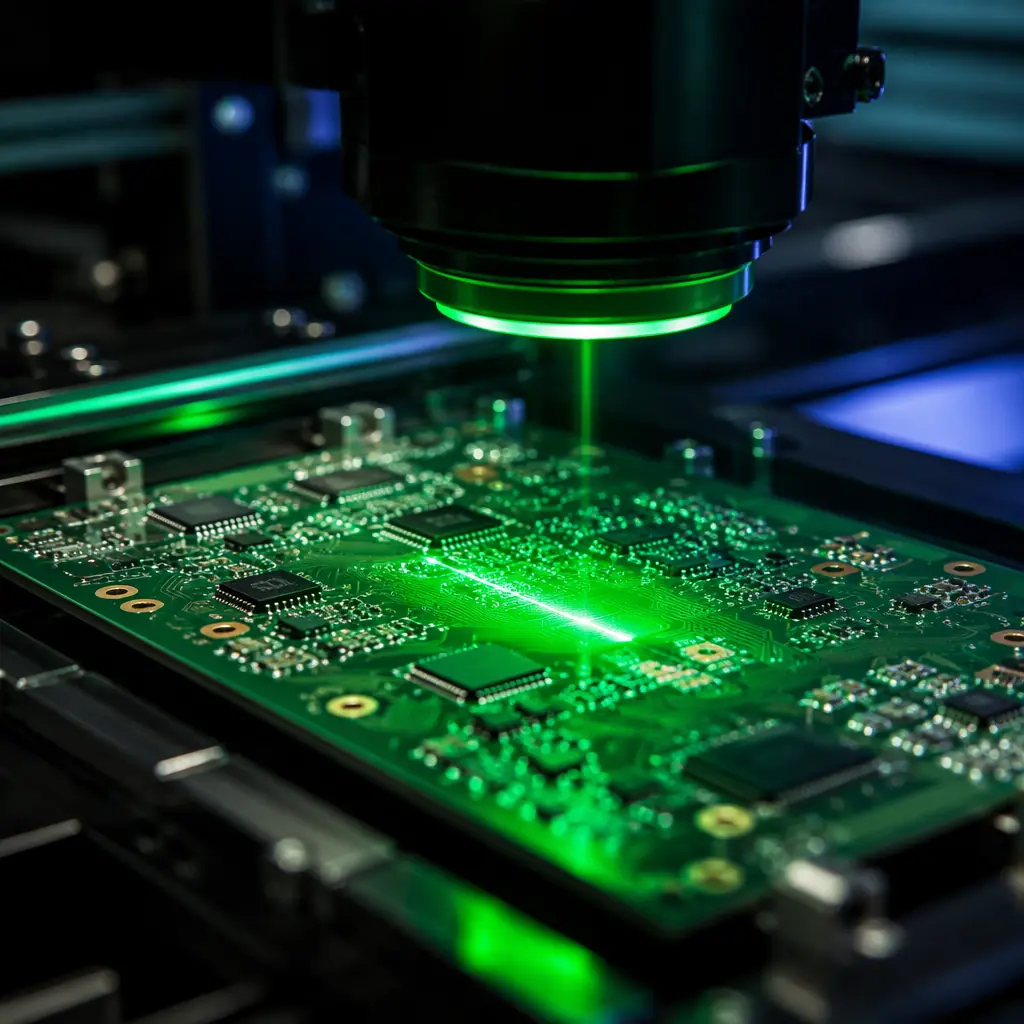
The Production Queue: How Factory Scheduling Affects Your Order
Even after engineering review, material procurement, and process steps, your order sits in a queue. Understanding how factories schedule work is the difference between a 7-day and 21-day lead time for identical boards.
Three scheduling realities that procurement managers should know:
1. Panel utilization drives priority. A factory's production planner looks at your order and asks: does this fill a panel efficiently? An order that fills exactly one panel (e.g., your board dimensions × array count = 510 × 410mm, the standard Shenzhen panel size) gets scheduled faster than one that leaves 30% of the panel unused. Action: design your board dimensions to panelize efficiently. Standard panel size in Shenzhen is typically 510 × 410mm or 610 × 510mm, ask your factory which they use.
2. "Rush" is a queue position, not a process change. When you pay for expedited service, the factory does not run your boards through a faster machine. They move your job to the front of the queue at each process step. This means your 2-day quick-turn board skips ahead of 50 other orders waiting for drilling. Implication: during peak season (August-November for consumer electronics ramp), even "rush" orders face queue congestion because everyone is rushing.
3. Chinese holidays create predictable bottlenecks. Chinese New Year (January/February) and Golden Week (October 1-7) shut down factories for 1-2 weeks. The two weeks before each holiday see a surge of rush orders as procurement teams scramble to get boards out before the shutdown. Action: place orders at least 3 weeks before these holidays, or plan for a 2-week gap.
How to Write an RFQ That Gets Prioritized
Factories receive dozens of RFQs daily. Most are generic: "please quote 4-layer PCB, 1,000 pcs." The ones that get fast responses share a common structure. Here is the RFQ format that Shenzhen factories actually prioritize:
Complete Spec in the First Message
Layer count, dimensions, material (with brand and TG), copper weight (inner and outer), surface finish, solder mask color, min trace/space, min hole size, impedance requirements, and IPC class. Attach Gerber files and a fabrication drawing. Every missing field requires an email, and every email costs a day.
State Your Timeline Upfront
"We need 50 prototypes in 7 days and 5,000 production units in 4 weeks." This tells the factory: (a) you have a real project, not tire-kicking; (b) you understand the difference between prototype and production timelines; (c) you are worth prioritizing because volume follows.
Include Annual Volume Estimates
"Estimated 50,000 units/year across 5 SKUs." Even if the first order is 500 pieces, the factory sees the long-term value and allocates engineering resources accordingly. A factory that quotes you for 500 pieces knowing there are 50,000 behind it will give you better pricing and faster turnaround than one quoting a one-off.
Ask for a Production Slot, Not Just a Quote
"Can you reserve a production slot for the week of August 10?" This is the procurement equivalent of a restaurant reservation. The factory commits to capacity before you commit to the order. Most Shenzhen factories will hold a slot for 48-72 hours without a PO, use this window to finalize internal approvals.
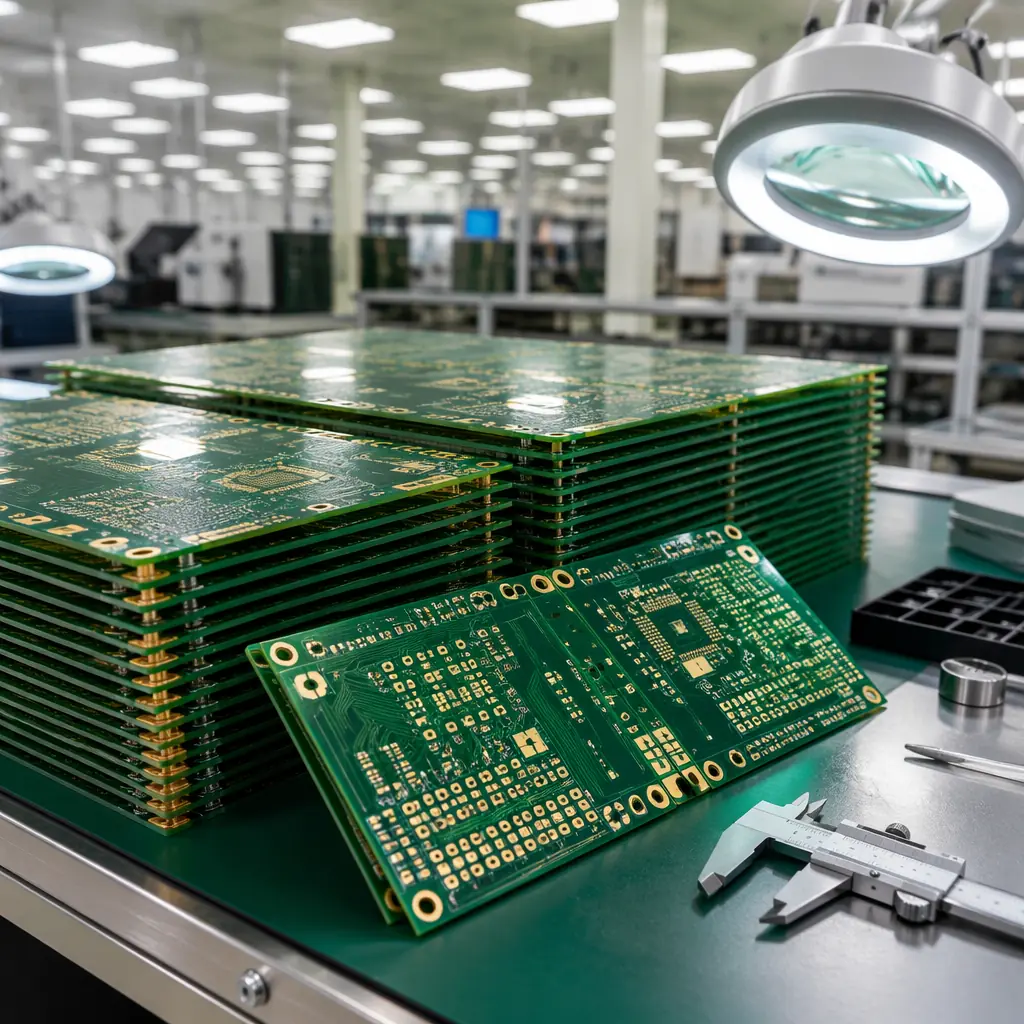
The Lead Time Reduction Checklist
If you apply every lever in this guide, here is the cumulative time reduction for a typical 4-layer PCB order:
| Lever | Time Saved | Effort |
|---|---|---|
| Complete fabrication package (no back-and-forth) | 2-3 days | Low, one-time discipline |
| Standard laminate (TG 140 FR-4 instead of specialty) | 2-5 days | Medium, requires engineering review |
| Standard stackup (factory-pre-approved) | 1-2 days | Low, ask for stackup table |
| Pre-panelized design | 1 day | Low, use CAD panelization tool |
| HASL instead of ENIG (when acceptable) | 1-2 days | Medium, assembly compatibility check |
| 7-10 day service (sweet spot) | 5-10 days | Low, request explicitly in RFQ |
| Reserve production slot upfront | 2-5 days | Low, ask during RFQ |
| Total potential reduction | 14-28 days |
The gap between a 4-week and a 1-week lead time is not factory capability, it is procurement process. A factory with 8 SMT lines and in-house CNC drilling can fabricate a 4-layer board in 48 hours of machine time. The remaining 18 days are engineering queries, material sourcing, and queue position. Eliminate those, and the timeline collapses.