

The most expensive kind of process failure is the one with no visible cause. A reflow line runs a mixed build for two days with clean bright fillets and a first-pass yield above ninety-eight percent. On the third day the wave of non-wetting starts, joints come out with dull convex fillets and skip on some pads entirely, and when the process engineer pulls the flux bottle off the machine it looks exactly as it did on day one. Same colour, same viscosity, same smell. The flux did not change appearance because the thing that failed is not visible, and the activator package that removes copper and tin oxide at soldering temperature has been consumed.
Activator depletion is one of five plausible causes of a wetting failure that appears mid-run, and getting to it means eliminating the other four first: oxide on the boards, a drifting reflow profile, contamination on pads, and a change in paste or flux lot. What makes it worth understanding as a category rather than an anecdote is that the diagnosis is cheap once the decision tree is in place, and the control is a purchasing and records problem rather than an equipment problem.
This page sets out how flux activators work, what consumes them, how a depleted flux presents compared with the four competing causes, what test distinguishes them, and what belongs in a purchase order or process control plan so that a mid-run shift becomes a scheduled event rather than a surprise. The chemistry of the flux systems involved is covered in solder paste selection, and the residue and cleaning consequences in no-clean vs water wash flux.
What an Activator Does, and What Consumes It
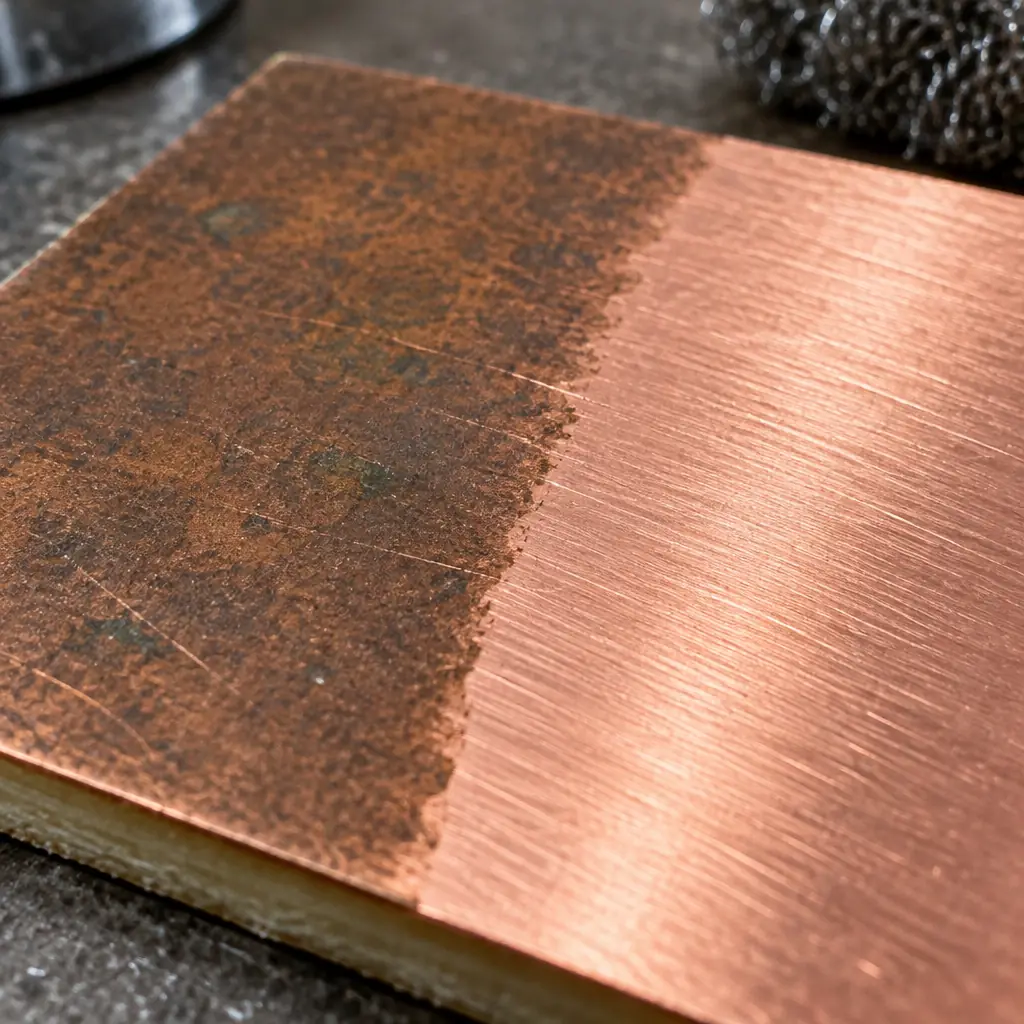
Solder will not wet oxide directly. The activator's job is to remove this tarnish at temperature, and every removal consumes a finite quantity of it.
Every pad, lead and solder powder particle carries a surface oxide. Copper oxidises in air within minutes of cleaning, and at reflow temperature that oxide film is thermodynamically stable enough to prevent the alloy from wetting the metal underneath. The flux has two jobs. The vehicle carries heat and protects the surface from further oxidation, and the activator chemically attacks the oxide so that the molten alloy can reach clean metal and form an intermetallic bond.
Activators are consumed stoichiometrically by that reaction. A rosin-based system relies partly on the natural activity of abietic acid, which is mild and short-lived. An organic acid system uses materials like adipic, succinic, glutaric or malic acid, and a halide-activated system, now restricted in most markets but still present in some older specifications, uses ionic species that attack oxide far more aggressively. In every case the quantity available is finite and it is depleted in proportion to the oxide it removes, the thermal exposure it survives, and the time it spends at temperature.
Four things consume activators faster than a process plan usually assumes. Overtemperature exposure at the soak or the peak burns the package off before it can do its work, so a flux that is fine at a 150 degree soak and a 245 degree peak may be inert at a 190 degree soak with a 260 degree peak. Long soak times at intermediate temperatures give the activator time to evaporate or decompose ahead of the actual melting. Time at ambient after printing or fluxing, particularly on an open machine, allows the more volatile components to leave before the board ever reaches the oven. Board surface condition is the fourth: heavily tarnished boards, boards stored long enough to build a thick oxide, or boards whose finish has oxidised in poor storage consume far more activator to reach the same result, which is why the same flux can work for a month on one board lot and fail on the next. The oxide and storage side of that problem is covered in PCB storage and moisture control, and the finish-dependent behaviour in ENIG vs HASL.
Five Causes, One Symptom
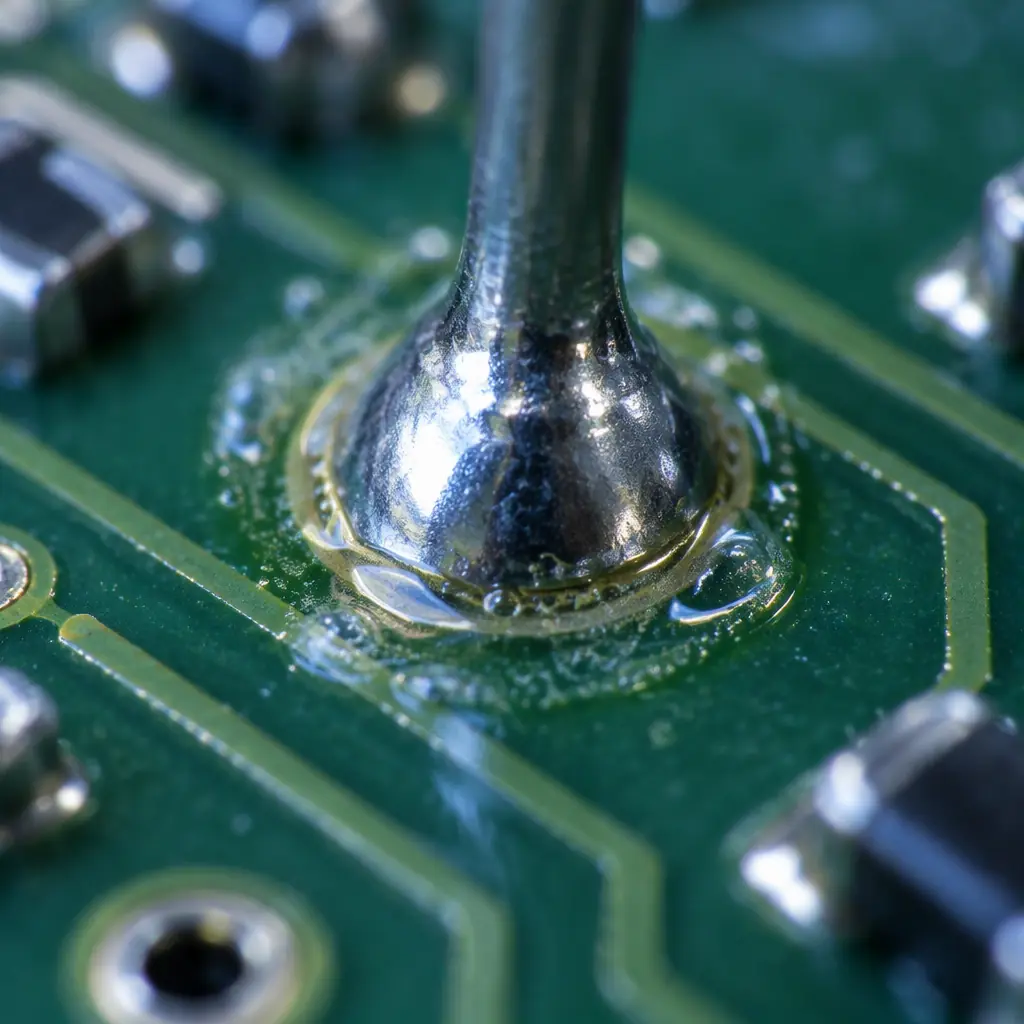
Residue presence is not evidence of activity. A depleted flux leaves the same residue as an active one, because the vehicle and the activators are different materials.
The reason activator depletion is misdiagnosed so often is that it presents as generic poor wetting, and four other causes present almost identically. Sorting them is a matter of looking at where the failure sits and what changed at the time it started.
| Cause | Where it appears first | What it looks like | How to confirm |
|---|---|---|---|
| Activator depletion | Progressive across a lot or a shift; worse on tarnished or heavily oxidised boards | Dull convex fillets, partial wetting, worse on large copper areas and old stock | Fresh control flux on the same boards, same profile; wetting balance comparison |
| Board oxide / storage | The whole board lot from the first panel; often a new incoming lot | Uniform poor wetting across all joints on boards from that lot | Swap in a known-good board lot on the same flux and profile |
| Profile drift | Coincides with a change of product, loading or oven condition | Wetting poor on thermally heavy regions, good on light regions | Thermocouple profile against the window, per board position |
| Pad contamination | Localised to an area or a component type | Isolated non-wetting on pads touched in handling or near a mask or adhesive step | Solvent wipe test on a sample; surface analysis if it persists |
| Paste or flux lot problem | At first use of a new lot, or after a long storage period | Wetting failure from the first board of the lot, not progressive | Retain sample of the previous lot; lot traceability at goods-in |
The discriminator that matters most is whether the failure is progressive or immediate. Activator depletion gets worse as the lot is consumed or as the shift goes on, because the mechanism is finite and it is being used up. A bad board lot fails from the first panel with no trend. A profile problem tracks the board's thermal mass rather than time. That single distinction eliminates most of the field in one observation.
One false signal to discard early: residue. A joint soldered with a depleted flux has the same residue ring as one soldered with fresh flux, because the rosin or resin vehicle is not what was consumed. Inspectors who judge flux condition by residue appearance will conclude the flux is present and functioning when it is not. Yellowing or darkening of residue does indicate overheating, which is a related but separate failure.
Key takeaway: If wetting degrades progressively across a lot or a shift, and a fresh control flux on the same board and profile restores it, the flux has lost its activator. That test costs one board and one substitution and it settles the question faster than any amount of discussion.
The Test That Settles It
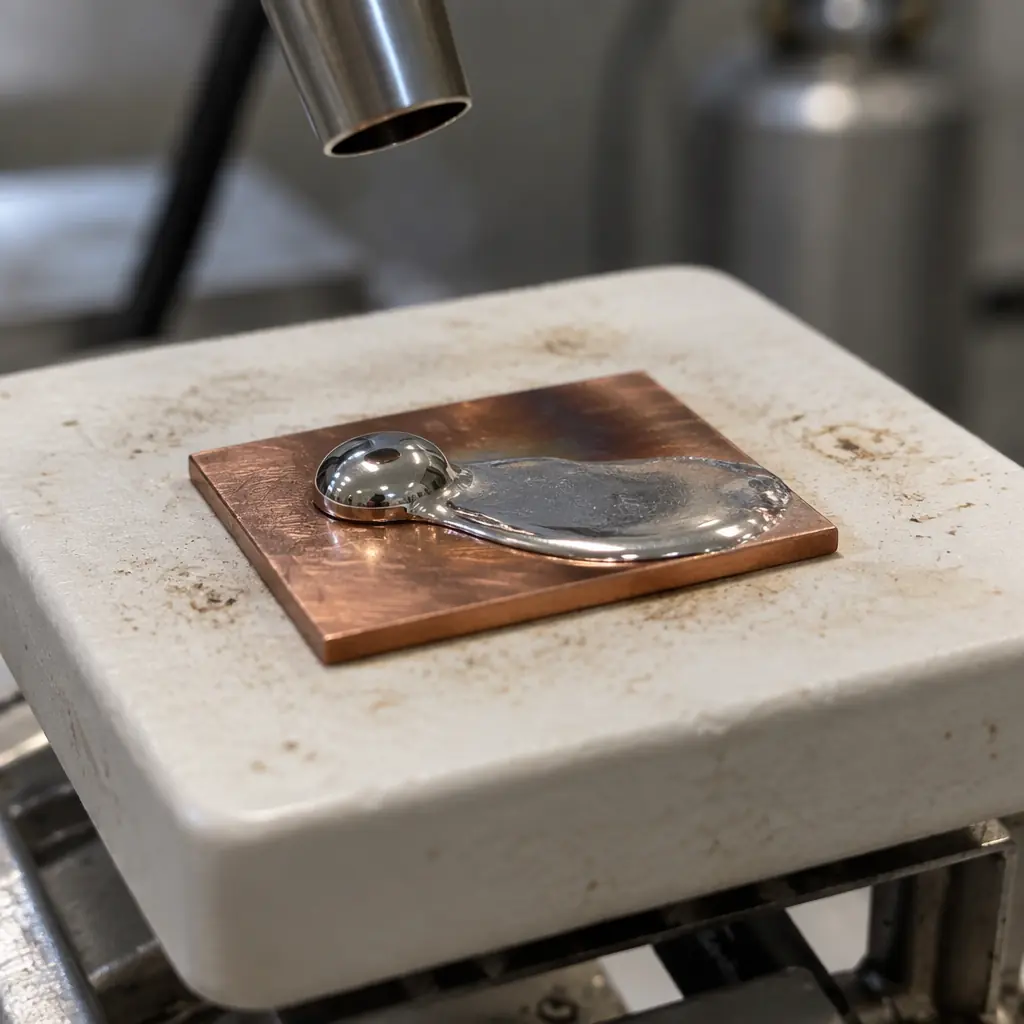
A wetting balance quantifies the difference between an aged flux and a fresh control on identical copper, which is the whole argument in one number.
Two tests carry most of the diagnostic weight, and both are cheap enough to run on the shift where the problem appears rather than shipping samples to a laboratory.
The first is the substitution control. Take a board from the failing lot, flux it with a freshly opened control lot of the same flux part number, and run it through the production profile alongside a board fluxed with the suspect material. If the control board wets normally and the suspect board does not, the flux is the variable. This is decisive because it holds board, profile, operator and machine constant and changes exactly one thing. The only requirement is that the control flux is genuinely fresh, which means a sealed container held in reserve rather than the bottle currently on the machine.
The second is a wetting balance test on a standardised copper coupon, run with the suspect flux and with the control, at the profile's actual thermal exposure. The output is a wetting time and a wetting force for each, and the difference between them is the quantitative statement of what the operator has been seeing. A coupon test is also the only way to prove the point to a supplier who believes the flux is in specification, because it produces a number rather than an impression. The test methods, coupon preparation and acceptance figures are set out in solder float test vs wetting balance, and the broader solderability testing frame is in PCB solderability testing.
A third, cheaper indicator is available in production if the line has the equipment: a spread test. Print or flux a defined deposit onto a glass slide or an oxidised copper coupon, hold it at the soak temperature for the profile's soak duration, and measure the spread diameter after reflow. Spread drops measurably as the activator is consumed, and the test can be run at the start of each shift with a retained sample. It is not a standard-compliant qualification, but it is a trend indicator that catches a lot going off before it reaches the boards.
Why It Happens Mid-Run More Than at Start-Up
The pattern of a failure that emerges on the third day rather than the first is not random. Three mechanisms produce it, and all three are about time rather than about the material being wrong.
Slow Consumption Through the Container
Flux in an open reservoir on a wave machine or in a printer cartridge is exposed to air continuously. Volatile components leave, the activator package partially depletes at ambient, and the material at the surface of the reservoir ages faster than the material in the middle. The effect is small per hour and it accumulates over days, which is exactly the pattern where the first two days are fine and the third is not. A covered reservoir, a fifo rotation on cartridges and a written change-over interval all attack this.
Board Oxide Building Across the Lot
Boards at the top of an opened stack oxidise faster than boards in a sealed bag, and a lot that has been open in a production environment for a week carries visibly more oxide than one opened the same morning. The flux does not change, the boards do, and the flux's activator budget is consumed by the extra oxide. This is the single most common way a stable process appears to become unstable with no process change, and it is why board storage practice and lot age are part of the wetting investigation rather than a separate housekeeping topic.
Profile Drift Noticed Only When Wetting Fails
Oven zones drift slowly. A heating element degrading, a thermocouple drifting, a conveyor speed creeping, or a change in board loading all shift the thermal profile without triggering any alarm. A profile that has drifted toward a longer or hotter soak consumes more activator before melting and leaves less for the wetting window. The failure looks like flux depletion and is actually an oven problem, which is why the profile is verified before the flux is condemned. Profile verification practice is set out in reflow oven profiling, and a structured verification routine in reflow profile verification and PWI reports.
There is a fourth commercial mechanism worth naming because it affects buyers directly. A flux part number does not guarantee a flux formulation. Suppliers reformulate when a raw material becomes restricted, when a cost driver moves, or when a plant changes. The new formulation can carry the same part number, meet the same J-STD-004 activity classification, and behave differently at the thermal edge of the process window. A build that ran for two years and then started showing wetting failures after a "same" flux arrived is a well-known pattern, and the only defence is a requirement to notify formulation change.
Design and Process Levers That Buy Margin
Where a build is genuinely at the edge of its flux's capability, which is common on thick boards, heavy copper, or old surface finishes, several levers improve the margin without changing the material.
Reducing the time between fluxing and melting protects the activator. On a wave line that means shortening the conveyor distance and controlling preheat so that the board arrives at the wave hot rather than being heated to the wave. On a reflow line it means a shorter soak and a profile that spends less total time in the range where activators decompose. Raising peak temperature helps wetting but consumes activator faster, so it is a trade rather than a lever and it should be evaluated against the material's rated window rather than pushed until joints look better.
Surface finish choice sets the required activator budget before the process ever runs. A fresh OSP is relatively easy to wet, a stored OSP is not, and an ENIG finish that has oxidised in storage can be harder to wet than HASL despite the flatness advantage. Where a build is highly sensitive to activator margin, specifying a finish with good storage stability and enforcing sealed storage with desiccant is more effective than paying for a more aggressive flux, and the finish comparison is set out in PCB surface finish selection guide. Board design also matters at the margin: large thermal masses, heavy ground planes and wide thermal reliefs all extend the time above liquidus and consume more of the flux's working life.
Nitrogen is the other significant lever. Lower oxygen at the joint reduces the oxide load that the activator must remove, which extends the effective working life of a given flux. It does not eliminate the need for activator, but it converts a marginal process into a comfortable one, and on a build where wetting margin is thin it is often the cheapest fix available.
What the Records Need to Contain
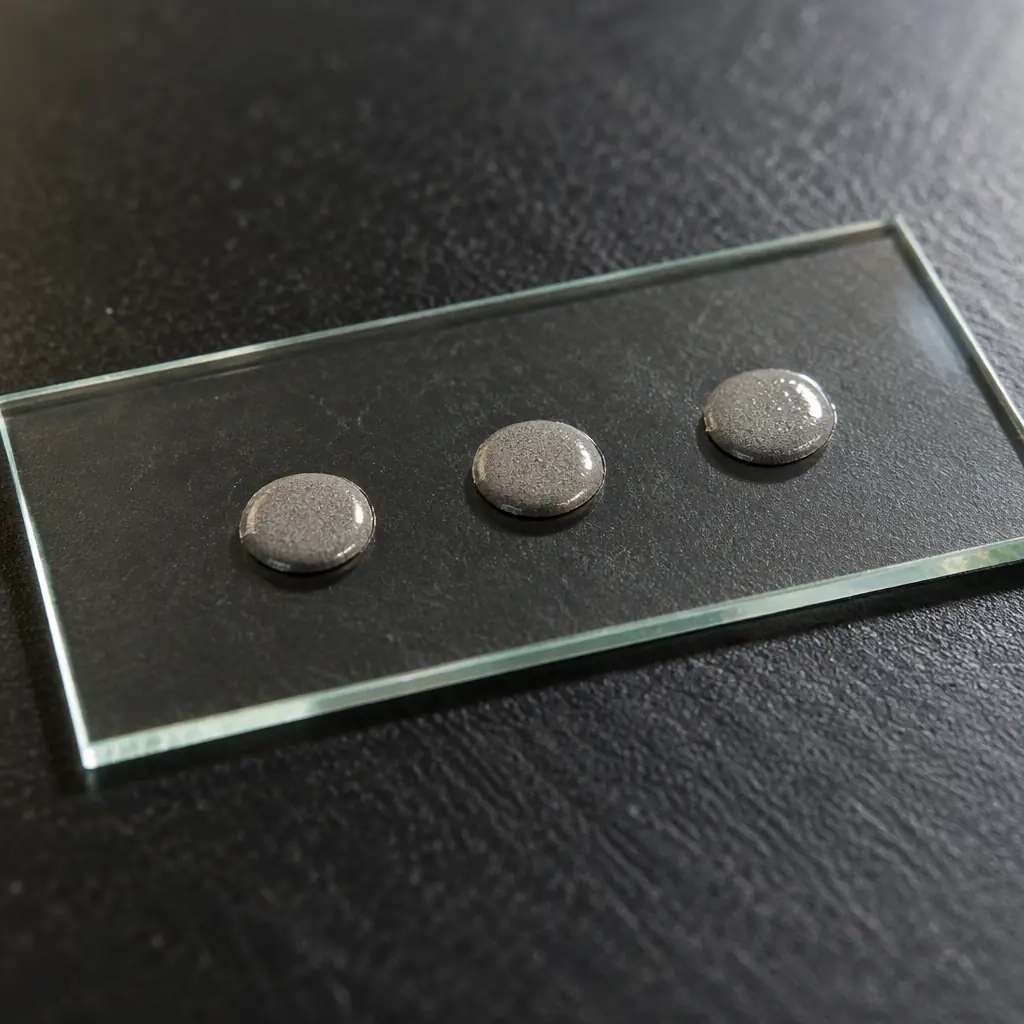
A shift-start spread check on a standard coupon turns activator condition from an impression into a trend line you can act on before boards are affected.
Activator depletion is a materials traceability problem dressed as a soldering problem, and the controls are mostly paperwork. The four records that make it manageable are the flux lot number on the certificate, the date the container was opened, the cumulative hours the material has been in an open reservoir or cartridge, and the retained control sample held in sealed storage for comparison.
With those four in place, an investigation that starts with a wetting complaint has a reference point. Without them, the only available comparison is between the suspect material and whatever is currently on the machine, which is usually the same lot and therefore useless. Retaining a sealed sample of each flux lot at receipt costs nothing and it is the difference between a five minute control test and a week of argument.
The companion record is board lot age. Boards and flux interact through oxide, and a wetting investigation that does not record how long the board lot was open cannot separate the two. Incoming inspection practice for boards, including what to check and what to retain, is covered in incoming quality inspection. Where a wetting failure has already reached the field, the analysis path is in PCB failure analysis and the attribution method in solder paste defect attribution.
Writing It Into the Purchase Order
Three clauses convert the whole subject from a process mystery into a contractual baseline. They belong in a supplier quality agreement, not in a one-off email.
The supplier shall identify on the certificate of conformance the flux part number, the manufacturing lot, the manufacture date and the J-STD-004 classification of every flux and solder paste supplied. The supplier shall give the buyer not less than ninety days notice in writing before any change to the formulation, the activator system, the raw material source or the manufacturing site of an approved flux or paste, and shall not implement such a change on product for the buyer without written approval supported by wetting test data on a representative board. The supplier shall hold a retained sealed sample of each lot supplied for a period of not less than twelve months from the date of shipment, and the buyer may request a sample for comparative testing at any time within that period.
The formulation change notification is the sentence that carries the commercial weight, because reformulation under an unchanged part number is the most common way a stable build becomes unstable and it is invisible without a contractual trigger. The retained sample clause is what makes every subsequent comparison possible, and it costs a supplier almost nothing to operate. A buyer who has both can prove a change happened; a buyer who has neither is left arguing about whether the boards or the chemistry moved, and usually absorbing the cost of both. Broader supplier qualification practice, including how approval of material changes is structured, is in the PCB supplier audit checklist and second source component approval.
Turning the Diagnosis Into a Control
Flux that has lost its activators looks, smells and pours like flux that has not, which is why a wetting failure that develops across a run is so often blamed on the boards, the oven or the operator before the material is examined. The mechanistic signature is progressive degradation with a fresh-flux control restoring normal wetting on the same board and profile, and that test is cheap enough to run on the shift the problem appears.
The controls are records rather than hardware: lot traceability at receipt, sealed retained samples, a container change-over interval, board lot age, and a supplier obligation to notify formulation changes. Together they turn a failure that used to consume a week of process engineering into a substitution test and a phone call.
At Huaxing PCBA flux and paste lots are received with retained sealed samples, lot numbers run through the process records per build, and formulation change notification is a condition of the supplier agreement rather than a request. For a build where wetting margin is thin because of board thickness, copper weight or an older surface finish, send the stackup and the finish specification through the quote form and the process plan that comes back will state the flux classification and the profile window the build is expected to run in.