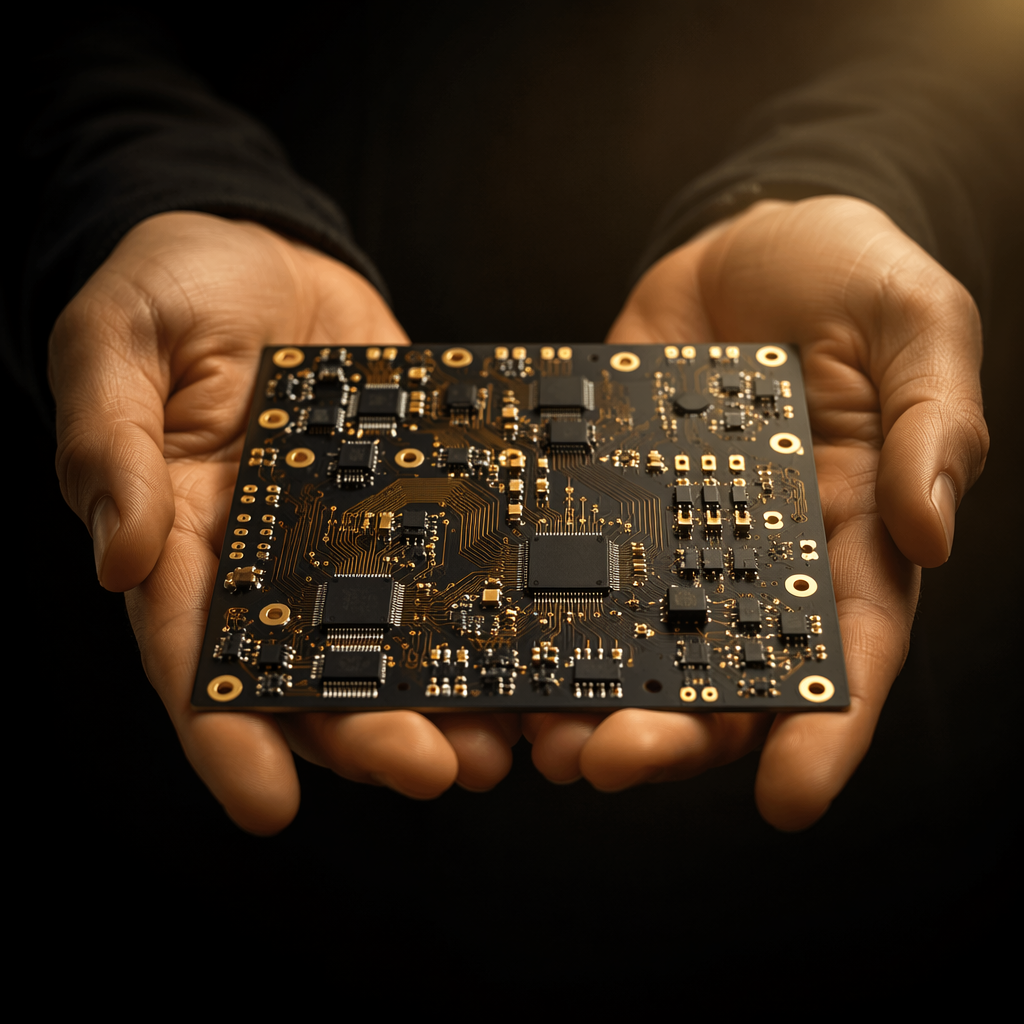
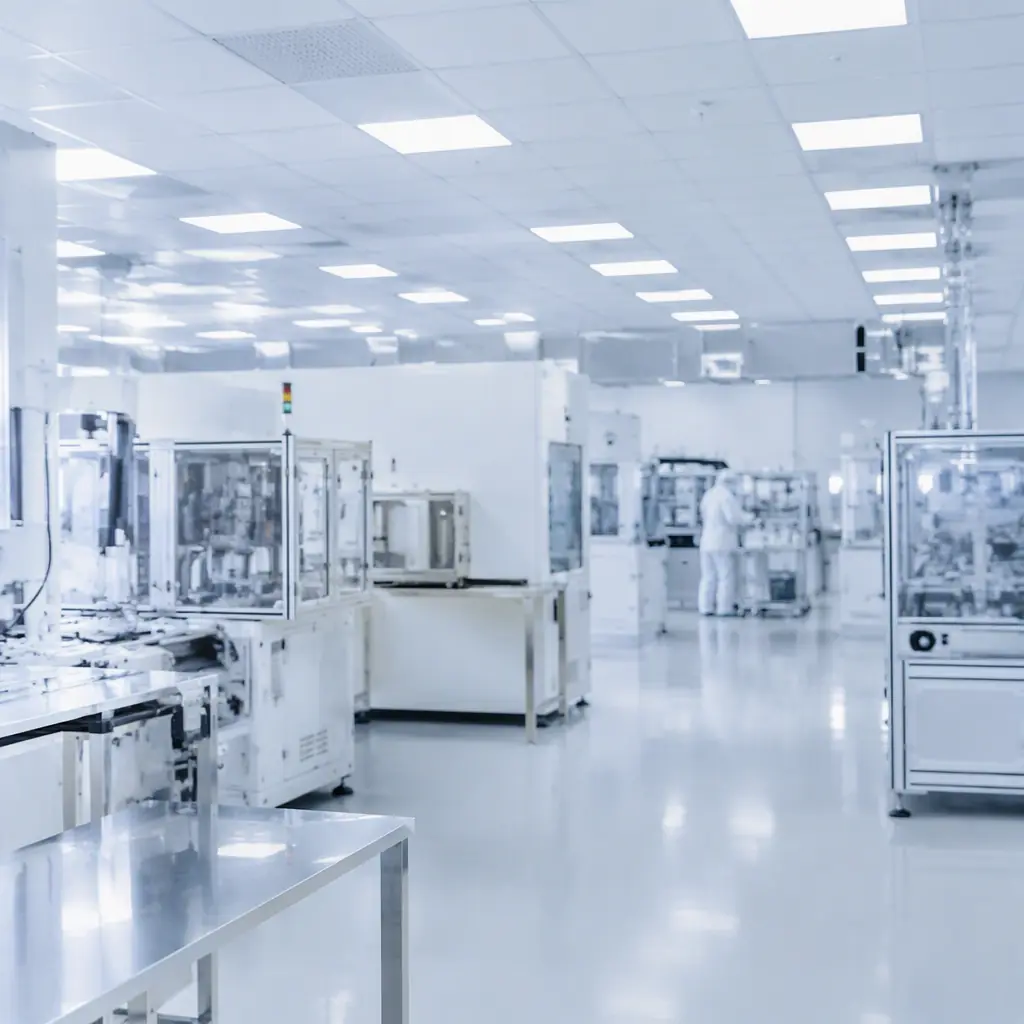
"We have an ISO Class 8 cleanroom" appears on a remarkable number of supplier pages and answers almost no question a buyer should be asking. Class 8 of what, applied to which process step, monitored how often, and verified against which particle size? Cleanroom classification is a facility property, and facility properties only matter to your product when they attach to a specific step that can actually be contaminated. The practical skill in sourcing is knowing which of your process steps needs which class — and which ones are being sold an upgrade they will never recover in yield.
This guide maps ISO 14644-1 classes to real PCB process steps, explains the failure physics that justify cleanroom requirements in the first place, and gives you the audit techniques that turn a claimed facility attribute into a checkable fact. Our facilities in Shenzhen run 8 SMT lines with controlled-environment areas for coating and high-reliability assembly, so the classifications and monitoring practices discussed here are ones we operate and are audited against.
What ISO 14644-1 Actually Specifies
ISO 14644-1 defines cleanroom classes by the maximum permitted concentration of airborne particles at specified sizes. A class designation is meaningless unless it is read across all three of its dimensions: the class number, the particle size thresholds, and the sampling method used to demonstrate compliance.
The standard's classes are graded by an exponent notation, where ISO Class N corresponds to a defined limit on particles of 0.1 µm and larger, 0.5 µm and larger, and 5 µm and larger. Because the limits are cumulative — "0.5 µm and larger" includes every particle at least that big — a claim that names a class without naming the particle size is incomplete. The monitoring method matters just as much: ISO 14644-2 covers how compliance is demonstrated over time, including the frequency of testing and the conditions under which a room may be considered at rest or in operation. A room classified clean at rest but never tested in operation may be performing far worse than its certificate suggests, because particles are generated by people and machines, not by empty rooms.
| ISO Class | Particles ≥0.5 µm per m³ (max) | Federal Std 209E equivalent | Typical PCB application |
|---|---|---|---|
| Class 5 | 3,520 | Class 100 | MEMS, microelectronics, optical bonding |
| Class 6 | 35,200 | Class 1,000 | Camera modules, high-end optical assembly |
| Class 7 | 352,000 | Class 10,000 | High-reliability and medical assembly |
| Class 8 | 3,520,000 | Class 100,000 | General assembly, conformal coating |
| Class 9 | 35,200,000 | Class 1,000,000 | Controlled general production |
Read the claim carefully: "ISO Class 8" without a particle size and a monitoring frequency is a marketing statement. A specification worth writing says "ISO Class 8, ≥0.5 µm, verified quarterly per ISO 14644-2, monitored in operation." The extra words are the part that makes it enforceable.
Which PCB Processes Need Which Class
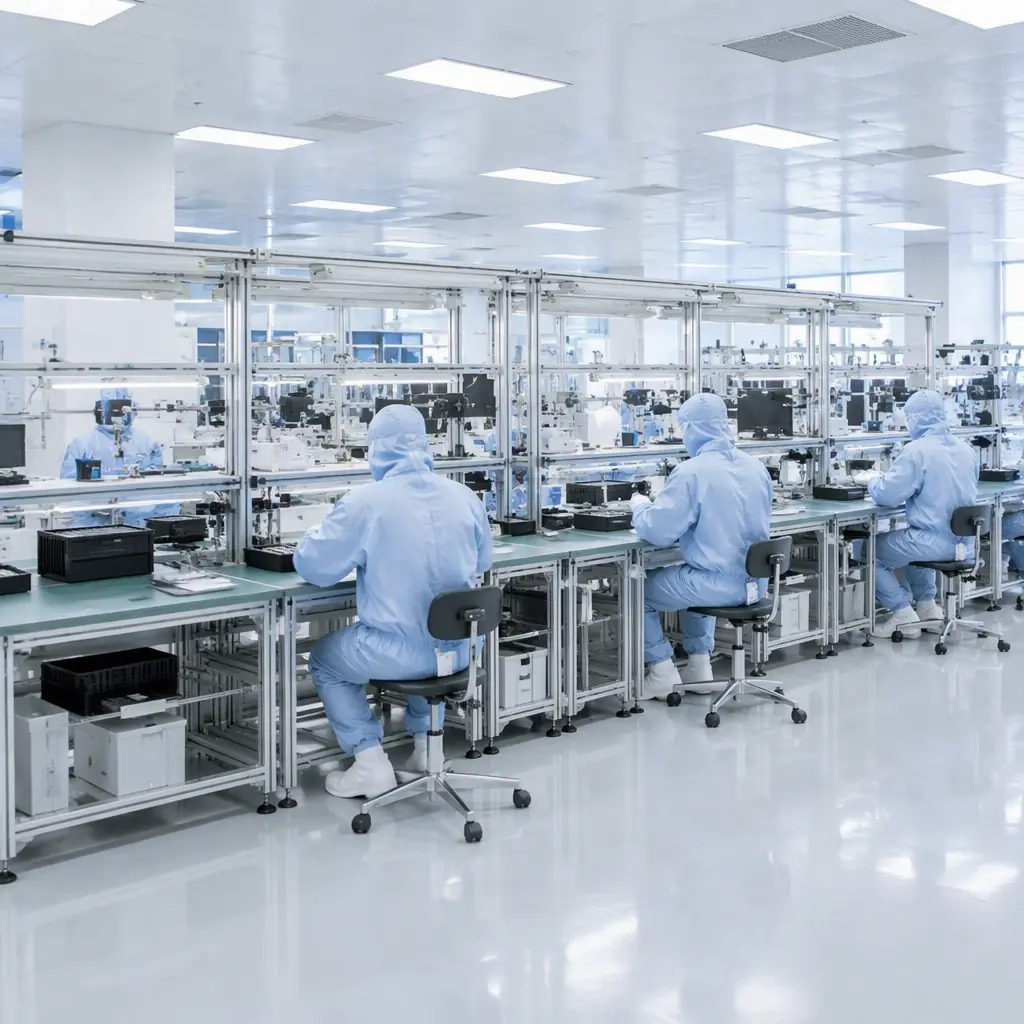
Cleanroom requirements attach to process steps, not to whole factories. A bare-board fabricator and an assembly house may both claim a classification while the classification matters to a completely different step in each. The mapping below reflects where contamination control has a defensible effect on product quality.
| Process step | Typical class | Justification |
|---|---|---|
| Bare-board fabrication (etch, drill, plating) | Controlled, not classified | Particles are washed and stripped downstream; controlled environment for plating bath quality |
| Solder mask application and cure | Controlled / Class 9 | Prevents surface inclusions that survive to assembly |
| Conformal coating | Class 8 typical, Class 7 for high-rel | Particles trapped under coating create adhesion defects and ionic paths |
| Standard SMT assembly | Class 8 or controlled | Reduces foreign-object defects and improves first-pass yield |
| Medical device assembly | Class 7 to Class 8 | Biocompatibility, particulate limits, regulatory expectation |
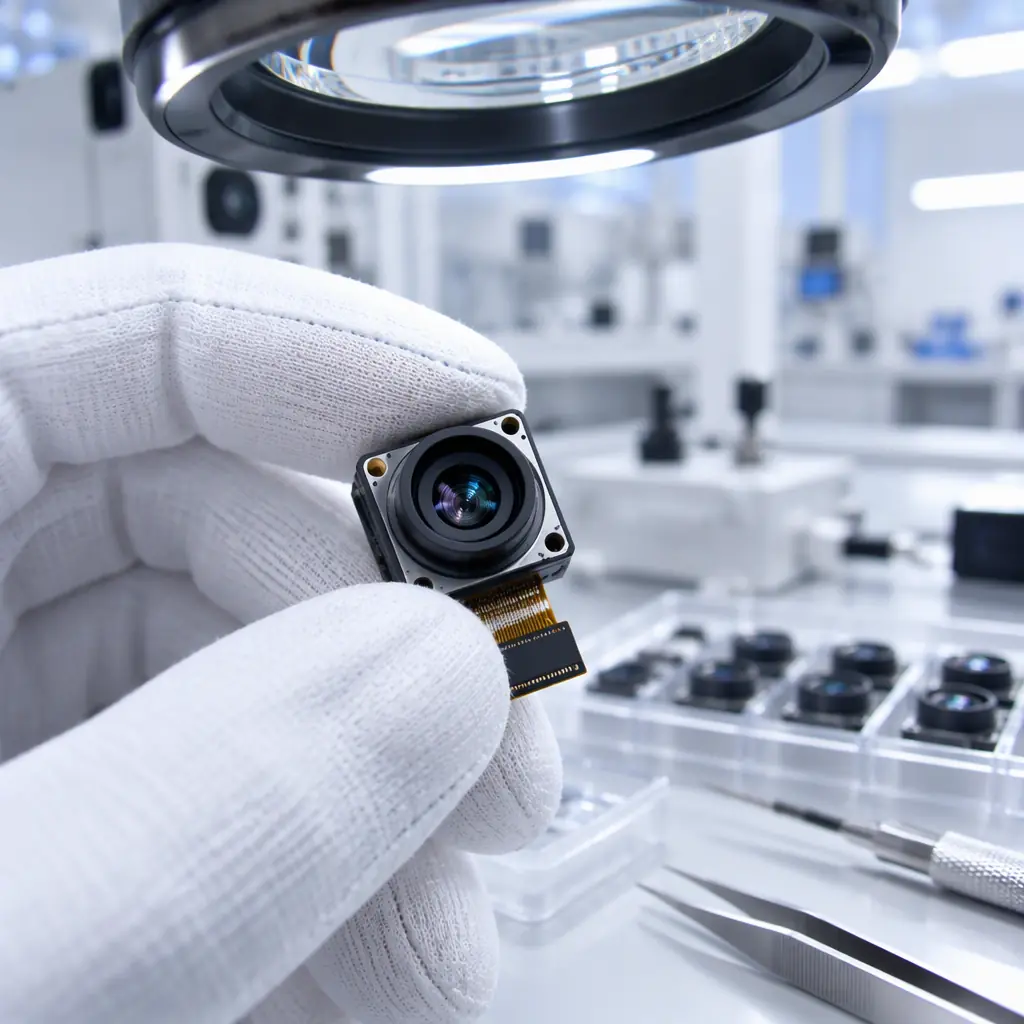
| Camera module and optical assembly | Class 6 to Class 7 | Any particle in the optical path is a visible defect |
| Class 3 / space assembly | Class 7 or better with gowning | High-reliability acceptance with cleanliness evidence required |
| MEMS and microelectronics | Class 5 to Class 7 | Particle-induced stiction and shorting at micron scale |
The distinction between "controlled" and "classified" matters for cost. A controlled environment with filtration, air changes and gowning discipline delivers most of the benefit for steps where particles are subsequently washed or where defect sensitivity is low. A formally classified and monitored room costs substantially more because it carries testing, documentation and standby power obligations. Paying for classification where control was sufficient is one of the more common forms of overspend in a PCB sourcing decision.
Where Cleanroom Class Is Oversold
There is a real and steep cost curve between ISO Class 8 and ISO Class 6. Each step change requires more air changes per hour, more filtration coverage, tighter pressure cascades, more gowning discipline and more energy. Those costs are passed on in the piece price whether or not the product benefits.
The cases where the upgrade is genuinely justified share a common feature: the particle is either permanent and visible, or it occupies a path where it can cause electrical or optical failure. Optical assemblies are the clearest example — a particle bonded into an optical path during assembly is a defect that no downstream test can remove. MEMS structures at micron scale are another, where a particle can mechanically obstruct a moving element.
The cases where the upgrade is usually oversold are those where the particle is downstream of a cleaning operation, or where the electrical geometry is large enough that a stray particle in the range suppressed by the upgrade would not bridge a conductor gap. For general surface-mount assembly of standard pitch boards, upgrading from a well-run Class 8 or controlled environment to Class 6 typically does not move DPPM, because the dominant defect causes are process-related — paste volume, placement, thermal profile — rather than particulate. A buyer specifying Class 6 for a standard industrial control board is buying facility cost, not yield improvement.
Procurement rule of thumb: specify the cleanroom class by asking what defect the particle would cause and whether the process step is upstream or downstream of a cleaning operation. If you cannot name the defect mechanism, you cannot justify the class — and you should not be paying for it.
How Particles Actually Cause PCB Field Failures
The requirements make more sense once the failure mechanisms are concrete. Particulate contamination produces four characteristic failure modes in electronics, and each attaches to a different process step.
Electrochemical migration and dendrite growth
Conductive or ionic particles on a surface, combined with moisture and a bias voltage, dissolve and re-plate as metallic dendrites that grow between conductors until they bridge. This is a time-dependent failure that appears months into field service, which makes it expensive and hard to trace. It is the primary mechanism justifying cleanliness control before coating, and it is closely related to the ionic contamination pathways covered in our guide to ionic cleanliness testing.
Conductive anodic filament formation
Under humidity and bias, copper can migrate along glass fibre bundles inside the laminate, forming a filament that eventually shorts adjacent conductors. Surface contamination accelerates initiation. This is a board-level reliability concern that ties directly to material selection and fabrication process control, and it is one reason cleanliness specifications matter for high-reliability products even after the board leaves the assembly line.
Coating adhesion defects and voids
A particle on a surface before conformal coating creates a shadow the coating cannot wet, leaving a void or a thin spot. That void becomes a moisture path to the conductor beneath, defeating the purpose of the coating entirely. Class 8 and Class 7 requirements for coating areas are justified by this mechanism rather than by the coating chemistry.
Optical path contamination
In camera modules, LiDAR assemblies and optical sensing products, a particle bonded into the optical stack is a permanent image defect. There is no rework path. This is the clearest case for Class 6 and Class 7 environments, and it is why optical assembly is often the step that justifies the highest classification in a factory.
How to Verify a Supplier's Cleanroom Claim in an Audit
A cleanroom claim becomes verifiable the moment you ask for the evidence that a maintained classification generates as a by-product. A working cleanroom produces records continuously; a marketing cleanroom has a certificate and little else. The following items are what to request, in roughly increasing order of how revealing they are.
Particle count reports with sample locations and dates
ISO 14644-1 prescribes how many sample locations a given room size requires and how the sample volume is determined. A report that shows the room as a single number, with no location map, was not produced by the standard method. Look for dated reports covering a rolling period, not one historical certificate.
Differential pressure records
A properly cascaded cleanroom maintains a positive pressure relative to adjacent spaces, typically around 10 to 15 Pa, so that air flows outward and contamination flows away from the product. Pressure gauges should be present and logged. If the room has no pressure monitoring, it is a filtered room rather than a controlled one.
Gowning protocol and actual practice on the floor
Ask for the written protocol, then observe whether it is being followed during the audit itself. The gap between documented gowning and observed gowning is frequently large. Note whether gloves are changed at the defined frequency, whether hair and beard covers are complete, and whether airlocks are used correctly.
Air changes per hour and filter coverage
Class 8 typically requires far fewer air changes per hour than Class 7, which requires fewer than Class 6. The filtration ceiling coverage is visible: heavily covered ceilings indicate a genuinely high-class room. A room claiming Class 6 with sparse terminal filters is not achieving it in practice.
Personnel density limits and their enforcement
People are the dominant particle source in any cleanroom. A classification is only maintained below a maximum occupancy, and a room crowded during a production push will not hold its class. Ask what the occupancy limit is and how it is enforced.
Material transfer and airlock procedures
How do boards, components and tooling enter the room? Every uncontrolled entry is a contamination pathway. Look for wipe-down stations, pass-through airlocks and defined transfer procedures rather than open doors used for convenience.
Whether the classification applies to the step you care about
This is the most important question and the one most often skipped. A supplier may hold a genuine Class 7 room used for one product line while your boards are assembled in an uncontrolled area. Ask specifically which steps for your product are performed inside the classified space, and get it into the process flow. Our Shenzhen factory visit checklist covers how to structure this verification on site.
Specifying Cleanroom Requirements in Your RFQ
Cleanroom requirements should appear in the RFQ as a short, precise clause tied to specific steps rather than as a general statement about the supplier's facility. A workable form is: name the process step, name the class with the particle size, name the monitoring standard and frequency, require the latest particle count and pressure records with the quotation, and require written confirmation that the step for your product is performed inside the classified area. Five or six lines is enough, and it removes the ambiguity that lets a facility claim and a process reality diverge.
Where the product is medical or otherwise regulated, the classification requirement may also be driven by the applicable quality management standard rather than by defect physics alone. In those cases, the relevant requirements and the way they attach to medical device PCB manufacturing should be confirmed with your regulatory team before the RFQ goes out, because adding a classification requirement after qualification is expensive for both parties.
Summary and Next Steps
Cleanroom class is a tool, not a badge. It earns its cost when a particle at a specific process step causes a defect you cannot remove downstream — optical paths, micron-scale mechanisms, coating interfaces. It wastes money when specified as a facility attribute disconnected from any named failure mechanism. The buyer's leverage lies in asking for the records a real cleanroom generates: particle counts by location and date, pressure logs, gowning practice observed on site, and confirmation that your specific product steps run inside the classified space.
At Huaxing PCBA we will tell you which of your process steps genuinely need a classified environment and which do not, because specifying an unnecessary class simply raises your piece price without improving your yield. Our facilities hold IATF 16949 and ISO 9001 certification with controlled-environment areas for coating and high-reliability assembly. Read our guide to ionic contamination and cleanliness testing or send your process flow and let us map the environment requirements against it — quote in 24 hours.