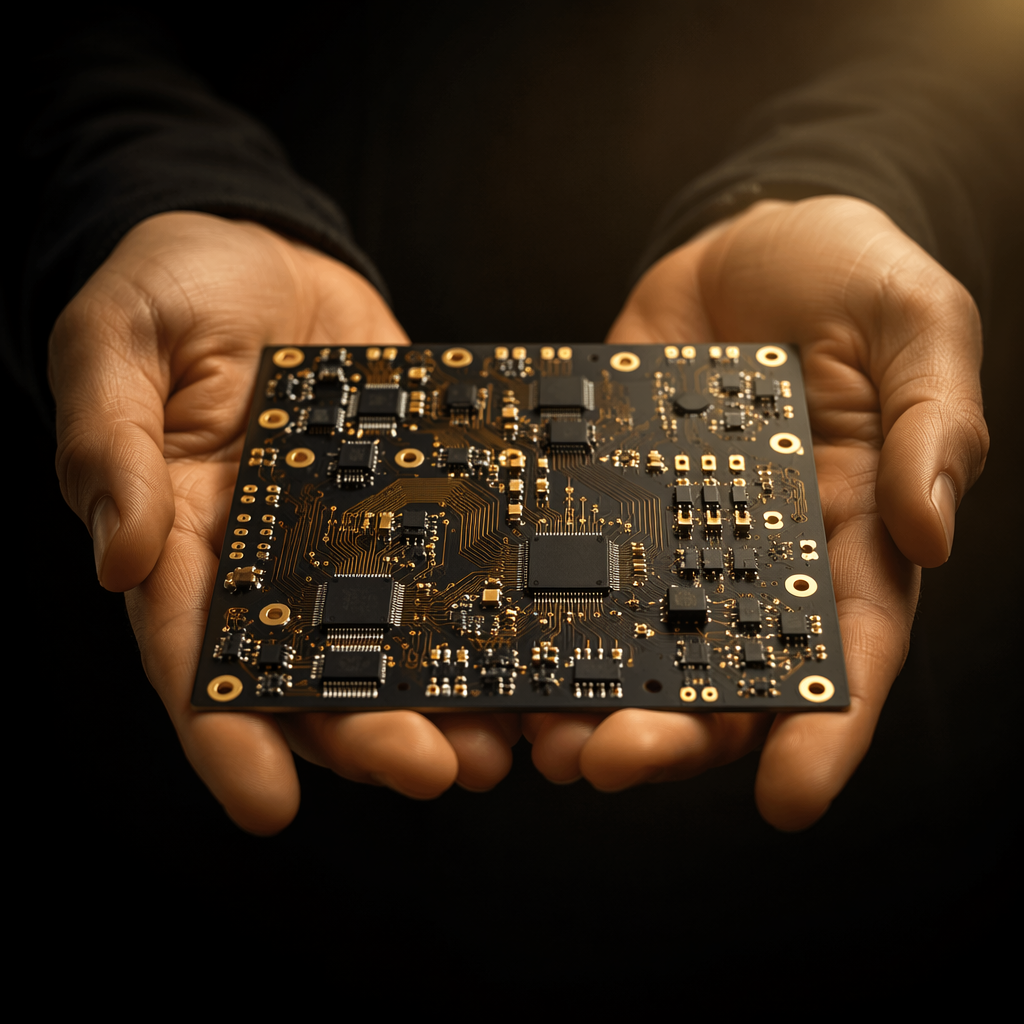
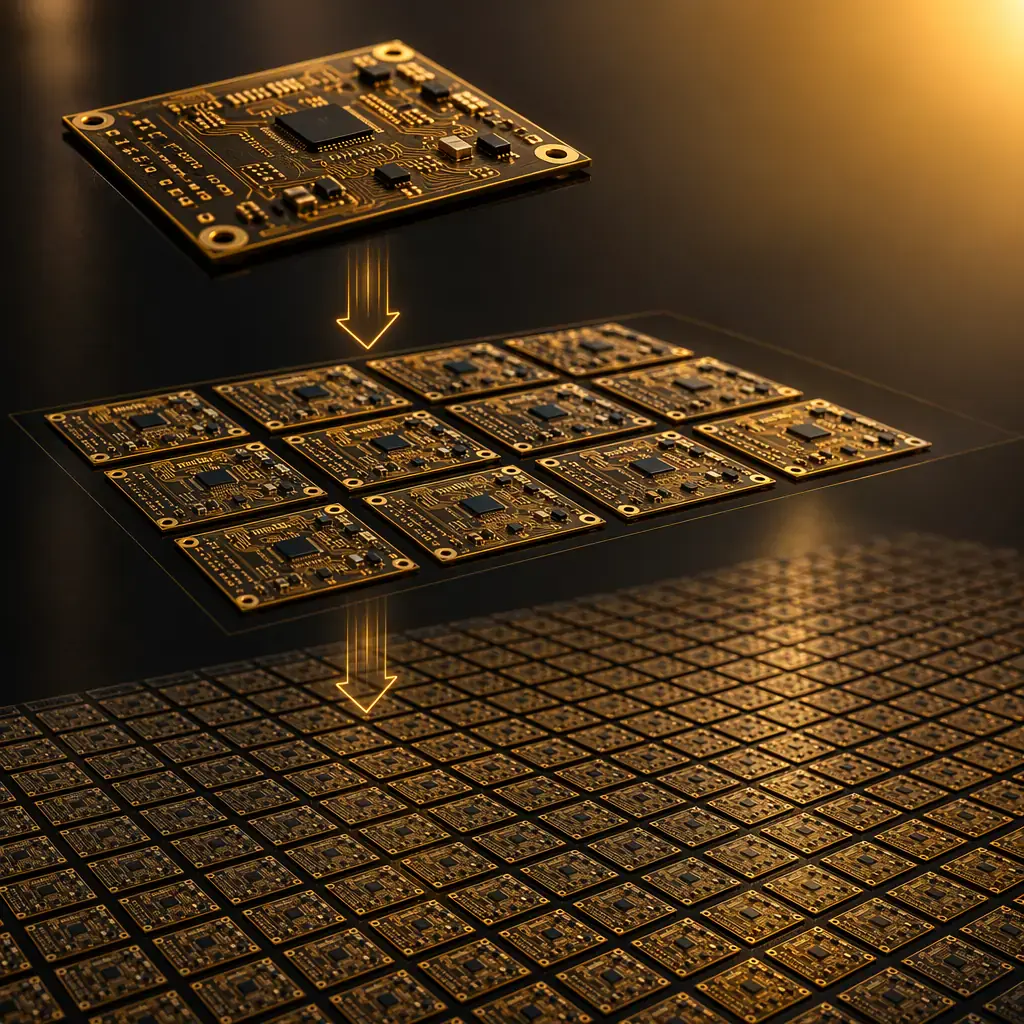
You just received a quote for 10 prototype PCBs at $240. That same board, quoted at 10,000 units, comes in at $4.70 each. The math doesn't seem to add up — 10,000 × $4.70 = $47,000 versus 10 × $24 = $240. Why is the prototype 5× more expensive per unit? And where does all that production cost savings actually come from?
This article breaks down exactly where the money goes at each quantity tier, using real 2026 manufacturing cost data from our Shenzhen facility. No marketing percentages — actual cost line items.
The Prototype Cost Stack (5–10 Pieces)
For a typical 4-layer PCB, 100×100mm, ENIG finish, standard FR-4, 5-day turnaround, here's where your $24/board goes:
Setup & Tooling (NRE): ~$120 total
CAM engineering (1.5 hours): $45
Photoplot film / LDI setup: $25
Drill program + tooling: $20
Electrical test fixture setup: $20
First-article inspection: $10
Per-Board Cost: ~$12
Raw material (laminate, prepreg, copper): $3.20
Processing (drill, plate, etch, solder mask, silkscreen, ENIG): $5.80
Electrical test + AOI: $1.80
Routing/scoring + packaging: $1.20
Total: $120 (NRE) + 10 × $12 = $240, or $24/board. The NRE accounts for 50% of the total cost. This is the fundamental economic reality of prototyping: the setup costs are fixed, and the per-board processing cost is relatively modest. The small quantity means setup dominates.


The Production Cost Stack (10,000 Pieces)
Same board, 10,000 units. The NRE is amortized across 1,000× the volume, and the per-board processing cost drops through panel optimization:
Amortized NRE: ~$0.012/board
Same $120 setup, divided by 10,000 boards. Effectively zero.
Per-Board Cost: ~$3.50
Raw material (panel-optimized): $1.10
Processing (volume-optimized, panel-level): $1.60
Electrical test (flying probe, panel-level): $0.45
Routing + packaging (panel-level): $0.35
Panel Utilization Bonus: ~$1.20/board saved
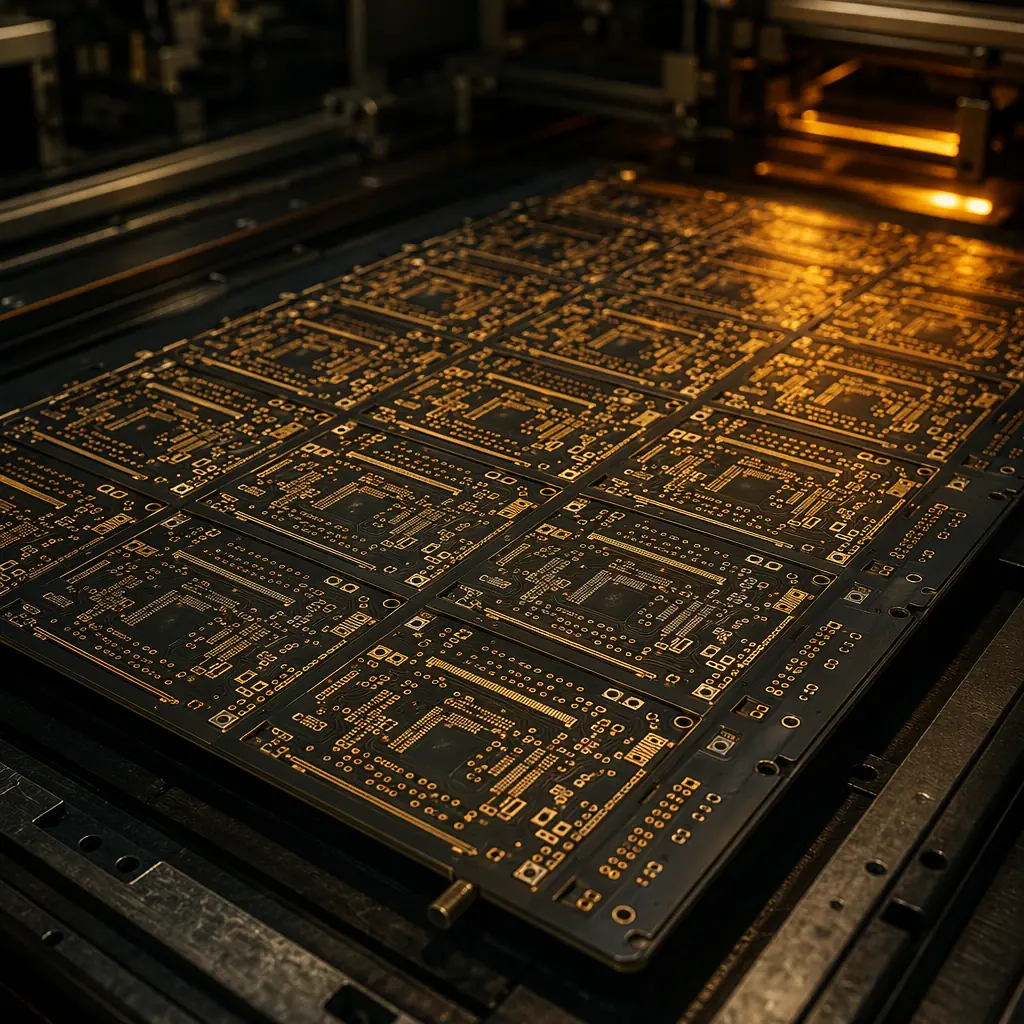
At prototype quantity, we fit 6 boards per panel (70% utilization). At 10,000 units, we optimize the panel for 12 boards (92% utilization). That's 2× the boards per panel cycle for roughly the same processing cost.
Total: $120 (NRE) + 10,000 × $3.50 = $35,120, or $3.51/board — before the panel utilization bonus. Actual cost with optimized panelization: approximately $4.70/board (the $3.51 base plus $1.19 in yield management, extra testing, and logistics).
Where the 5× Cost Multiplier Actually Lives
5×
The per-unit cost difference between prototype and production is driven by four factors, weighted by impact:
1. NRE Amortization (35% of the gap). The $120 setup cost on 10 boards is $12/board; on 10,000 boards it's $0.012. This alone accounts for a 5× difference in per-unit cost. The fix: aggregate multiple prototype designs into a single panel. If you have three different prototype designs on one panel, you split the NRE three ways. We offer this as a standard option — it adds 1–2 days to CAM engineering but typically saves 30–40% on prototype NRE.
2. Panel Utilization (30% of the gap). Prototype panels run at 60–75% utilization because we prioritize quick-turnover over perfect nesting. Production panels run at 85–95% utilization with optimized CAM nesting. On a $150 panel processing cycle, going from 6 to 12 boards per panel halves the per-board processing cost. This is the single largest lever in production pricing and the one most buyers don't understand.
3. Process Efficiency (25% of the gap). A prototype panel goes through the same 20+ process steps as a production panel — but it's processed individually or in small batches. A production run processes 100+ panels simultaneously through each step. The drill machine, plating tank, and etch line cost the same to run whether they're processing one panel or one hundred. The per-panel processing cost drops by roughly 60% when equipment is fully loaded.
4. Yield Management (10% of the gap). Prototypes target 90–95% yield (some scrap is acceptable; we overbuild by 10–15% to compensate). Production targets 97–99.5% yield because scrap at volume is expensive. The tighter process controls required for high yield add about 5–8% to per-board cost at volume — but the scrap savings more than offset it.

The 500-Piece Sweet Spot
There's a compelling economic argument for ordering 500 pieces even when you only need 200. At 500 units, the NRE becomes negligible ($0.24/board), panel utilization improves to ~80%, and process efficiency starts to kick in. The per-unit cost at 500 pieces is typically 40–55% lower than at 50 pieces, and 65–75% lower than at 10 pieces.
If your product has predictable demand, the 500-piece prototype-to-pilot transition order is the sweet spot: you get most of the production cost benefit, you have enough units for beta testing and early customers, and you avoid the cash outlay of a 10,000-piece production run before market validation. We recommend this bridge quantity to startups and new product introduction teams regularly.
When to Go Direct to Production
Skip the prototype phase entirely when: (a) you've built this exact board before (minor revision of an existing design), (b) the design uses all standard materials and processes we stock daily (FR-4, 1oz, ENIG, 5/5mil), and (c) your BOM has no allocation or long-lead-time components. In these cases, a 1,000-piece pilot run can replace both prototype and initial production, saving 2–3 weeks and roughly $500–1,000 in combined NRE.
The Bottom Line
PCB cost follows a classic fixed-cost + variable-cost structure, where the fixed cost (NRE + setup) dominates at low quantities and the variable cost (material + processing + yield) determines pricing at volume. The key numbers to remember: NRE is typically $100–200 for a 4-layer board, panel utilization improvement from prototype to production saves 20–30% on processing cost, and the 500-piece bridge quantity captures 60–70% of the volume cost benefit without committing to a full production run. At Huaxing PCBA, we provide transparent cost breakdowns at every quantity tier — use our online estimator at /quote/ to see how your specific design scales.